


- Startseite
- Über uns
- Personal
- Arbeitsgruppen und Einrichtungen
- Forschungsgruppen
- Geophysics – Geodynamics
Geophysics – Geodynamics


Geophysics-Geodynamics Research Group
The main purpose of our research is to understand the dynamics of the lithosphere/asthenosphere system in a variety of tectonic environments and how other more superficial processes such as sedimentation and hydrothermal circulation influence them.
In particular, we focus on understanding the tectonic evolution and dynamics of rifted margins and the formation and evolution of oceanic crust and plates. We link onshore and offshore observations of the crustal and lithospheric structure of these margins, with their tectonic plate context to answer questions regarding their tectonic evolution, history of faulting, subsidence and heat flow and their potential for natural resources, such as geological hydrogen and mineral resources.
Recently we are focusing on understanding the relationships between tectonism, hydrothermal circulation, element exchange during water-rock reactions and its implication for the deep biosphere during continental rifting and oceanic spreading.
Methods include the use of dynamic models of rifting and oceanic spreading, and their integration with geophysical, geochemical and geological data. We develop our own in house code, Rift2Rdige, and also lead or take part in geophysical and geochemical data collection expeditions (see projects).
Contact
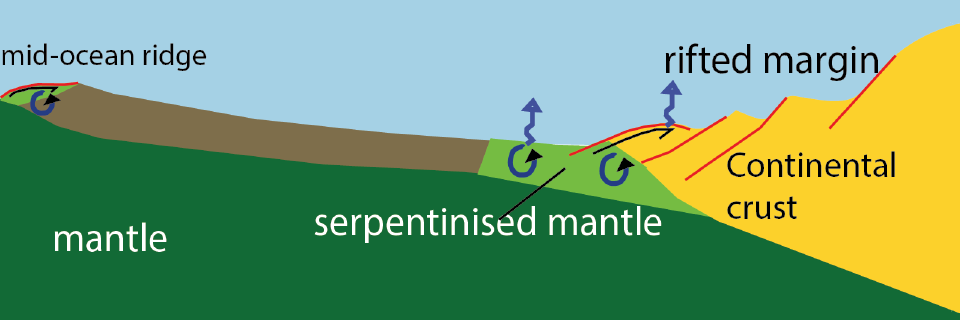
Cartoon showing main areas and processes of research of the Geodynamics group.
Model-Data Fusion
The goal of understanding a given margin at the scales needed for quantitative resource prediction can be pursued by fusing simulations of rift dynamics with geological and geophysical data, commonly known as inversion and data assimilation. A model with adequate dynamics could, for example, assimilate MCS images. A first step in this direction is our heuristic nudging approach Kinedyn, which sequentially assimilates interpretations of MCS data and shows the potential of data assimilation towards understanding tectonics at fault-block scale (Perez-Gusisnye et al., 2023, Liu et al., 2022, Araujo et al., 2022, Muldashev et al., 2021). Modelling at fault-block scale yields the sediment and basement temperature field during the synrift and postrift margin evolution. These results can be used to understand the spatial distribution of serpentinization with consequences for the potential formation of H2 reservoirs.
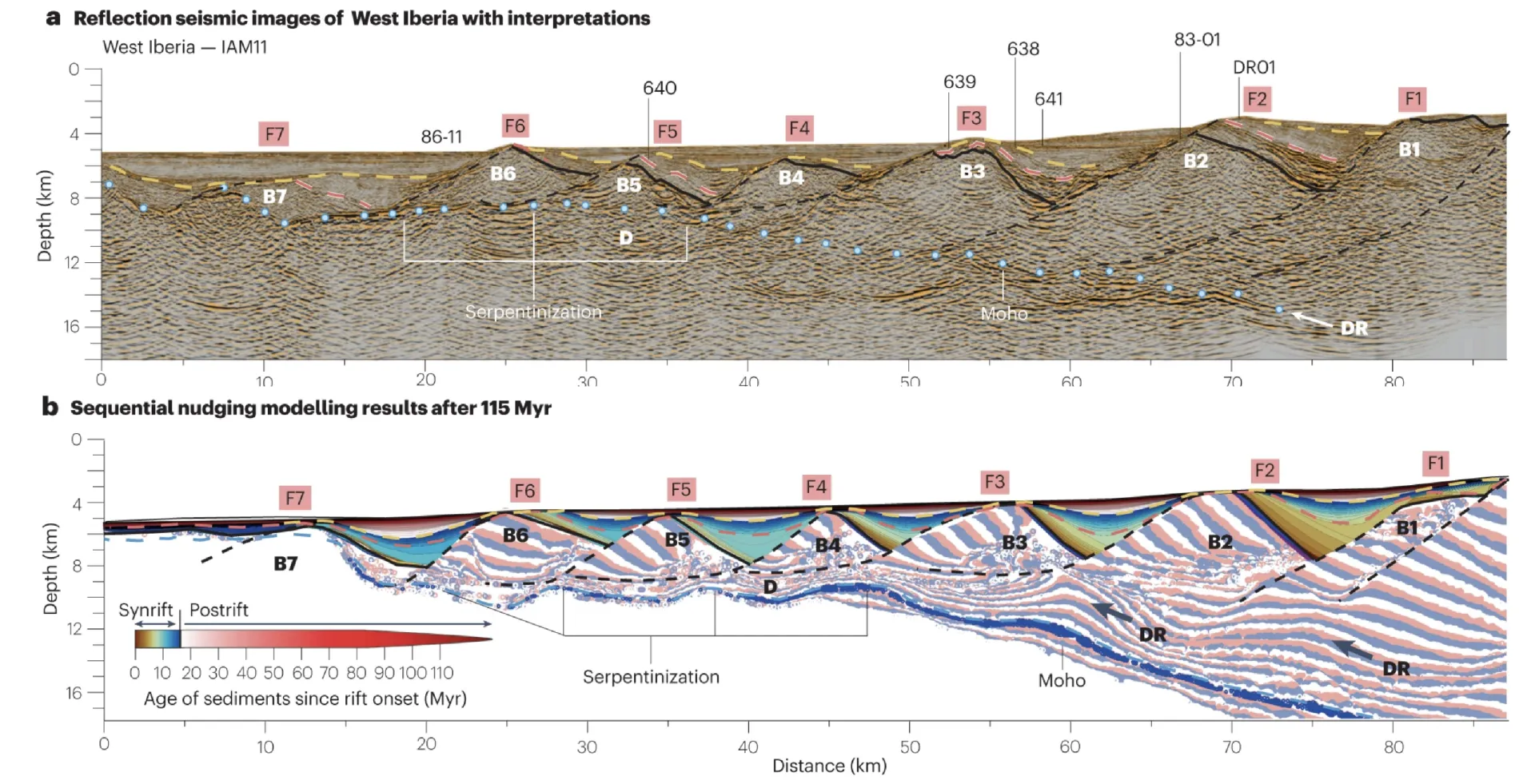
Modified from Liu et al., 2022, EPSL
Energy Transition
Numerical simulations can be used to estimate the amount of natural hydrogen produced during magma-poor rifted margin formation and onset of seafloor spreading. We did a first step in this direction in Liu et al., Geology, 2023. We are currently refining these models to further explore the potential of these margins for natural hydrogen accumulation (see Irene Merino‘s project).
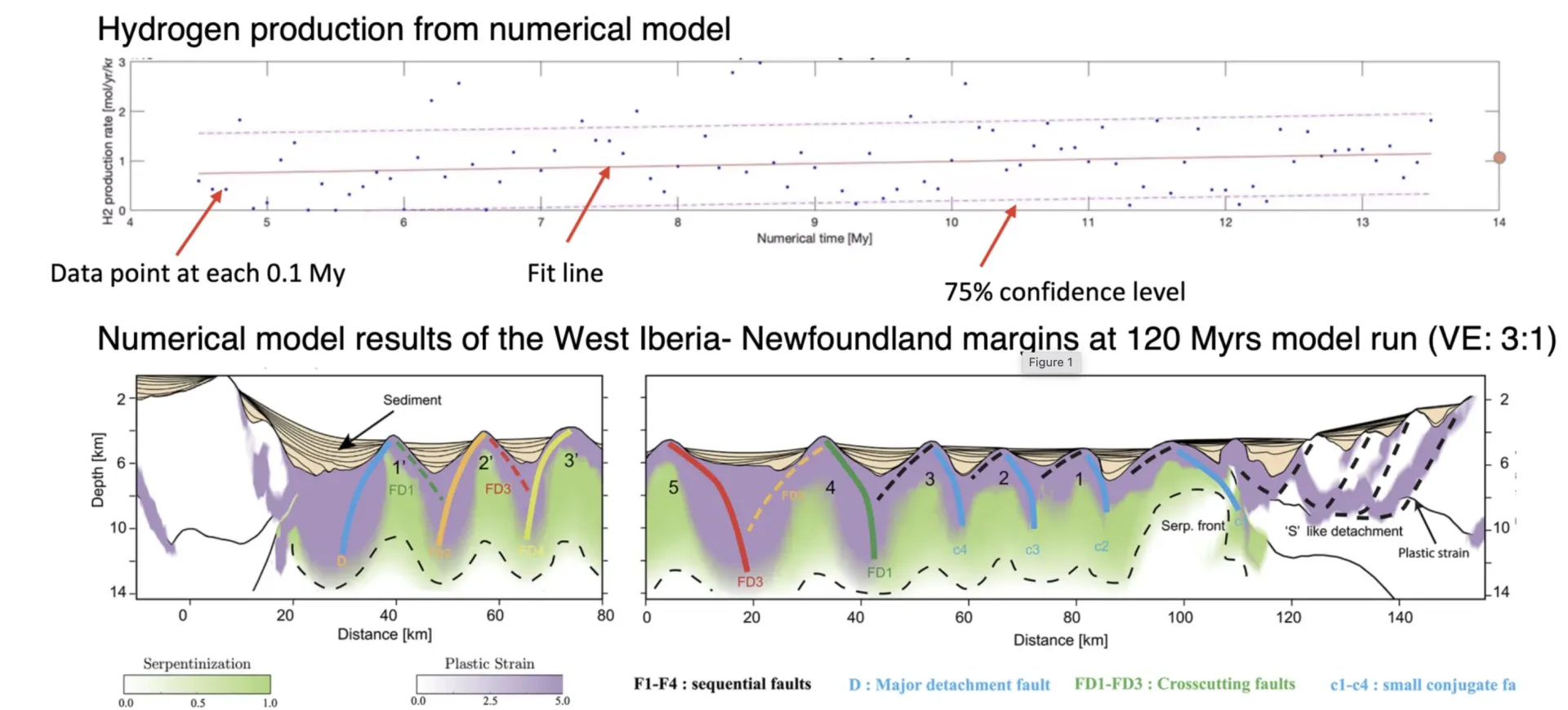
Modified from Liu et al., Geology (2023)
Stratigraphic interpretation
Stratigraphic interpretation is key to understand rifted margin evolution. Numerical simulations allow to link observed stratigraphy with rifted margin evolution and test interpretations from seismic multichannel data. The potential of this approach was first shown in Perez-Gussinye et al., Tectonics, 2020 (see also Andrés-Martínez et al., 2019). We have currently updated our sedimentation algorithms to better simulate post-rift sedimentation (García-Pintado et al., in prep.)
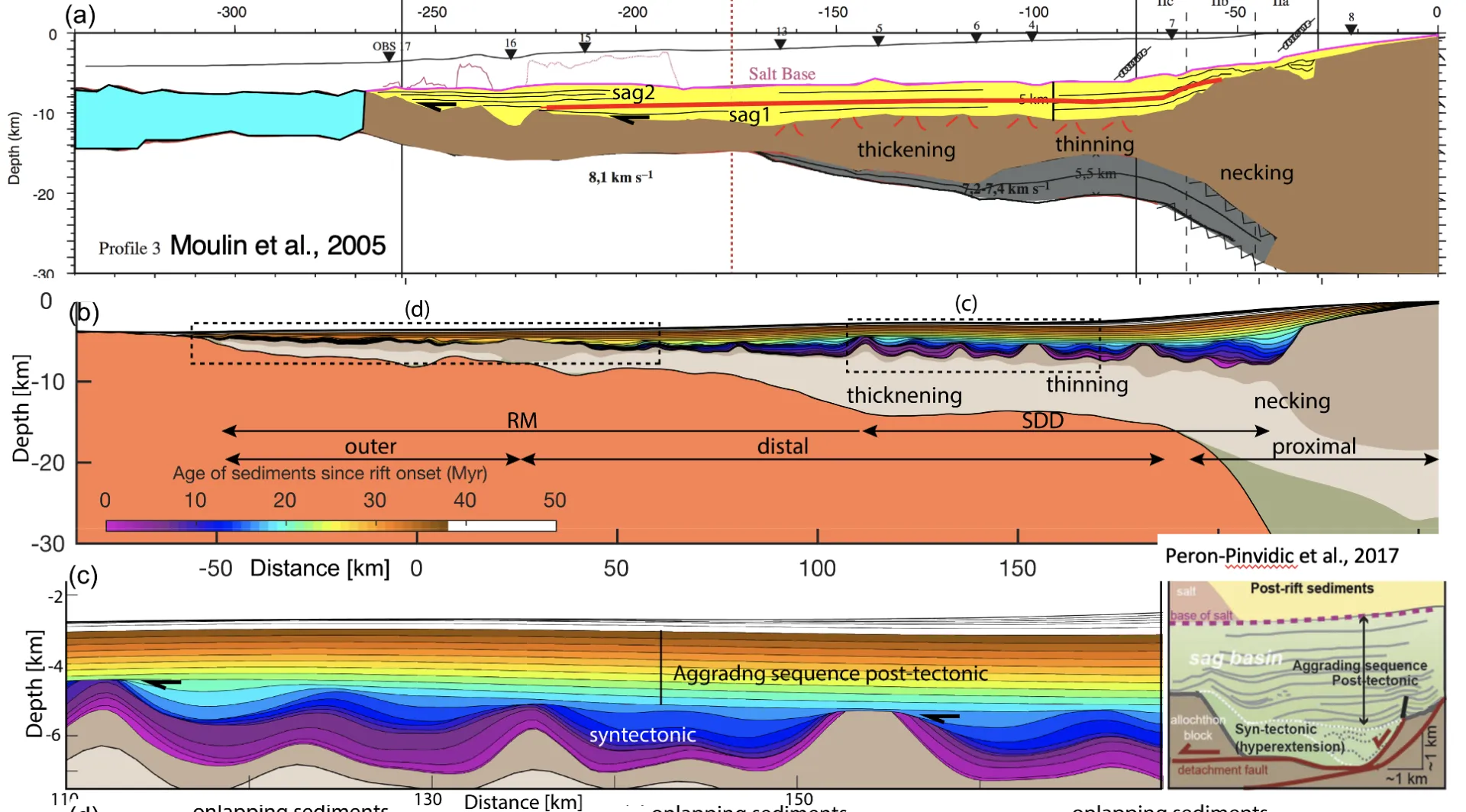
Modified from Perez-Gussinye et al., Tectonics (2020)
Birth of new oceans
We develop numerical models to understand the processes that lead to oceanic crust formation (Pérez-Gussinyé et al., Nature Reviews Earth and Environment, 2023), and the processes that shape mature ultra-slow spreading crust (Mezri et al., 2024).

Modified from Pérez-Gussinyé et al., (2023), Nature Reviews Earth and Environment
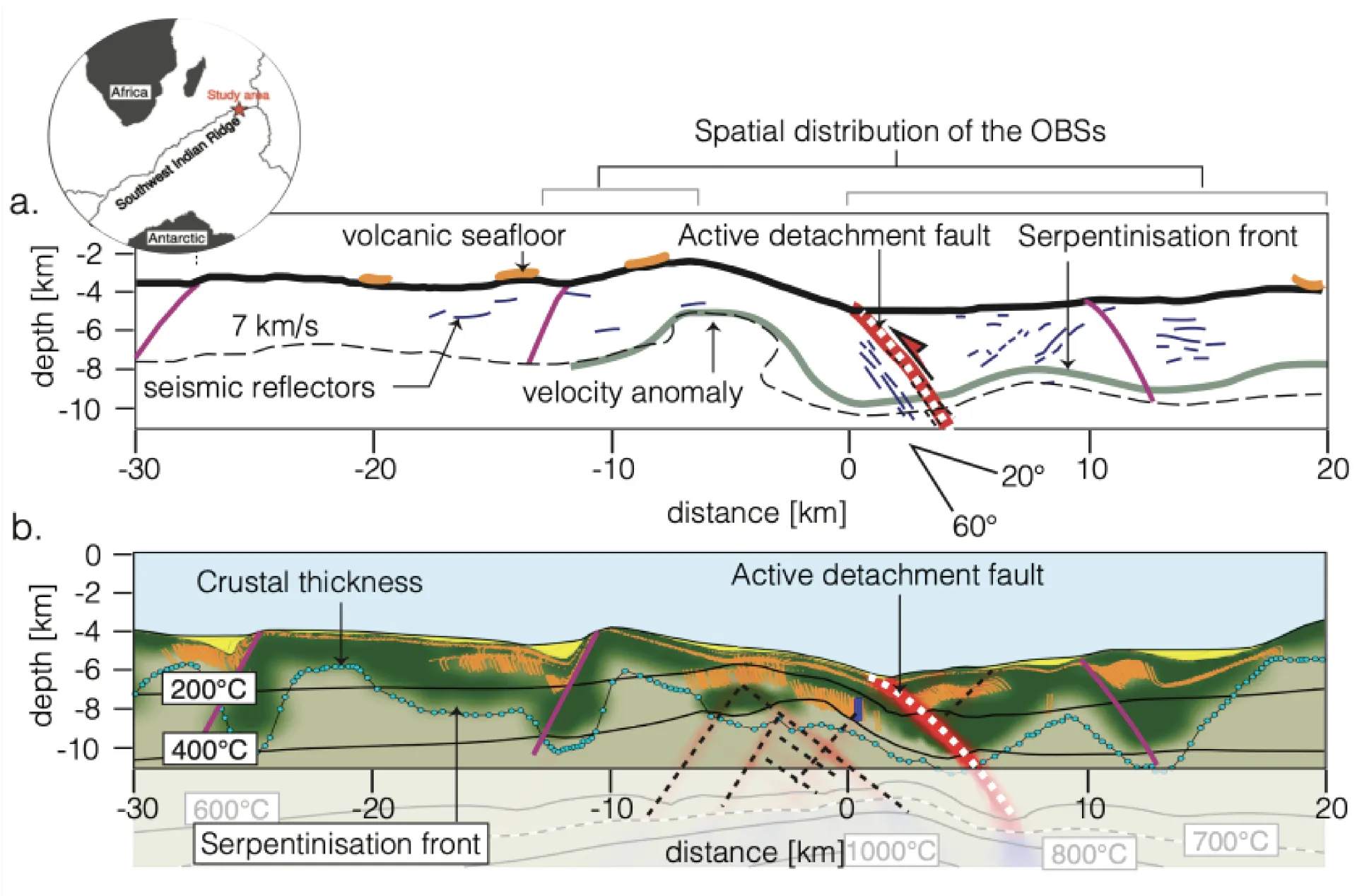
Modified from Mezri et al., EPSL, 2024