


Page path:
New concept for the protection of marine biodiversity
The AGELESS Project will leverage long-term data series for the ocean of the future
Aug 27, 2024

+++ Joint press release from the Universities of Oldenburg and Bremen +++
The open ocean, which, for the most part, lies outside of national jurisdictions is just as severely impacted by climate change as are Nationally regulated coastal waters. With the new international Agreement on Biodiversity of Areas Beyond National Jurisdiction (BBNJ), a framework for nature conservation and the regulation of interventions in the international waters of the open ocean has been under development since 2023. But how can anything be protected in areas outside of national jurisdiction? How can marine protected areas be managed in a rapidly changing ocean?
This is where the AGELESS project comes in, as a continuation and expansion of the already successful cooperation between MARUM – Center for Marine Environmental Sciences at the University of Bremen and the University of Oldenburg. Partners at the Friedrich-Alexander-Universität Erlangen-Nürnberg (FAU) and Helmholtz Institute for Functional Marine Biodiversity at the University of Oldenburg (HIFMB) are also involved in the project. Researchers from Bremen and Oldenburg have already been engaged with the themes of the BBNJ agreement as part of the work of the German Research Foundation's Senate Commission on Fundamental Issues of Biological Diversity. They have also carried out fundamental research using palaeoecological data as part of the Cluster of Excellence “The Ocean Floor – Earth's Uncharted Interface”, thus contributing to our understanding of the current rapidly changing biodiversity in the sea.
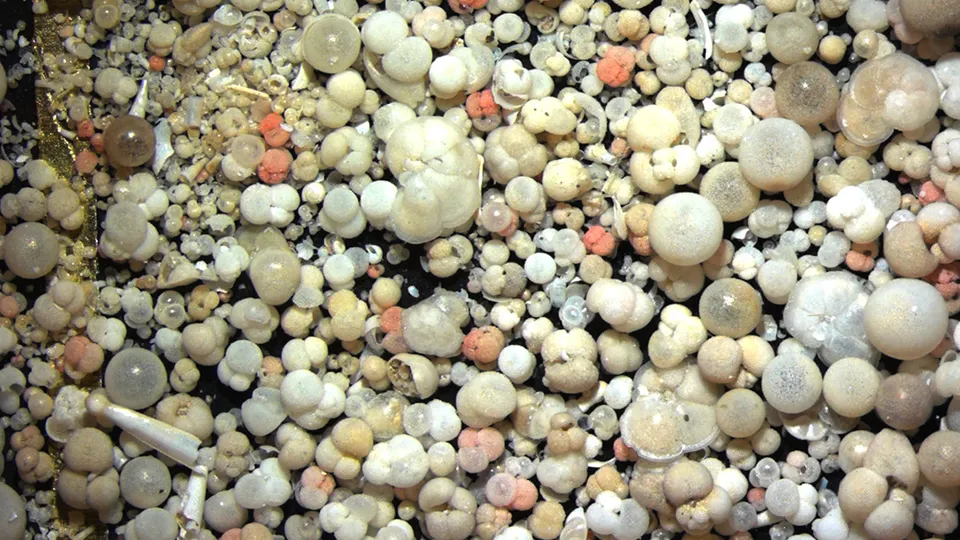
Tiny fossils provide a glimpse into the history of the oceans
The study of tiny microfossils that are deposited on the ocean floor over decades and millennia allows a unique glimpse into the history of the oceans and their inhabitants. Based on the ways in which fossil communities have spread, the researchers are able to understand how individual species and even entire ecosystems have reacted to environmental changes in the past. AGELESS wants to use such data from the past to develop concepts for protecting the ocean of tomorrow. This makes the project complementary to the research of the Cluster of Excellence. In addition to paleoclimate research and paleoecology studies, scientists will incorporate aspects of theoretical ecology, nature-conservation planning, and governance research.
Geological knowledge can be applied in the cause of environmental protection
“Such a combination of professional disciplines is unique and forward-looking,” says the coordinator of the consortium, Professor Michal Kucera from Bremen. “Cooperation crossing the traditional boundaries of specialty fields will make it possible to directly apply insights from the geological past to our efforts toward environmental protection.”
The project is designed to be interdisciplinary and transdisciplinary. The resulting data and models that reflect how biodiversity has changed in response to climate change will be presented in such a way as to provide comprehensible information for political decision-makers.
The Federal Ministry of Education and Research (BMBF) is funding the project with 2.5 million euros over a three-year period beginning in September 2024. During this time, the researchers will compile large datasets, involve experts and stakeholders, analyze time series of planktonic microfossils response to past ocean change and develop models based on this data. From this fundamental knowledge they will make concrete suggestions on how biodiversity in the high seas can be effectively protected in times of climate change.
“We are using a Co-design approach and have already contacted international and national interest groups,” explains Professor Helmut Hillebrand of the University of Oldenburg. Co-design is a participatory process in which stakeholders are involved in the project from the beginning in order to refine the research questions and define possible products in dialog workshops. “A total of four projects on this topic will be funded by the BMBF. Employing a joint dialog strategy, these will ensure that the results of the project can have an impact.”
More information
- BBNJ Agreement: https://www.un.org/bbnjagreement/en
Participating Institutions:
- MARUM – Center for Marine Environmental Sciences, University of Bremen
- Department of Economics and Law, Carl von Ossietzky University of Oldenburg
- Institute for Chemistry and Biology of the Marine Environment (ICBM), Carl von Ossietzky University Oldenburg
- Helmholtz Institute for Functional Marine Biodiversity at the University of Oldenburg (HIFMB)
- Friedrich-Alexander-Universität Erlangen-Nürnberg (FAU)
Contact:
Prof. Dr. Michal Kucera
MARUM – Center for Marine Environmental Sciences and
Department of Geosciences at the University of Bremen
E-mail: [Bitte aktivieren Sie Javascript]
Prof. Dr. Helmut Hillebrand
Institute for Chemistry and Biology of the Marine Environment (ICBM), Carl von Ossietzky University Oldenburg,
Helmholtz Institute for Functional Marine Biodiversity at the University of Oldenburg (HIFMB)
E-mail: [Bitte aktivieren Sie Javascript]
MARUM produces fundamental scientific knowledge about the role of the ocean and the seafloor in the total Earth system. The dynamics of the oceans and the seabed significantly impact the entire Earth system through the interaction of geological, physical, biological and chemical processes. These influence both the climate and the global carbon cycle, resulting in the creation of unique biological systems. MARUM is committed to fundamental and unbiased research in the interests of society, the marine environment, and in accordance with the sustainability goals of the United Nations. It publishes its quality-assured scientific data to make it publicly available. MARUM informs the public about new discoveries in the marine environment and provides practical knowledge through its dialogue with society. MARUM cooperation with companies and industrial partners is carried out in accordance with its goal of protecting the marine environment.