

Page path:
- Home
- Our Offers
- Media
- Archive Media Releases
- Media Releases 2025
- Success Cluster of Excellence
Historic Success: University of Bremen Acquires Funding for Two Clusters of Excellence for the First Time
May 22, 2025

“It couldn't have turned out any better,” says the President of the University of Bremen, Professor Jutta Günther, who is delighted with the great success of her research teams from the marine sciences (MARUM – Center for Marine Environmental Sciences at the University of Bremen) and the materials sciences (MAPEX – Center for Materials and Processes). The teams prevailed against tough nationwide competition across all disciplines: “This double success is phenomenal for a university of our size and with our resources. It is the unique combination of highly committed researchers, excellent research infrastructure, and many years of strategic groundwork that has made this success possible. I am proud of the two cluster teams and the university as a whole.”
Professor Michal Kucera, Vice President for Research and Transfer, who has accompanied the teams in the application preparation, is also extremely pleased: “This is an absolute team effort. To steadily improve in such a competitive and long selection process, which extends over two and a half years, and to convince the evaluating bodies several times over deserves great respect. This is only possible if everyone works together and makes their contribution at the right moment.”
The German Research Foundation (DFG) announced the funding decision for the new Clusters of Excellence on May 22. From January 1, 2026, the Clusters of Excellence “The Ocean Floor – Earth's Uncharted Interface” and “The Martian Mindset: A Scarcity-Driven Engineering Paradigm” at the University of Bremen will receive funding.
“It was a moment of great joy,” says Bremen's Senator for Environment, Climate, and Science, Kathrin Moosdorf, who attended the selection meeting in Bonn as a federal state representative: “The fact that both MARUM and MAPEX are being supported as part of the Excellence Strategy is proof of Bremen's high caliber as an academic location. We have excellent researchers, outstanding research conditions, and a special research spirit in Bremen. I would like to thank everyone involved for making this great success possible.”
“The Ocean Floor – Earth's Uncharted Interface”: MARUM Delighted with Renewed Excellence Funding
For more than two decades, MARUM – Center for Marine Environmental Sciences at the University of Bremen has been conducting cutting-edge research as part of the Excellence Strategy. “At MARUM we are delighted about the positive funding decision! With this success, we can continue to innovatively develop our efforts to promoting scientific discoveries and supporting early-career researchers,” says Professor Heiko Pälike, designated spokesperson of the Cluster of Excellence for the second funding phase, which begins on January 1, 2026. “The result is also special because there was an exceptional field of applicants.”
The ocean floor is being studied as an interface that has far-reaching functions for the entire Earth system. This involves, for example, deciphering the processes that control the transport of biogenic particles such as algal remains, pollen, or microorganisms to the ocean floor and their transformation under changing environmental conditions, balancing the transfer of carbon and other elements between the ocean floor and seawater, or understanding how ecosystems on the ocean floor react to environmental changes. Due to the scientific and technological complexity, the implementation of the cluster's objectives requires an interdisciplinary research network. In the funding phase that has now been approved, researchers from the University of Bremen will be working together with scientists from the Institute for Chemistry and Biology of the Marine Environment (ICBM) at the Carl von Ossietzky University of Oldenburg. They are pooling their expertise to further decode the role of the ocean floor for material cycles and biodiversity under changing climatic conditions.
Other cooperating partners in the region are the Alfred Wegener Institute, Helmholtz Centre for Polar and Marine Research (AWI) in Bremerhaven, the Helmholtz Institute for Functional Marine Biodiversity at the University of Oldenburg (HIFMB), the Max Planck Institute for Marine Microbiology (MPIMM), Constructor University, the Leibniz Centre for Tropical Marine Research (ZMT), and the Hanse-Wissenschaftskolleg in Delmenhorst.
“We are grateful for the support of our employees, the states of Bremen and Lower Saxony, and our international cooperation partners. This renewed success would not have been possible without their commitment and partnership,” emphasizes Professor Kai-Uwe Hinrichs, Director of MARUM. “We look forward to continuing to contribute to society with our joint research in the future.”
“The Martian Mindset – A Scarcity-Driven Engineering Paradigm”: MAPEX Brings New Cluster of Excellence to Bremen
The scientists at MAPEX – Center for Materials and Processes are also thrilled. Professor Marc Avila, designated co-spokesperson of the cluster: “We see the funding as recognition of our four years of hard work. We now have new opportunities that will enable us to tackle the socially highly relevant and future-oriented topic of resource scarcity and the development of sustainable production technologies with all our strength. Our thanks go to Bremen State and the University of Bremen, who have placed their trust in our academic expertise in the fields of materials science, exploration research, production engineering, and space technology from the very beginning. In this respect, the funding of the Cluster of Excellence is an award for Bremen as a scientific and aerospace location."
The scientists are adopting the “Martian mindset” in order to rethink the production of materials and components from the ground up. The scarcity of resources and extreme conditions on the red planet serve as an experimental setting to develop a new paradigm of sustainability that enables innovative resource and energy-saving processes for material extraction and processing. In the long term, the cluster will thus contribute to sustainable space exploration and, above all, drive green change on Earth.
To simulate this scenario, the researchers are imposing scarcity on themselves in four dimensions, for which they are developing solutions in the cluster: Limited raw materials, limited electrical energy, limited labor, and limited information. Taking these framework conditions into account, three scientific objectives are being pursued: Firstly, the development of (bio)electrochemical methods that do not require fossil fuels and can be used to extract metals, plastics, and other (vital) raw materials such as oxygen even from low-grade starting materials. Secondly, the experimental demonstration of low-energy process chains with which a range of components of sufficient quality (“enough-to-use”) can be produced from the raw materials obtained. Thirdly, the design of novel operating concepts for production systems that are operated jointly by small teams of humans and robots under great uncertainty and with limited information.
“The Martian Mindset” is intended to create the conditions for highly automated, resource-saving production of materials and components that is independent of fossil fuels. “The cluster is thus making a contribution both to the exploration of Mars and, above all, to the development of innovative technologies for the benefit of Earth,” says co-spokesperson Professor Kirsten Tracht. “The funding will allow our interdisciplinary team to break completely new ground with a disruptive research approach. Our goal is to radically rethink sustainability and apply this knowledge not only in academia but also in practice. On the one hand, we want to work with industry to achieve this. On the other hand, together with daycare centers and schools, we will initiate a transfer of knowledge that will enable future generations to shape a sustainable future.”
The cooperating partners are the Leibniz Institute for Materials Engineering – IWT, the German Aerospace Center (DLR), the German Research Center for Artificial Intelligence, the Fraunhofer Institute for Manufacturing Technology and Advanced Materials IFAM, and the MATENA innovate! Center.
Green Light for “University of Excellence” Competition: Best Possible Starting Position for the Bremen-Oldenburg Northwest Alliance
Following the Cluster of Excellence decision, it is now also clear how the University of Bremen will proceed in the Excellence competition: “The Clusters of Excellence we have acquired are the entry ticket for the competition – together with the University of Oldenburg – for the title of ‘University of Excellence.’ We have been hoping for this all along,” explains President Jutta Günther. “As we have been working intensively with the Carl von Ossietzky University of Oldenburg for some time now, we are well prepared. The great success today shows how sustainable our cooperation is. I would like to congratulate the University of Oldenburg, which was also successful across the board today!”
The aim is to develop a joint vision that is underpinned by various institutional projects at both universities. The University of Excellence applications will be submitted in November of this year and reviewed next spring. A decision will be made in fall 2026.
Further Information:
- "The Ocean Floor” Excellence Cluster: https://www.marum.de/en/The-Ocean-Floor.html
- “The Martian Mindset” Excellence Cluster: https://www.uni-bremen.de/en/humans-on-mars-initiative
- Northwest Alliance: https://northwest-alliance.de/en/
- Excellence Strategy of the German federal & state governments: https://www.exzellenzstrategie.de/en/
Contact:
President
Prof. Dr. Jutta Günther
Phone: +49 421 218-60011
Email: [Bitte aktivieren Sie Javascript]
Spokespersons of “The Martian Mindset” Excellence Cluster
Prof. Dr. Marc Avila
Phone: +49 421 218-57826
Email: [Bitte aktivieren Sie Javascript]
Prof. Dr.-Ing. Kirsten Tracht
Phone: +49 421 218-64840
Email: [Bitte aktivieren Sie Javascript]
Spokesperson of “The Ocean Floor” Excellence Cluster
Prof. Dr. Heiko Pälike
Phone: +49 421 218-65980
Email: [Bitte aktivieren Sie Javascript]
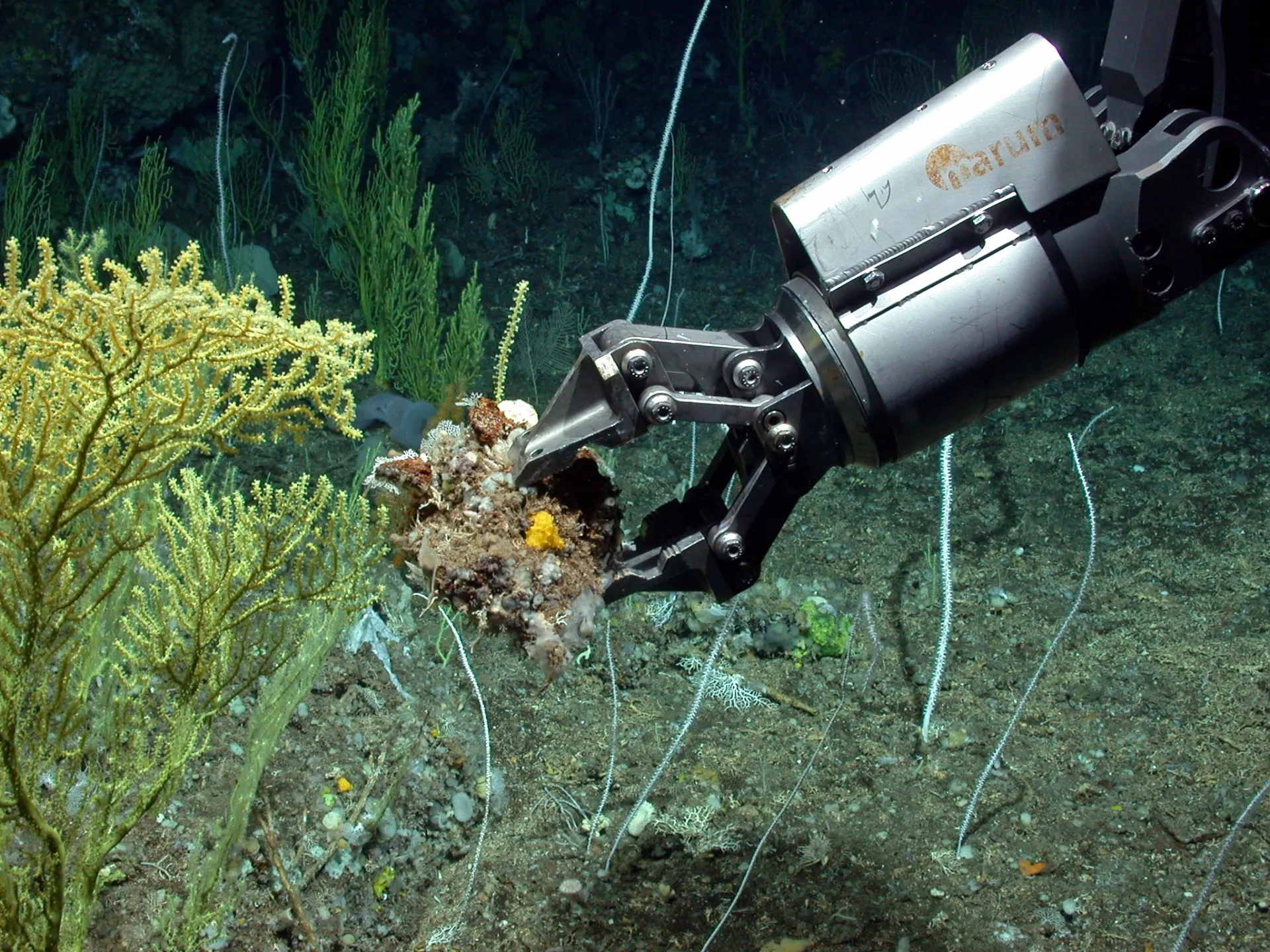
Expedition M128: Sampling with the robotic arm of the submersible MARUM-QUEST in 270 meters water depth at the Azores Plateau at the Mid-Atlantic Ridge. Photo: MARUM – Center for Marine Environmental Sciences, University of Bremen
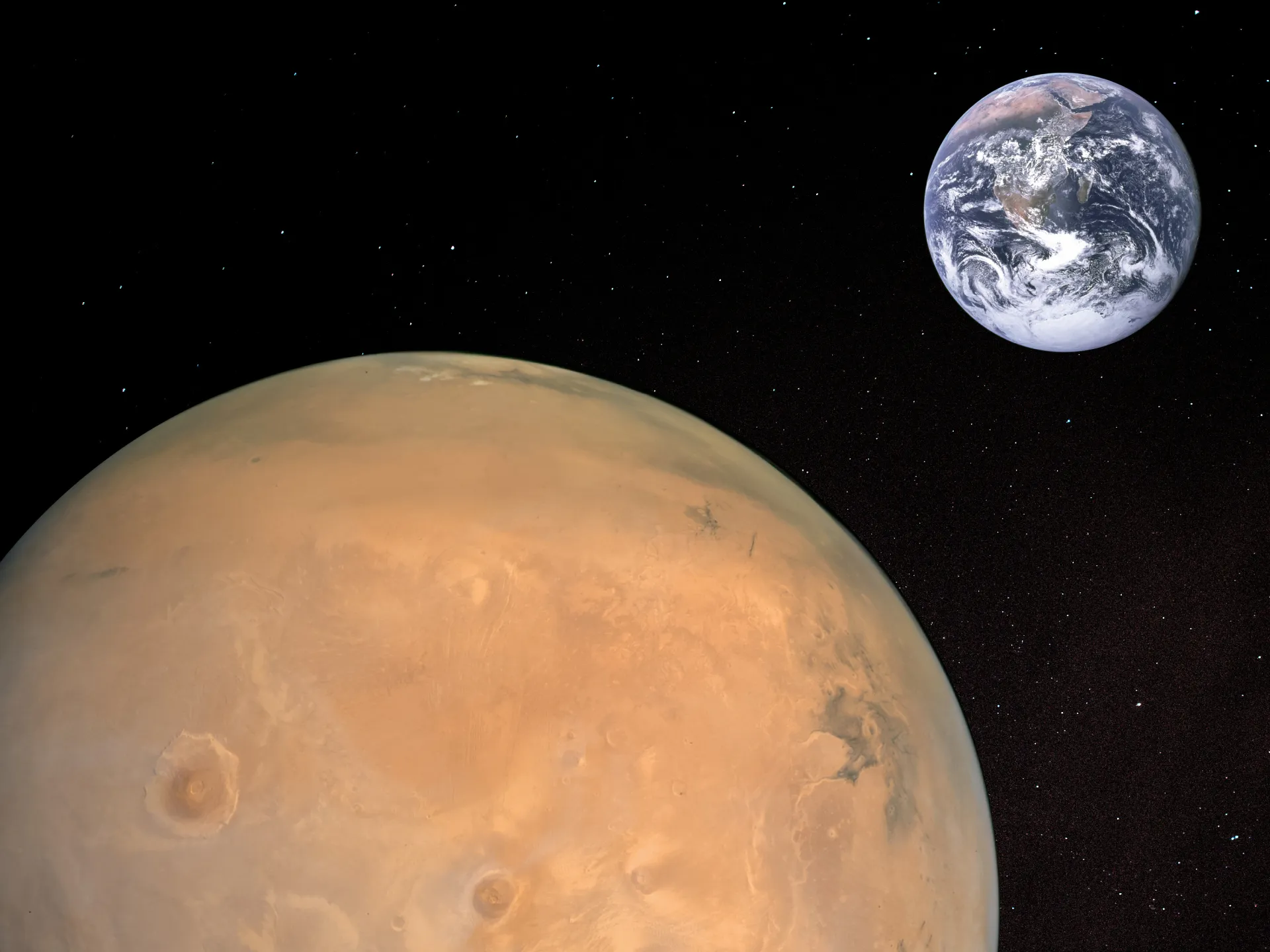
The Mars perspective creates a radically new view of the Earth for a highly innovative research approach. Photo: University of Bremen / Joris Wegner
About the University of Bremen:
High-performing, reform-minded and cooperative - that is the University of Bremen. Social responsibility has been its guiding principle since its foundation in 1971. It stands for the social and ecological changes that are necessary worldwide, for democracy, diversity and justice. In research, teaching, administration and technology, the UN Sustainable Development Goals and climate justice are of particular concern to the University of Bremen. With its broad range of around 100 degree courses, it combines exceptional performance and great potential for innovation with a pronounced interdisciplinary approach. It emphatically stands for the approach of research-based learning and studying. As an ambitious European research university, the University of Bremen maintains close cooperation with universities and research institutions worldwide. In the region, it is part of the U Bremen Research Alliance and a transfer partner for many stakeholders. As part of the European University Alliance YUFE - Young Universities for the Future of Europe, the 23,000 people at the University of Bremen contribute to the further development of society and actively shape scientific cooperation worldwide.
MARUM produces fundamental scientific knowledge about the role of the ocean and the seafloor in the total Earth system. The dynamics of the oceans and the seabed significantly impact the entire Earth system through the interaction of geological, physical, biological and chemical processes. These influence both the climate and the global carbon cycle, resulting in the creation of unique biological systems. MARUM is committed to fundamental and unbiased research in the interests of society, the marine environment, and in accordance with the sustainability goals of the United Nations. It publishes its quality-assured scientific data to make it publicly available. MARUM informs the public about new discoveries in the marine environment and provides practical knowledge through its dialogue with society. MARUM cooperation with companies and industrial partners is carried out in accordance with its goal of protecting the marine environment.