




Sep 21, 2022
First Temperature Record from the Last Interglacial in annual resolution
How do oceans respond to a warming world? From marine sediments deposited on the ocean floor, researchers can decipher the surface temperature of the ...
+Through the direct exchange of gases at the sea surface, the marine carbon cycle plays a central role in the climate system. Greenhouse gases (especially carbon dioxide CO2) can be absorbed by the ocean from the atmosphere as well as released into it. The marine carbon cycle is one of the factors that determine the direction of this exchange.
The aim of the researchers at MARUM is to gain a better understanding of the various core processes of the marine carbon cycle. The marine carbon cycle describes the occurrence and reservoirs of carbon compounds in the oceans, as well as the associated biological and abiotic processes.This includes the primary incorporation of dissolved inorganic carbon (DIC) into photosynthesizing biomass (algae), as well as the transport and decomposition of organic material on and in the seafloor.
Typical questions are:
In order to successfully answer these and many other questions, MARUM has excellent and extensive equipment and facilities.
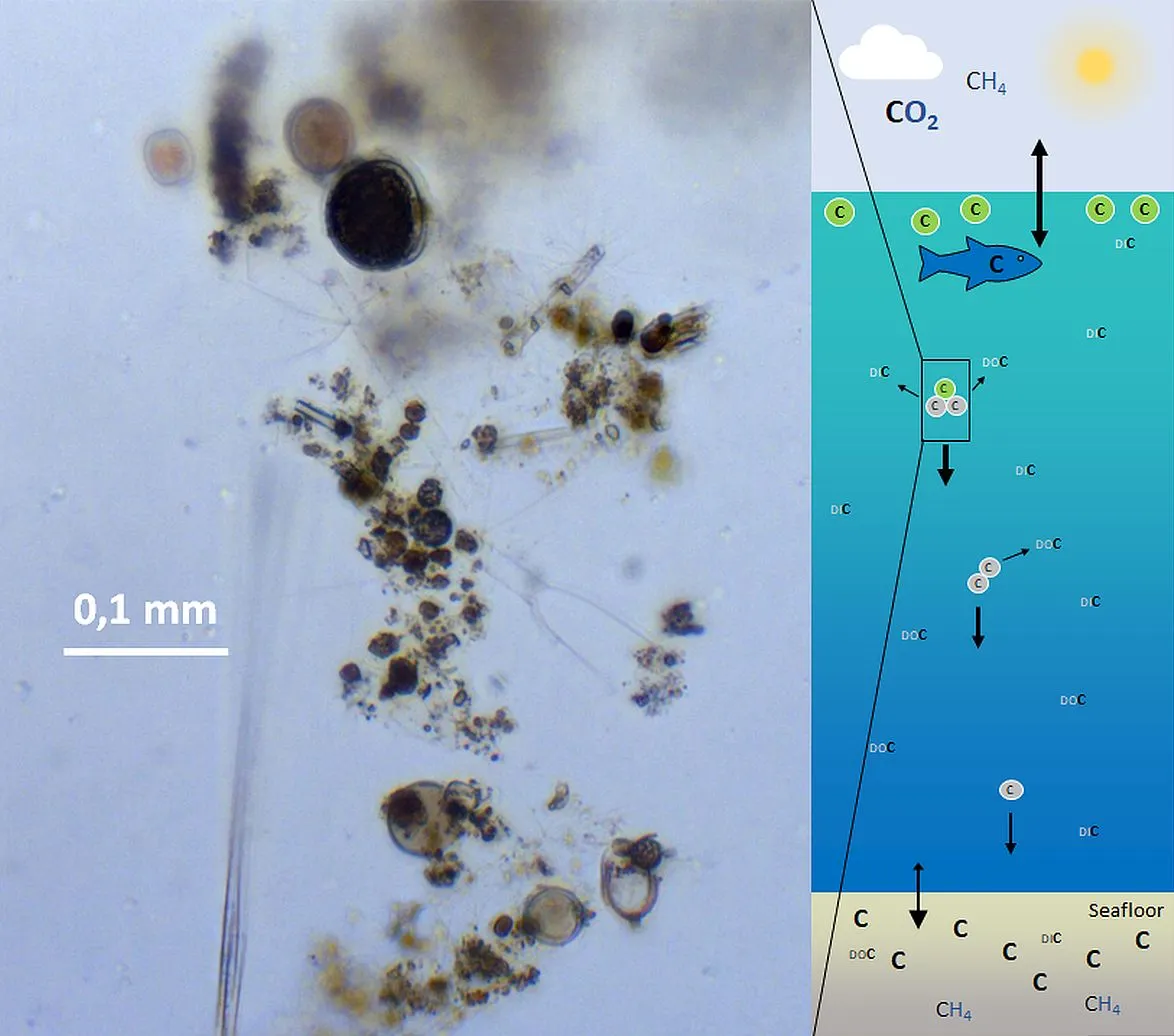
left: sinking organic particles; right: sketch of the marine carbon cycle

How do oceans respond to a warming world? From marine sediments deposited on the ocean floor, researchers can decipher the surface temperature of the ...
+
Researcher from MARUM – Center for Marine Environmental Sciences at the University of Bremen, Max Planck Institute for Marine Microbiology Bremen, ...
+
In order to mitigate the consequences of human-induced climate change, measures to remove CO2 from the atmosphere will be necessary in addition to drastic ...
+
Between 9 and 4.6 million years ago, the oceans were very rich in nutrients; the period is also known as the "biogenic bloom". A Swedish-German research ...
+