




Jan 14, 2022
Microbes produce oxygen in the dark
Only a few microorganisms are able to produce oxygen in complete darkness. A new member of this exclusive circle is the extremely small unicellular ...
+Through the direct exchange of gases at the sea surface, the marine carbon cycle plays a central role in the climate system. Greenhouse gases (especially carbon dioxide CO2) can be absorbed by the ocean from the atmosphere as well as released into it. The marine carbon cycle is one of the factors that determine the direction of this exchange.
The aim of the researchers at MARUM is to gain a better understanding of the various core processes of the marine carbon cycle. The marine carbon cycle describes the occurrence and reservoirs of carbon compounds in the oceans, as well as the associated biological and abiotic processes.This includes the primary incorporation of dissolved inorganic carbon (DIC) into photosynthesizing biomass (algae), as well as the transport and decomposition of organic material on and in the seafloor.
Typical questions are:
In order to successfully answer these and many other questions, MARUM has excellent and extensive equipment and facilities.
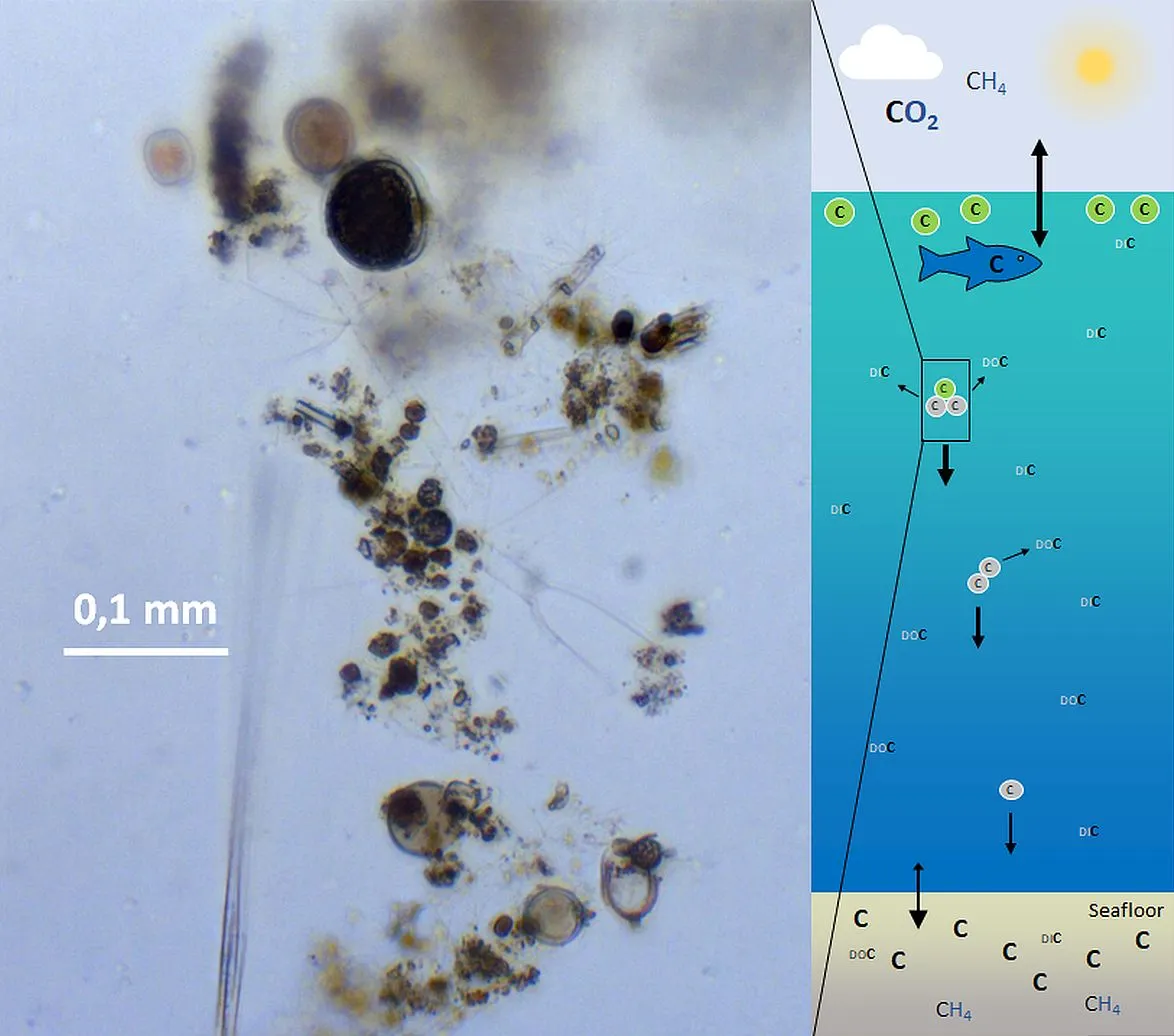
left: sinking organic particles; right: sketch of the marine carbon cycle

Only a few microorganisms are able to produce oxygen in complete darkness. A new member of this exclusive circle is the extremely small unicellular ...
+
Microorganisms can convert oil into natural gas, i.e. methane. Until recently, it was thought that this conversion was only possible through the ...
+
The movement of water masses in the ocean, its circulation, is an essential component of the global climate system. In a study recently published in the ...
+
Hydrocarbons, which are an essential component of crude oil and natural gas, form under pressure and high temperatures in the deep ocean floor. In the ...
+