

- Home
- Our Offers
- Media
- Archive News
- News 2024
- Meeting SPP2299 September24
Tropical coral records of climate change
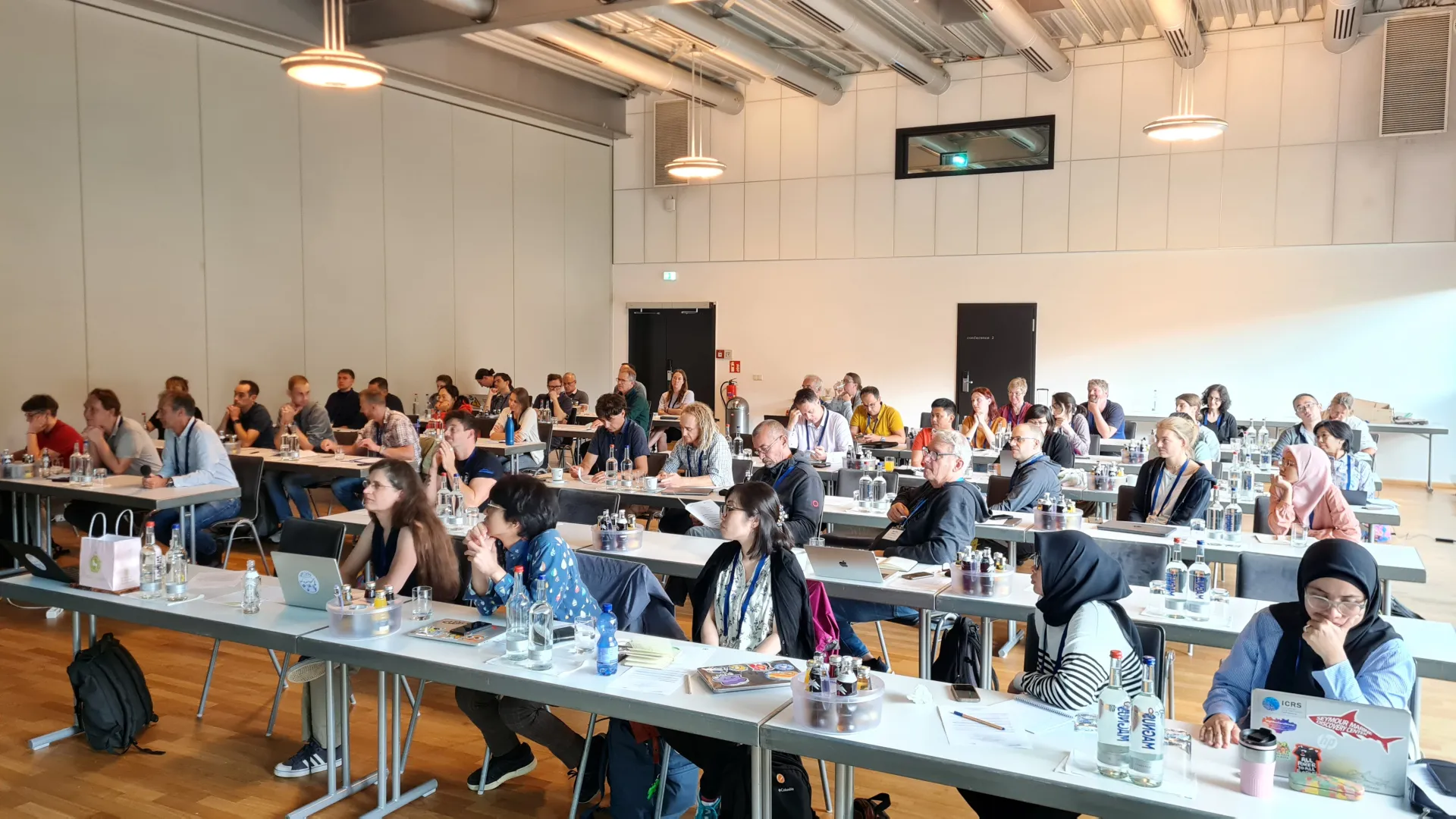
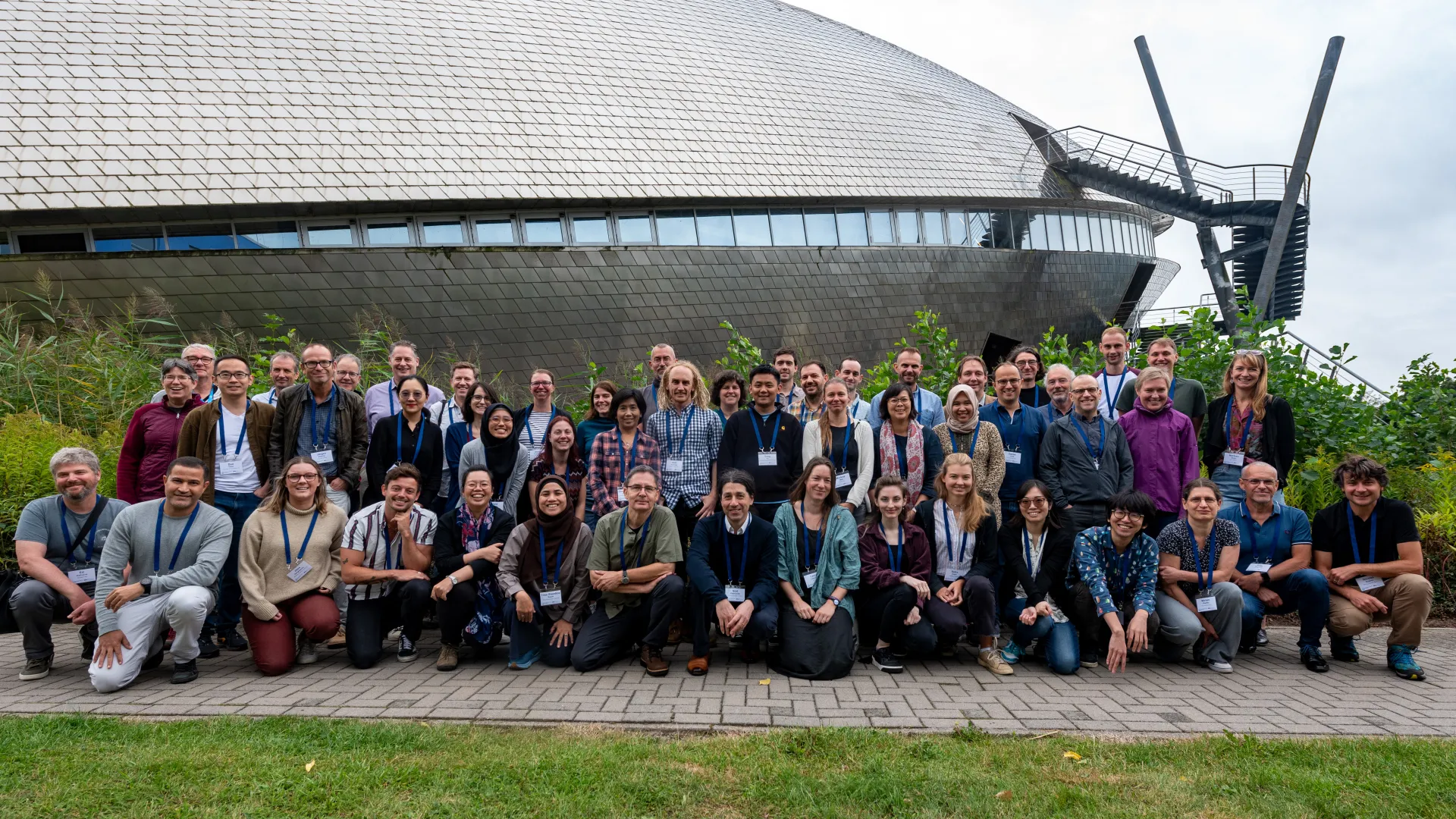
About sixty international researchers met at the University of Bremen to discuss tropical coral records of climate change and environmental stress.

Tropical coral reefs are one of the most vulnerable ecosystems to climate change, as they are sensitive to heat stress that causes coral bleaching. Coral bleaching is characterized by the expulsion of tiny algae that live in symbiosis with the coral host. If the heat stress lasts for a longer time period, this can lead to coral mortality. If coral reefs are lost, there will be large follow-on effects with major losses of marine species, and food sources for large tropical populations, while also impacting the stability of tropical coasts.
The last year 2023 was the warmest since the start of global instrumental temperature observations around the year 1850 and was characterized by regional weather extremes, an unusually early onset of coral bleaching in the tropical Atlantic and an El Niño event in the tropical Pacific. The warming resulting from anthropogenic climate change, which was further amplified by the El Niño, led to surface temperatures of the world's oceans reaching unprecedented record temperatures for 15 consecutive months from April 2023. As a consequence, marine heatwaves also led to coral bleaching in the tropical Pacific, Indian Ocean and Red Sea.
In April 2024, the United States NOAA declared the fourth global coral bleaching event since the first observed in 1998, associated with the occurrence of significant coral bleaching in both hemispheres of all major ocean basins. This global coral bleaching event is not over yet, as summer temperatures in the northern hemisphere oceans have just reached their annual peak again, with the potential for further coral bleaching in the Caribbean, along the East Asian coasts, and in the northern Red Sea.
The Priority Programme aims to improve our understanding of tropical climate variability and its impacts on coral reef ecosystems in a warming world. This improved understanding comes from prior to the start of instrumental climate observations and coral reef monitoring. “Some species of coral grow annual bands in their skeletons like tree rings”, explains Thomas Felis from MARUM - Center for Marine Environmental Sciences at the University of Bremen, coordinator of the Priority Programme and organizer of the meeting. “These continuously record changes in their environment, including changes in temperature and possibly even heat stress during their lifetime”. Corals themselves can therefore provide us with answers from the past on how to best protect them, as well as the tropical communities who depend on these ecosystems and suffer most from climate extremes.
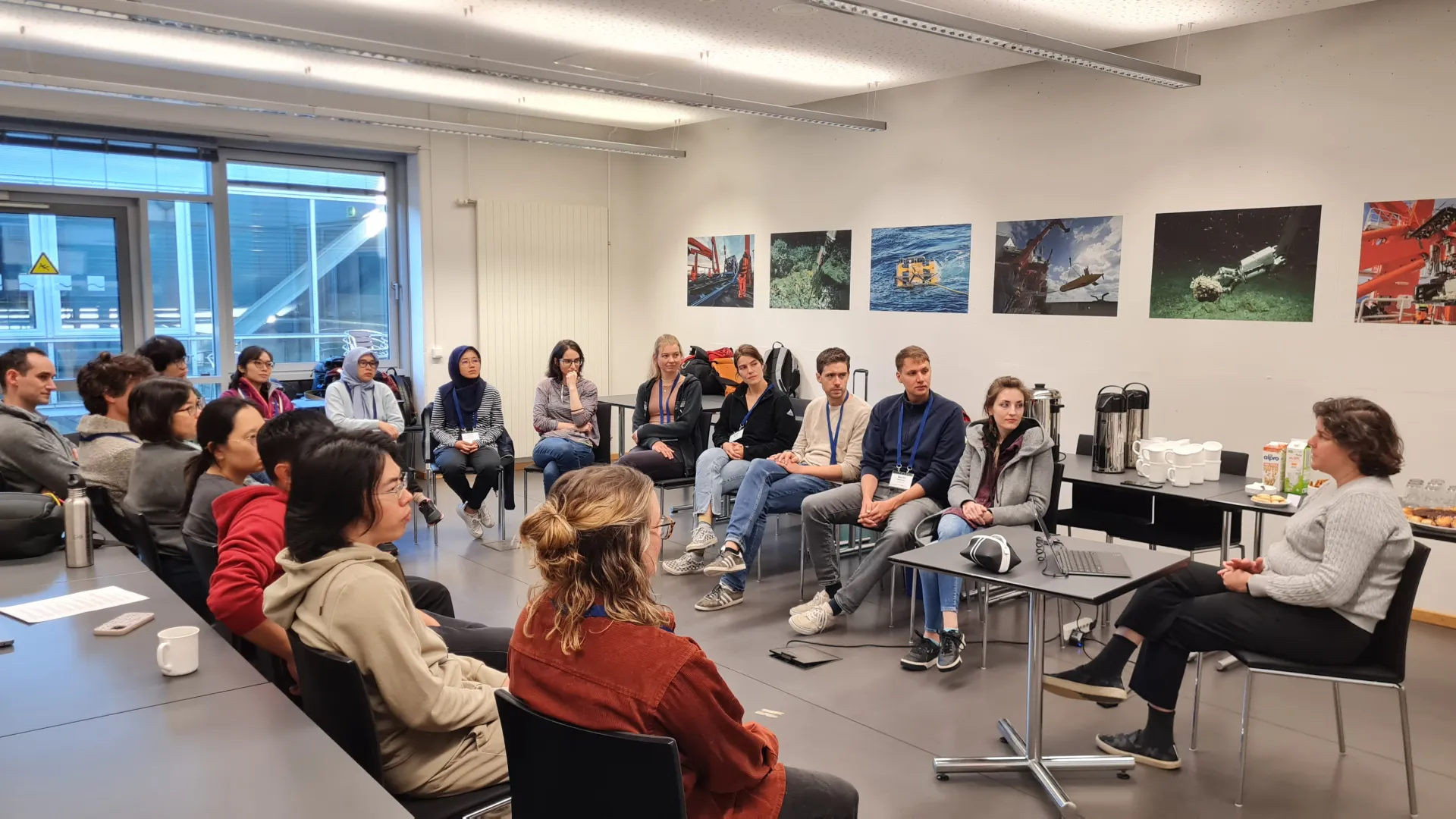
For the first time, researchers from coral reef countries in the Global South such as Indonesia, Singapore, Brazil, Malaysia, Thailand and Mexico were also invited to the meeting last week to exchange ideas, network and establish knowledge transfer in both directions with researchers from the Priority Programme. The meeting concluded with a workshop for early career researchers on “Navigating academic publishing and thriving in academia”, which was conducted by Nathalie Goodkin from the American Museum of Natural History (New York) and Jessica Hargreaves, postdoc in the SPP 2299 coordination team at MARUM.
The DFG Priority Programme “Tropical Climate Variability & Coral Reefs” (SPP 2299) brings together over forty researchers from 15 institutions across Germany (ten universities, three Helmholtz Centres, one Max Planck Institute, one Leibniz Centre) using novel geochemical and isotopic tools applied to coral skeletons, along with advanced statistical methods and earth system modelling to not only understand past and future tropical climate but also coral responses to past and future heat stress. The unique interdisciplinary nature of the participants and the ability to focus on different scales in time and space will help broaden our perspectives and better prepare for the warmer future we are entering into.
The Priority Programme (SPP 2299) has been running for two years, with the first phase of the programme coordinated by Thomas Felis from MARUM – Center for Marine Environmental Sciences at the University of Bremen. In addition to the coordination, MARUM is involved with 4 scientific projects and a total of 8 researchers.
More information:
About the DFG Priority Programme SPP 2299 https://www.spp2299.tropicalclimatecorals.de/
SPP 2299 YouTube channel https://www.youtube.com/@ClimateReefs
Contact:
Dr. Thomas Felis
Coral Paleoclimatology
Phone: +49 421 218-65751
Email: [Bitte aktivieren Sie Javascript]