


Page path:
- Home
- Our Offers
- Media
- Archive Media Releases
- Media Releases 2025
- Exzellent erklärt
New Podcast “Life in the Deep Biosphere” Explores Secrets of the Ocean Floor
Apr 1, 2025

Joint press release by MARUM – Center for Marine Environmental Sciences at the University of Bremen and the Institute for Chemistry and Biology of the Marine Environment (ICBM) at the University of Oldenburg
The podcast on current scientific topics reflects the research diversity of Clusters of Excellence – from African Studies to the Future of Medicine. In each episode, listeners can expect insights into the interdisciplinary work of a research cluster. The Clusters of Excellence researchers talk to podcaster Larissa Vassilian about how they want to find scientifically sound answers to relevant topics of our time. This time, the podcast visits the Cluster of Excellence “The Ocean Floor – Earth's Uncharted Interface” at MARUM – Center for Marine Environmental Sciences at the University of Bremen. There, the presenter talks to two researchers: Dr. Florence Schubotz, biogeochemist at MARUM, and Dr. Michael Seidel, scientist at the Institute for Chemistry and Biology of the Marine Environment (ICBM) at the University of Oldenburg. Together they provide exciting insights into their research on organic material in the ocean and the mechanisms that influence the marine ecosystem.
A Black Box in the Global Carbon Cycle
A central aspect of the episode is the global carbon cycle. The researchers explain how dissolved organic matter is stored in the ocean, what role it plays for microorganisms, and how the carbon content of the ocean has changed over thousands of years. Particularly fascinating is the discovery that some organic molecules in the ocean are up to 20,000 years old – an important piece of the puzzle for understanding past and future climate change.
Black Carbon and the Deep Sea as a Carbon Reservoir
Another topic is so-called “black carbon,” a stable form of organic material produced by incomplete combustion. Researchers have been able to prove that this not only enters the ocean from land, but is also formed directly on the seabed by hydrothermal vents. The findings could help to better understand the long-term storage of carbon in the ocean and thus contribute to climate research.
Climate and Environmental Regulators
The episode impressively demonstrates how closely life in the deep sea is linked to global environmental issues. The ocean stores huge amounts of carbon, regulates the climate, and supplies the atmosphere with oxygen. However, many processes in the deep sea are still not understood.
At the Universities of Bremen and Oldenburg, scientists from various disciplines are researching the effects of global warming on the marine ecosystem. The Cluster of Excellence “The Ocean Floor – Earth's Uncharted Interface” at MARUM has submitted a follow-up application together with the University of Oldenburg, which is already a partner in the current Cluster of Excellence. The two universities want to combine their strengths.
“Leben in der tiefen Biosphäre” is now available at https://exzellent-erklaert.podigee.io/.
Further information:
- Website of the Ocean Floor Cluster: https://www.marum.de/en/The-Ocean-Floor.html
- Website of the ICBM: https://uol.de/icbm
- Joint publication by Dr. Florence Schubotz and Dr. Michael Seidel: https://aslopubs.onlinelibrary.wiley.com/doi/10.1002/lno.12812
- Background interview with three cluster researchers on the close cooperation between MARUM and the ICBM: https://up2date.uni-bremen.de/en/article/the-ocean-floor-a-deep-dive
Background information Interview partners:
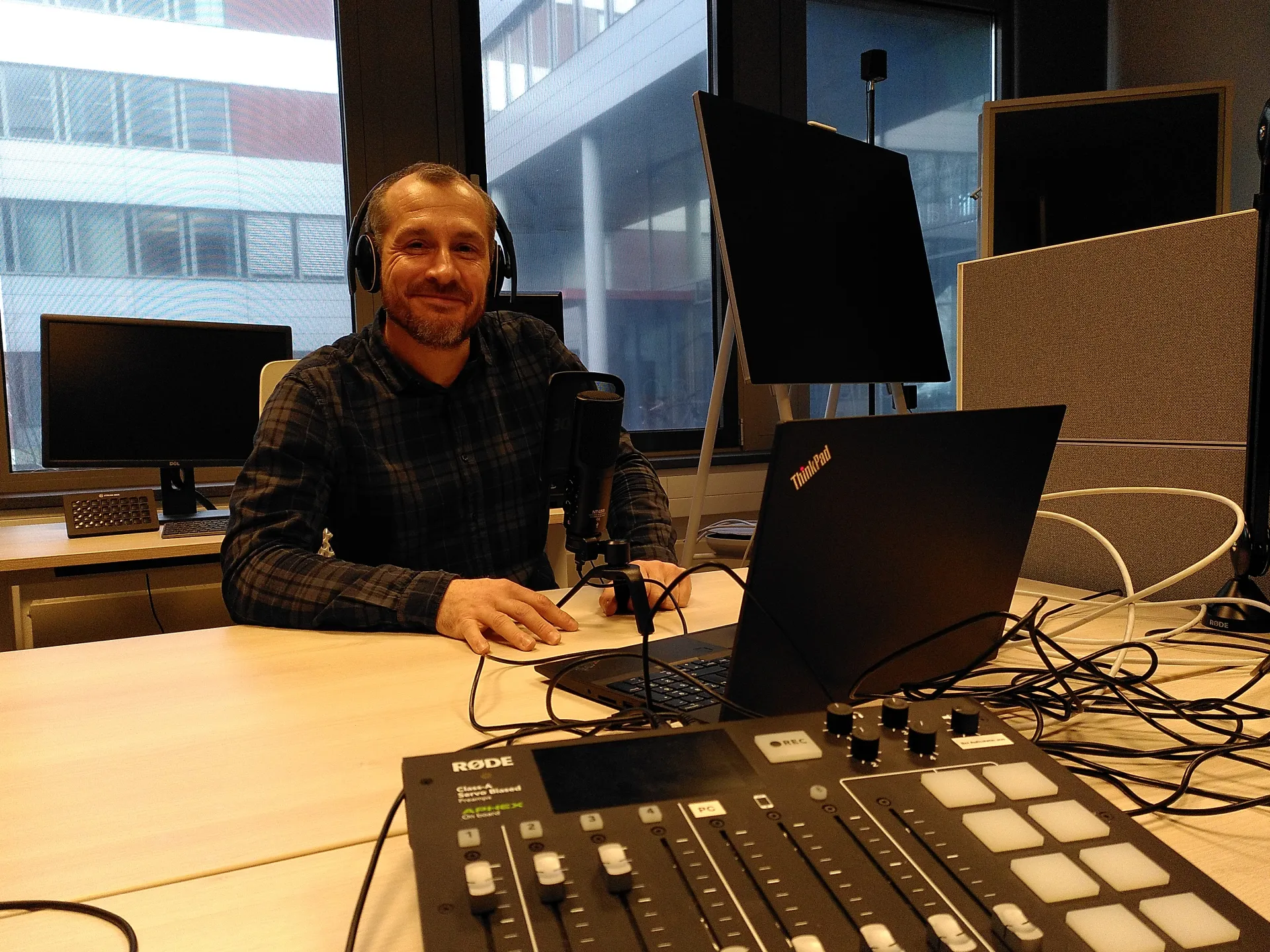
Michael Seidel is a scientist at the Institute for Chemistry and Biology of the Marine Environment (ICBM) at the University of Oldenburg. He researches the chemical composition of dissolved organic matter in the ocean and its influence on the global carbon cycle. He uses state-of-the-art mass spectrometry techniques to analyze the diversity and stability of these molecules.
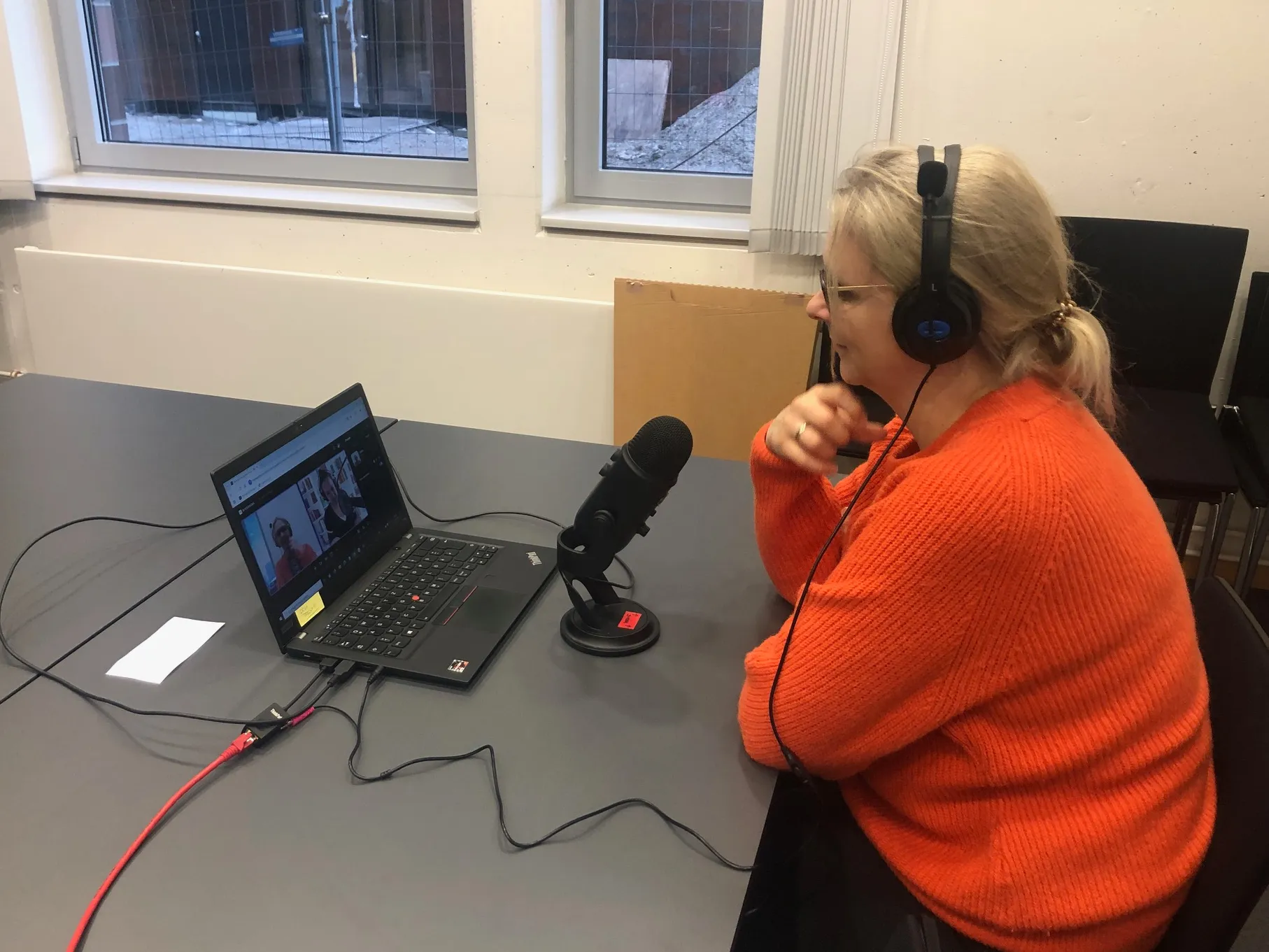
Florence Schubotz is a biogeochemist at MARUM – Center for Marine Environmental Sciences at the University of Bremen. Her research focuses on extreme habitats in the deep sea. Using highly sensitive analytical methods, she investigates how microorganisms exist in hostile environments and what role they play in global material cycles.
Contact:
Ulrike Prange
Public Relations
MARUM – Center for Marine Environmental Sciences, University of Bremen
Phone: +49 421 218-65540
Email: [Bitte aktivieren Sie Javascript]
Jana Stone
Public Relations
Institute for Chemistry and Biology of the Marine Environment (ICBM), University of Oldenburg
Phone: +49 441 798-3163
Email: [Bitte aktivieren Sie Javascript]
Dr. Florence Schubotz
MARUM – Center for Marine Environmental Sciences, University of Bremen
Phone: +49 421 218-65724
Email: [Bitte aktivieren Sie Javascript]
https://www.marum.de/Dr.-florence-schubotz.html
Dr. Michael Seidel
Institute for Chemistry and Biology of the Marine Environment (ICBM), University of Oldenburg
Phone: +49 441 798-3768
Email: [Bitte aktivieren Sie Javascript]
https://uol.de/en/icbm/marine-geochemistry/staff/dr-michael-seidel
Contact for general information on the podcast:
Project team “Exzellent erklärt – Spitzenforschung für alle”:
Email: [Bitte aktivieren Sie Javascript]
Web: exzellent-erklaert.de
#exzellenterklaert
Contact for general information on the Excellence Strategy and the Clusters of Excellence: German Research Foundation
Cornelia Lossau
Director Press and Public Relations Group
Phone: +49 (30) 206121-4328
Email: [Bitte aktivieren Sie Javascript]
MARUM produces fundamental scientific knowledge about the role of the ocean and the seafloor in the total Earth system. The dynamics of the oceans and the seabed significantly impact the entire Earth system through the interaction of geological, physical, biological and chemical processes. These influence both the climate and the global carbon cycle, resulting in the creation of unique biological systems. MARUM is committed to fundamental and unbiased research in the interests of society, the marine environment, and in accordance with the sustainability goals of the United Nations. It publishes its quality-assured scientific data to make it publicly available. MARUM informs the public about new discoveries in the marine environment and provides practical knowledge through its dialogue with society. MARUM cooperation with companies and industrial partners is carried out in accordance with its goal of protecting the marine environment.
The Institute for Chemistry and Biology of the Marine Environment (ICBM) is an interdisciplinary institute at the University of Oldenburg with locations in Oldenburg and Wilhelmshaven. It is the only university institute in Lower Saxony that covers broad areas of marine sciences, both in research and in teaching. Currently, 26 working groups of various scientific disciplines – including biology, chemistry, physics, mathematics, and social sciences – belong to the institute. ICBM operates the Spiekeroog Coastal Observatory and is the home institute of the research vessel SONNE.