


Page path:
- Home
- Our Offers
- Media
- News
- Newsflashes
- New building Center for Deep-Sea Research
New building Center for Deep-Sea Research
Construction work for the Center for Deep-Sea Research (ZfT) began in February 2021. Fundamental processes in the deep sea are to be investigated at the ZfT. Organizationally, the ZfT will be located under the umbrella of the Research Faculty MARUM.
The building was inaugurated in March 2025.
More information on the ZfT can be found in the MARUM press release from 29.06.2018 "New research building for marine research in Bremen" and on the website of the University of Bremen about current construction projects.
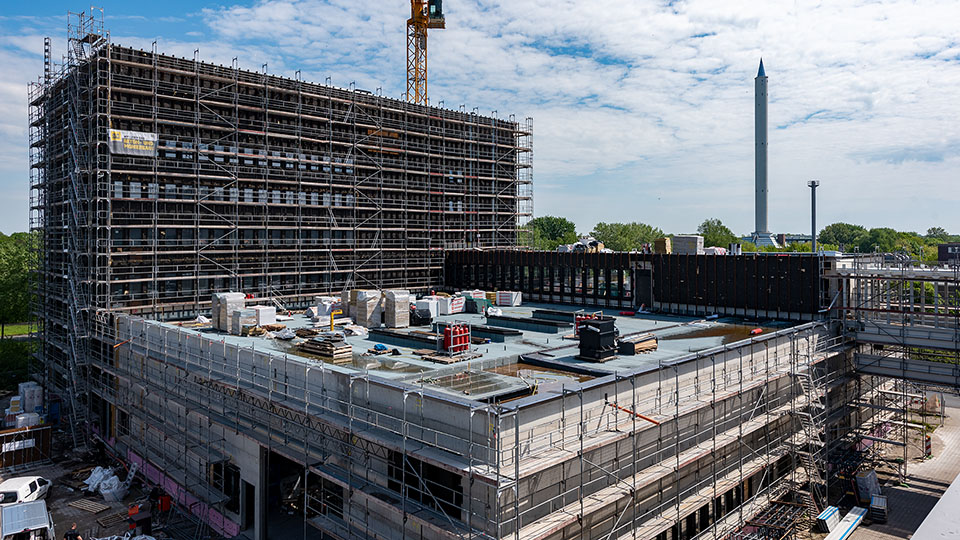
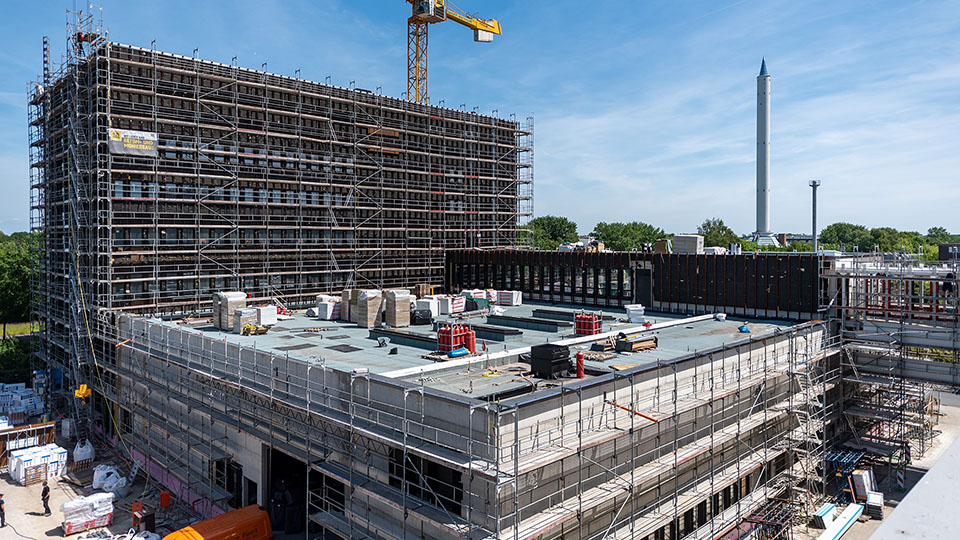
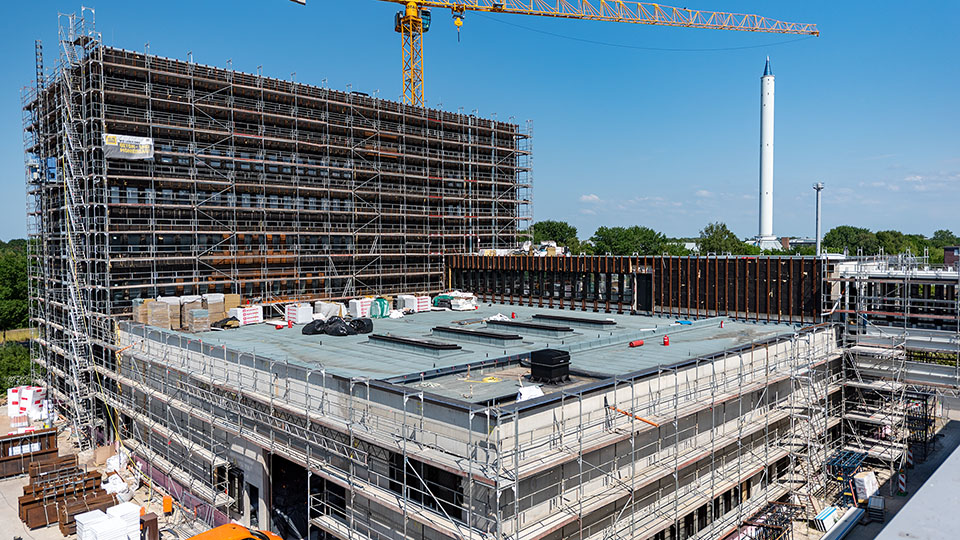
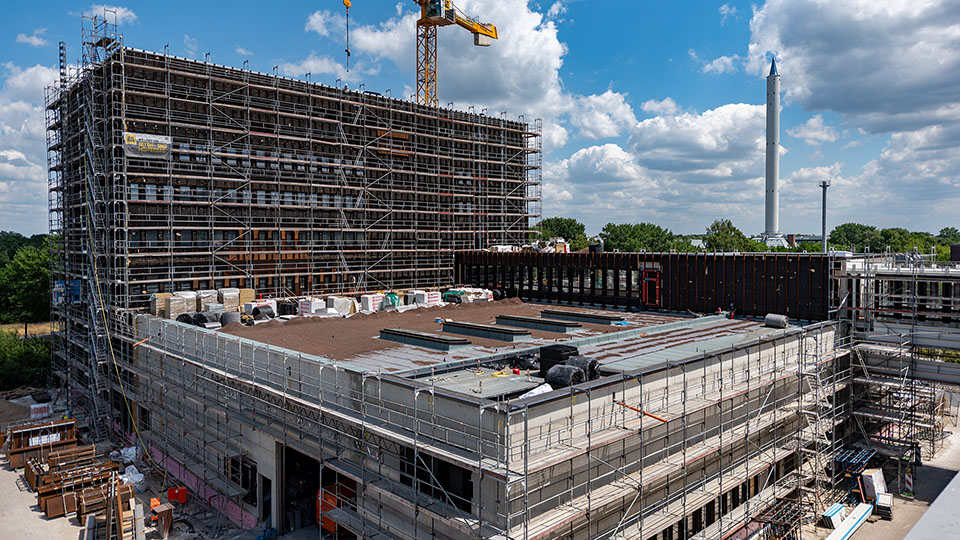
Our colleague Volker Diekamp continuously documents the construction progress with his camera.
From planning to the finished building:
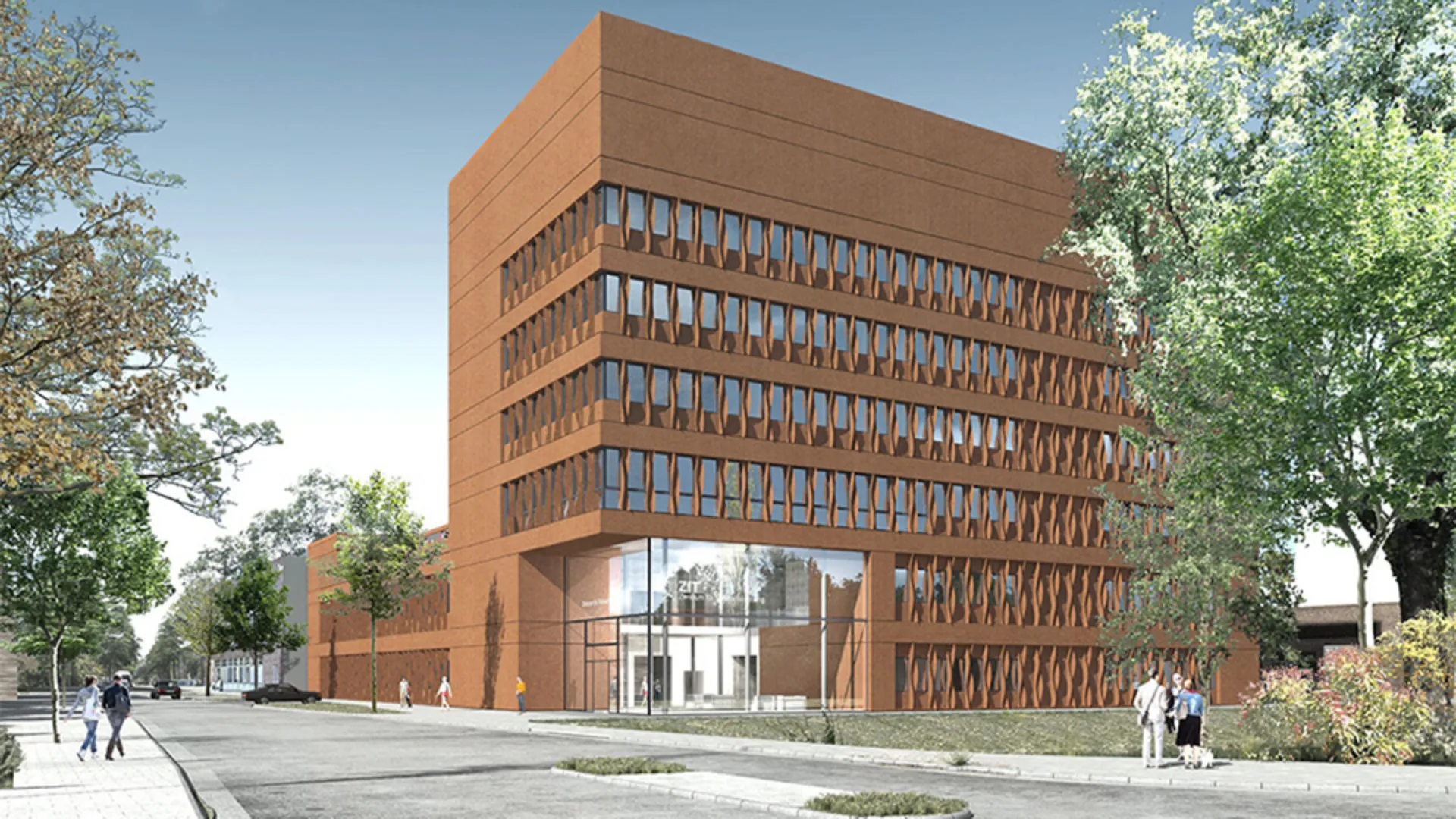
Planning drawing of the architect's office. Graphic: Haslob Kruse+Partner Architects BDA
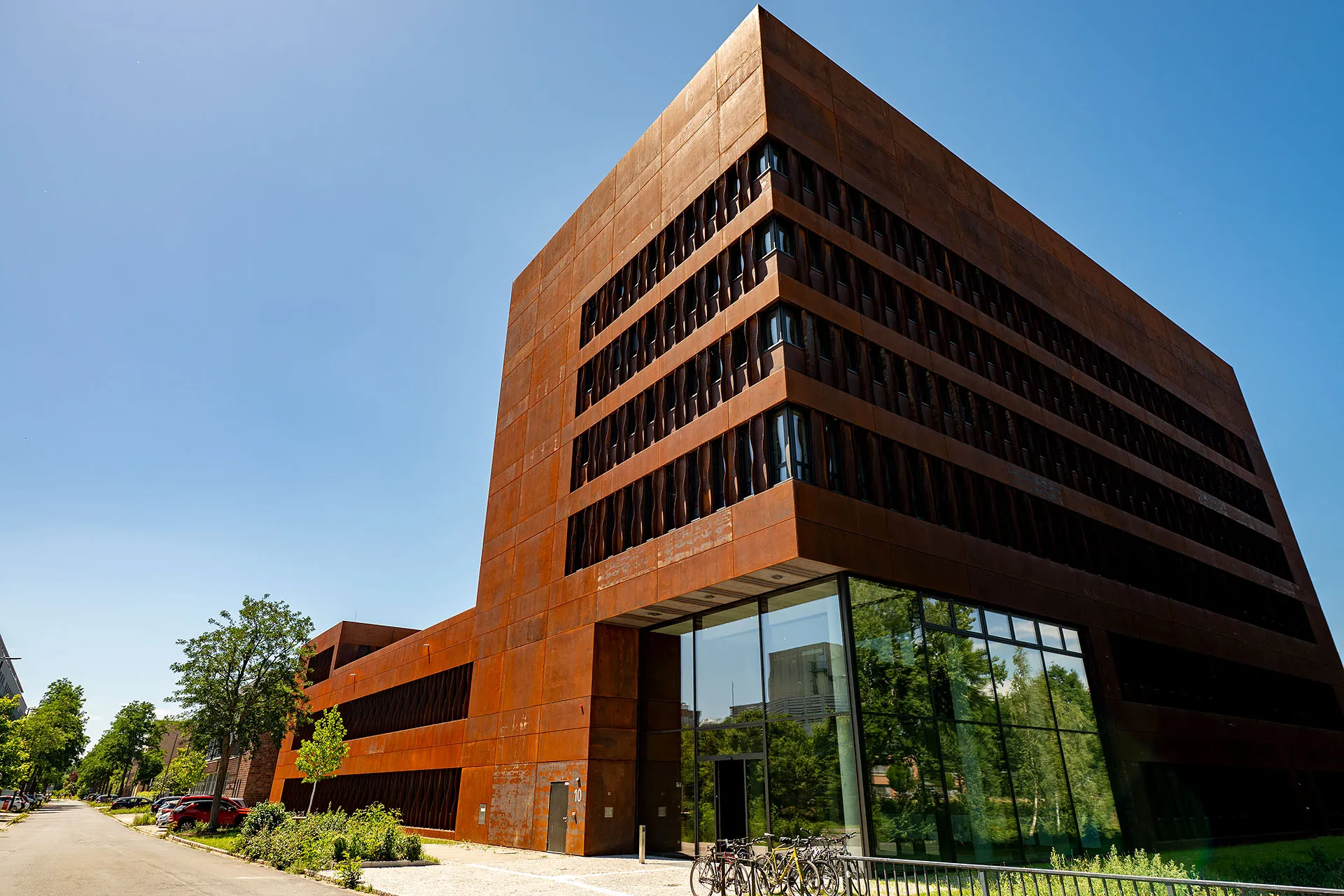
The large glass foyer
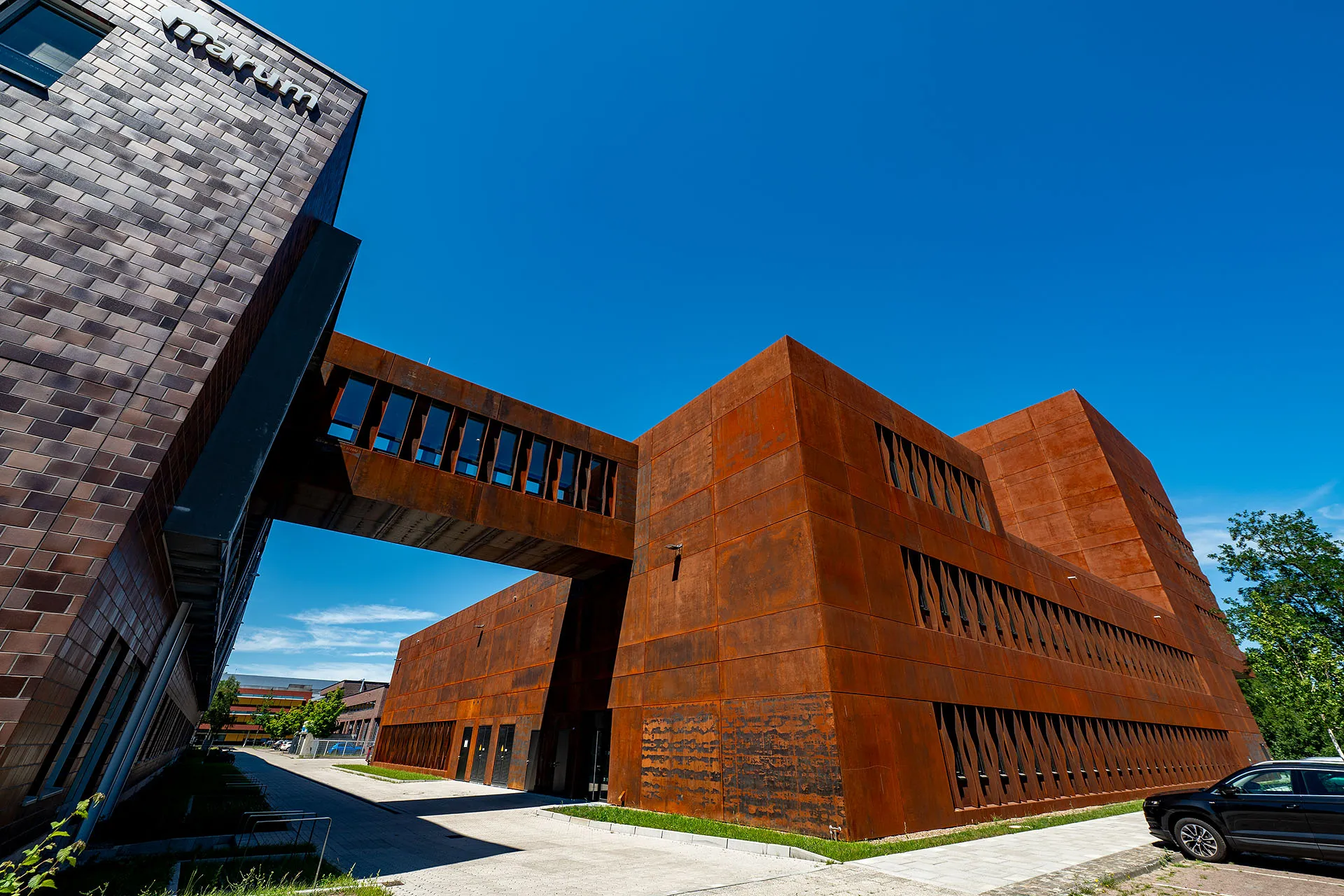
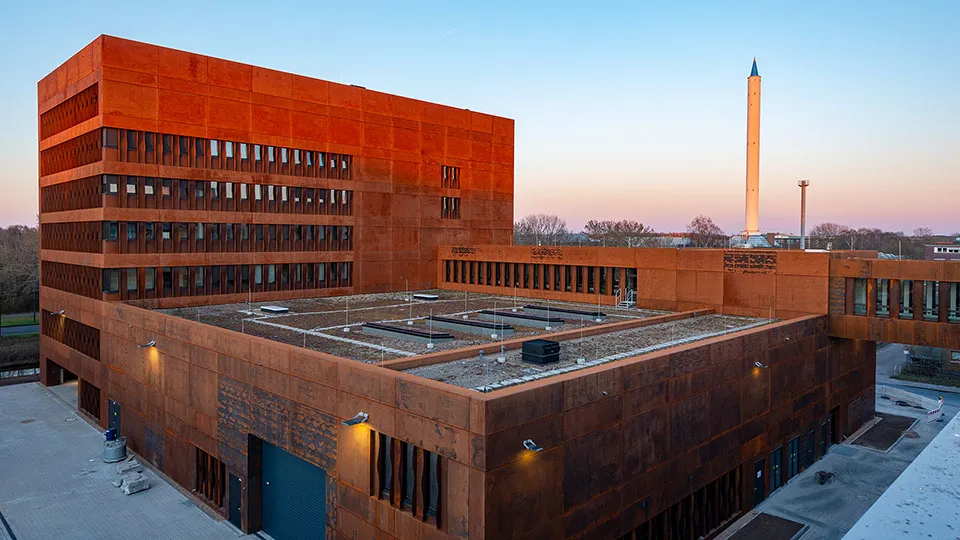
A bridge connects the buildings of MARUM and the ZfT.
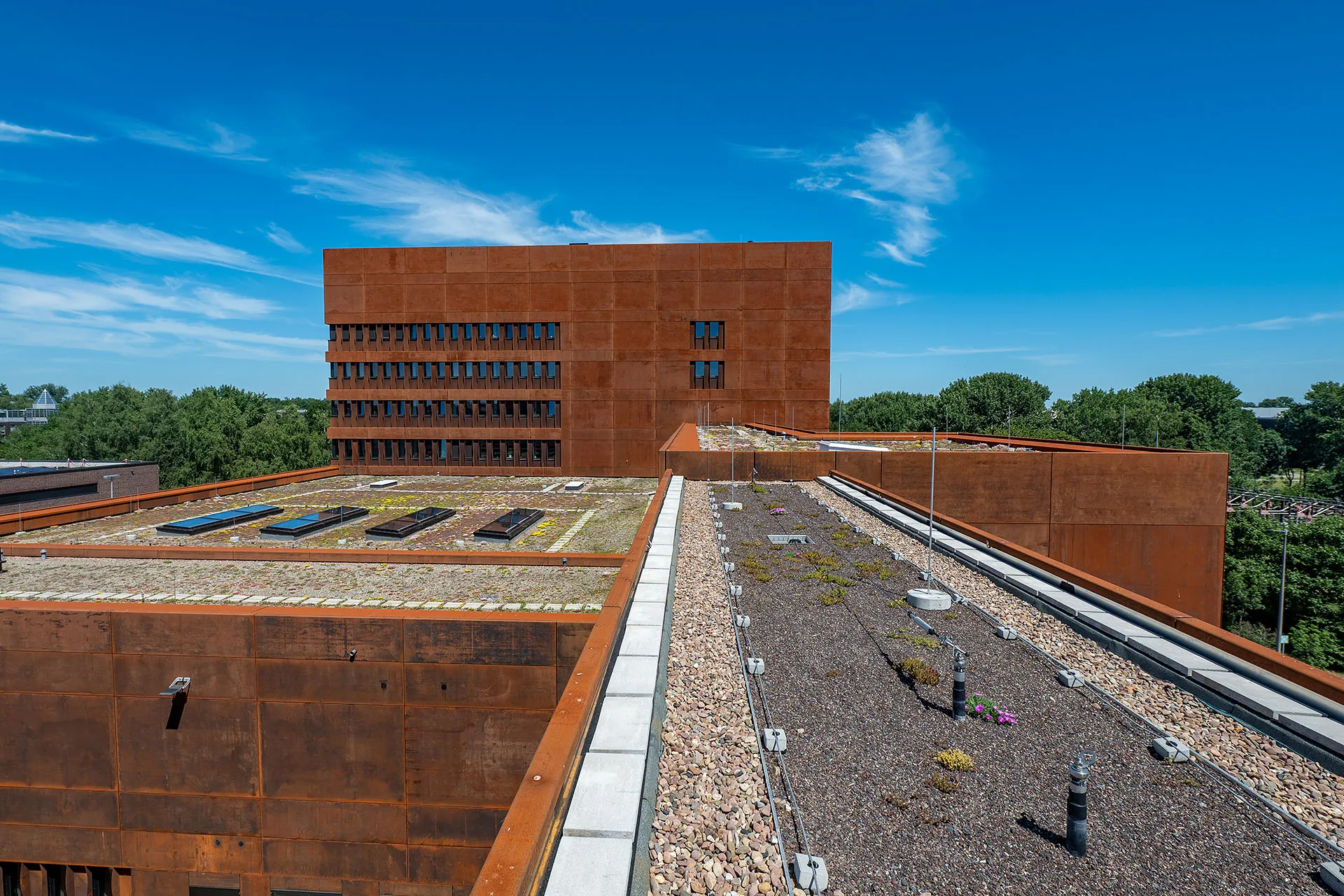
The roof is planted with vegetation. The sedum plants are growing slowly.
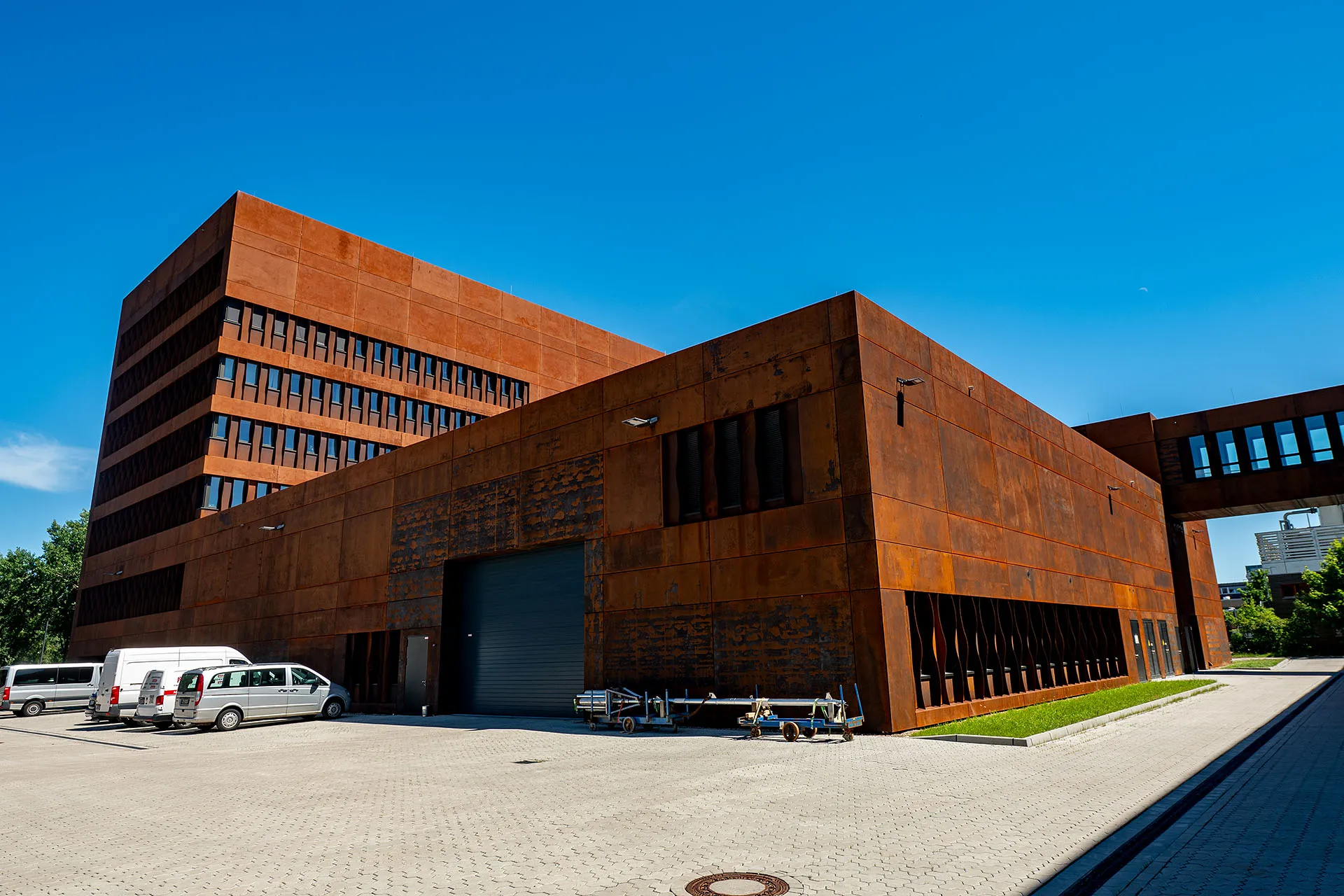
ZfT work yard.
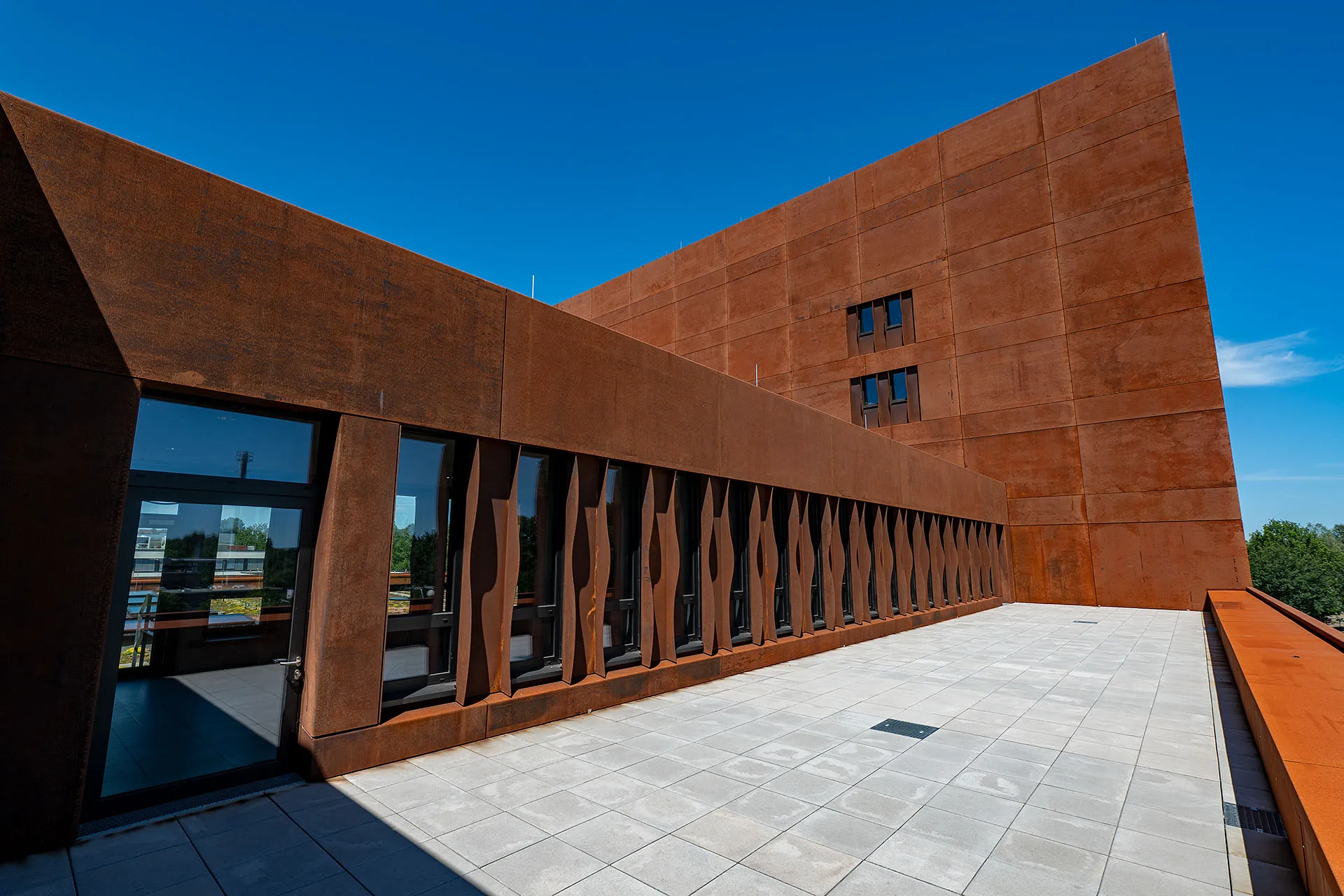
A large terrace adjoins the gallery walk.
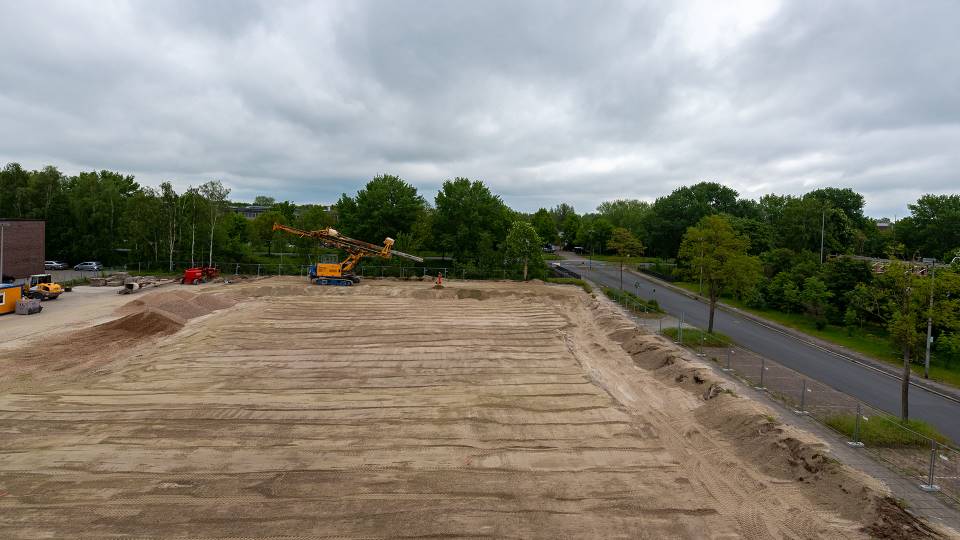
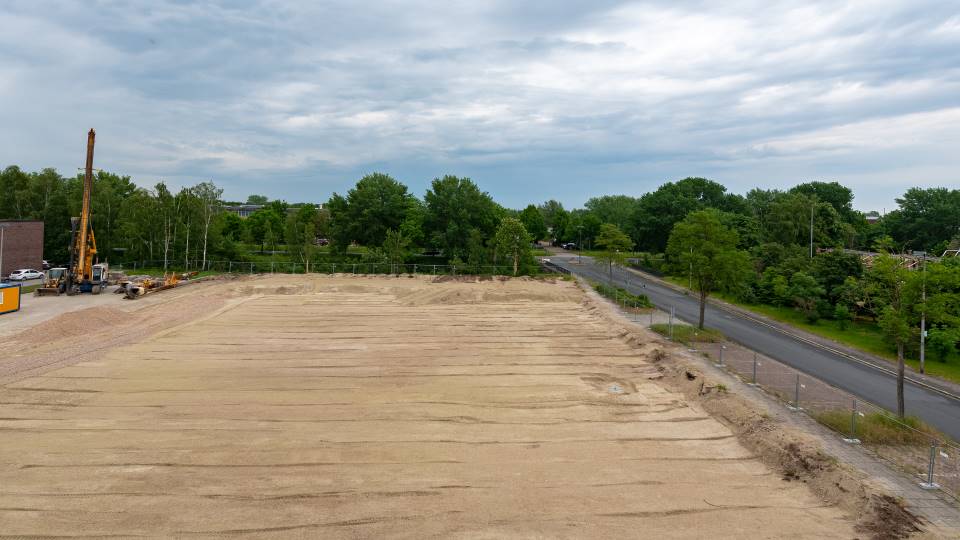
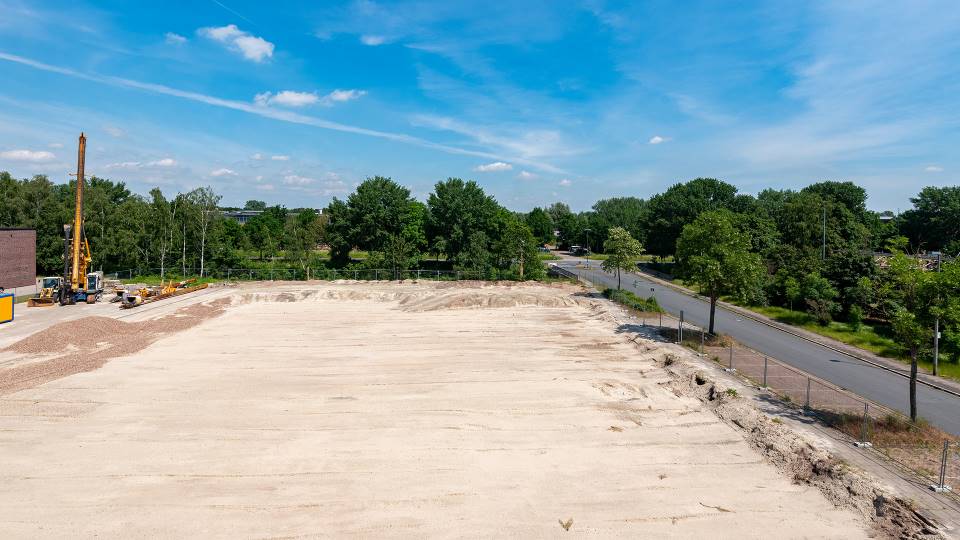
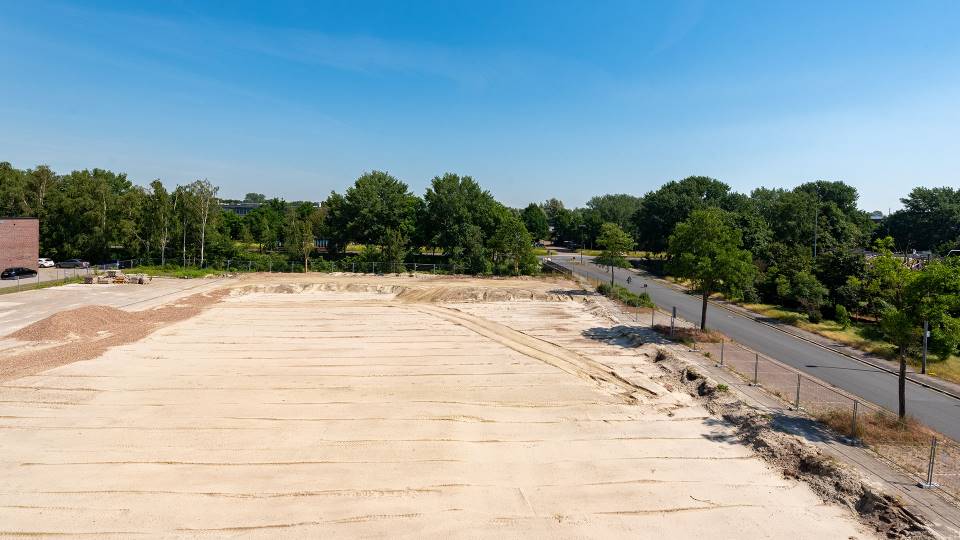
Excavation work
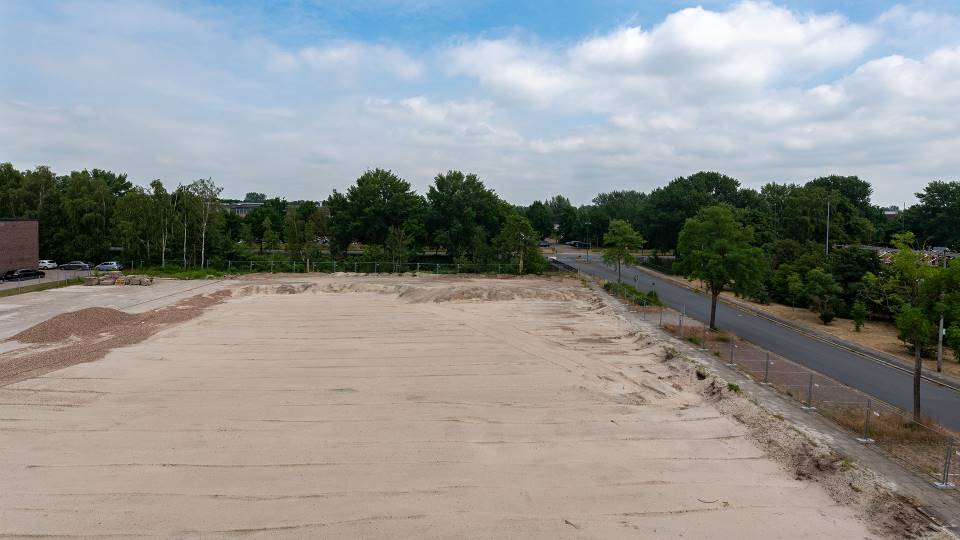
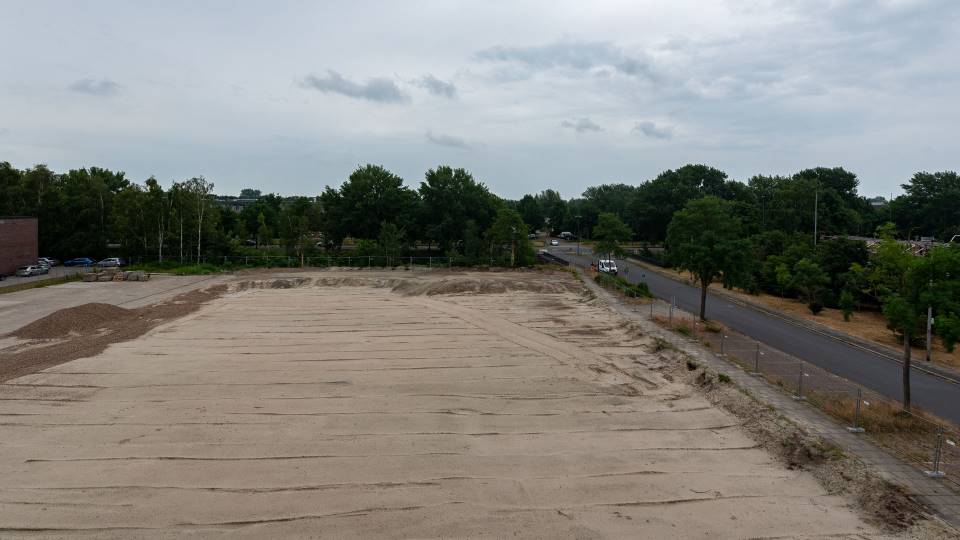
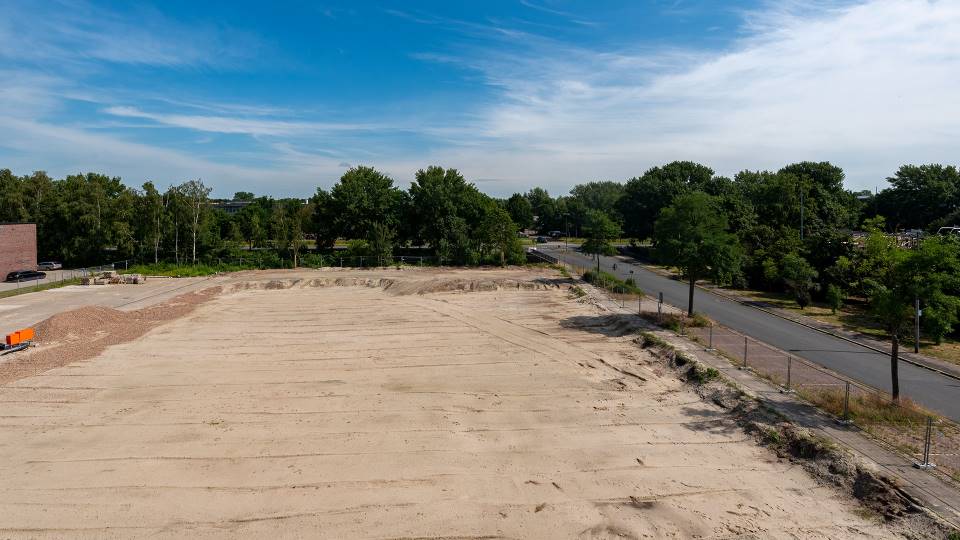
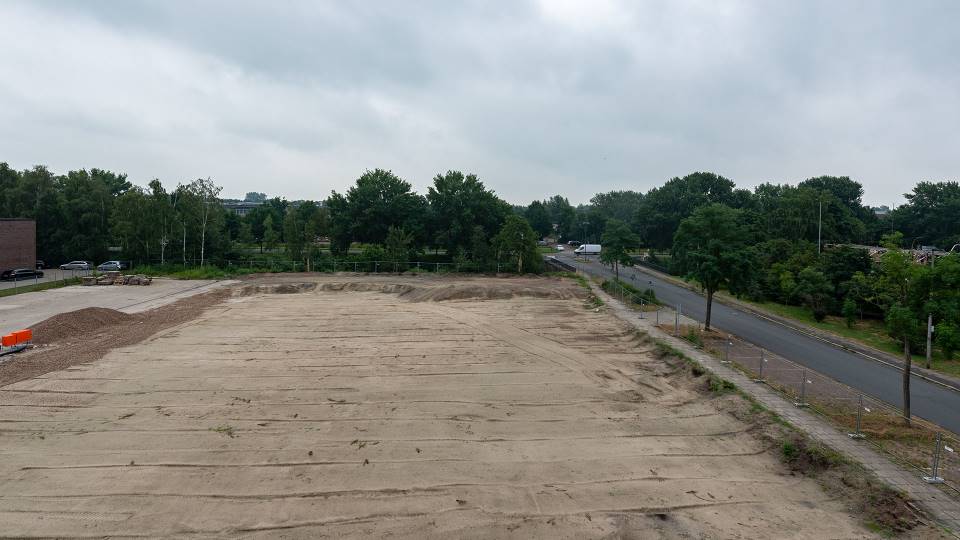
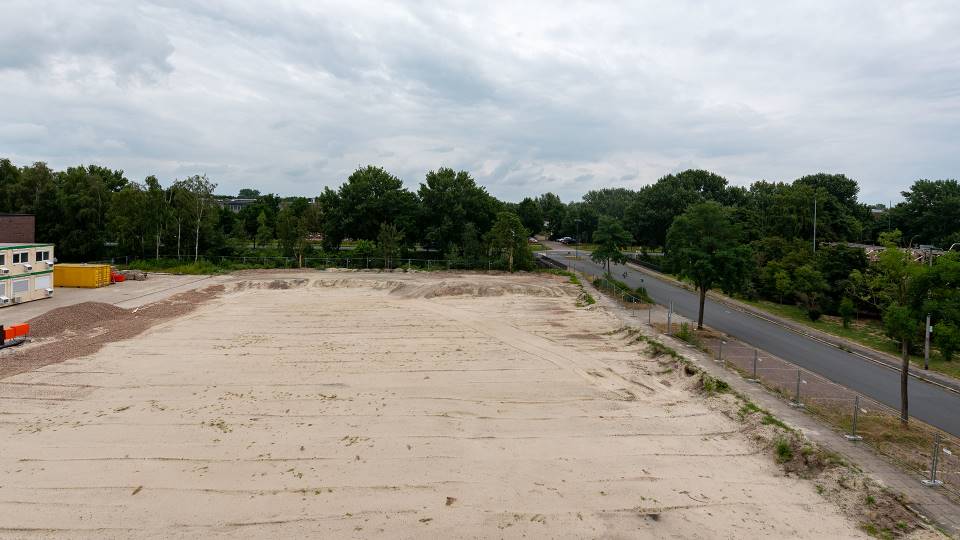
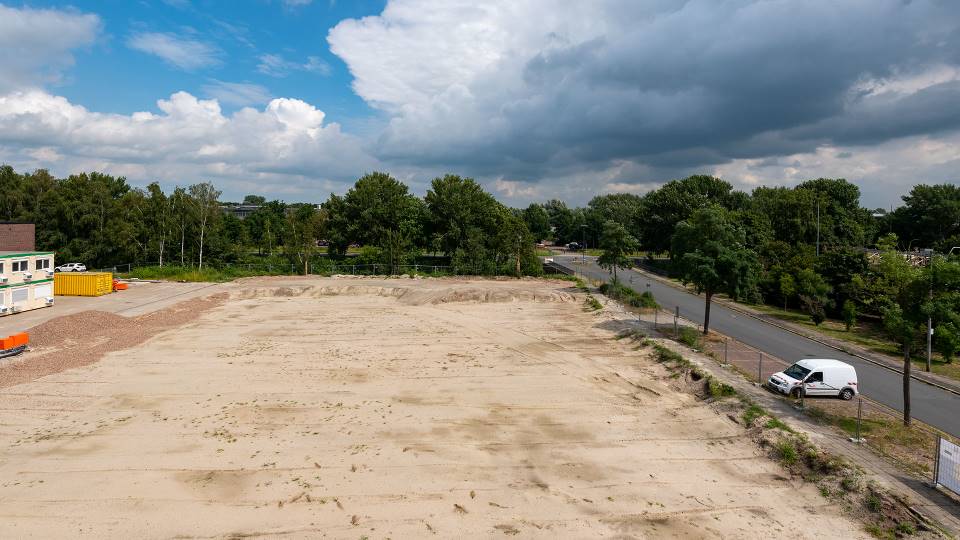
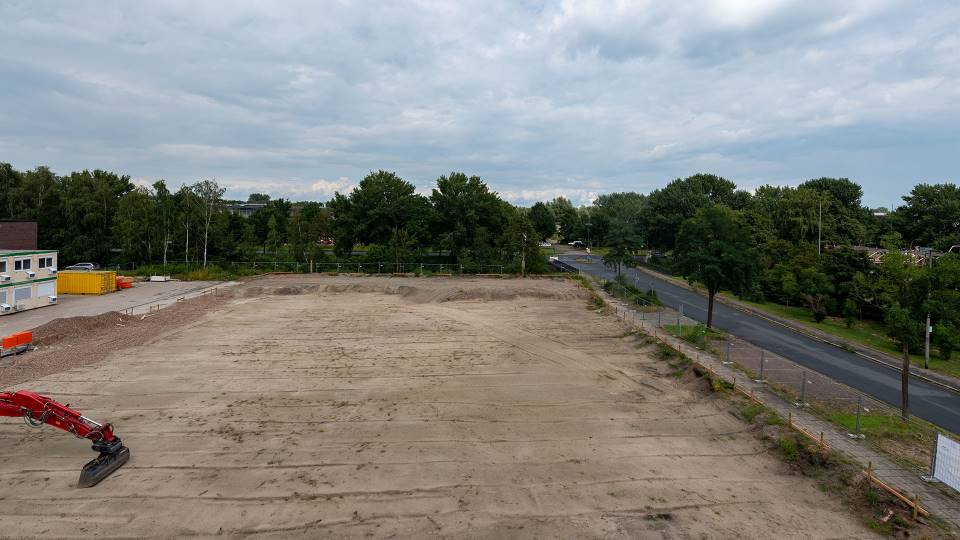
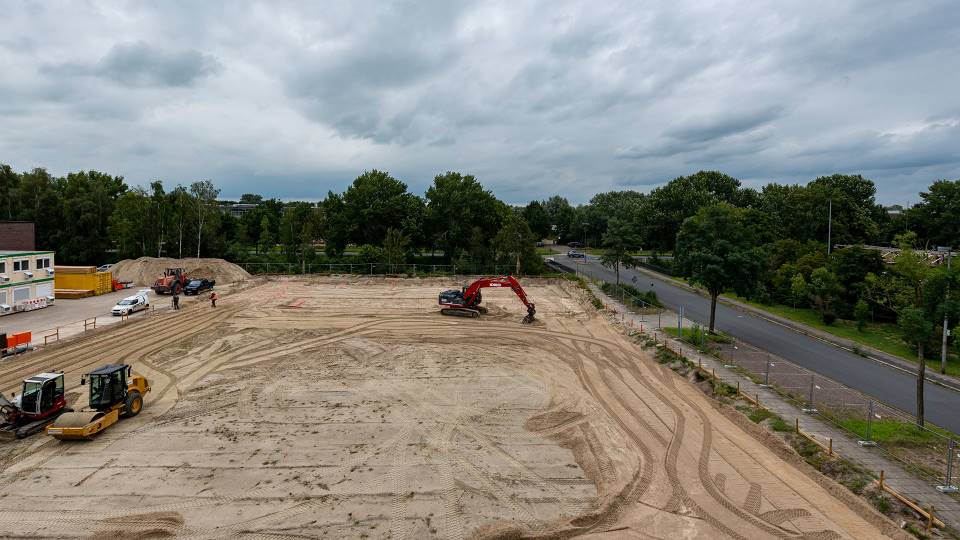
From the middle of October, the excavation work, i.e. the preparations, took place so that the actual construction of the research center could start.
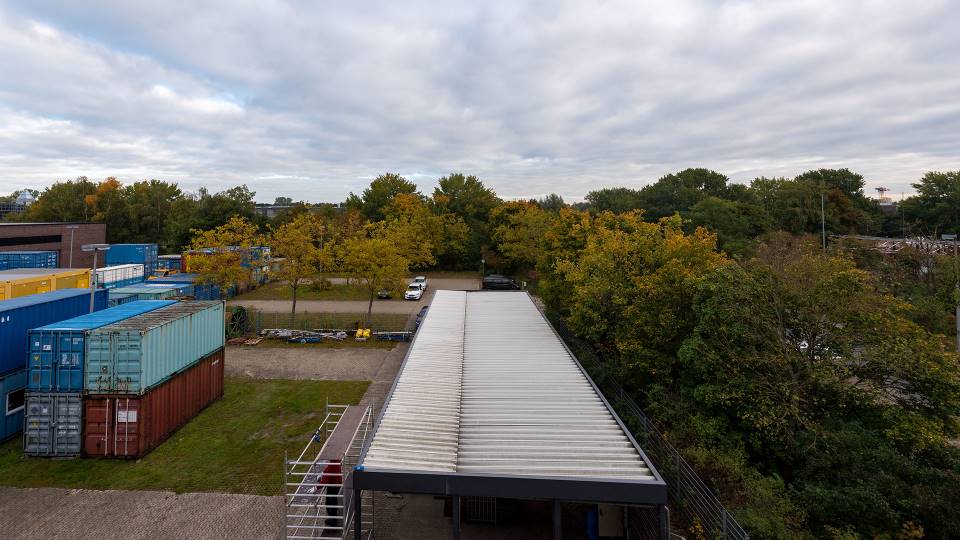
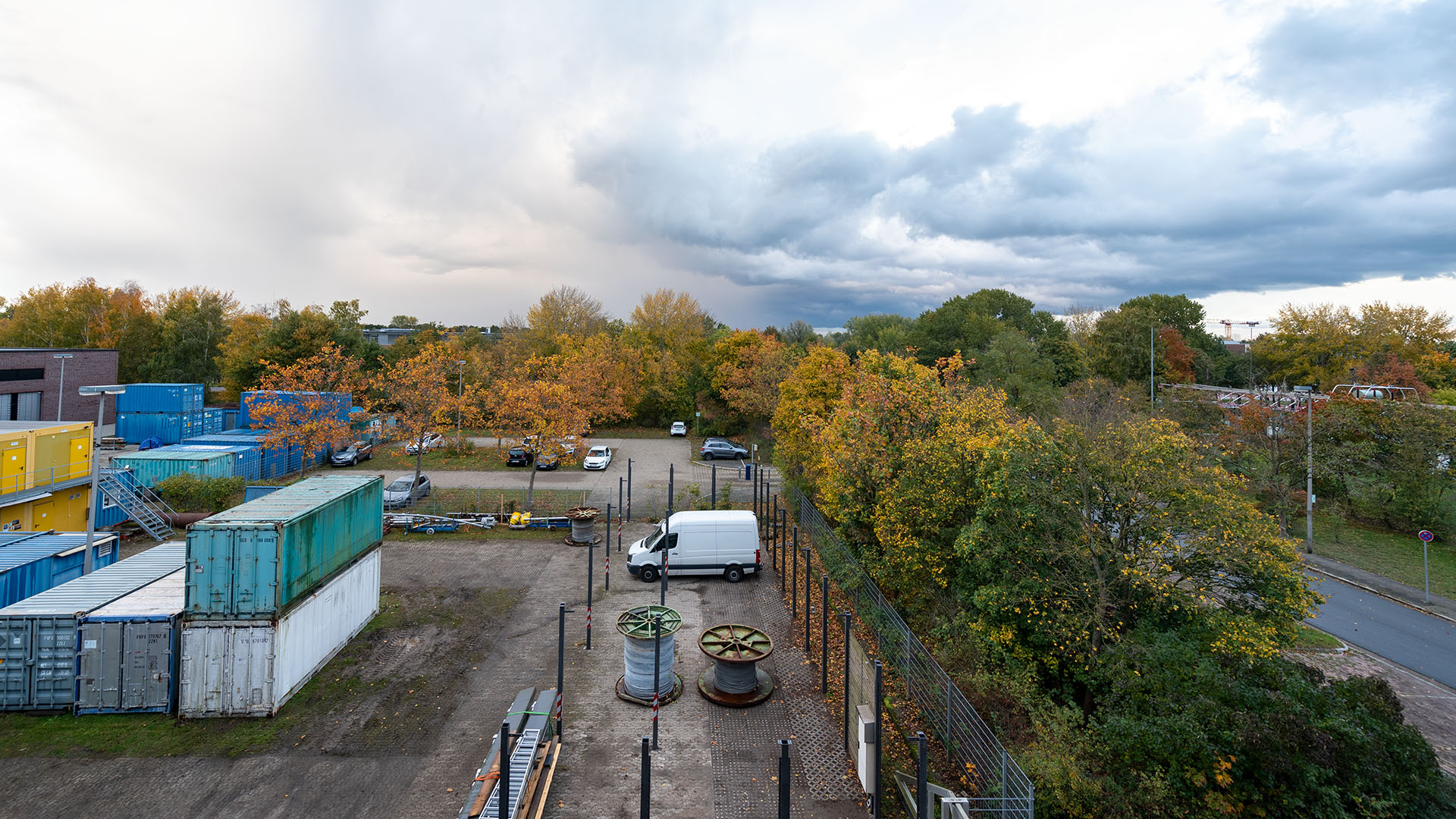
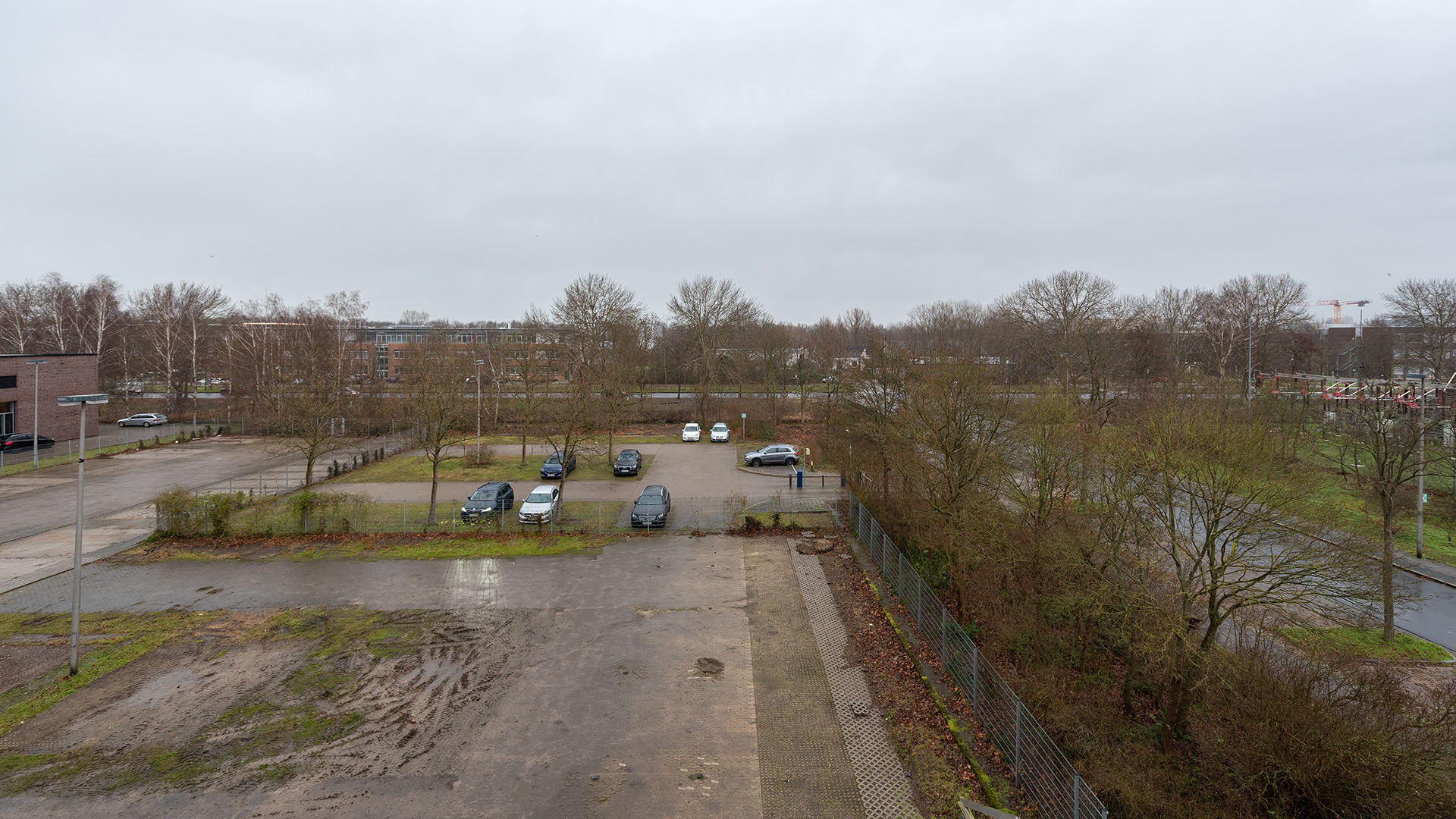
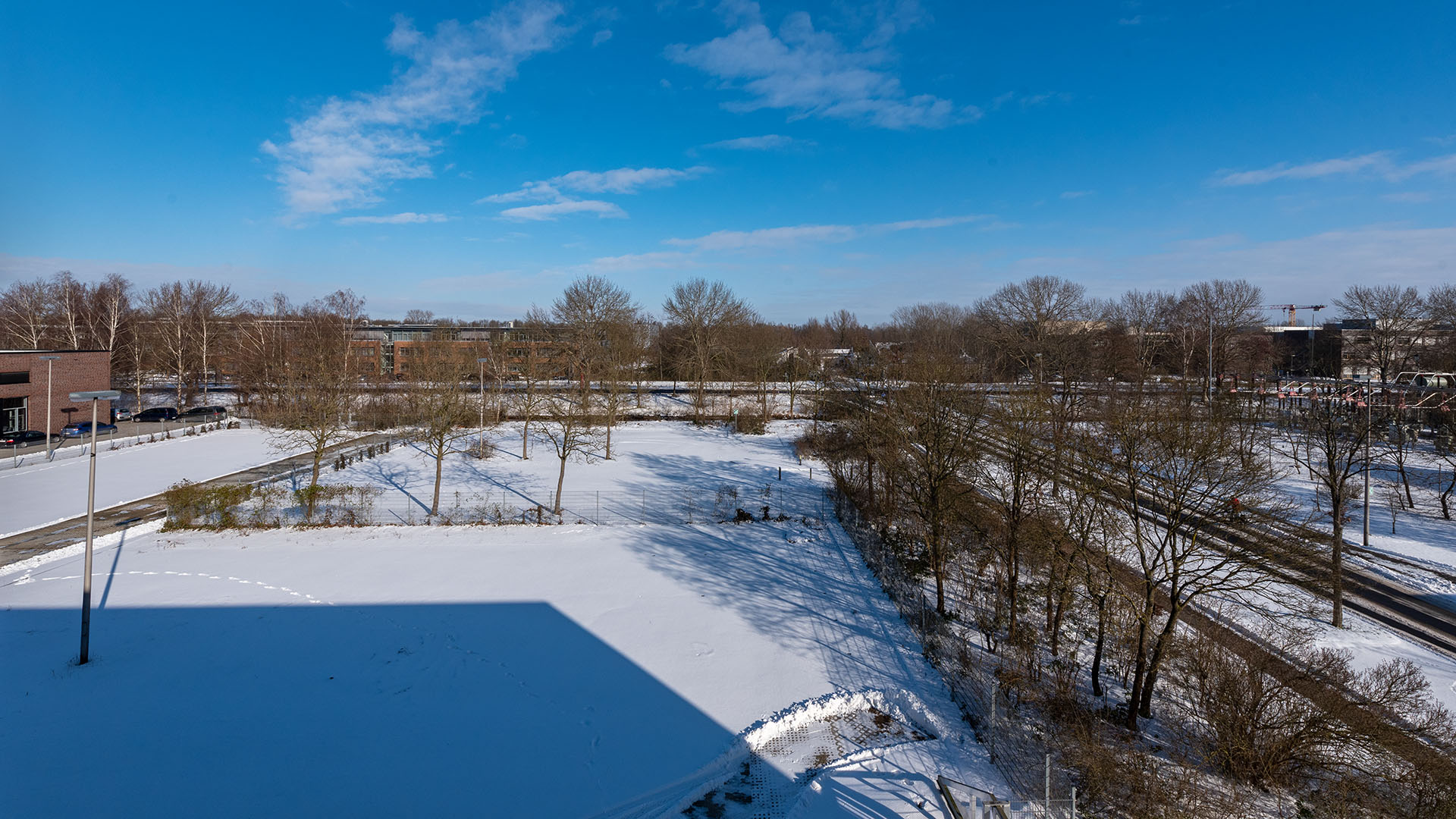
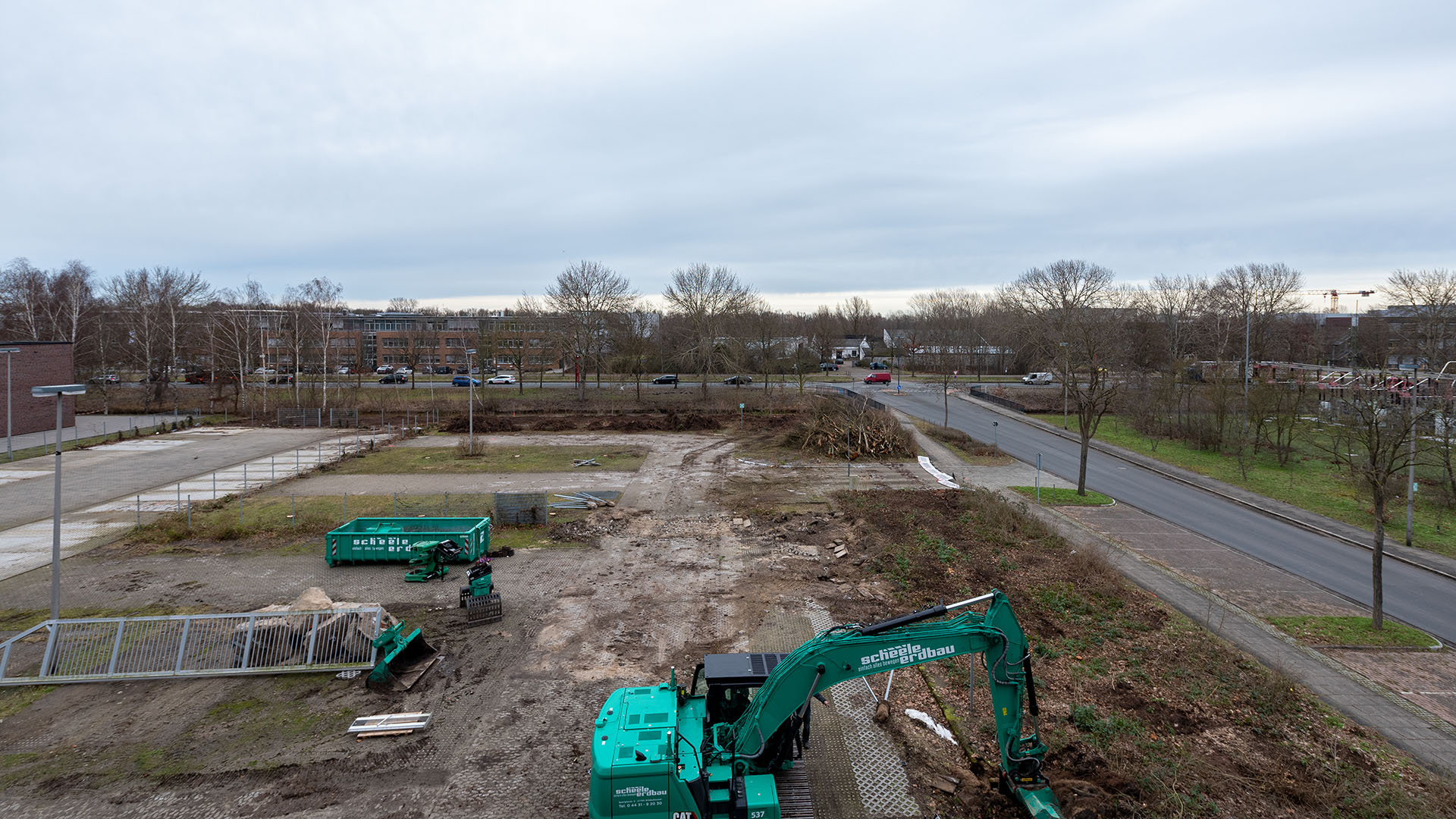
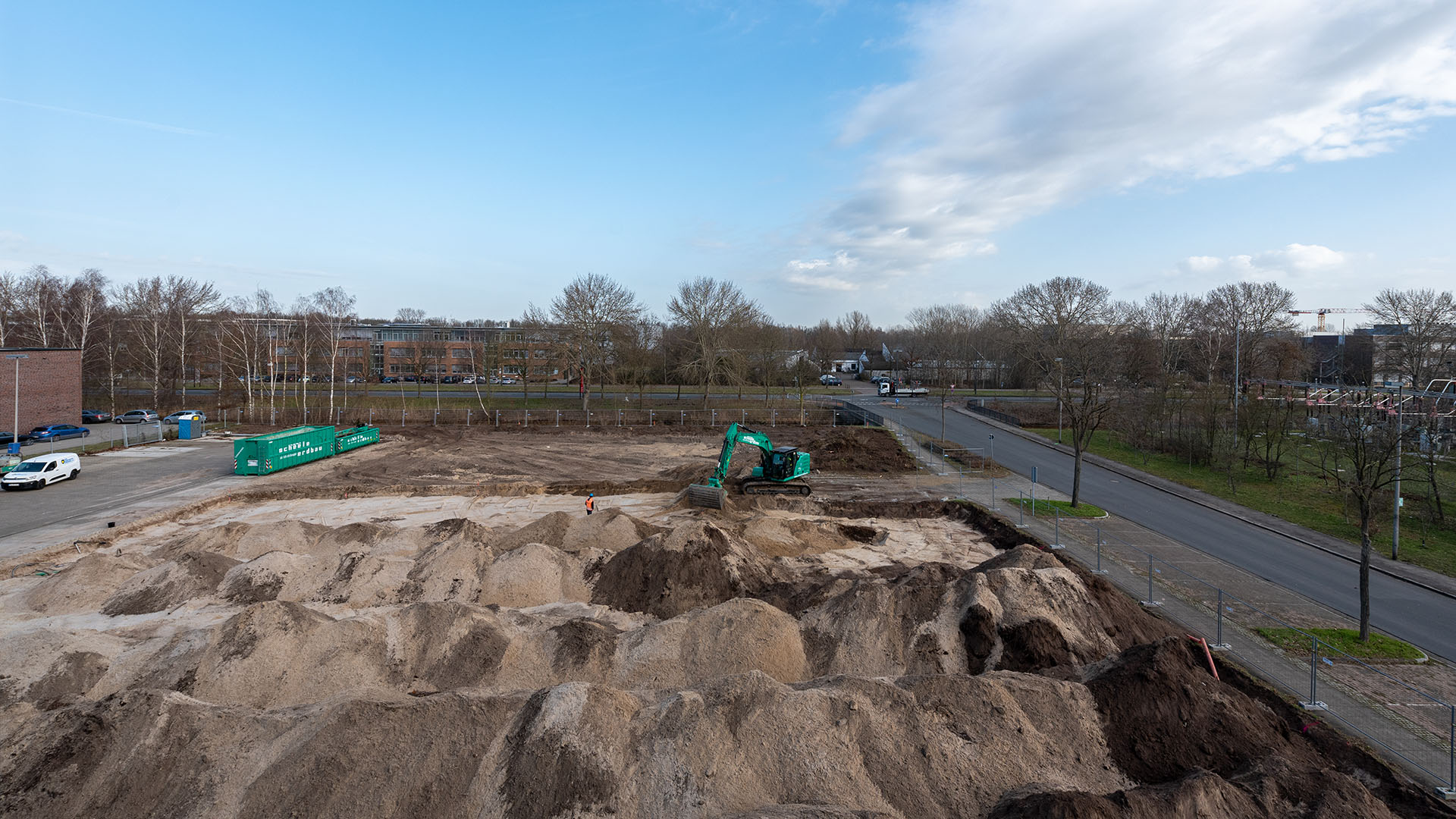
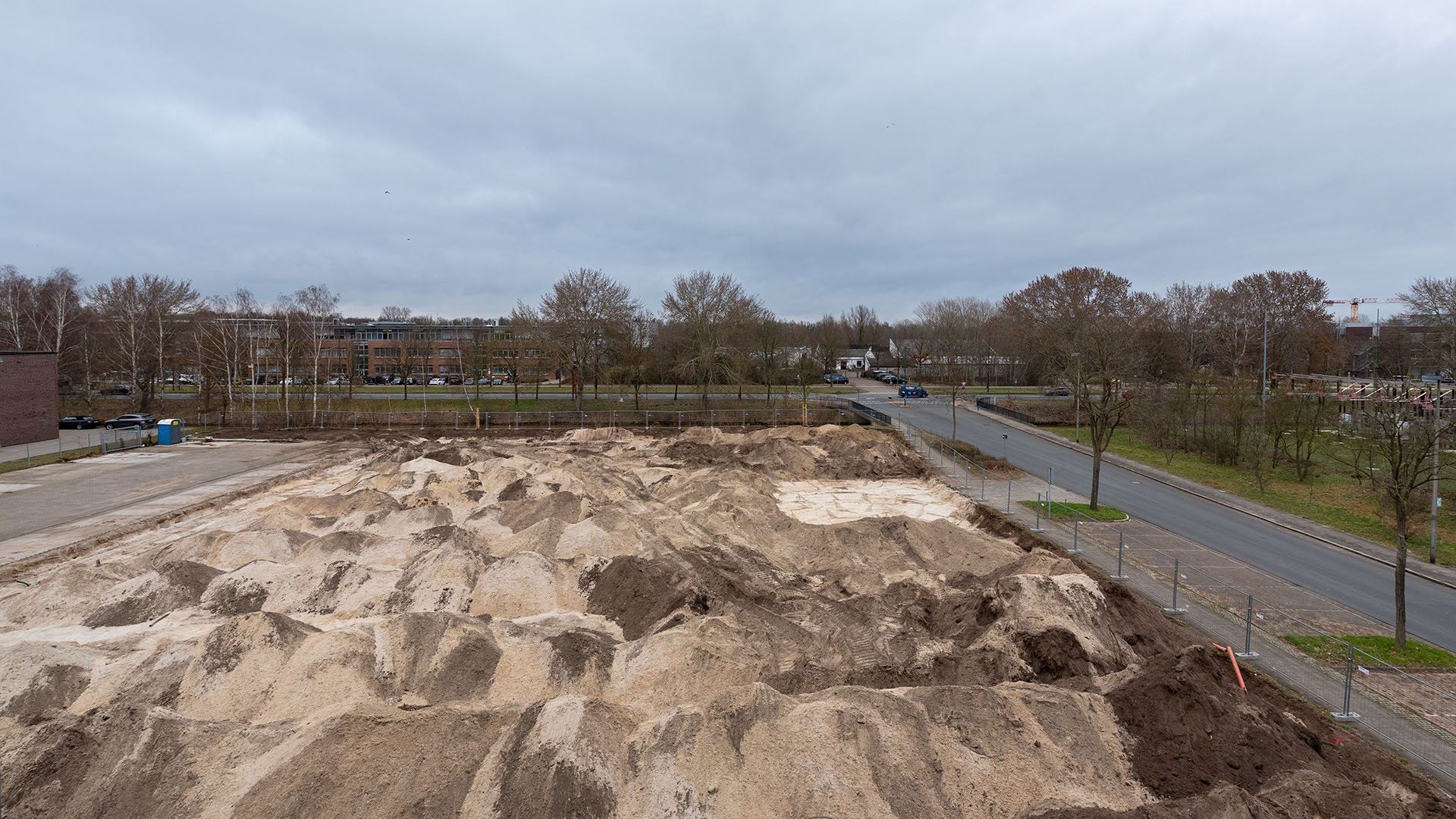
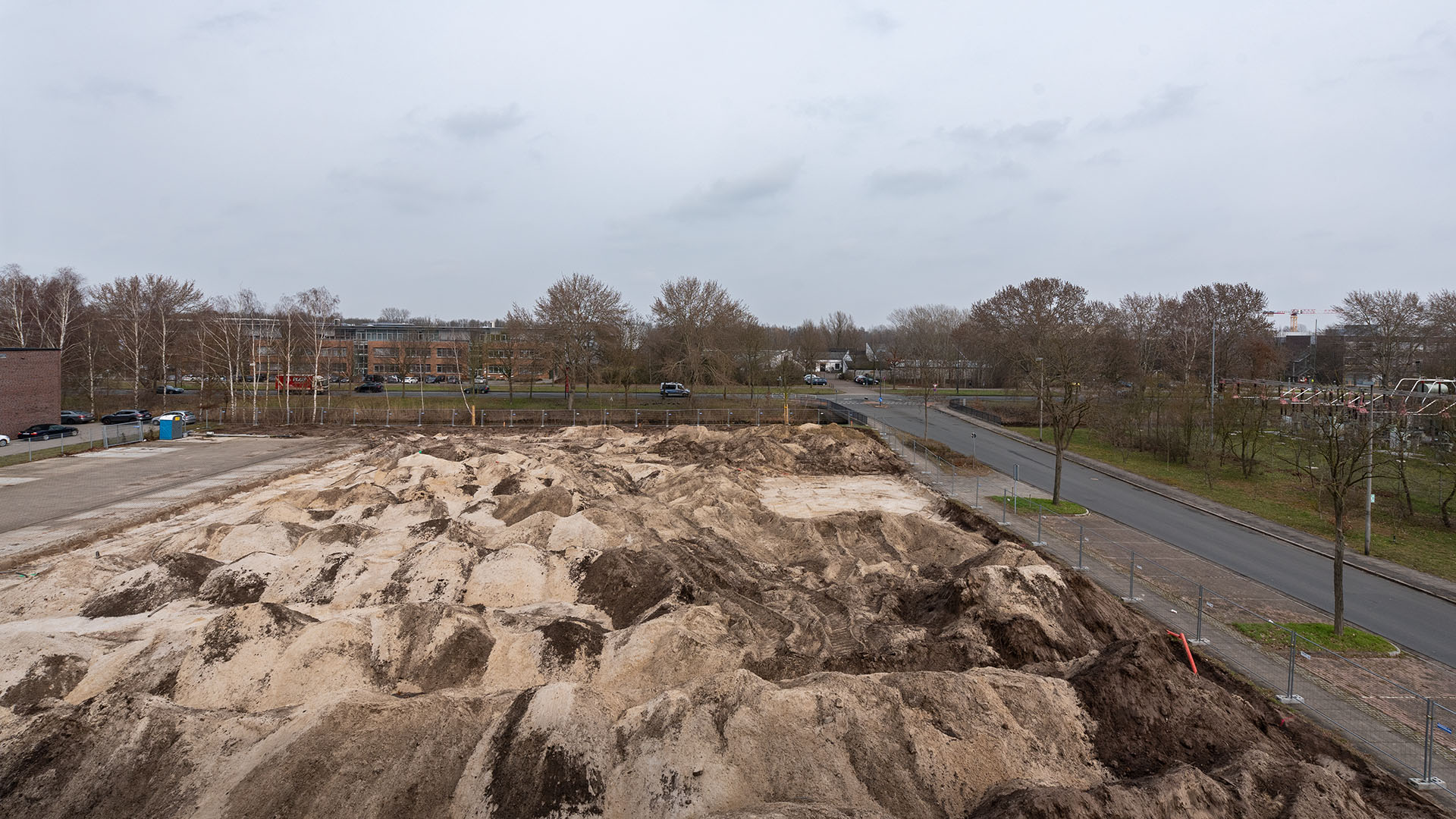
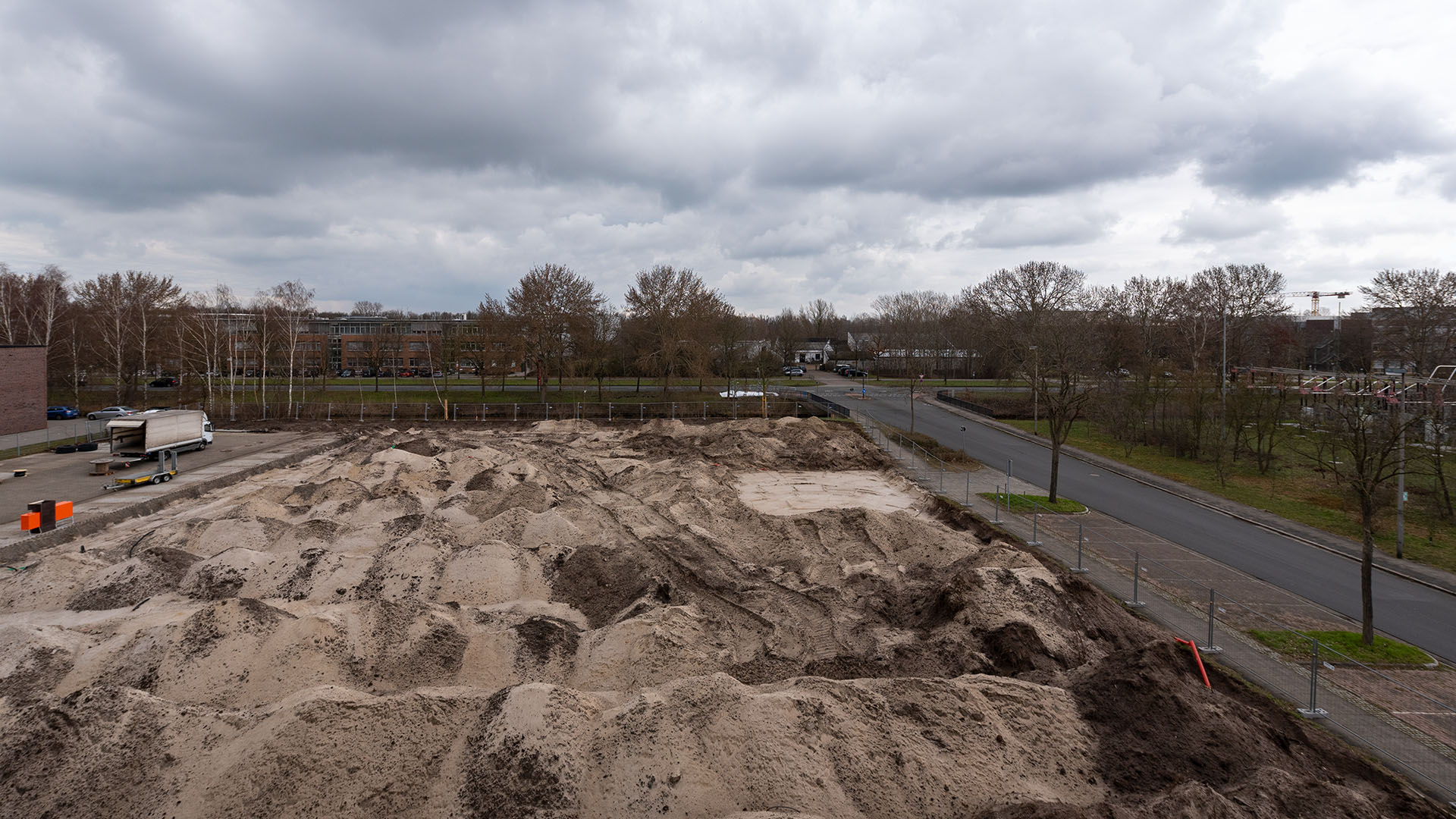
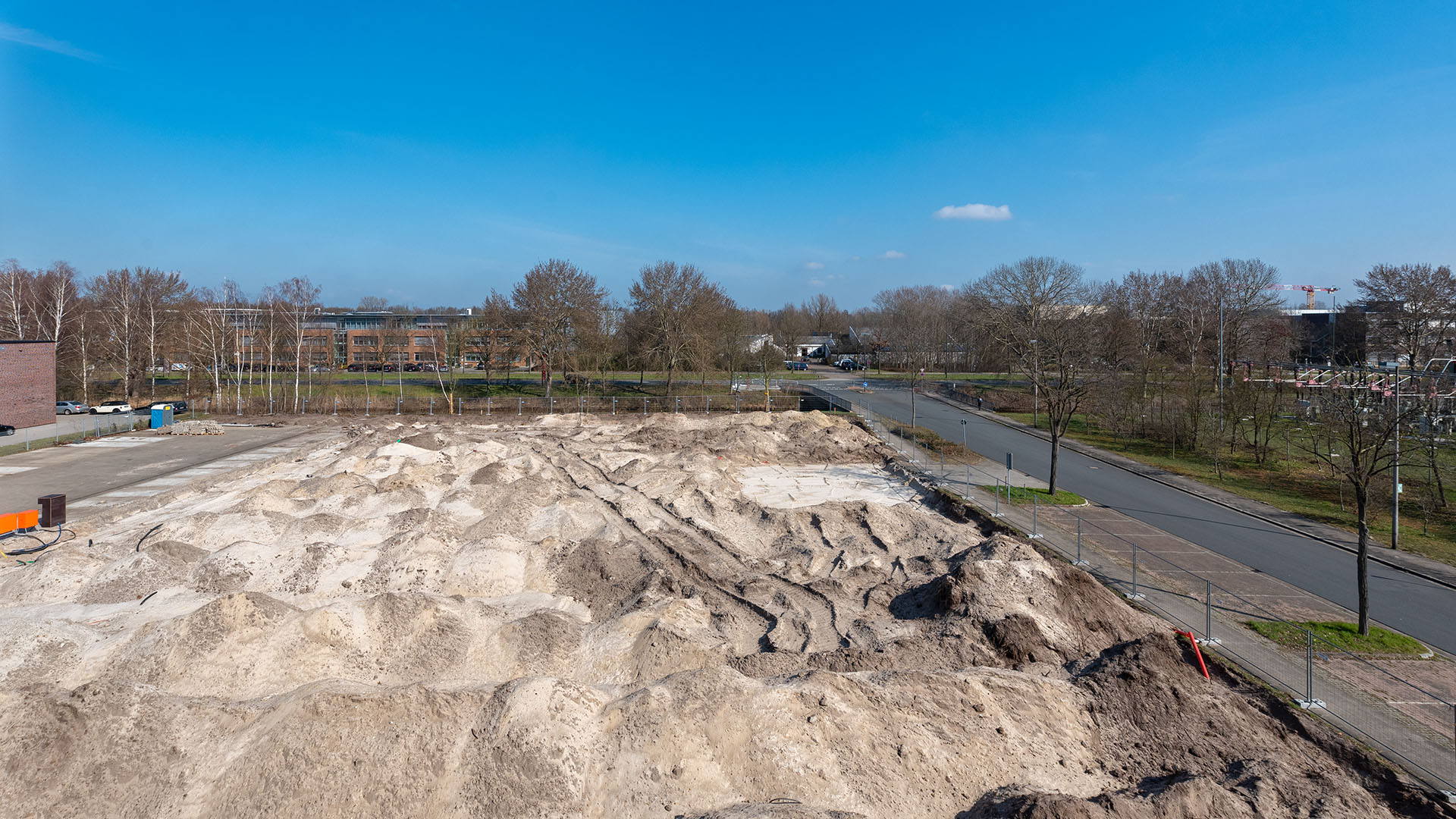
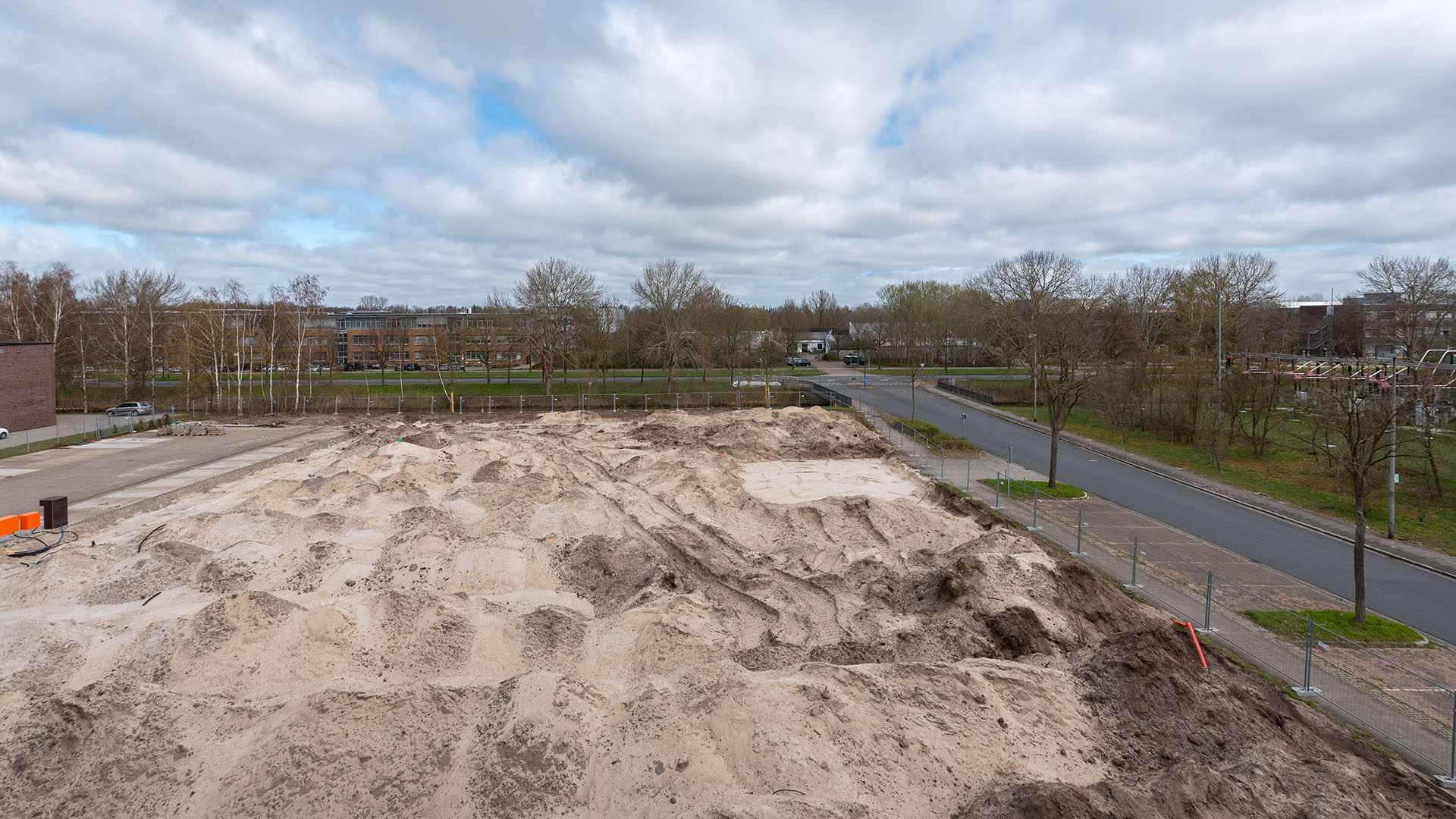
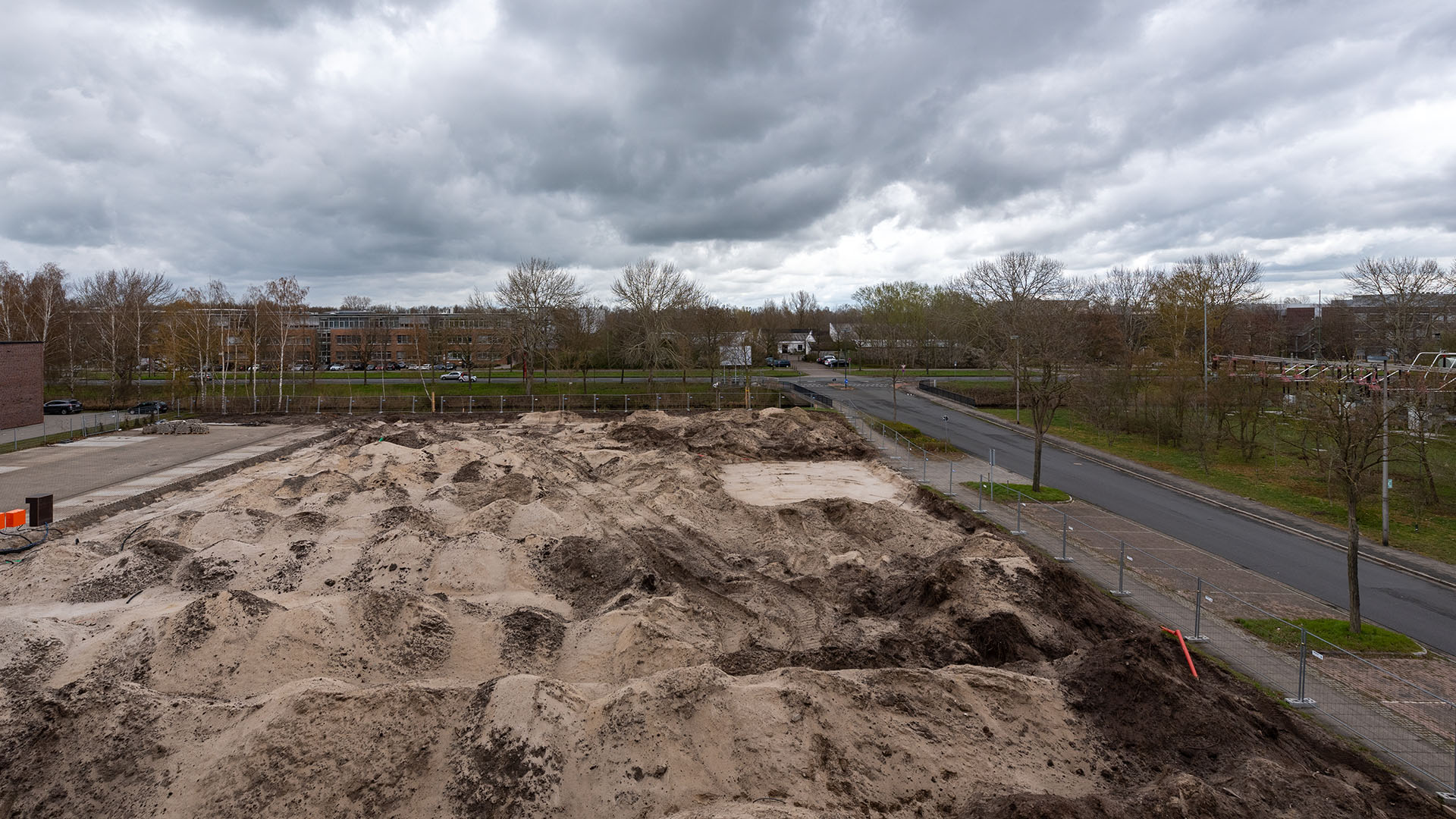
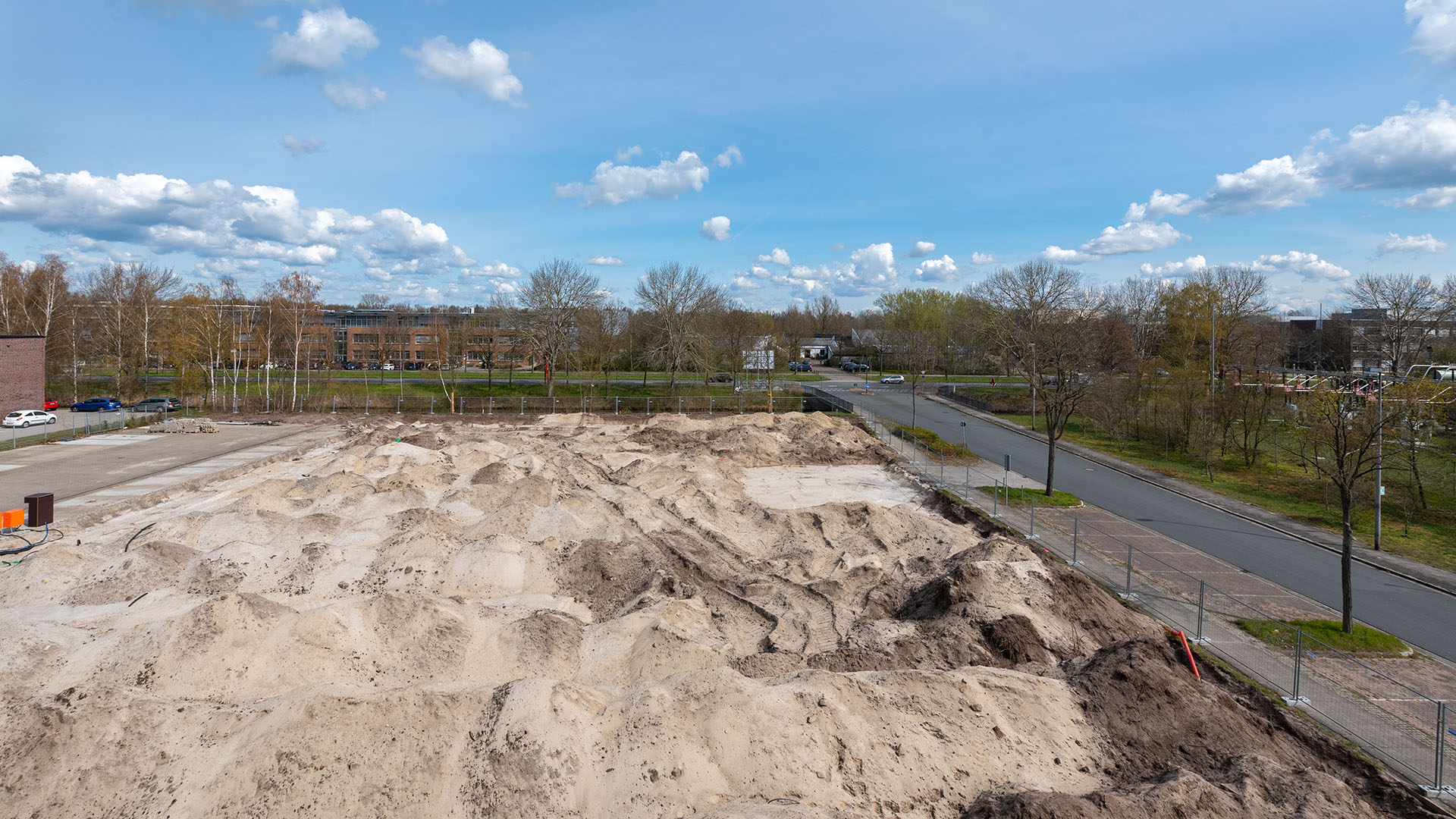
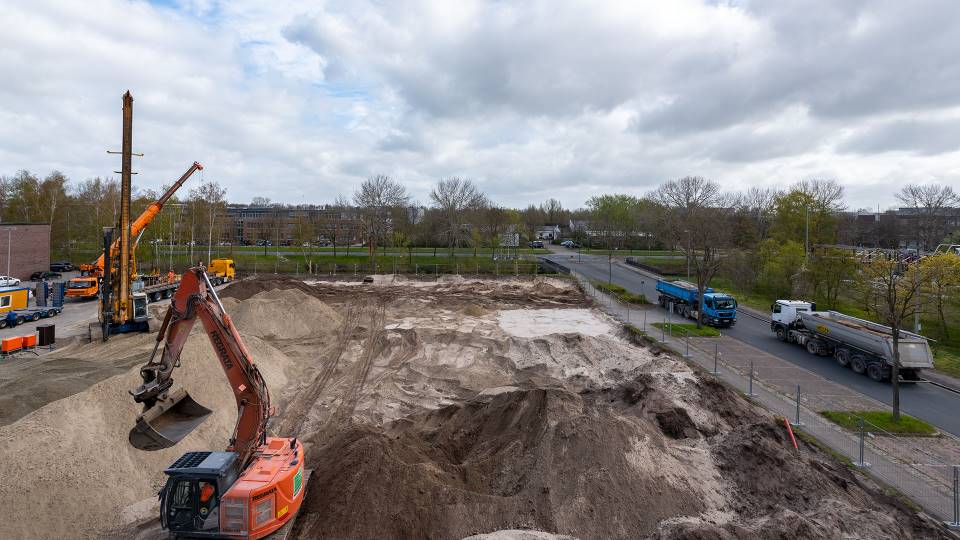
For this purpose, the construction site is being cleared and the ground is being prepared for the weight of the new building. Of course, archaeologists, bird protection experts and the explosive ordnance disposal service have examined everything in detail. In addition, the building ground was examined and a tree cadastre was created.
Before the soil is compacted in some places using a so-called vibration process, it has to be pulled level. During the vibration process, the soil is " shaken in" and sand that sags afterward is filled in. This increases the load-bearing capacity of the subsoil.
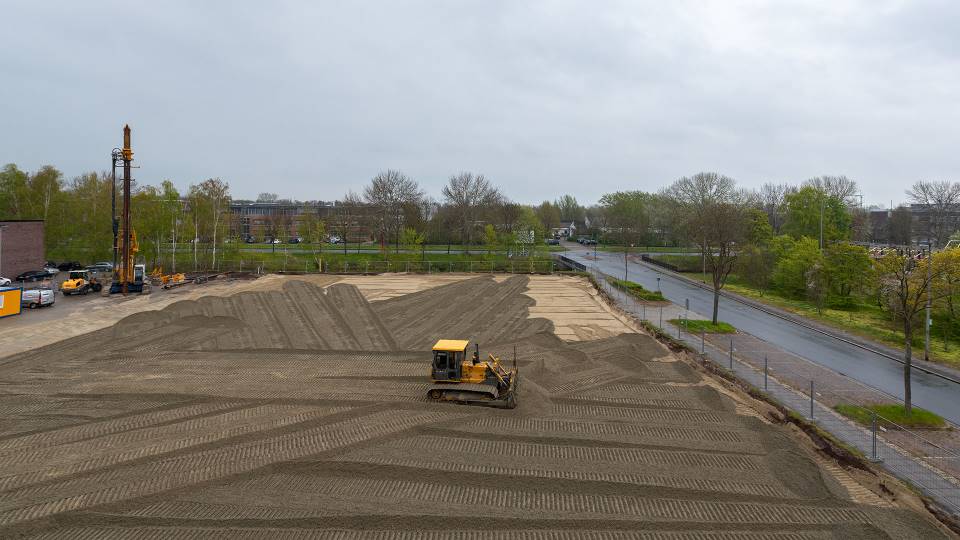
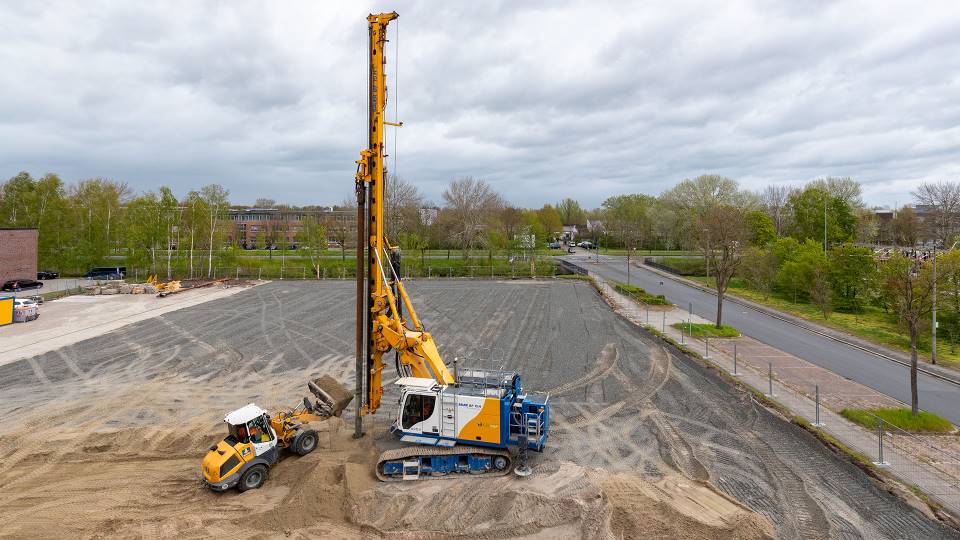
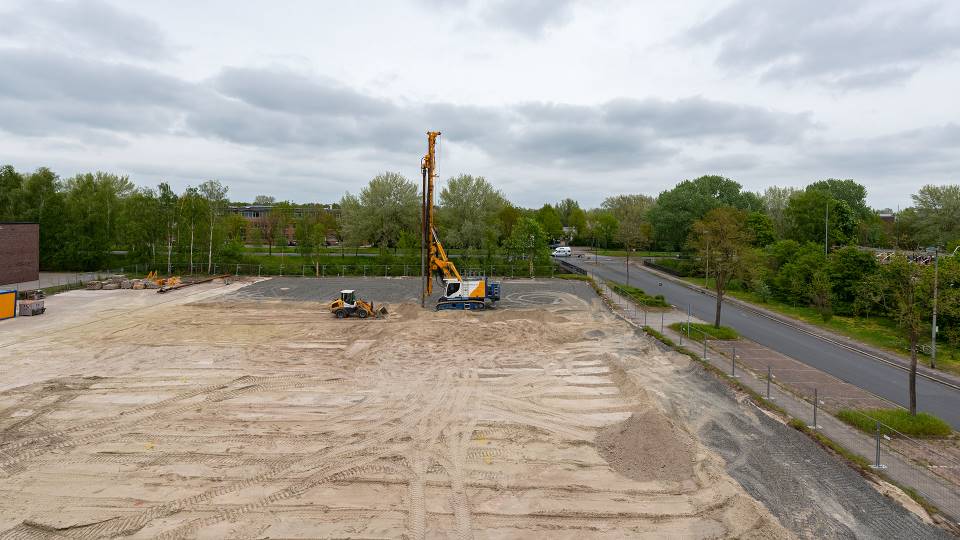
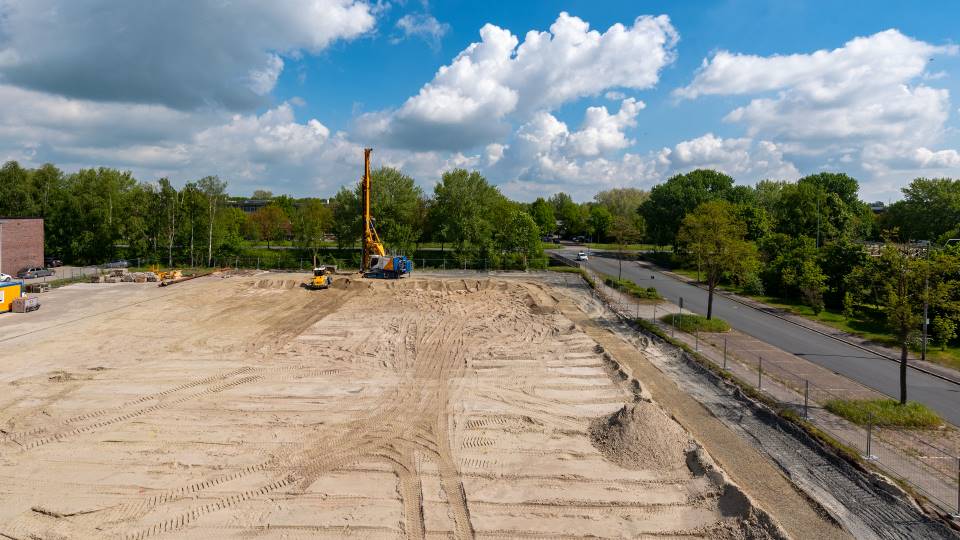
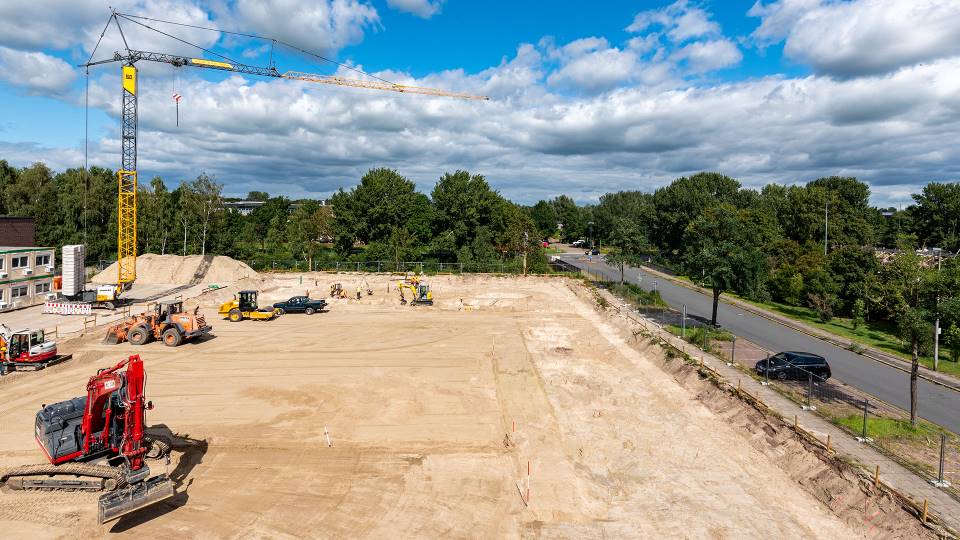
Structural work
The excavation work has been successfully completed, now it's time for the structural work. In the coming steps, the foundation will be laid.
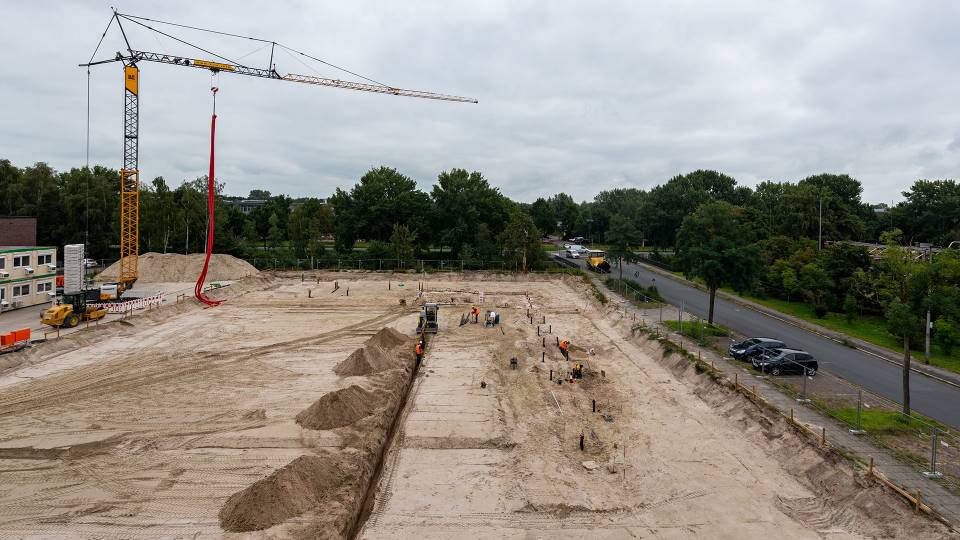
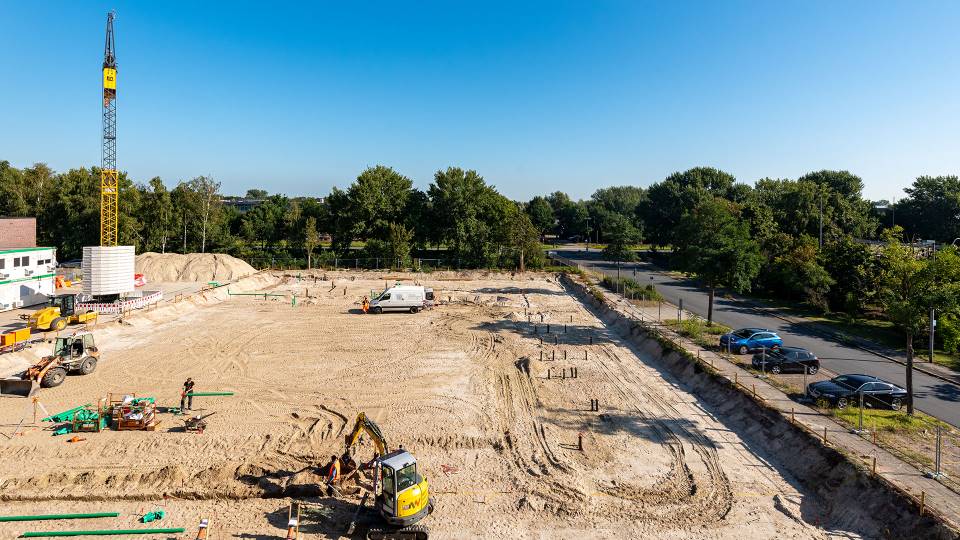
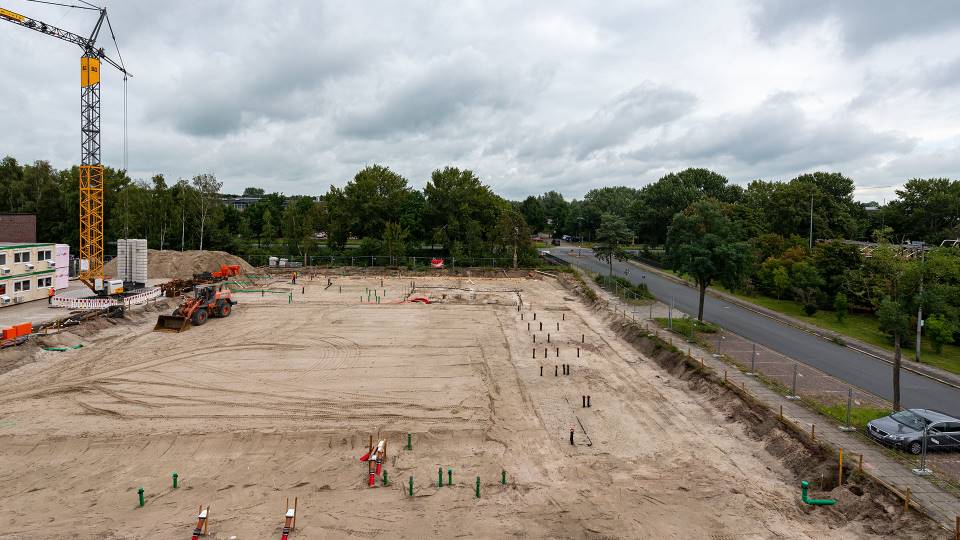
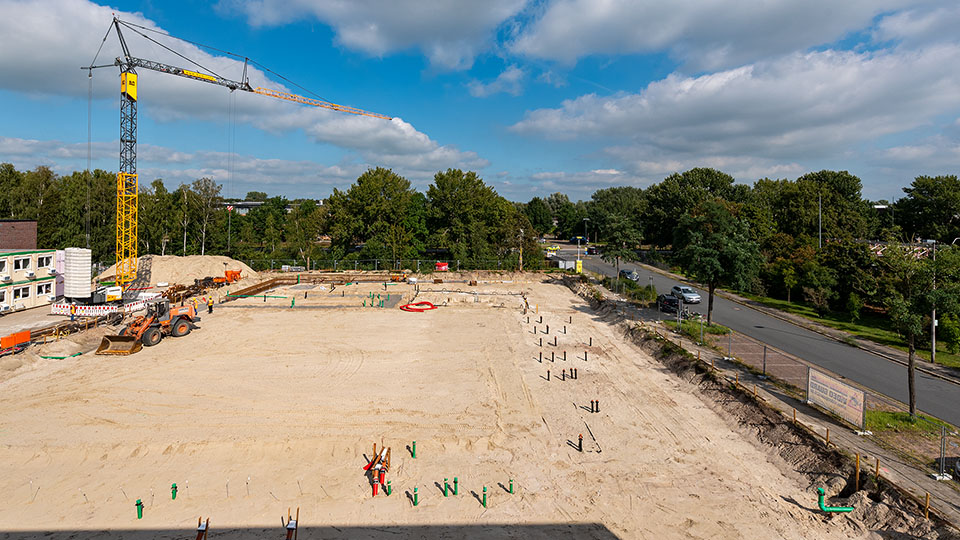
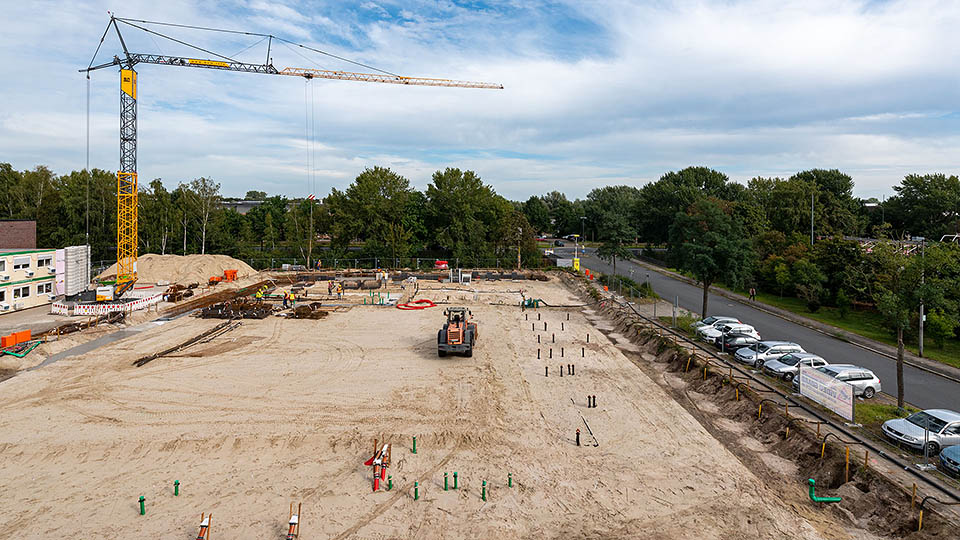
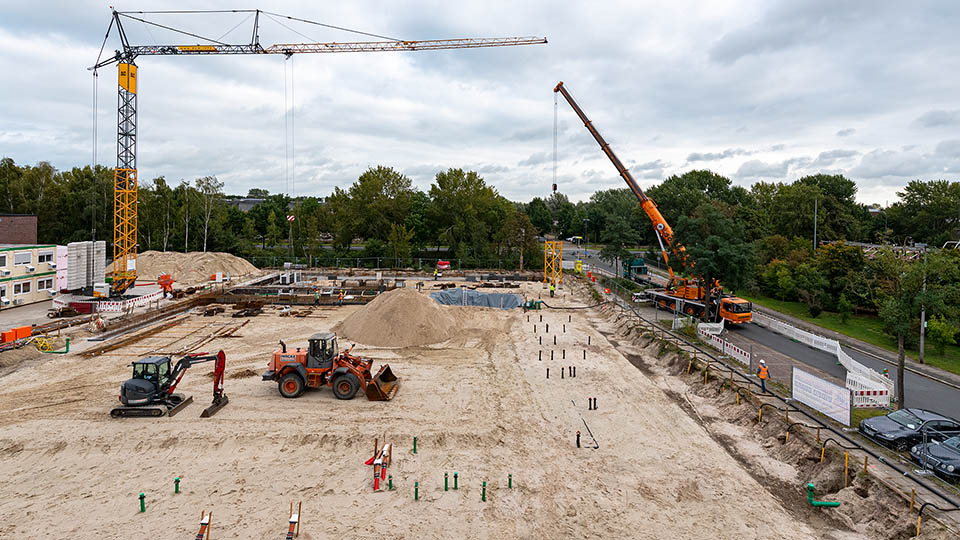
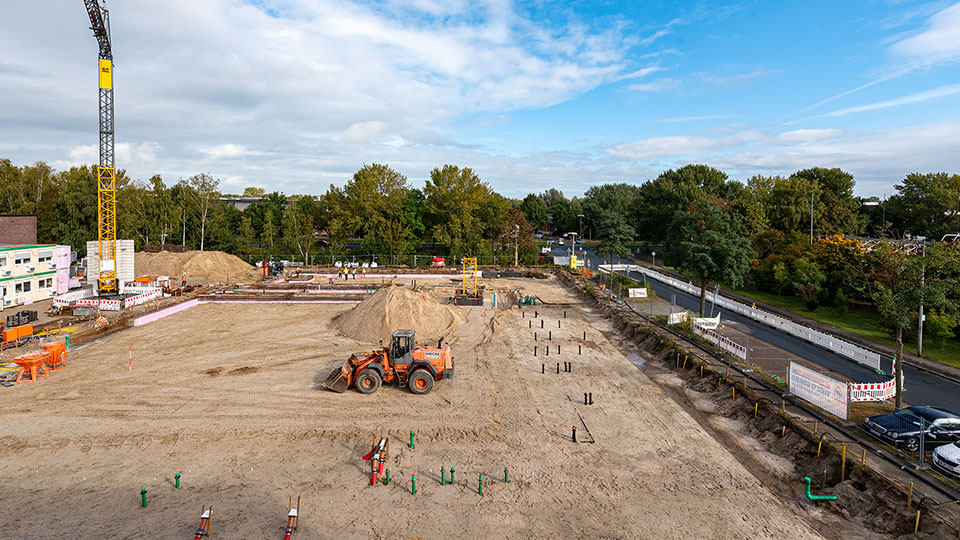
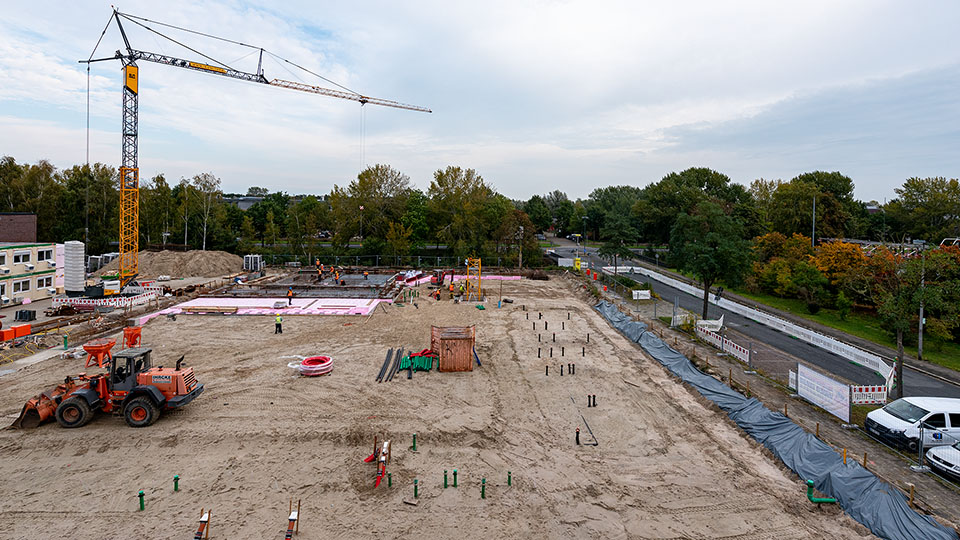
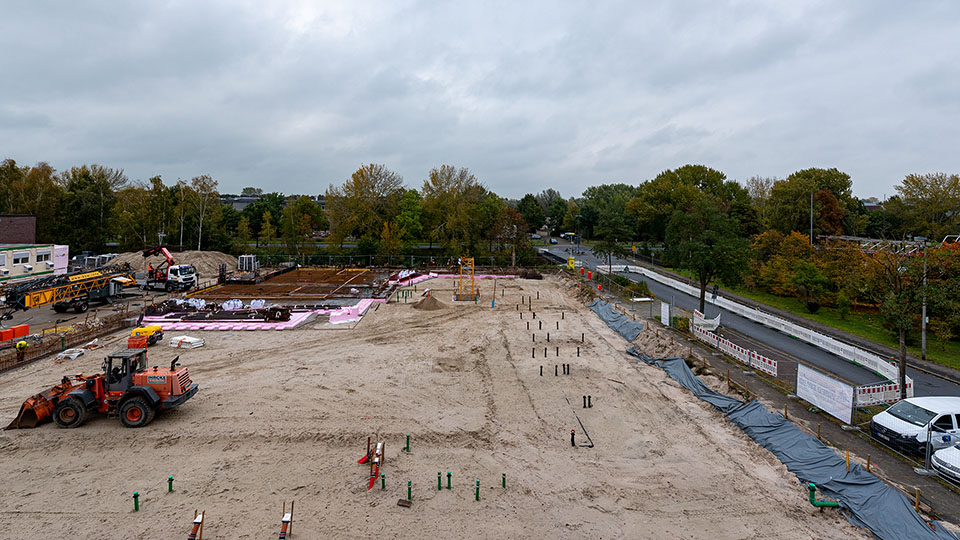
This includes that the sewage, fresh water and empty pipes are laid, the main sewer connection is set up and everything is sealed, the floor slab (base plate) is poured. The laying of the supply lines also includes, of course, that the power connection is set up.
In the area of the future elevator shaft, excavation work is being carried out somewhat deeper so that the so-called elevator underpass can be formed. This will also be the foundation for the 2nd construction crane.
As soon as all this has been done, work will begin on the outer walls. To ensure that the building can settle optimally, this will first be done in the direction of the waterway.
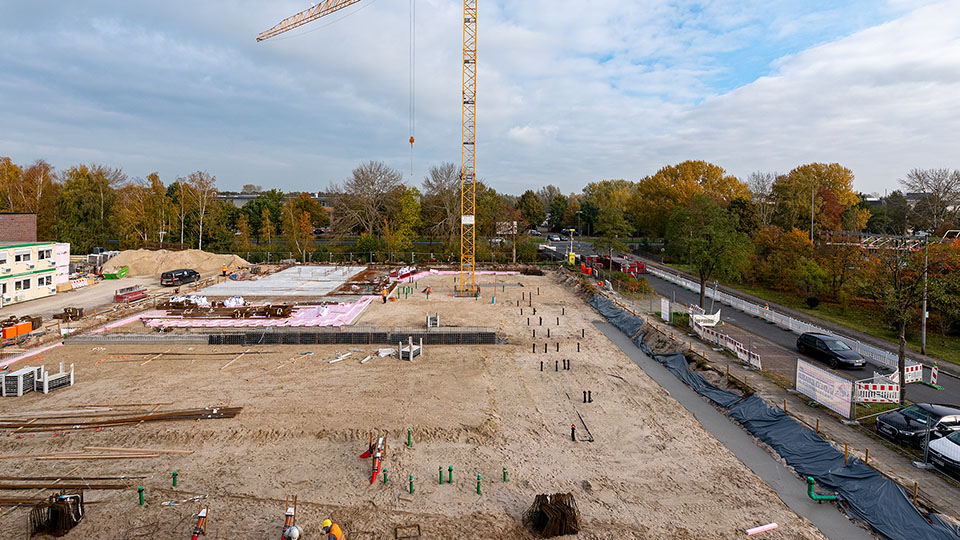
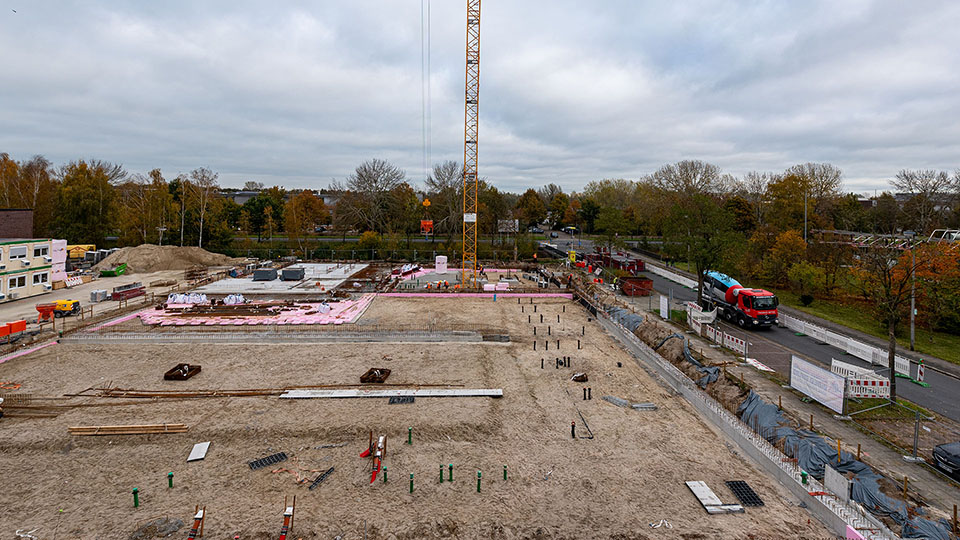
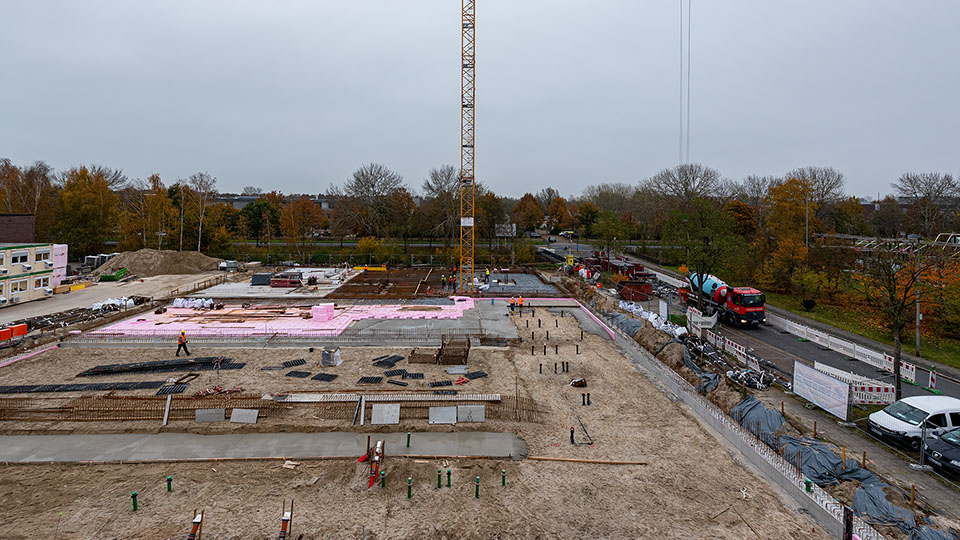
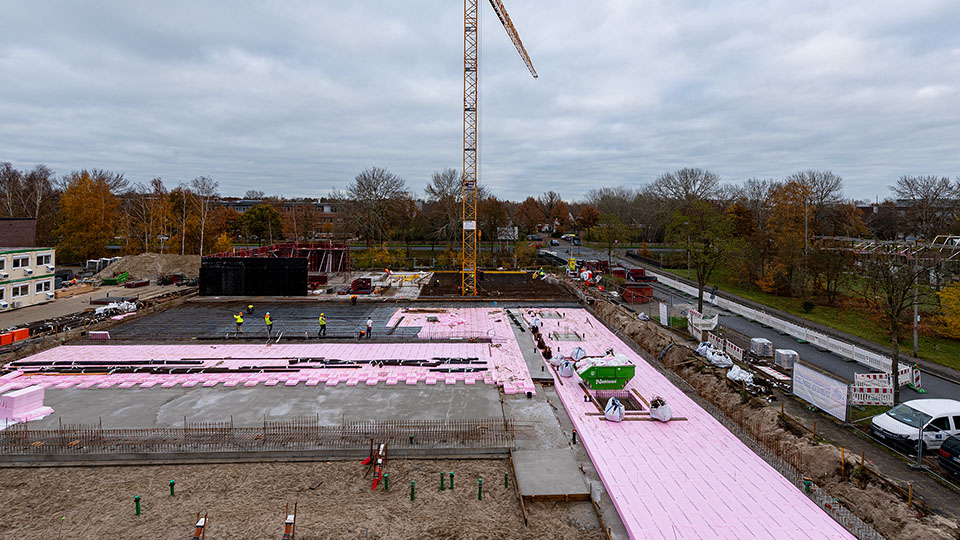
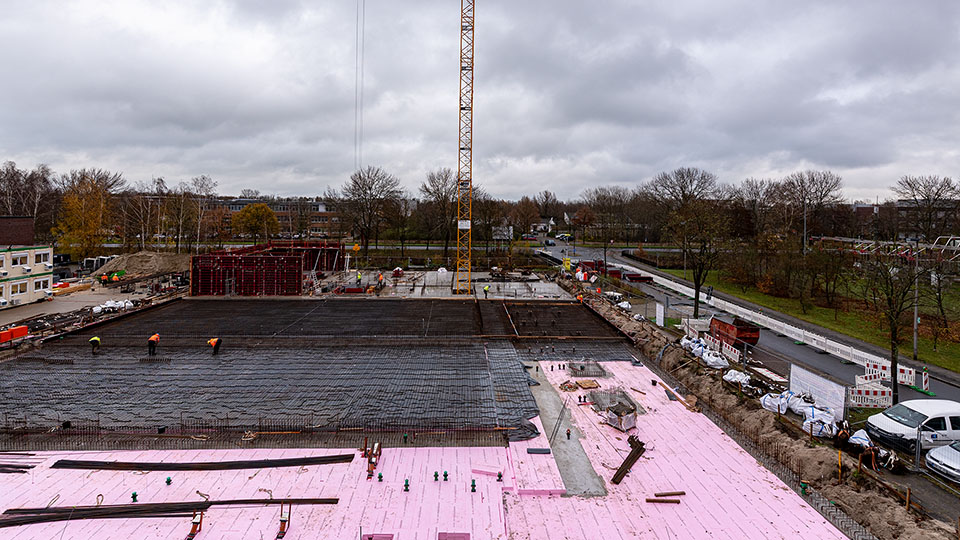
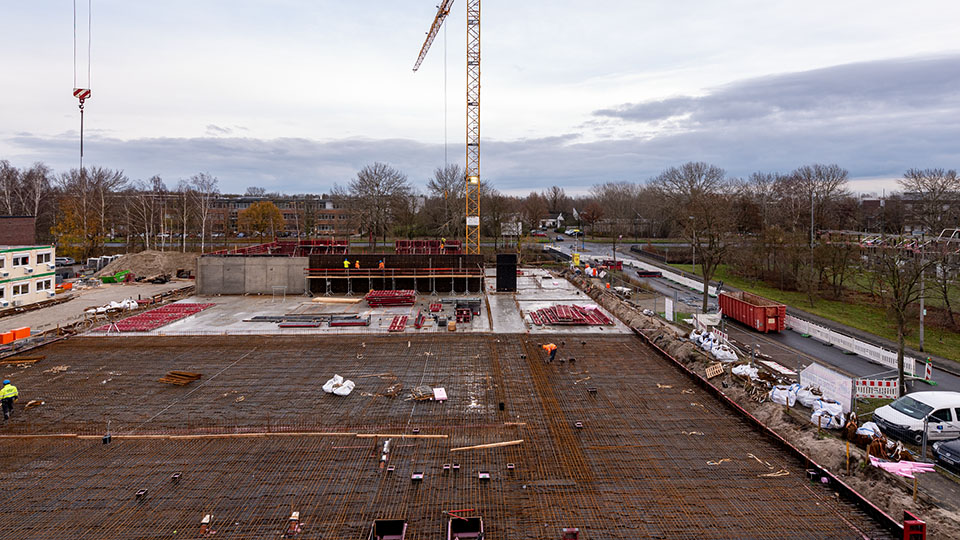
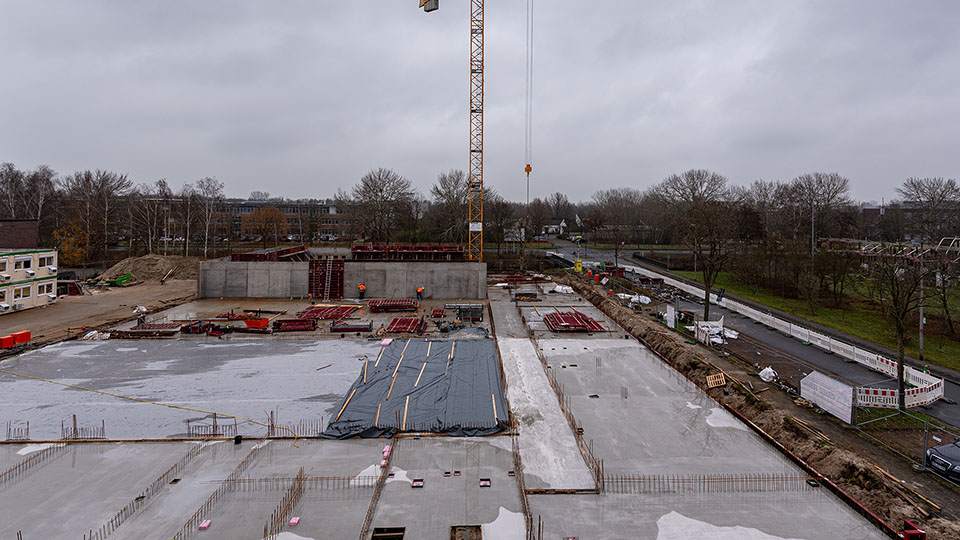
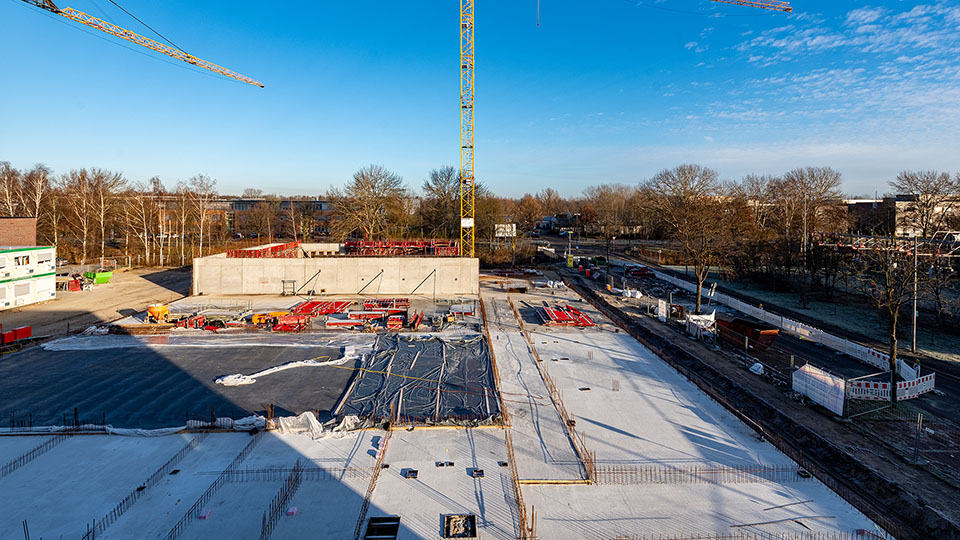
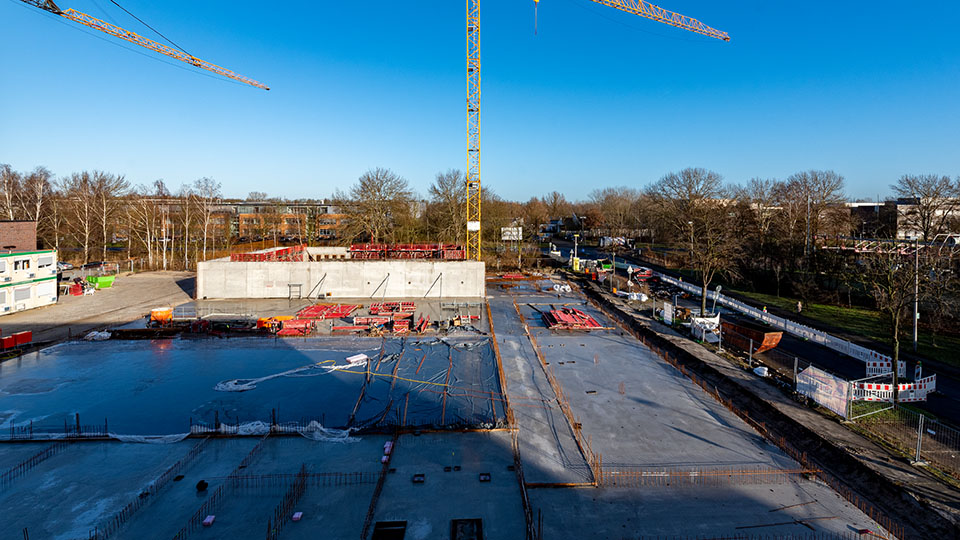
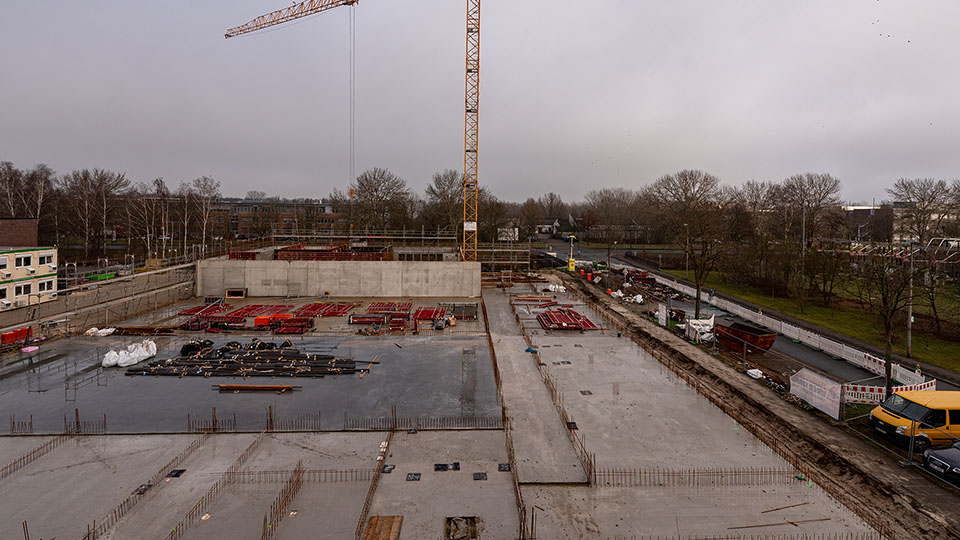
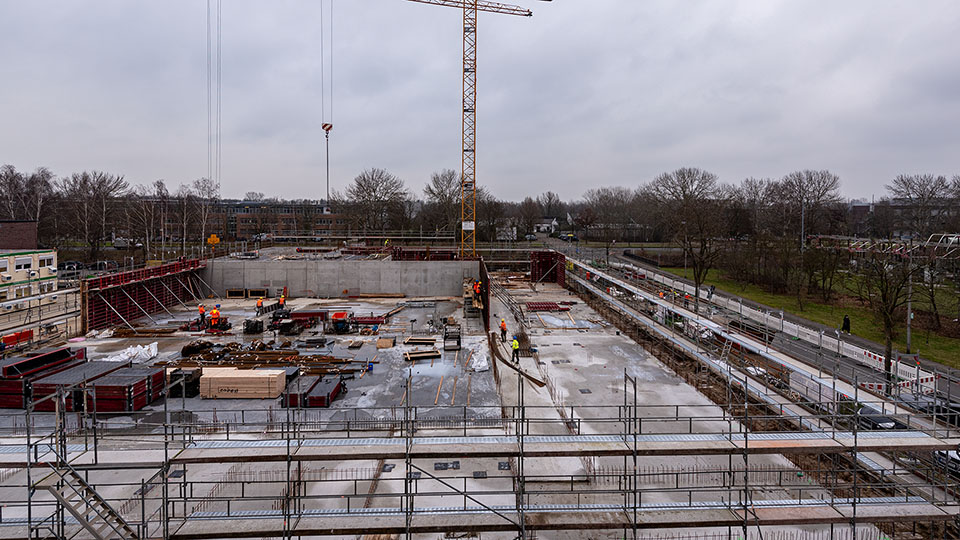
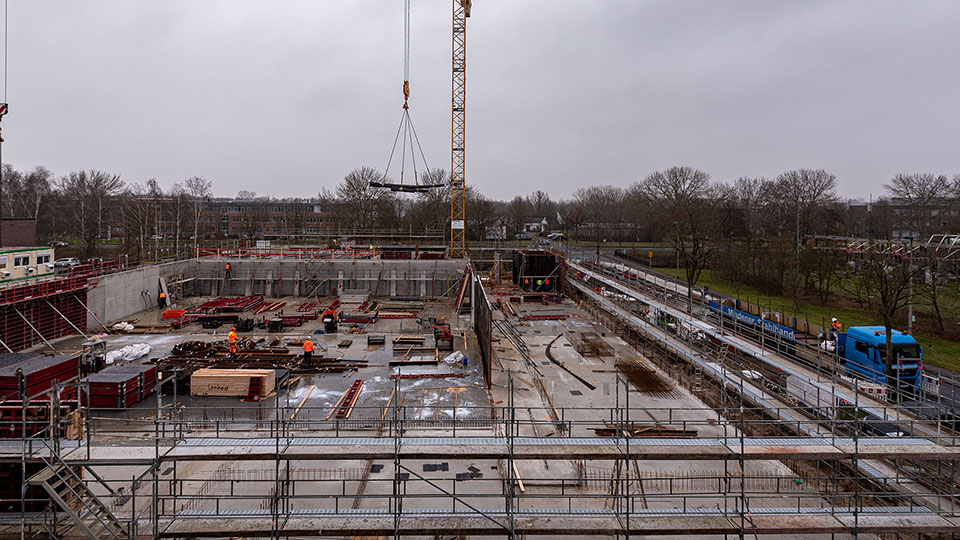
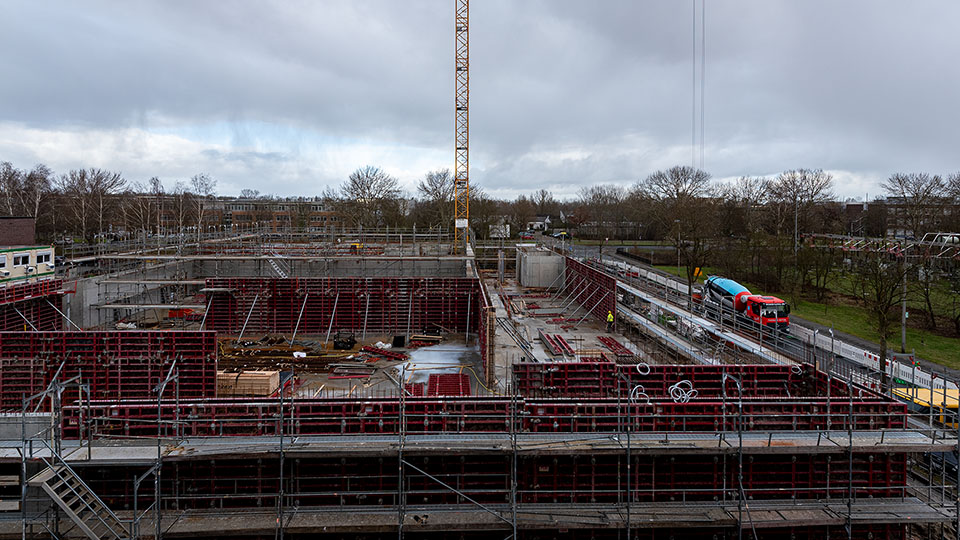
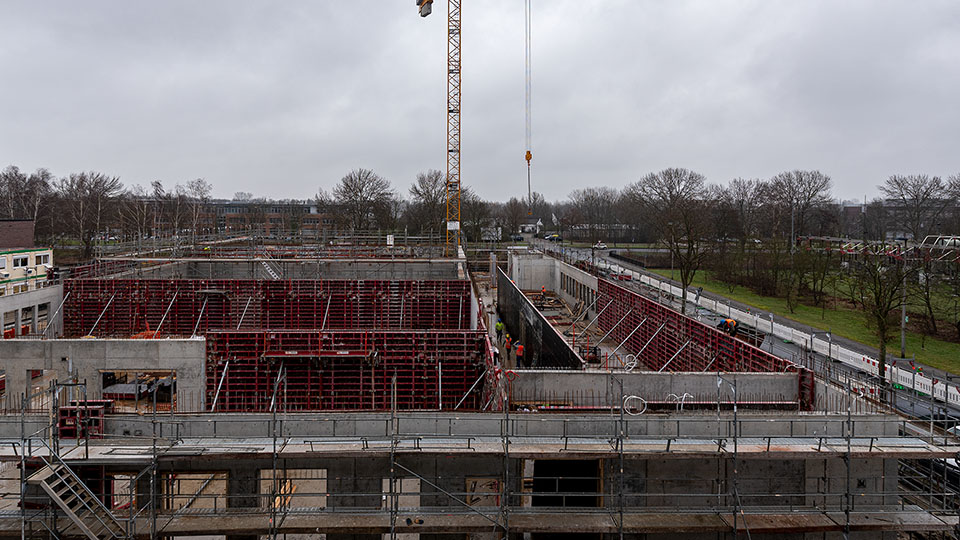
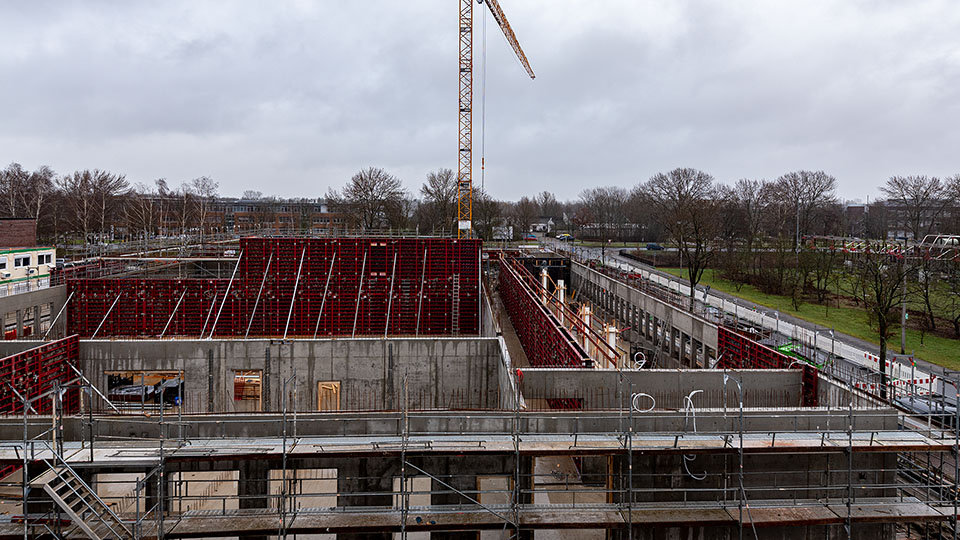
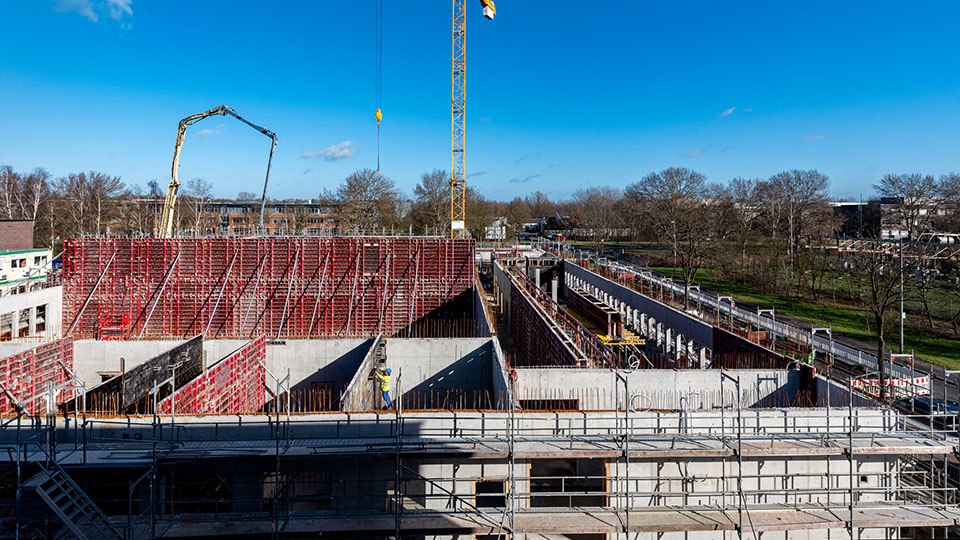
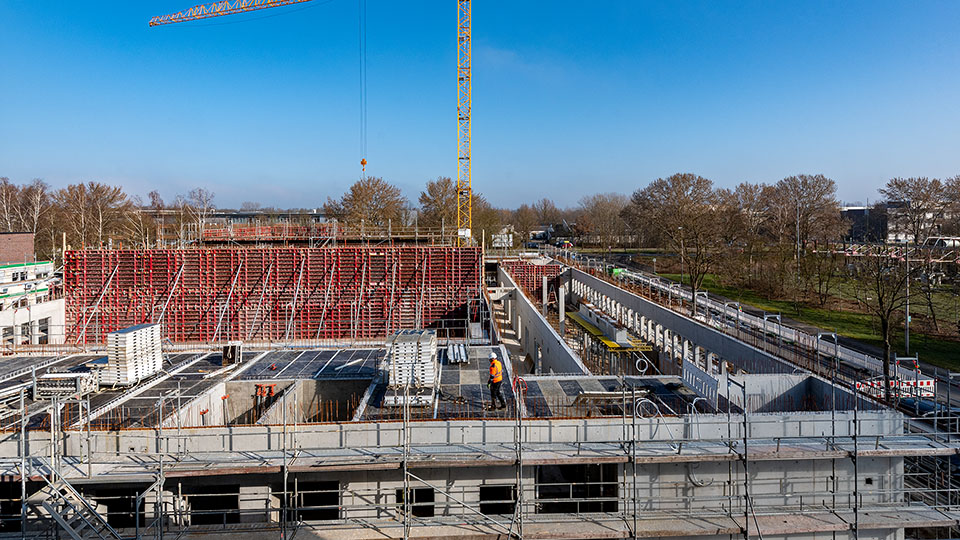
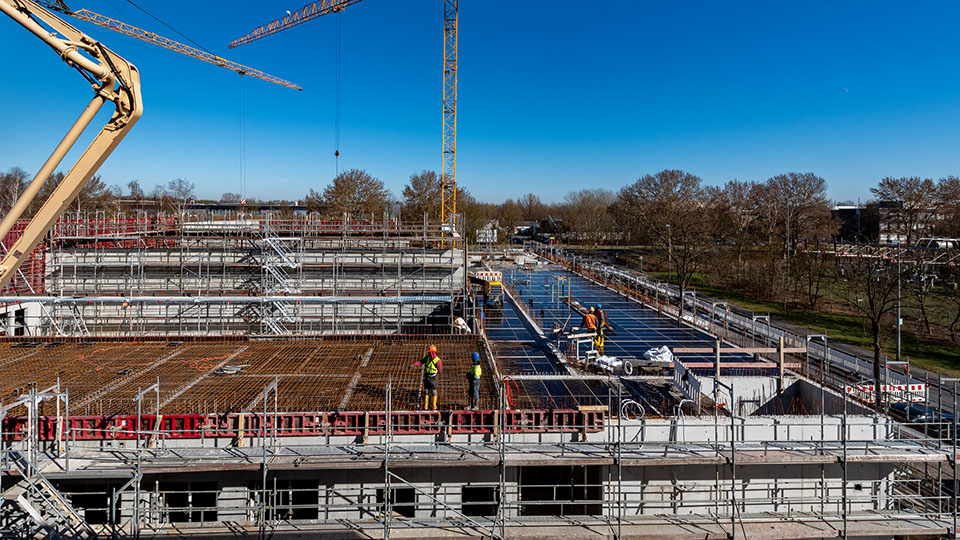
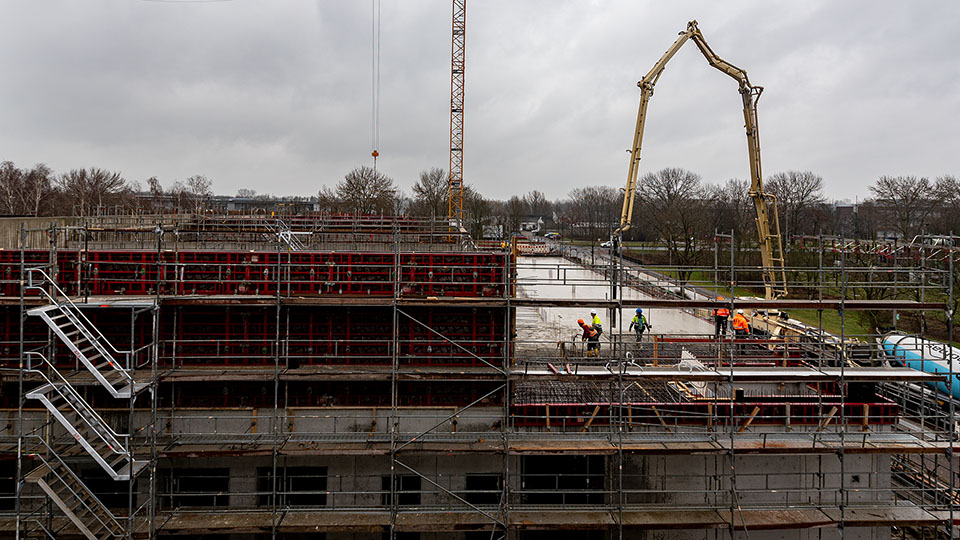
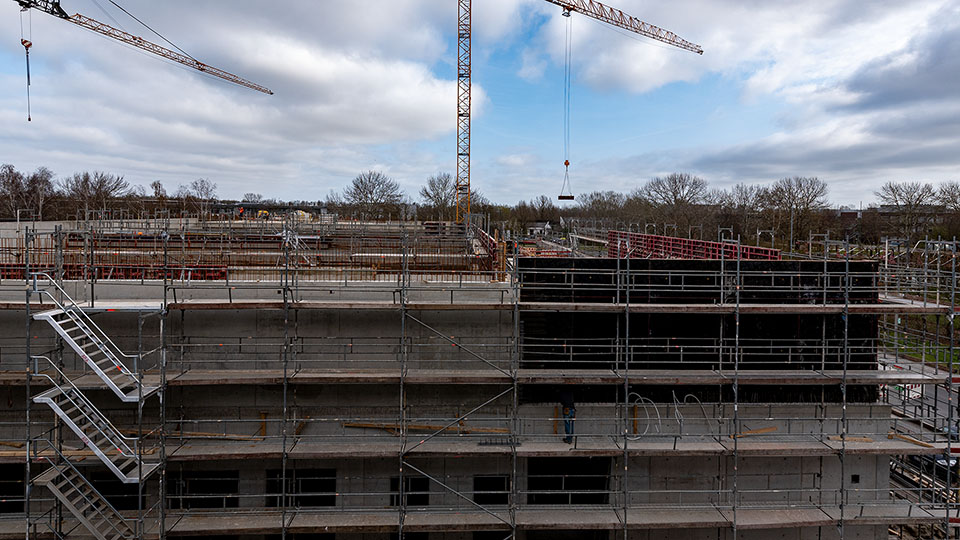
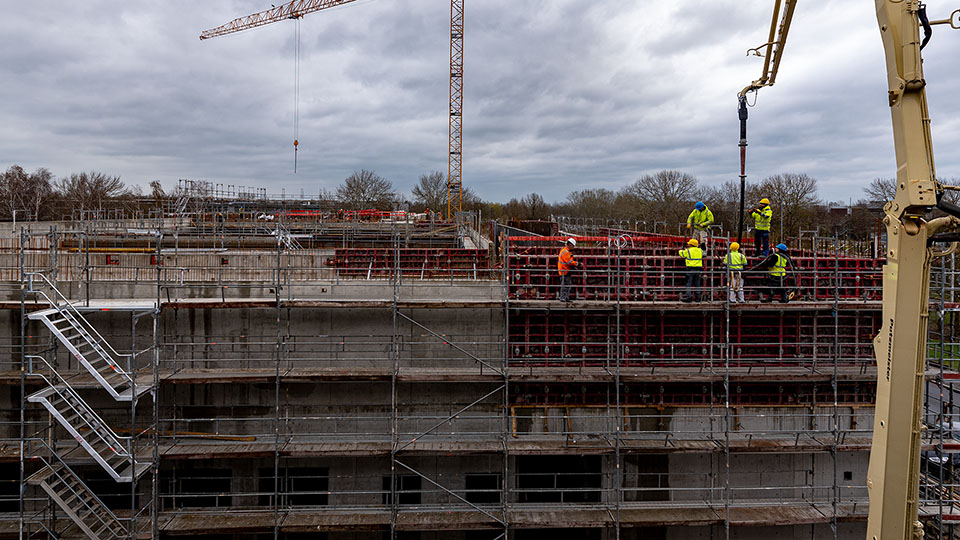
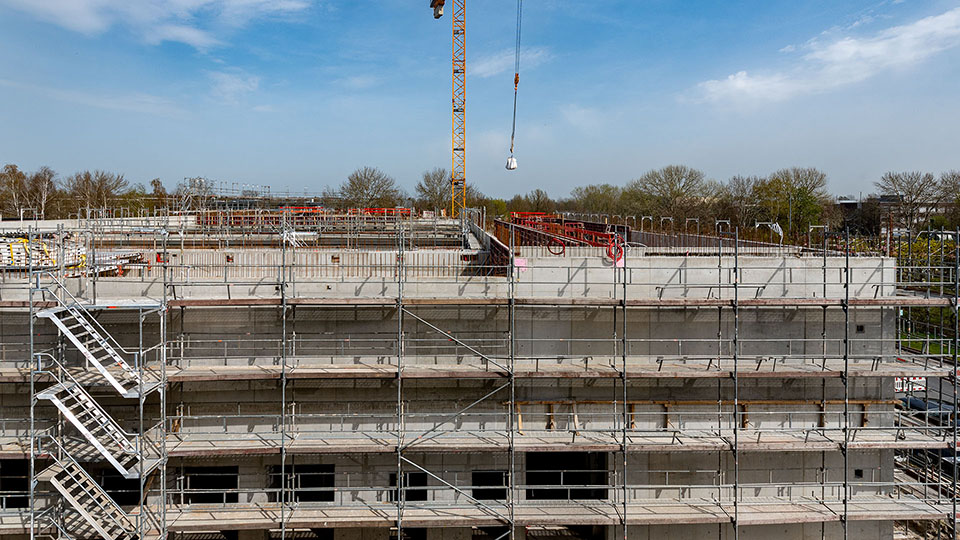
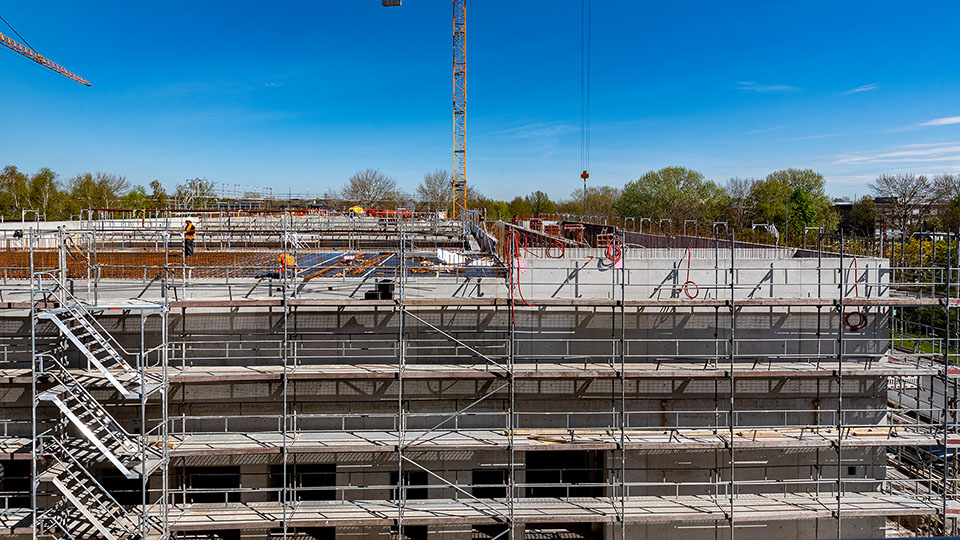
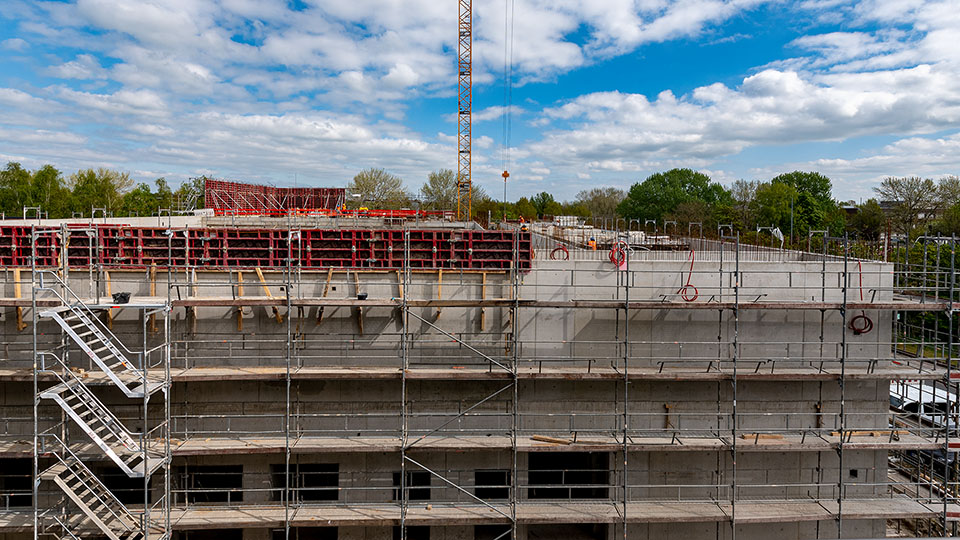
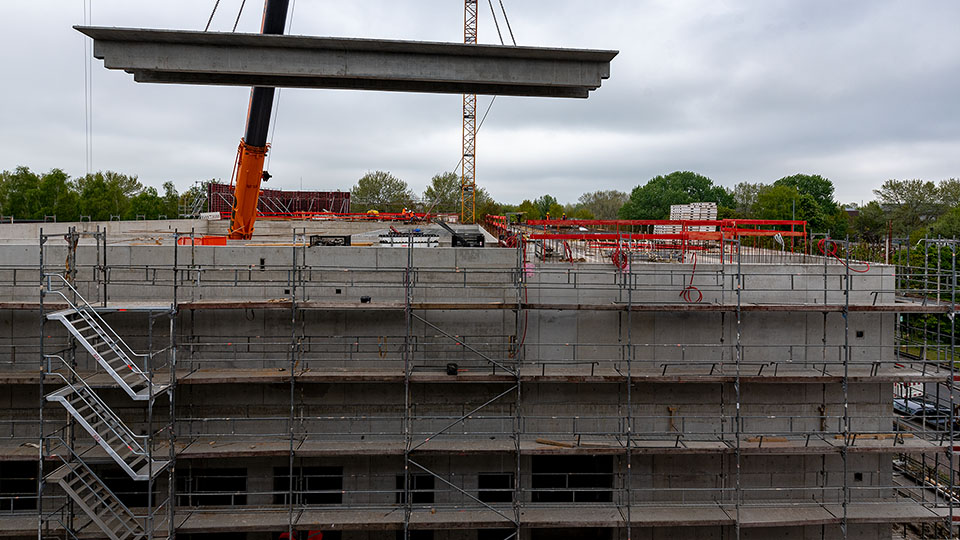
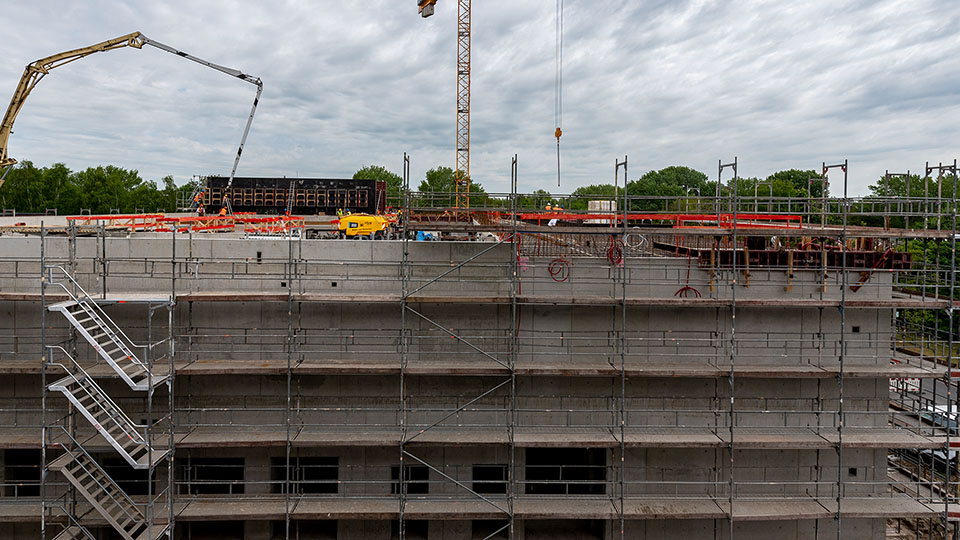
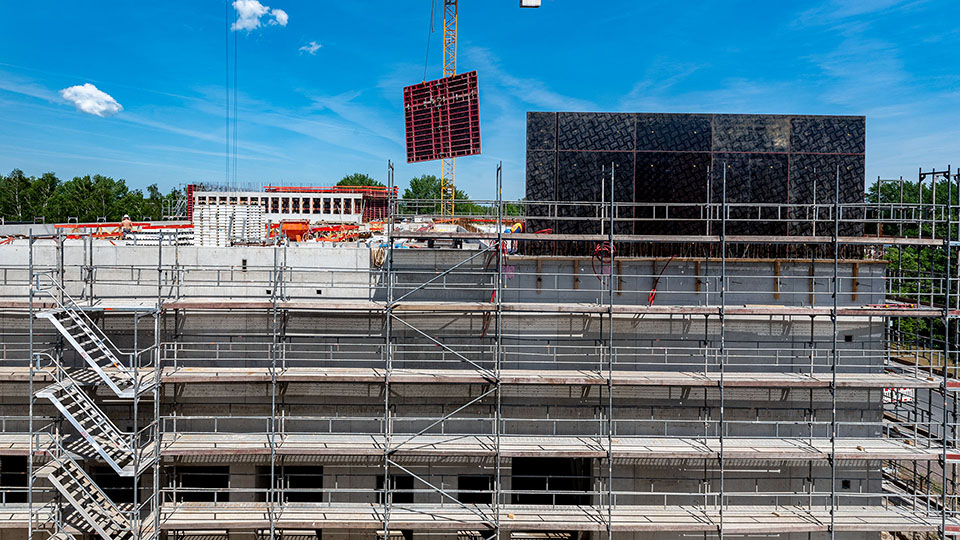
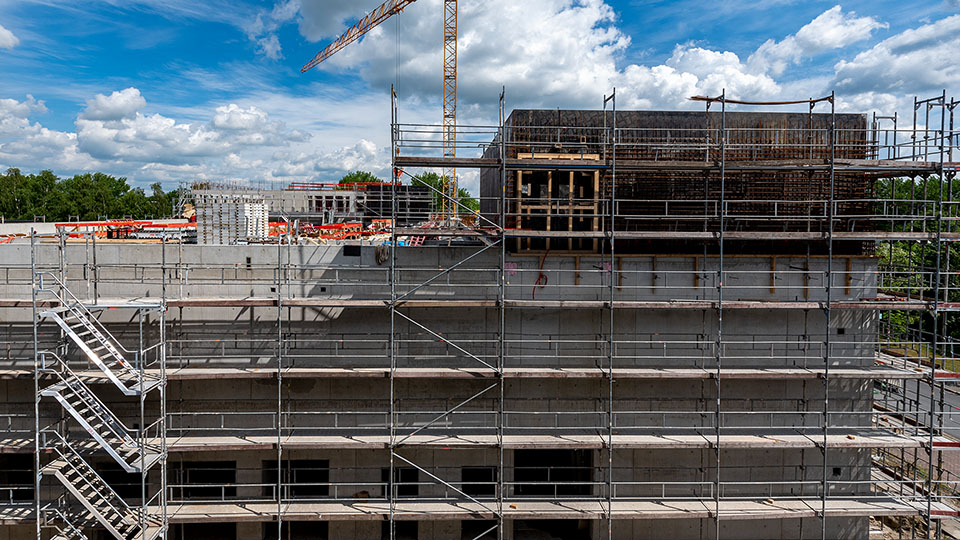
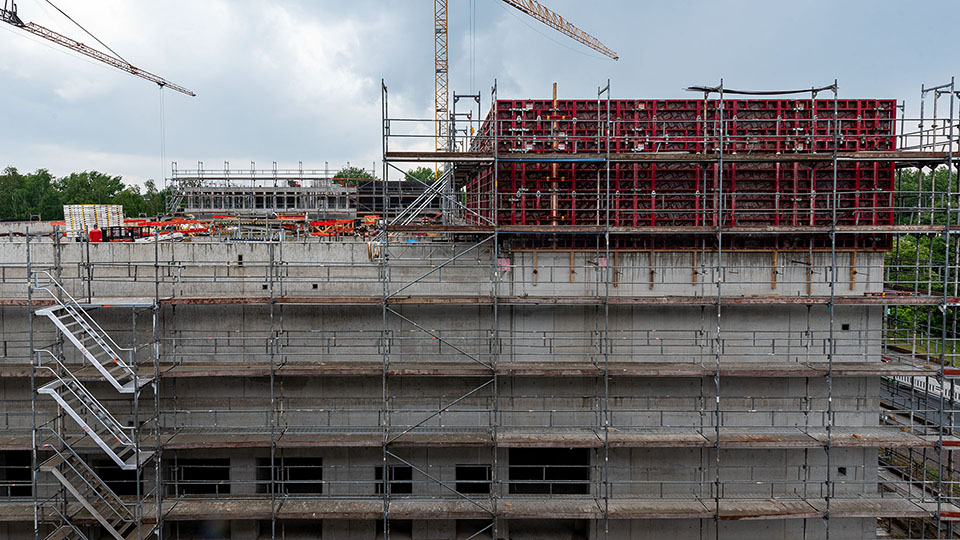
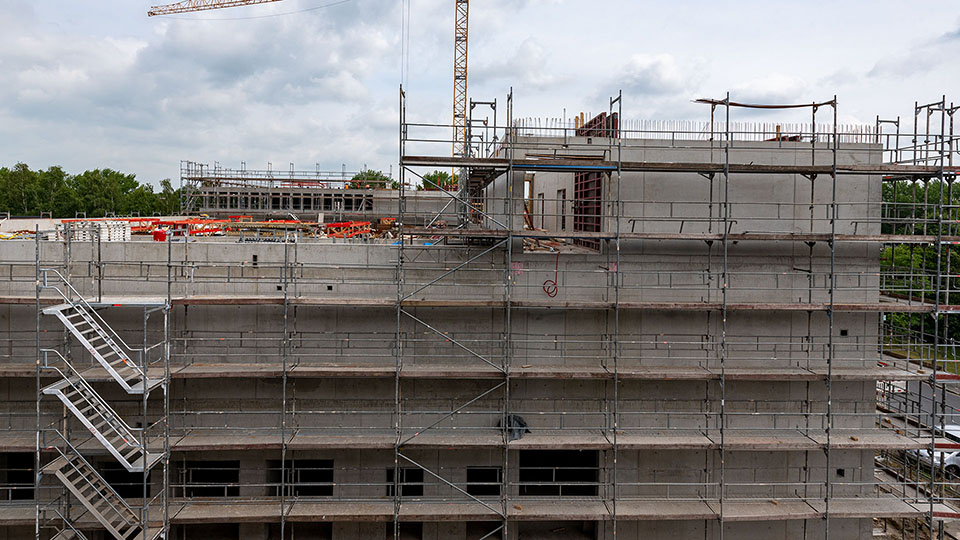
Of course, the shell of a building does not only include the exterior walls. Interior walls, intermediate ceilings, and additional floors and stairs also fall into this phase. From the foundation to the roof truss, the building slowly takes shape.
The walls of the first floor, the next floors and the new core repository have been built. Now the "tower" with the future offices is being built along the Fleet/ Hochschulring. A new vantage point on the construction site provides a better view.
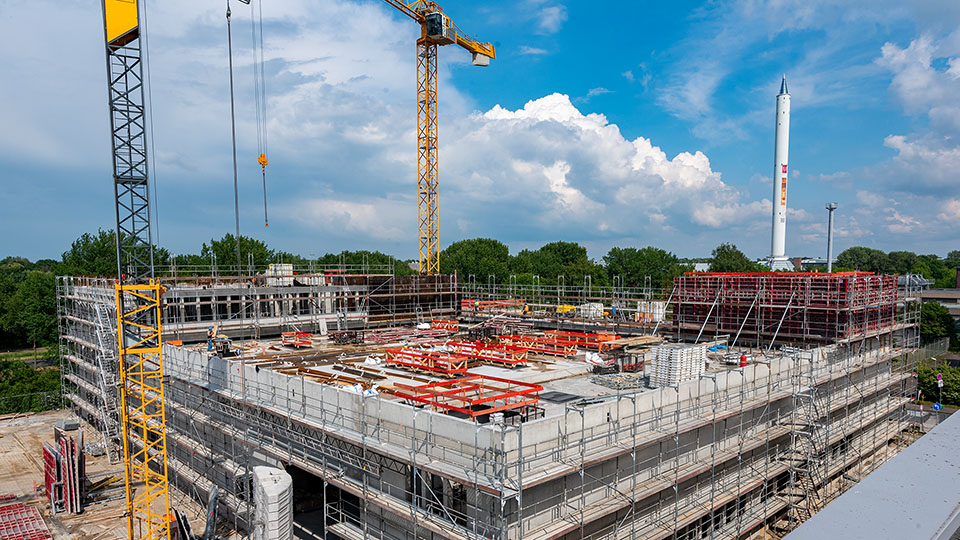
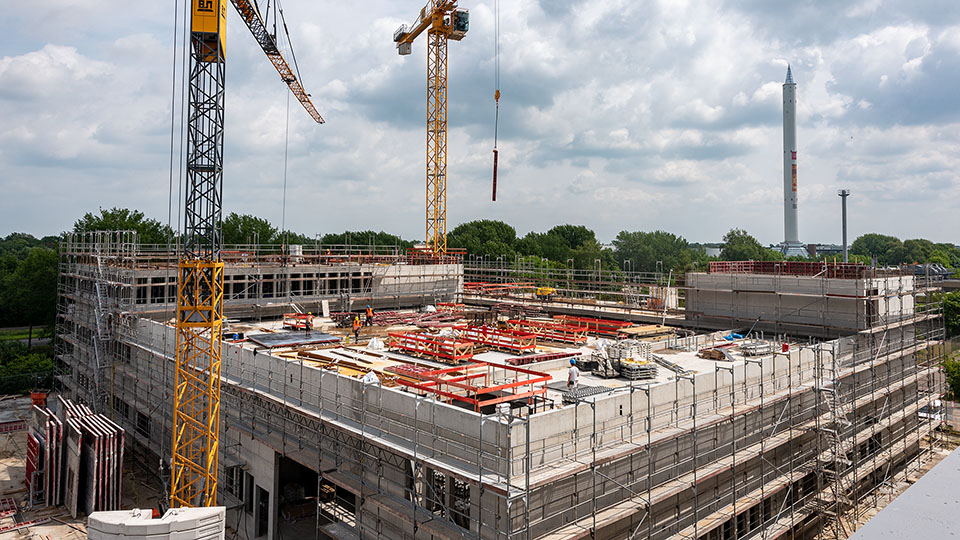
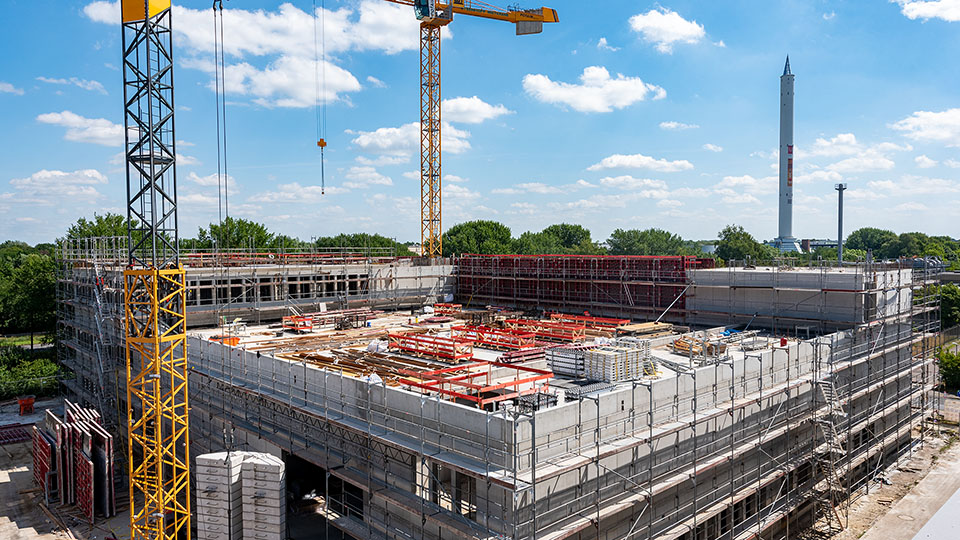
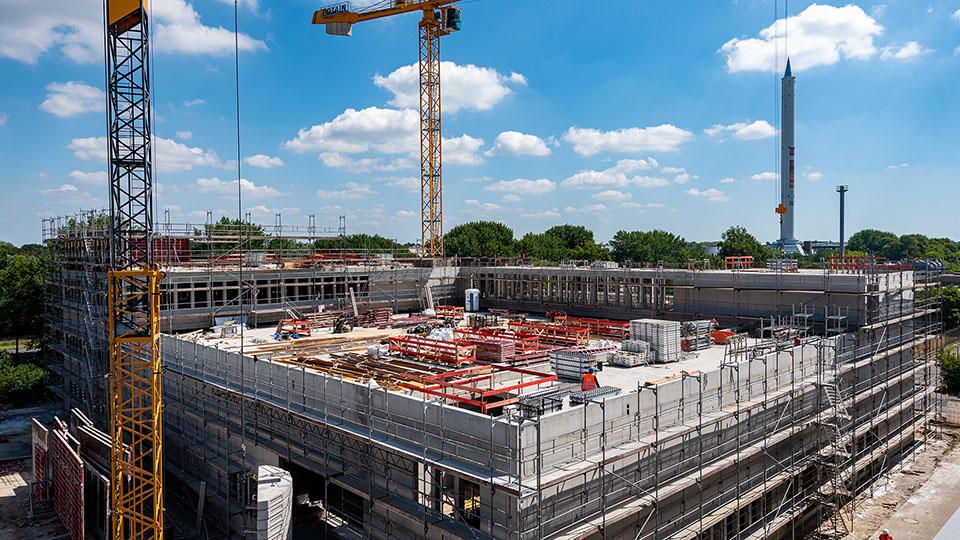
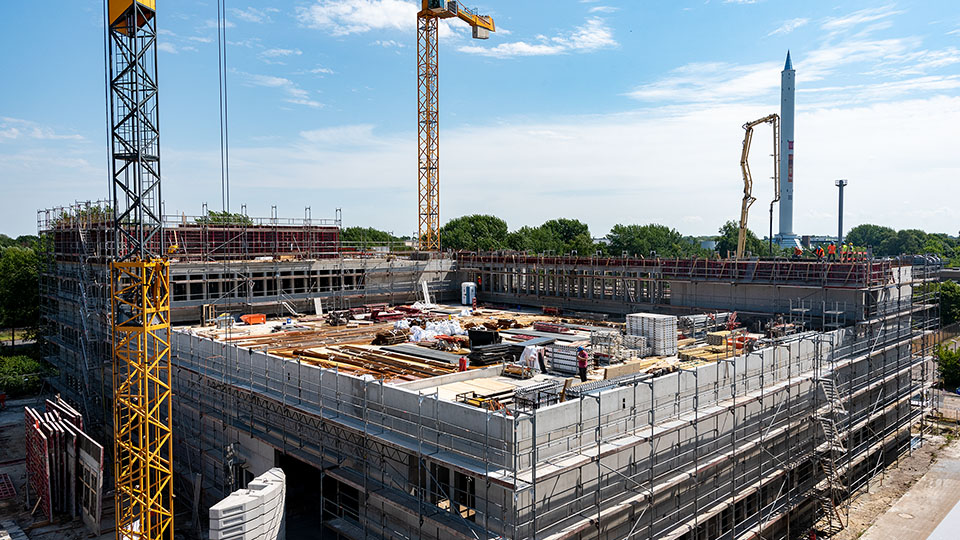
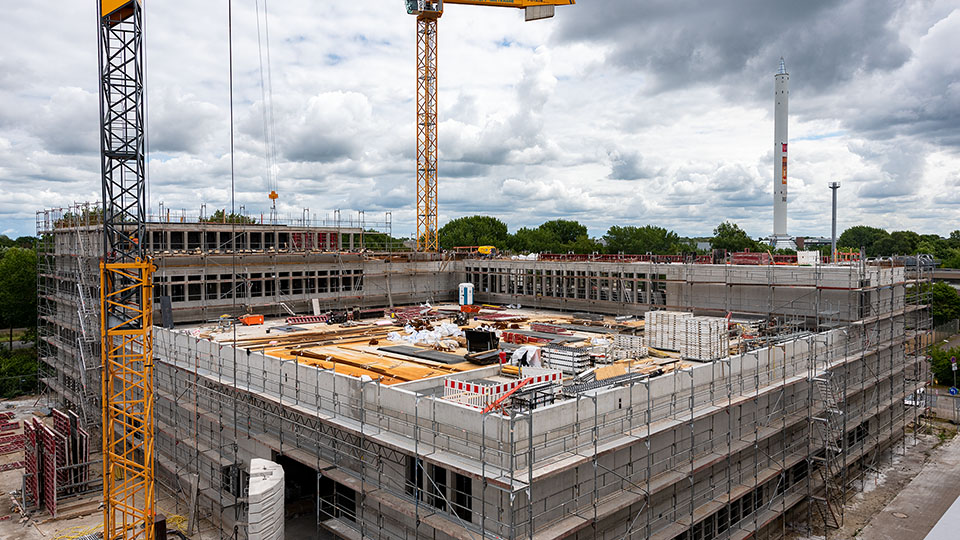
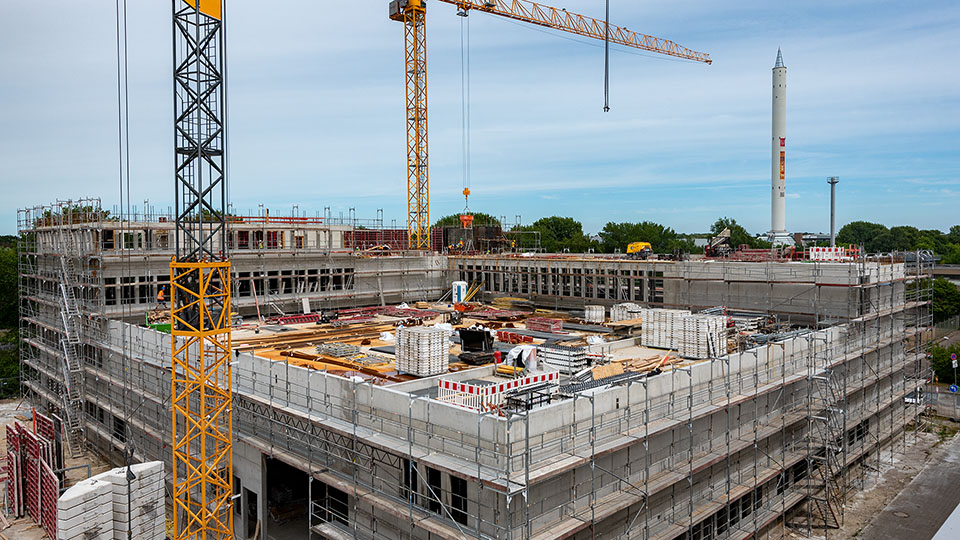
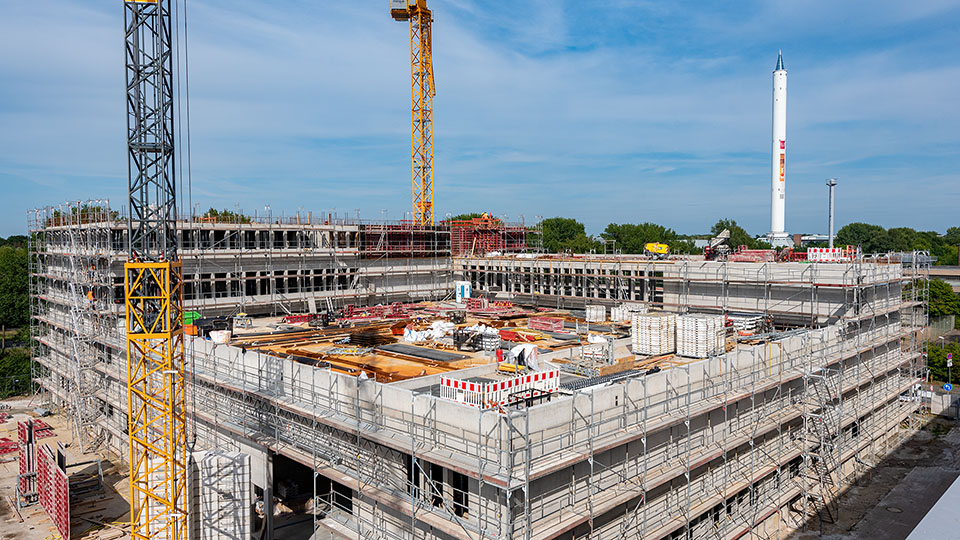
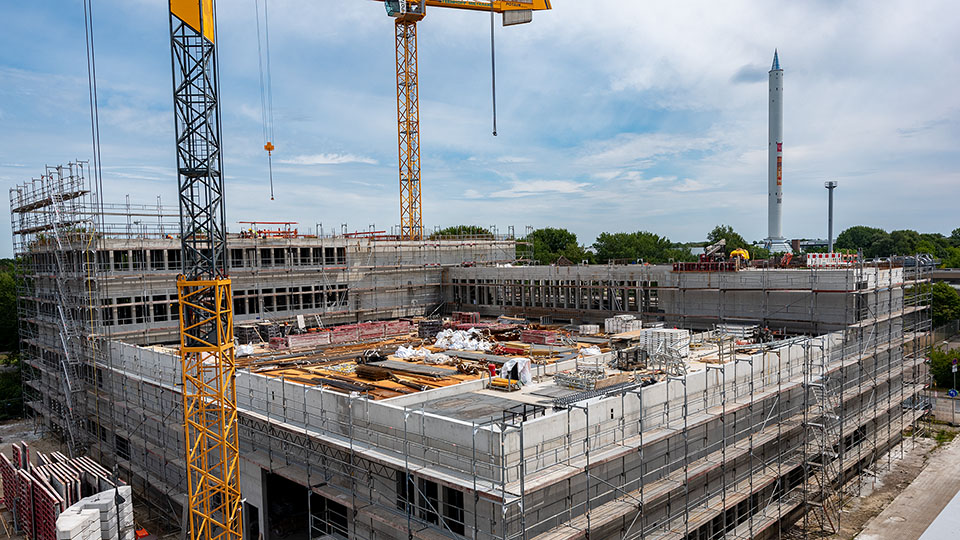
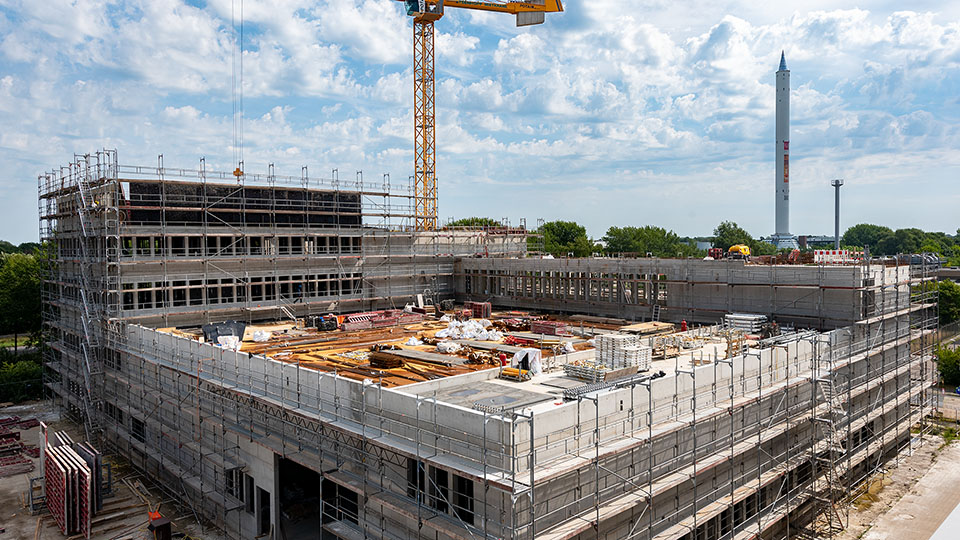
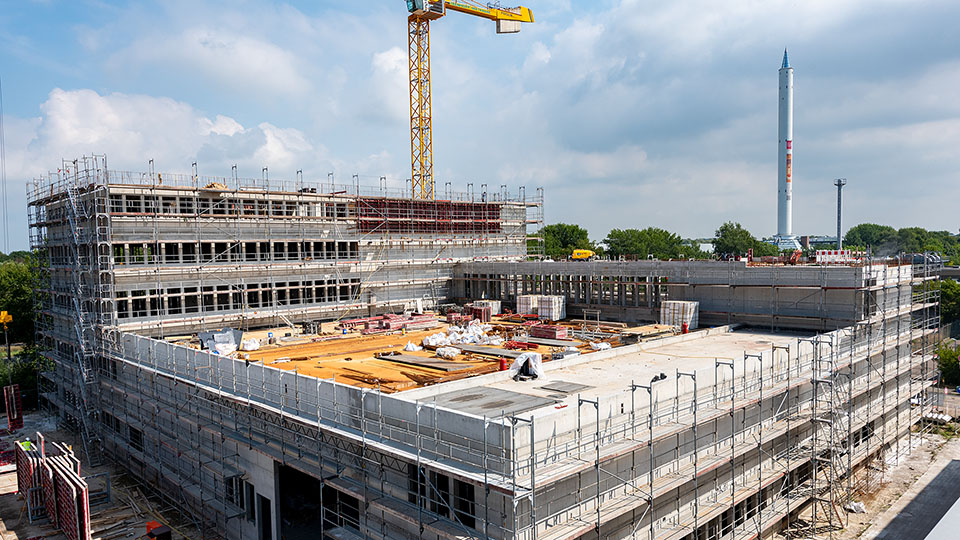
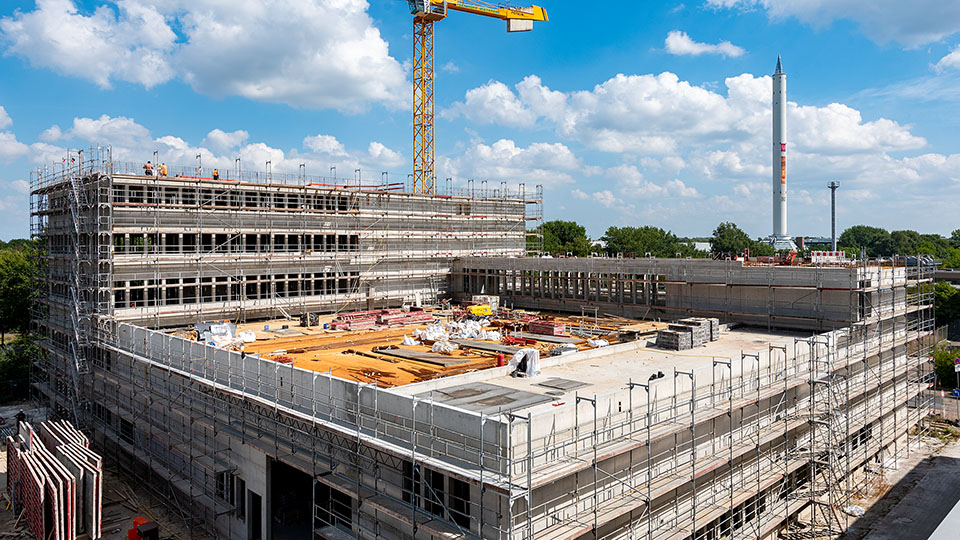
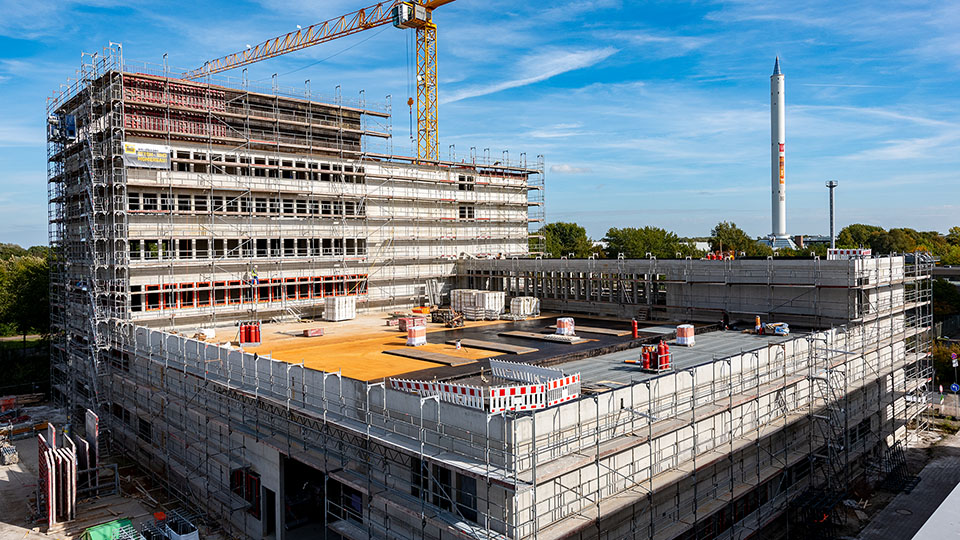
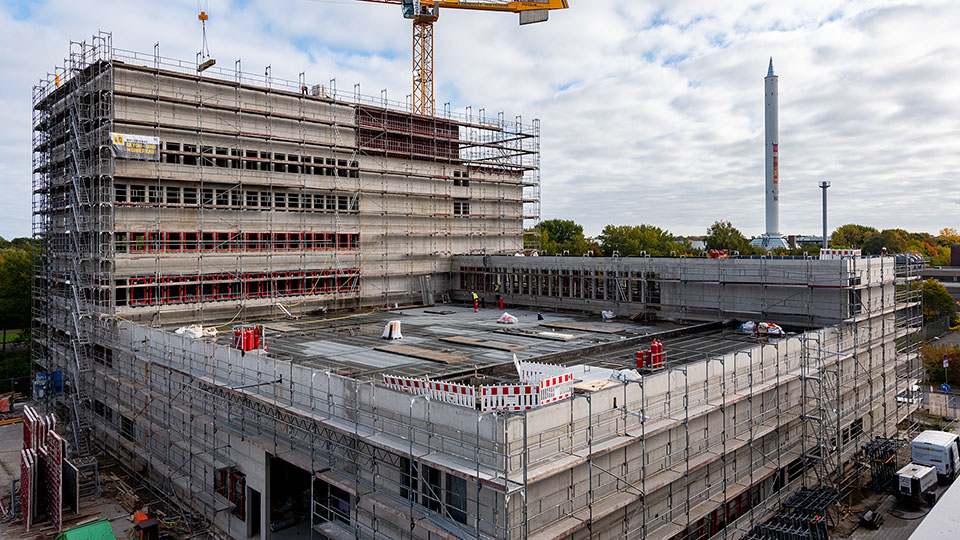
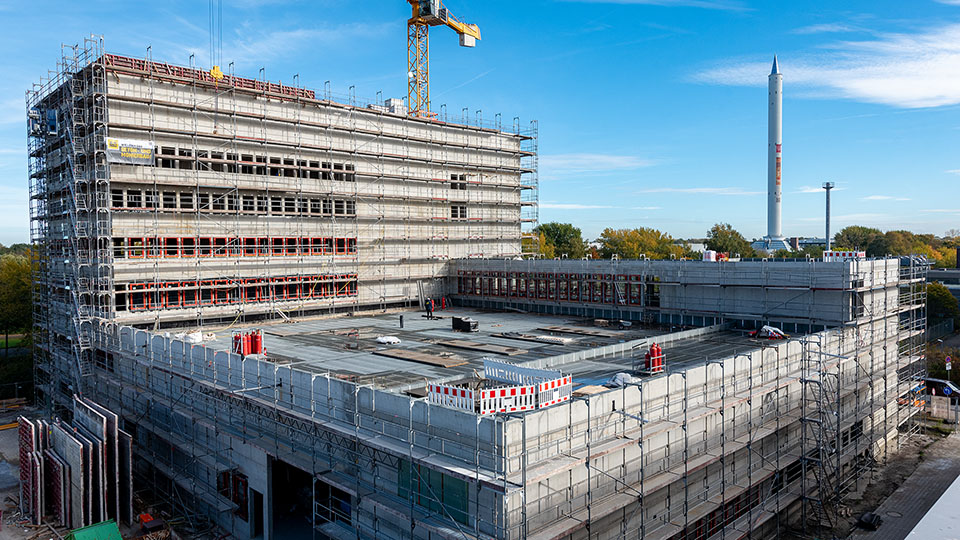
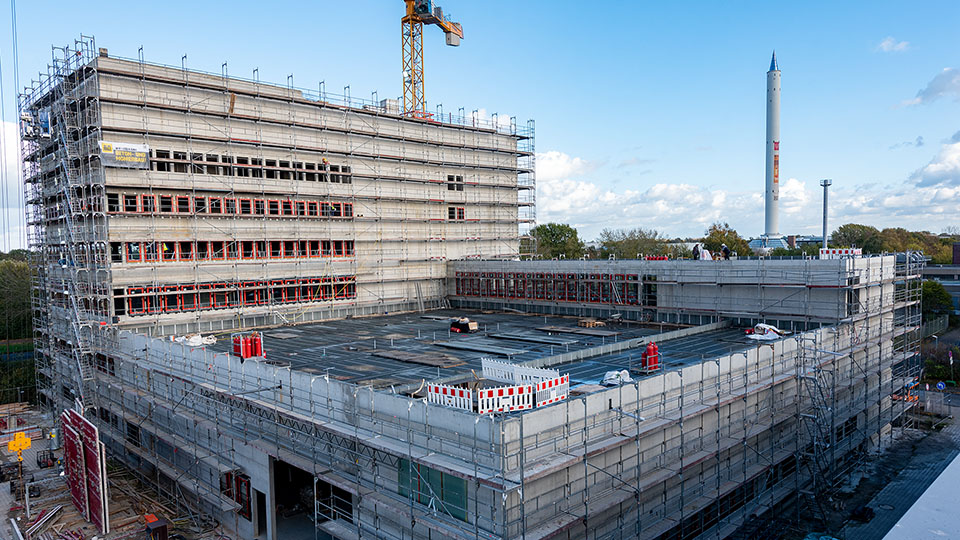
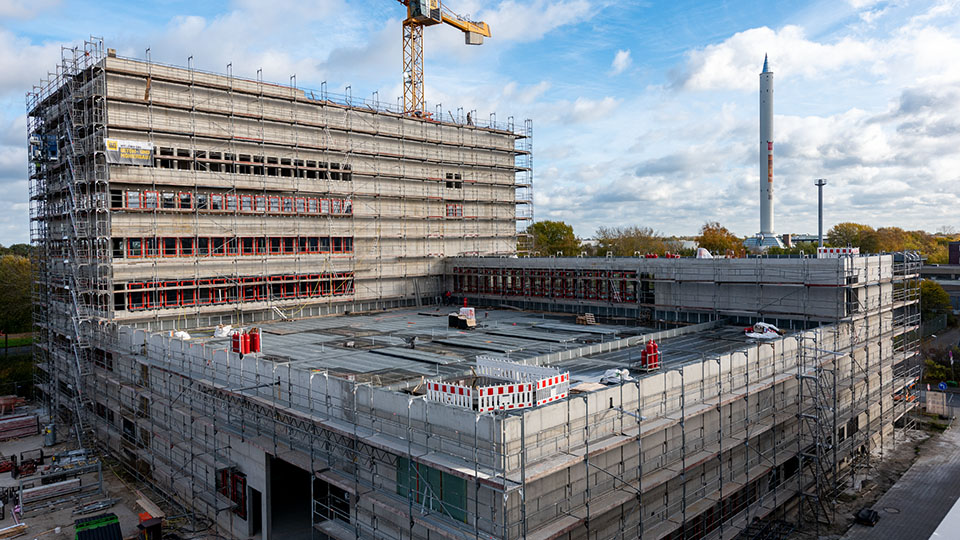
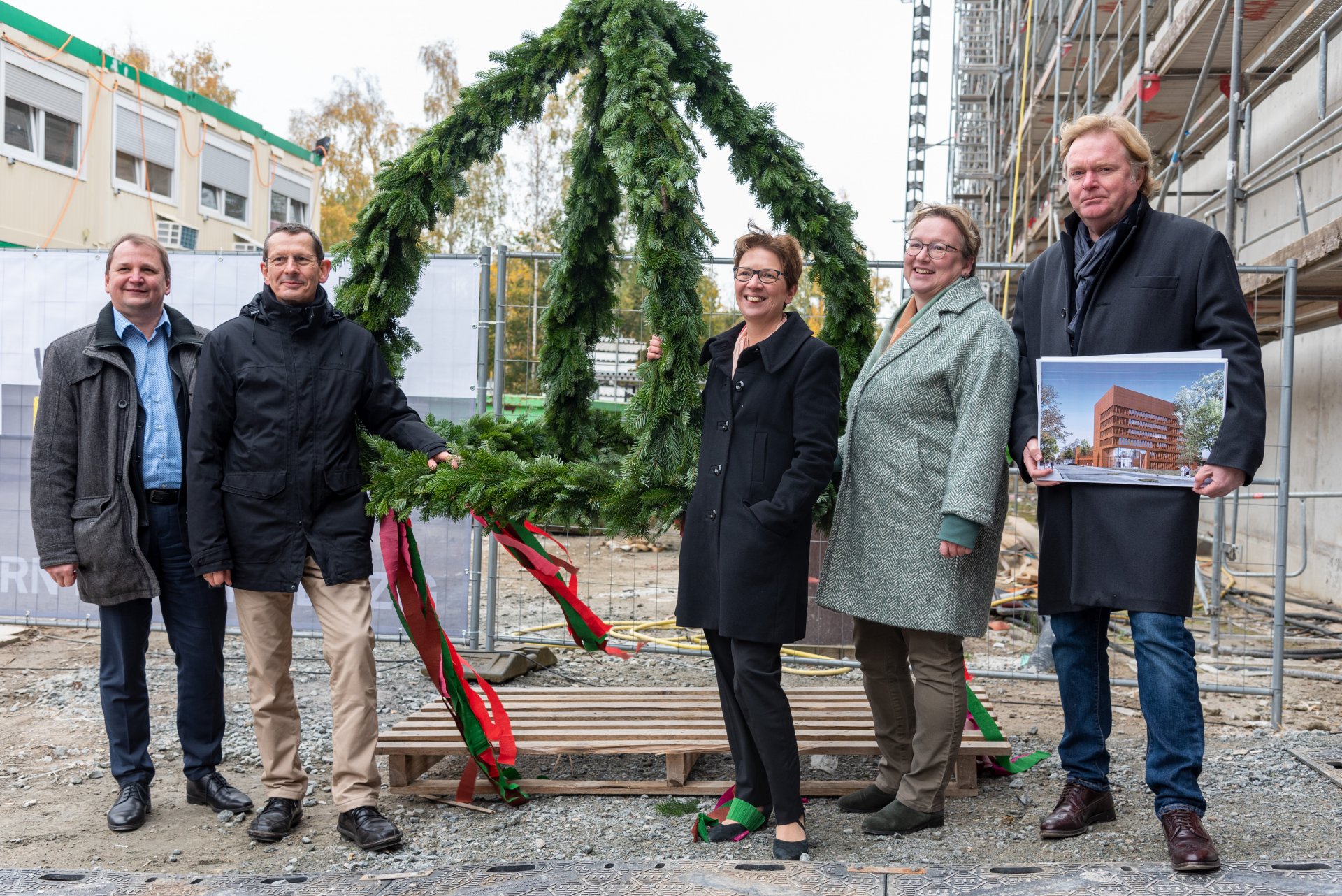
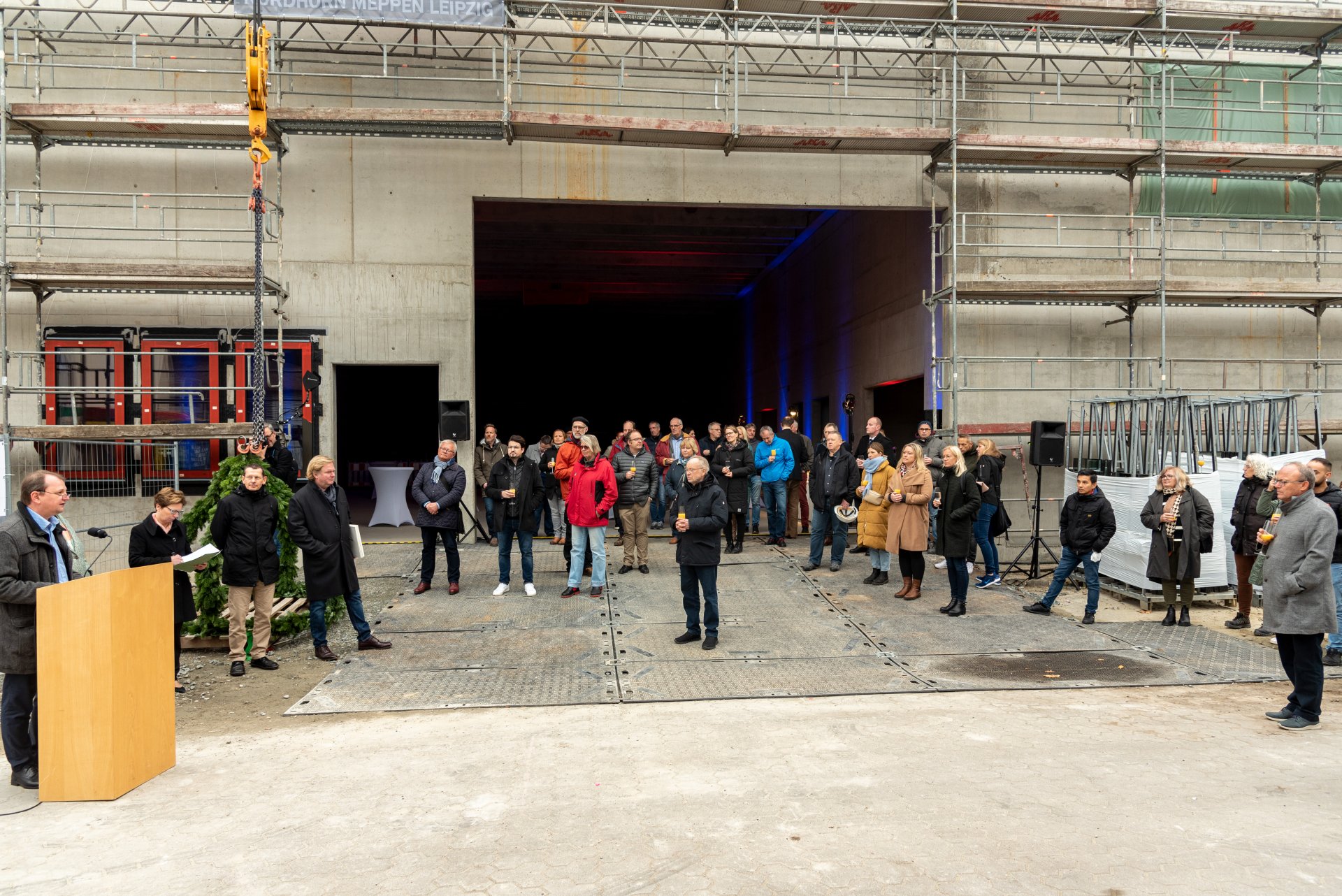
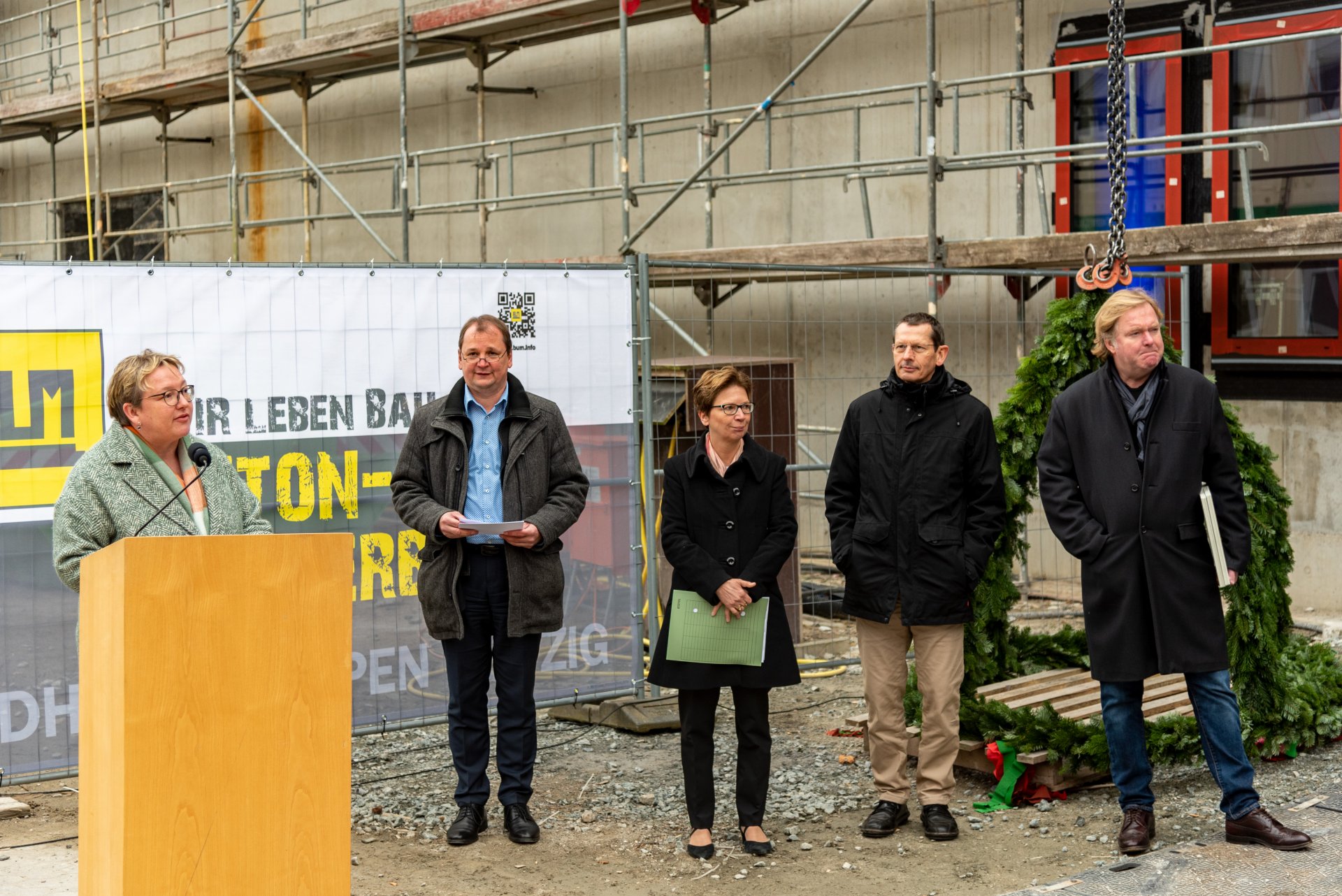
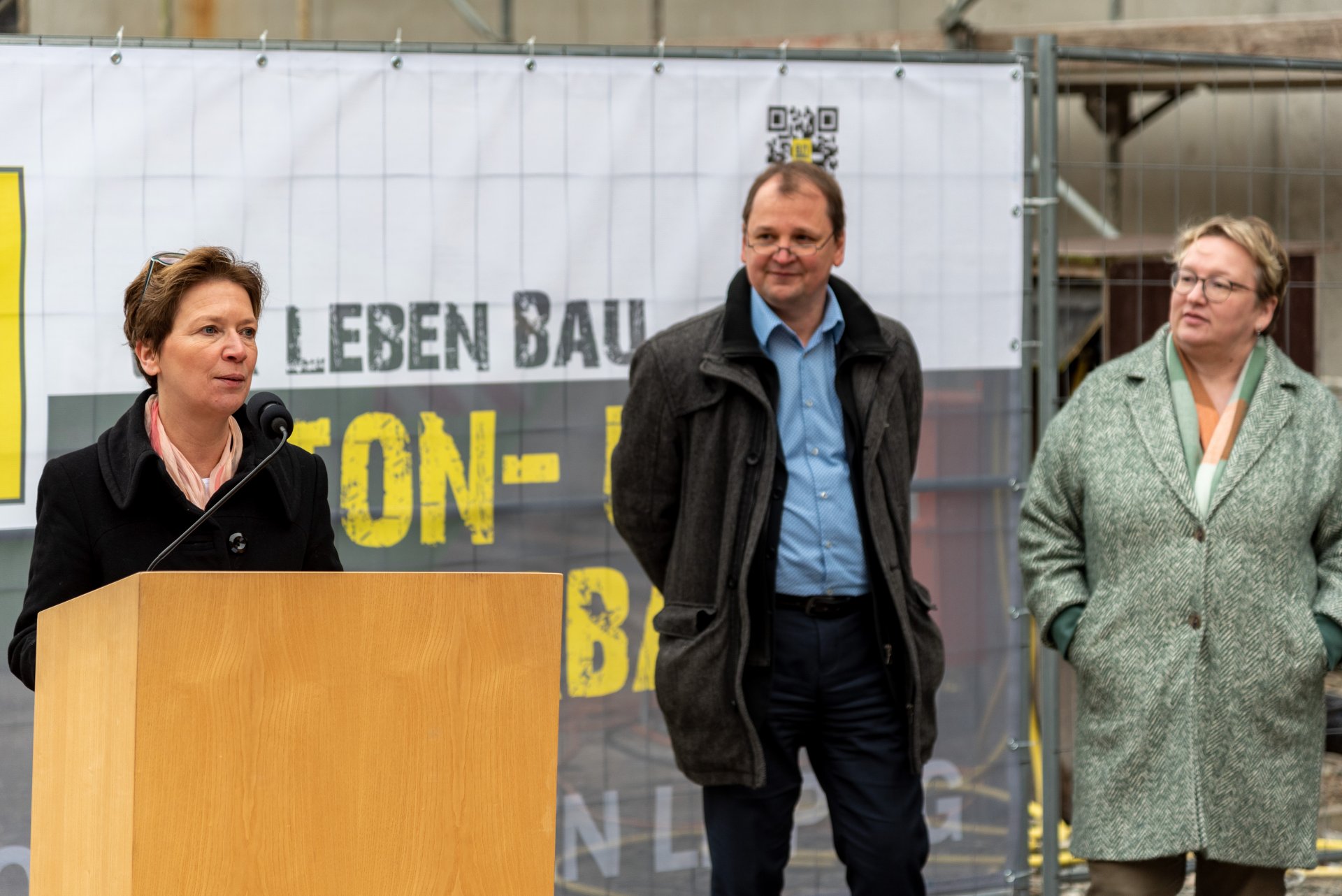
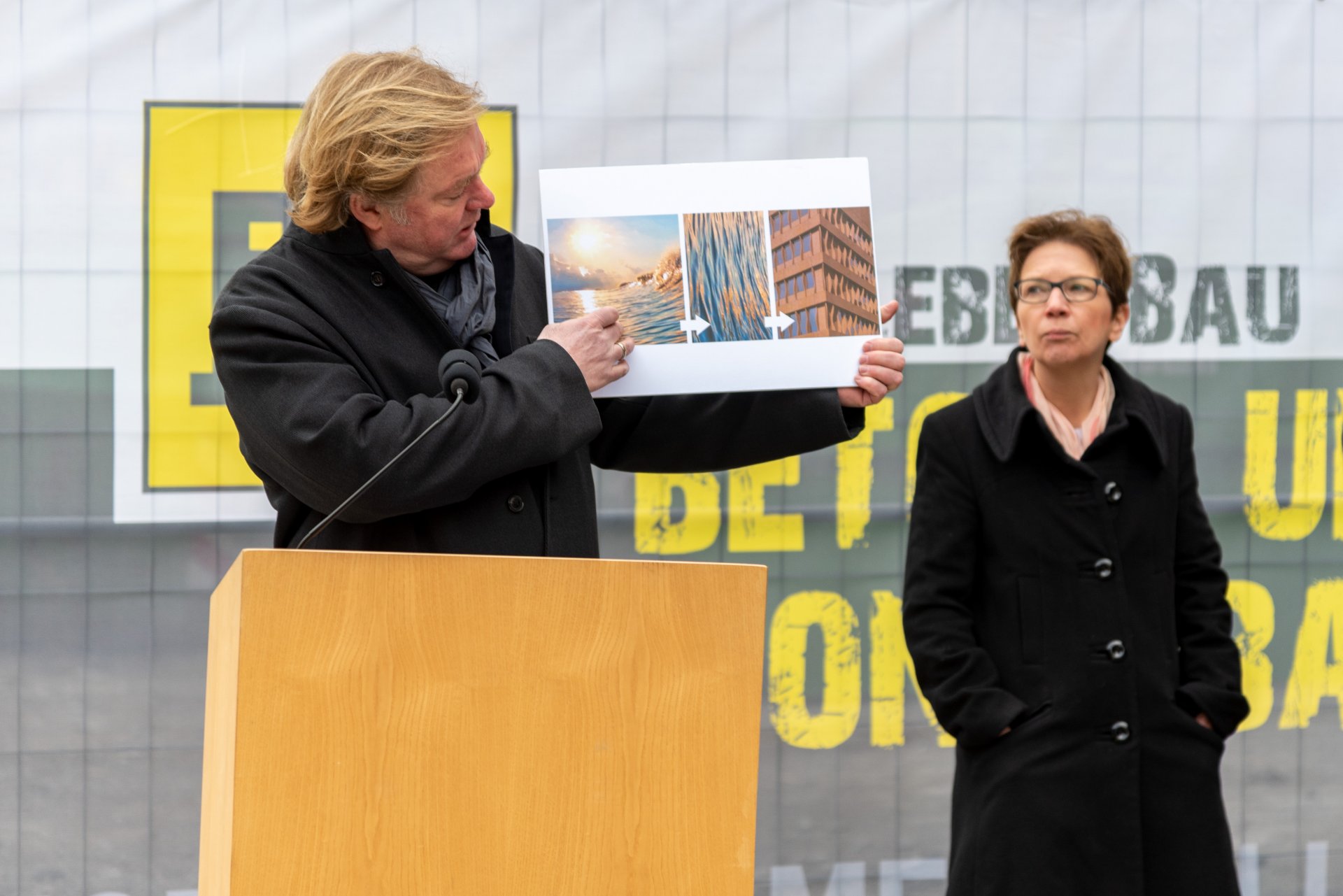
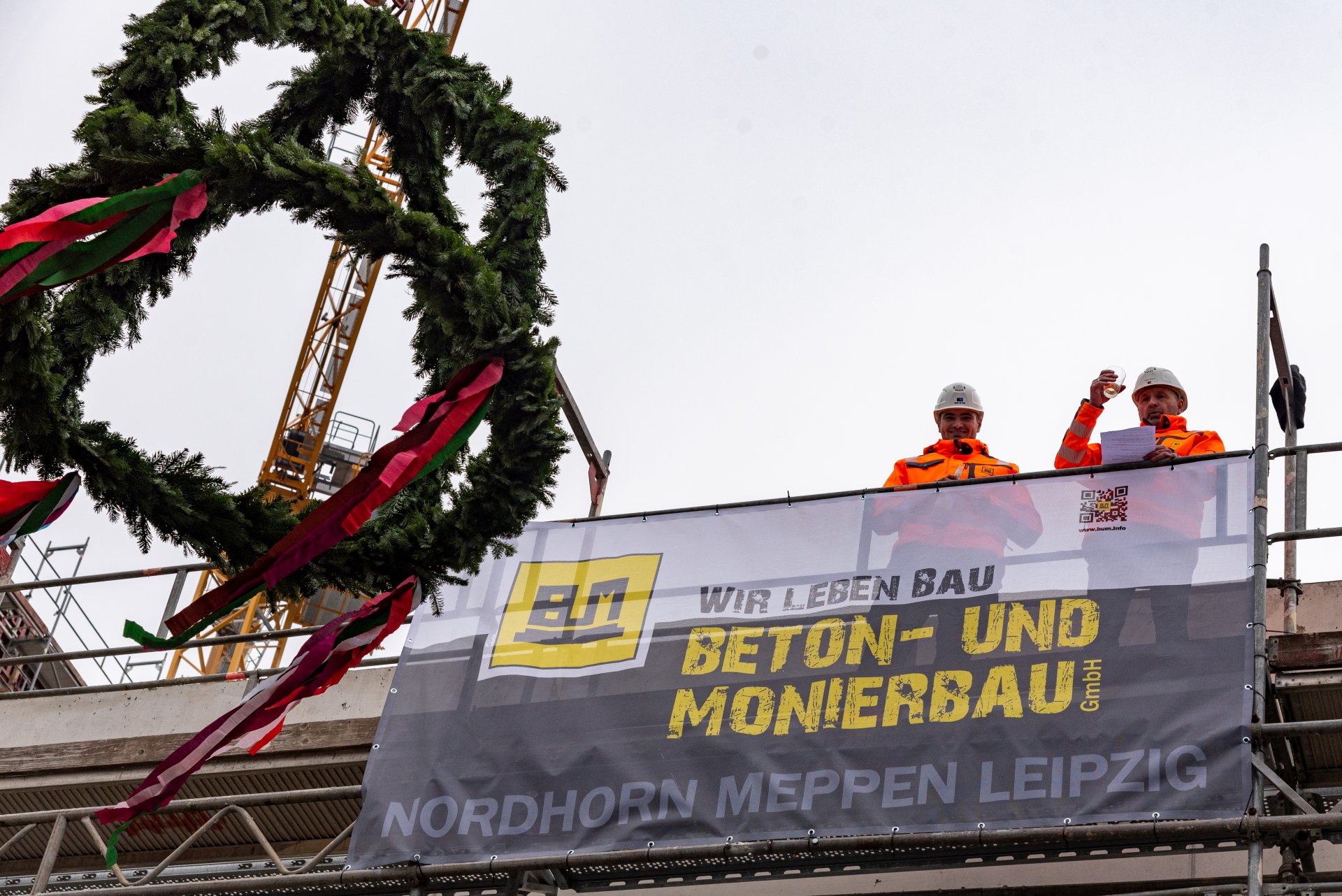
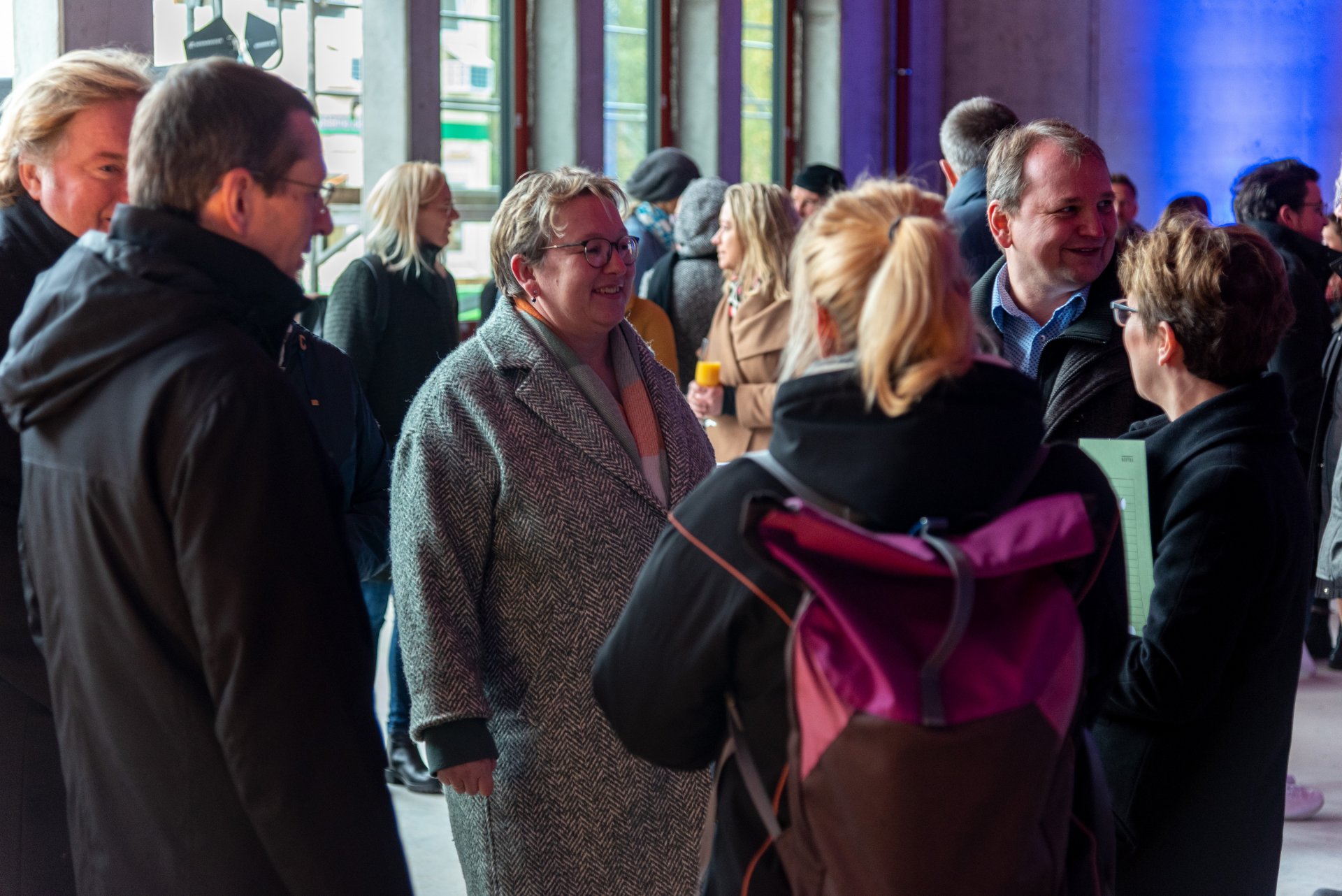
Around a year after the start of construction work, the topping-out ceremony has now been celebrated at the Center for Deep-Sea Research (ZfT).
More about the topping-out ceremony can be found here.
Dry Construction
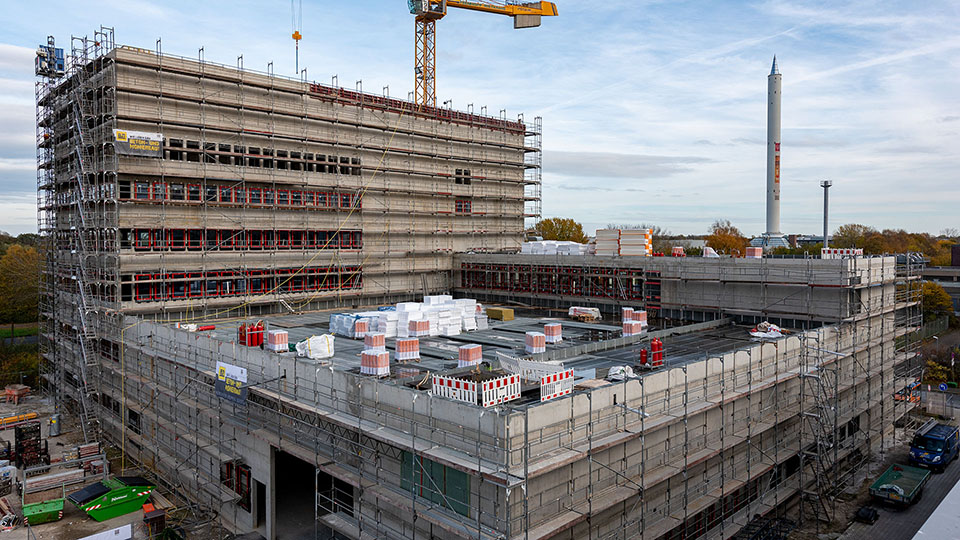
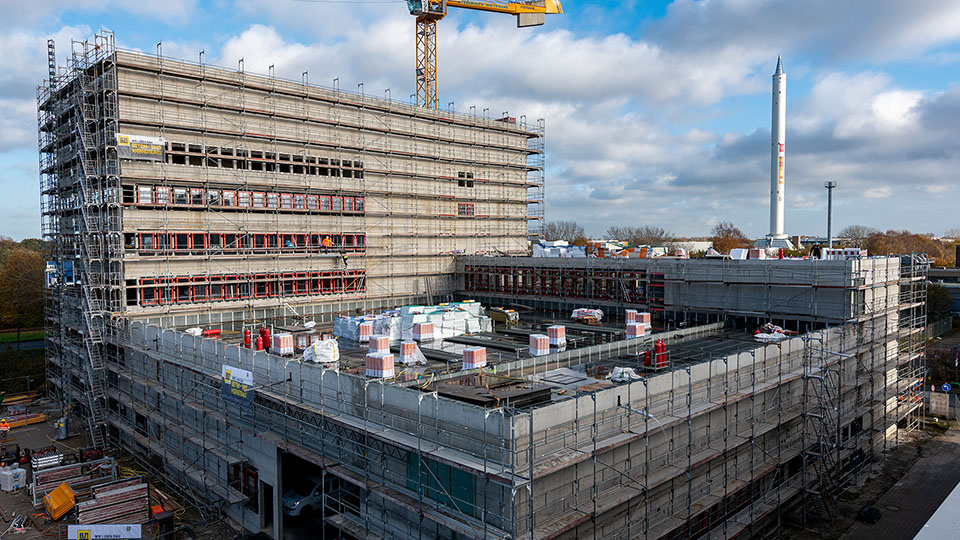
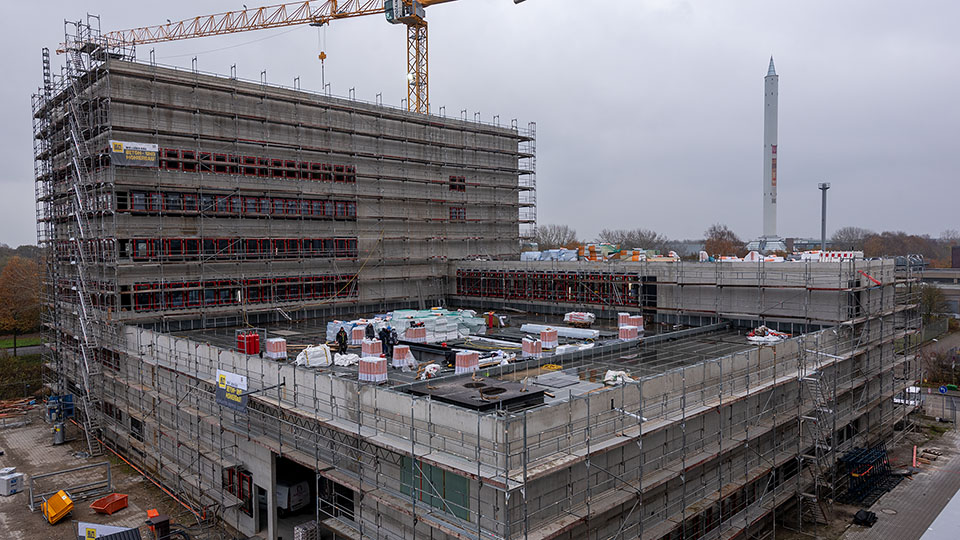
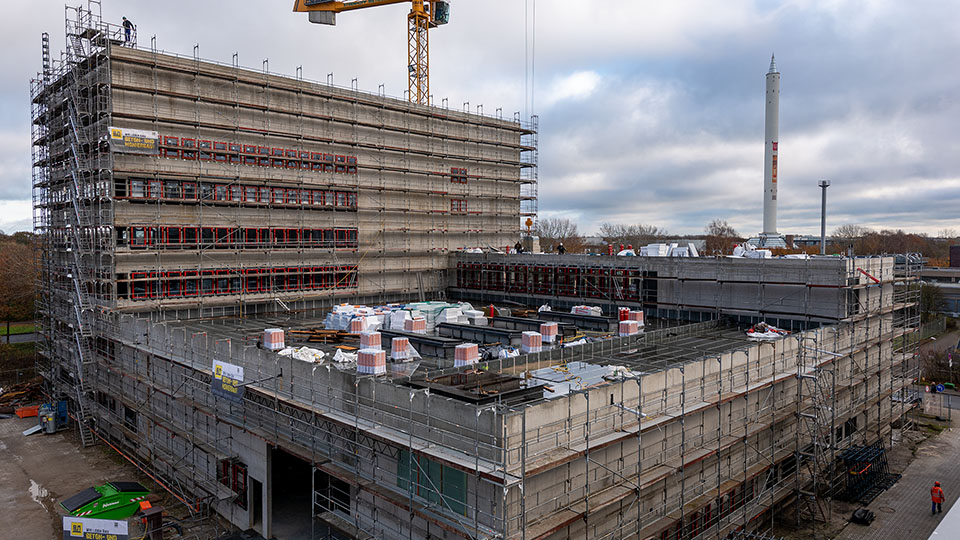
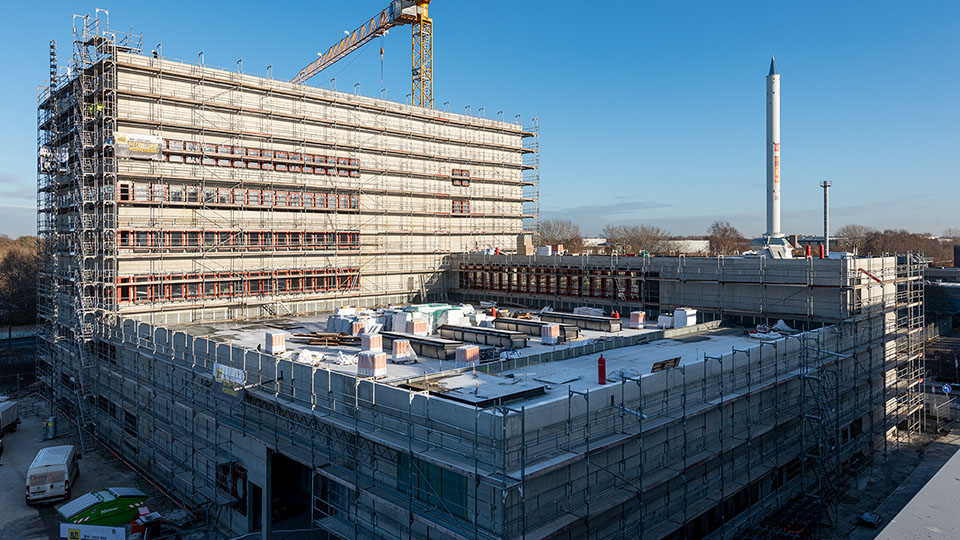
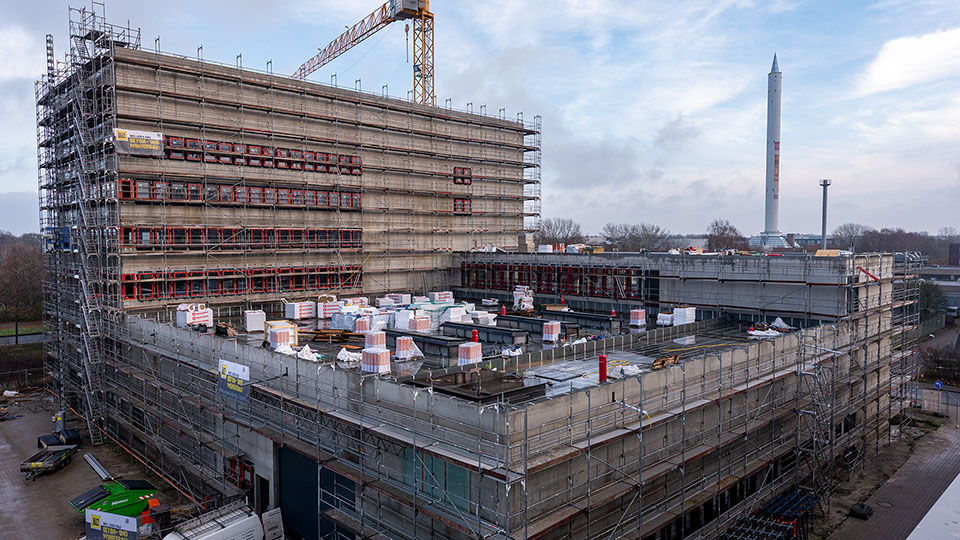
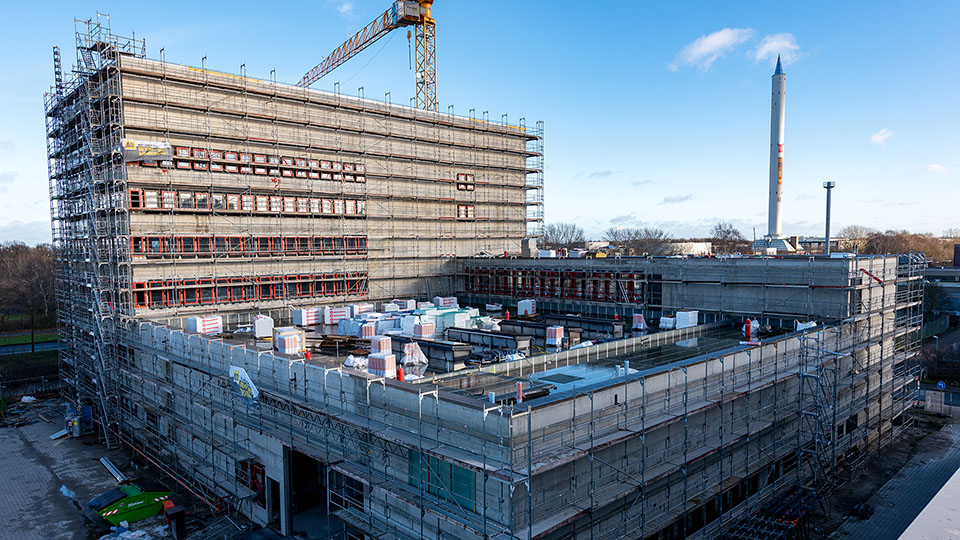
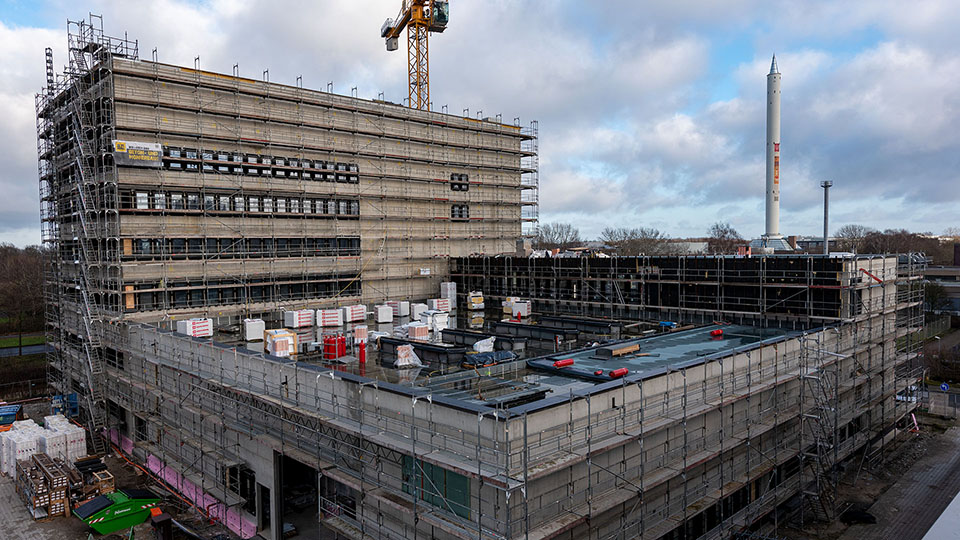
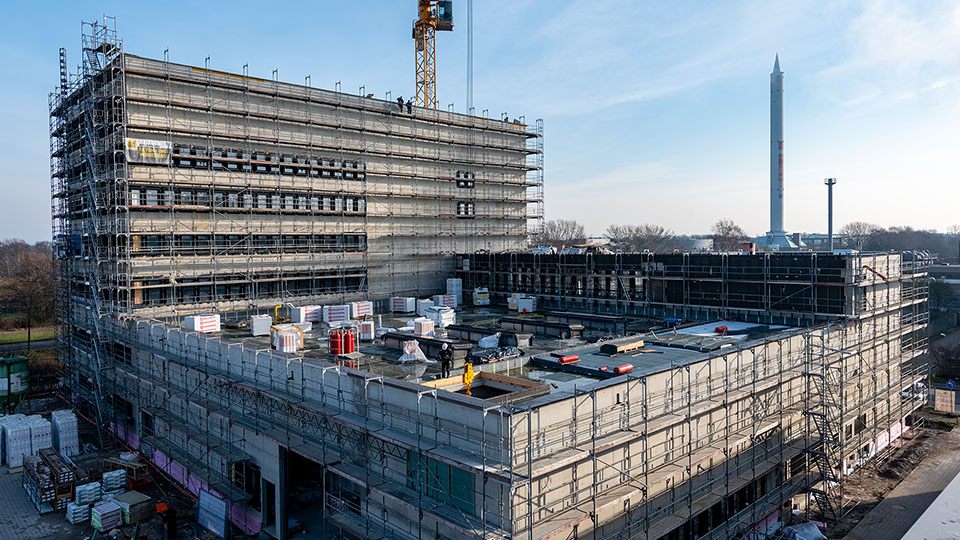
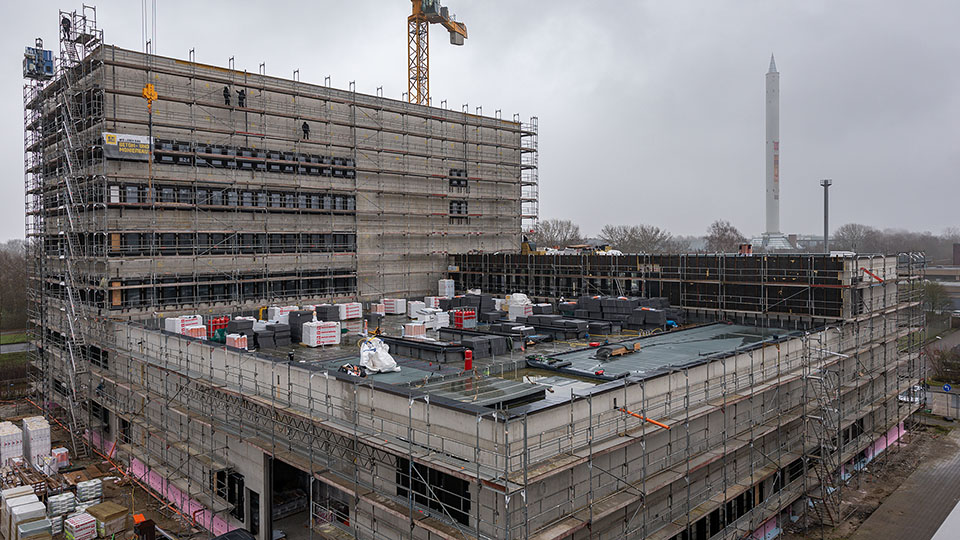
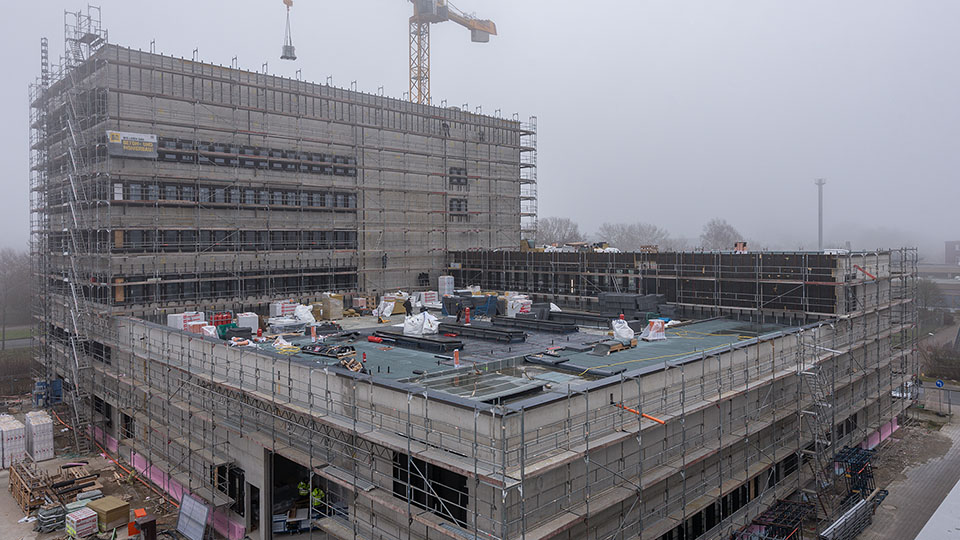
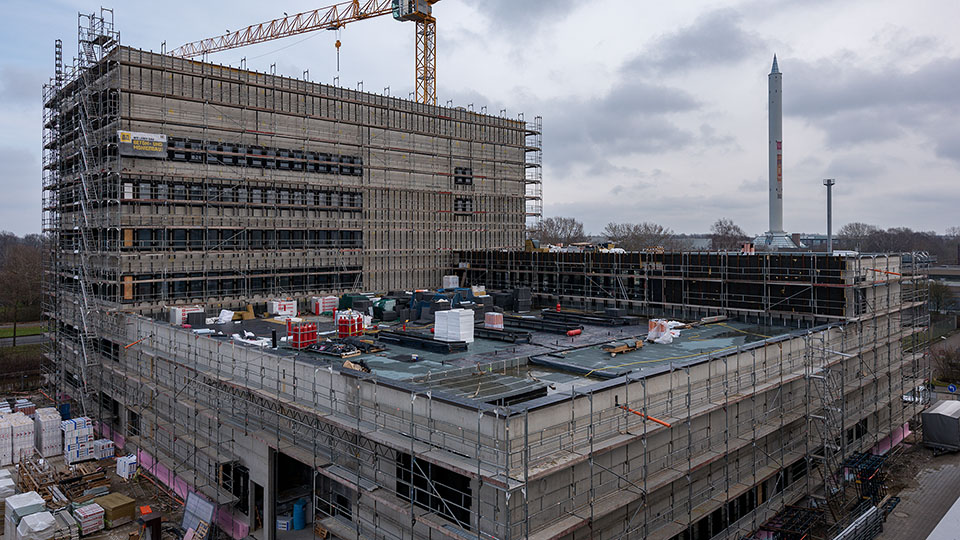
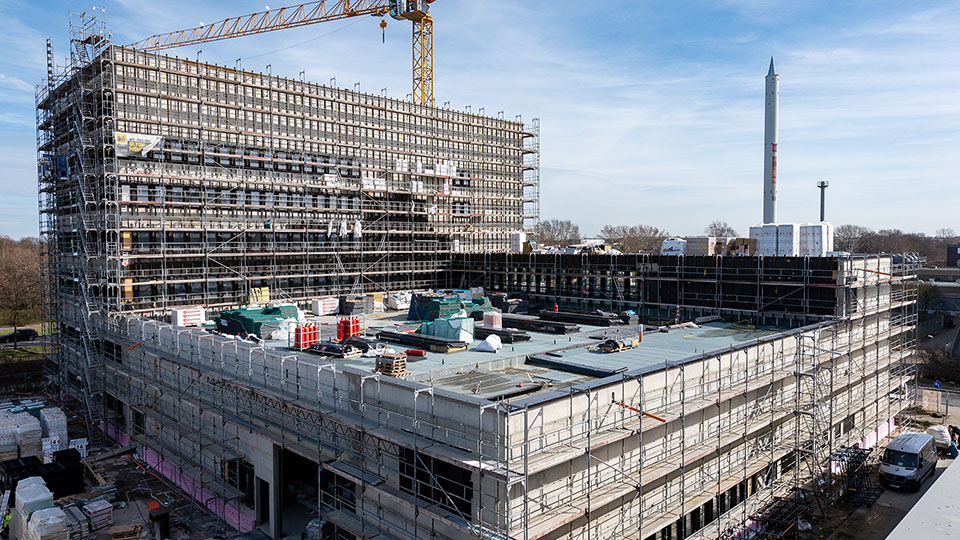
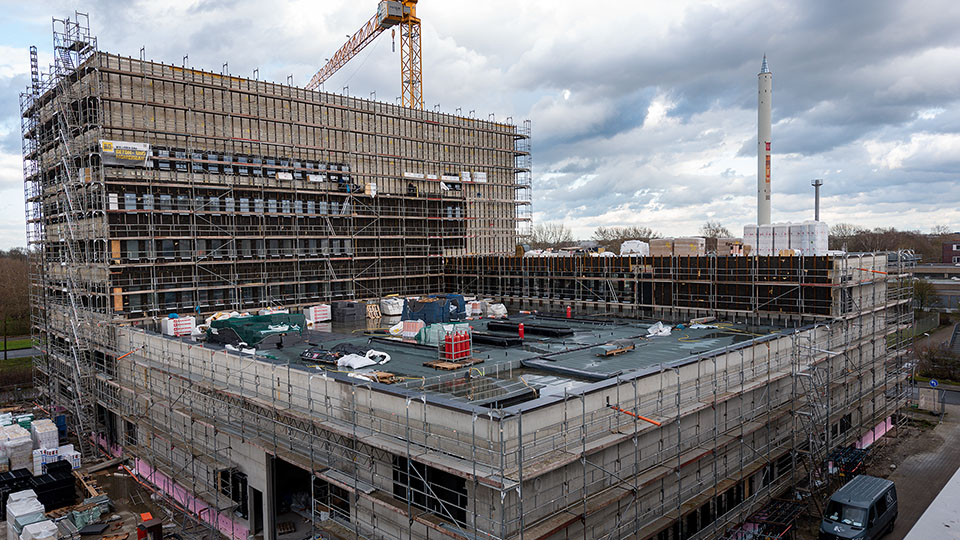
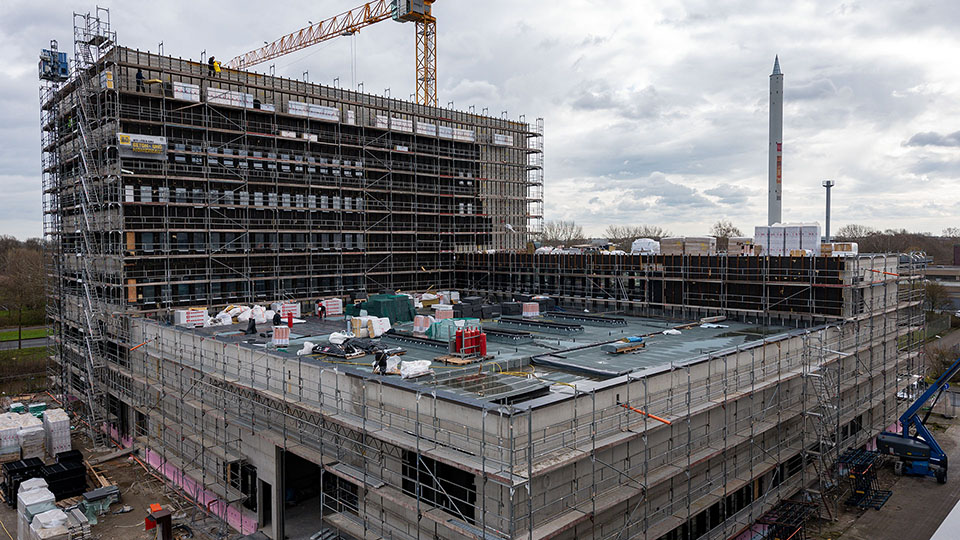
The building construction is almost finished, now the technical interior work and the completion of the facade begin.
At the beginning of April, the connection between the MARUM main building and the new building of the Center for Deep-Sea Research was also created architecturally. A bridge between the two buildings was installed on the second floor.
For this purpose, the facade first had to be opened, metal elements were chiseled out and masonry transoms were removed.
The new connecting bridge was then installed within one day. In the coming weeks, it will still be glazed.
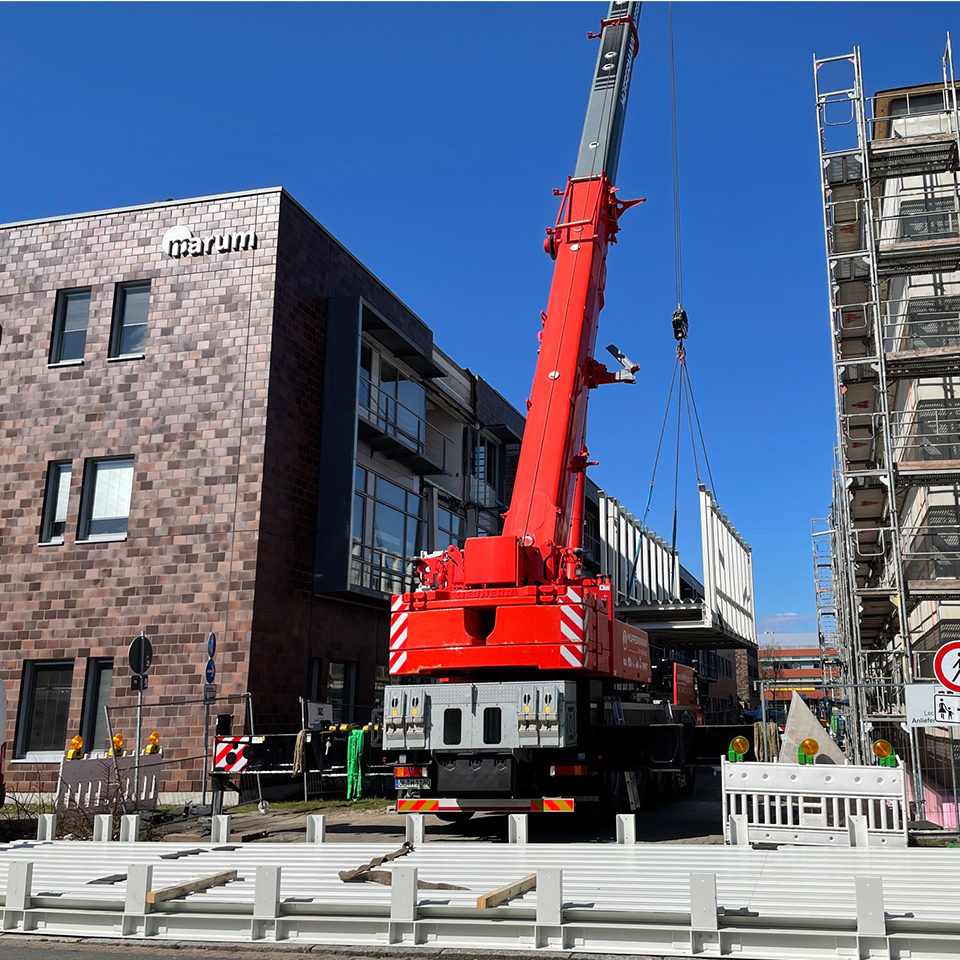
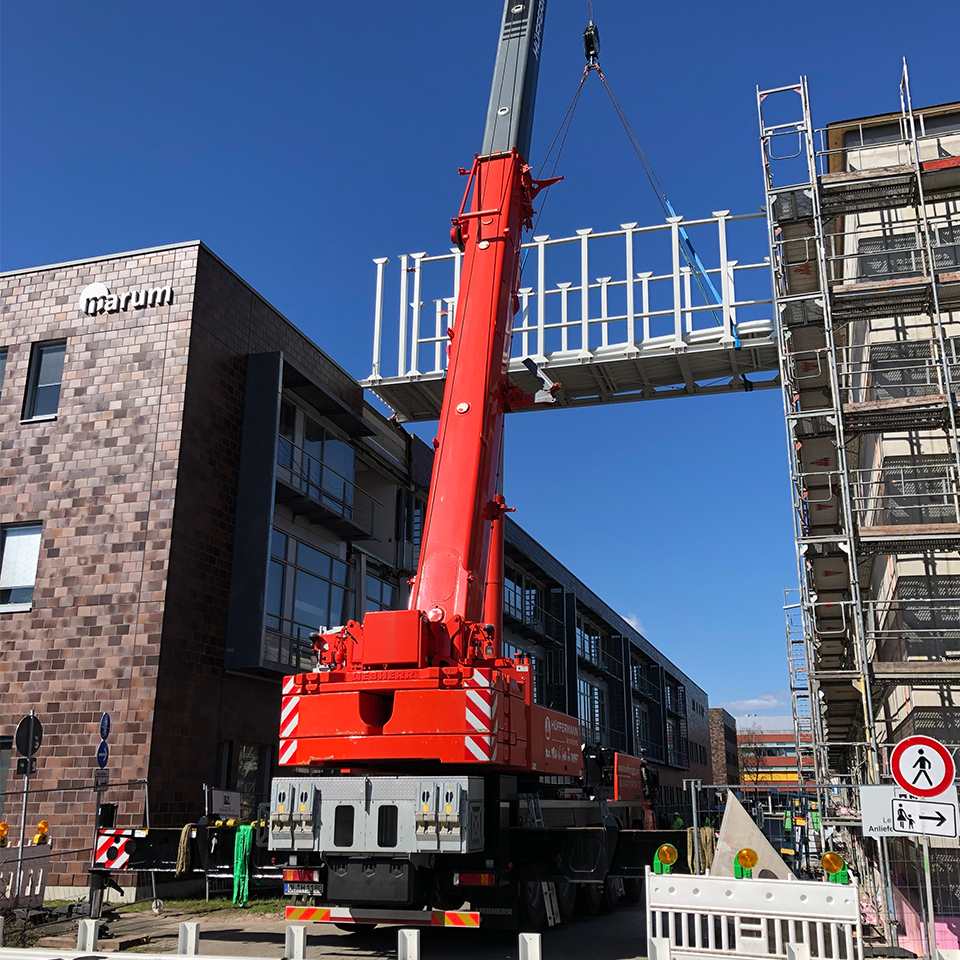
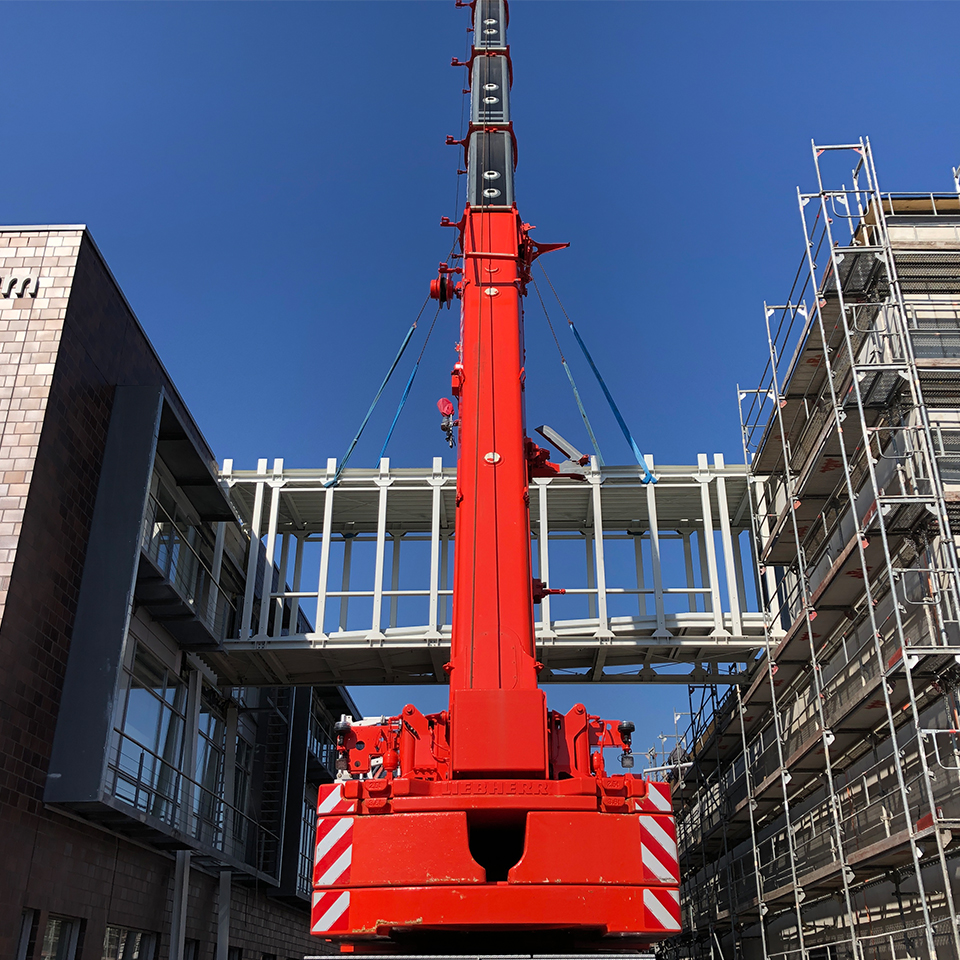
The new connecting bridge was then installed within one day. It will still be glazed in the coming weeks.
Meanwhile, the dry construction of the ZfT continues.
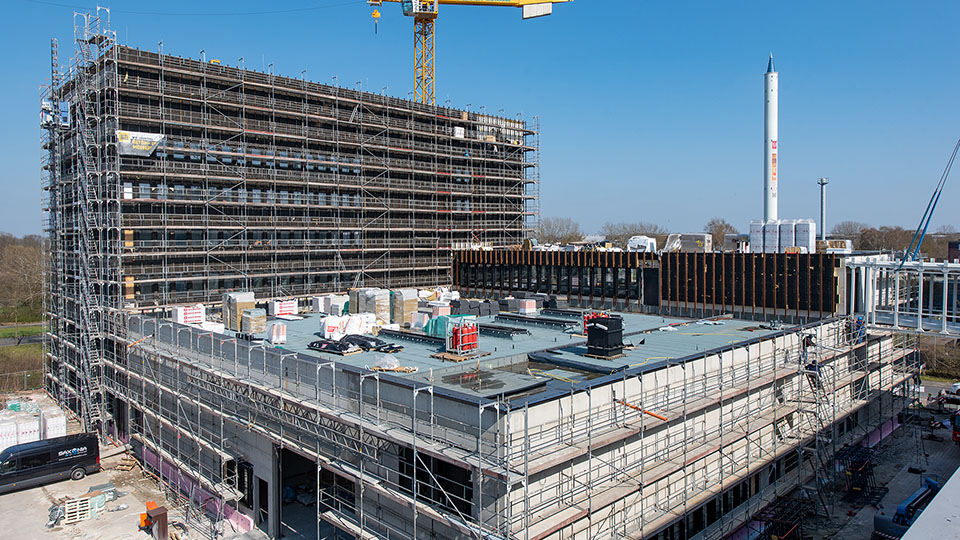
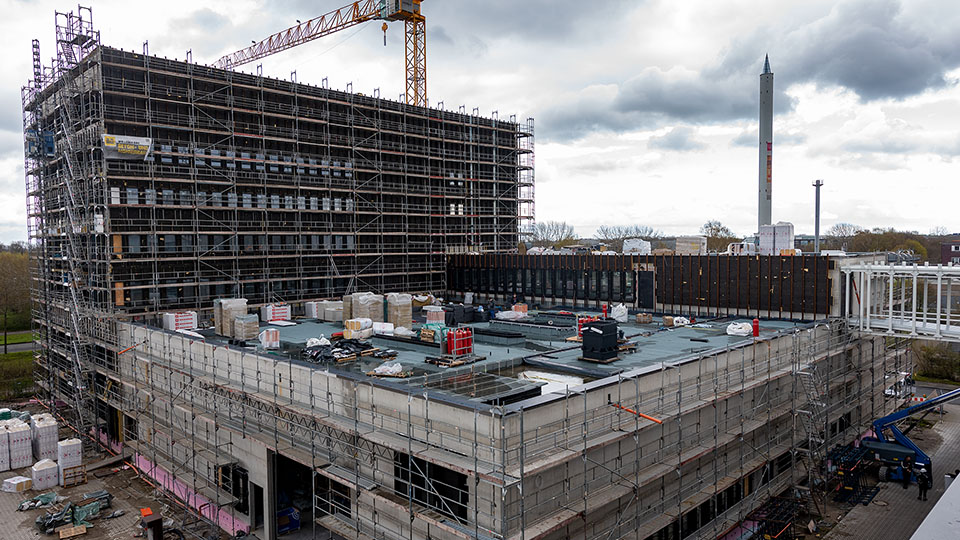
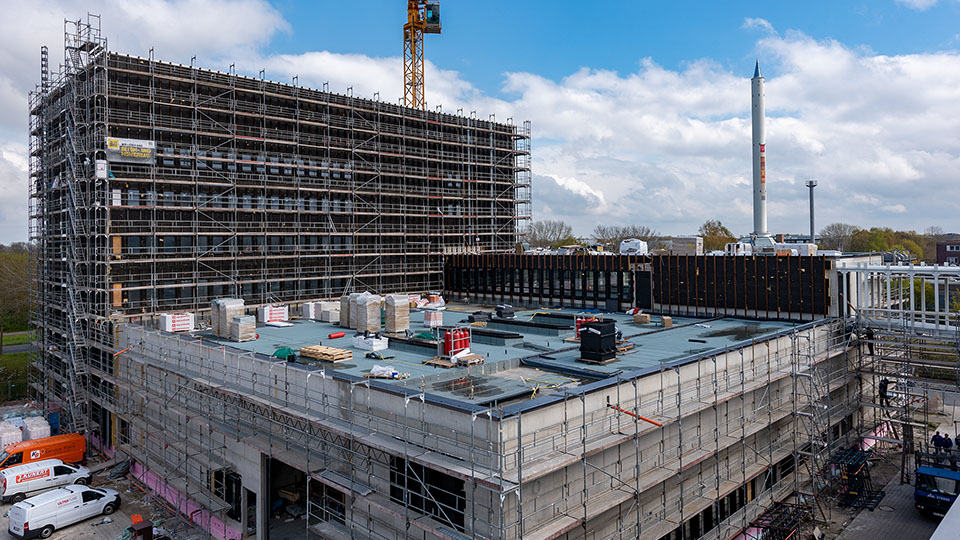
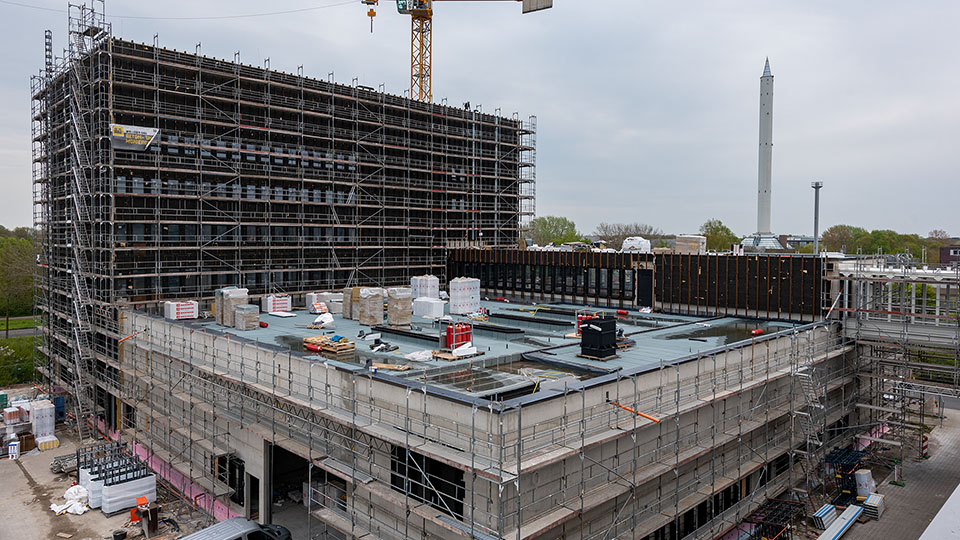
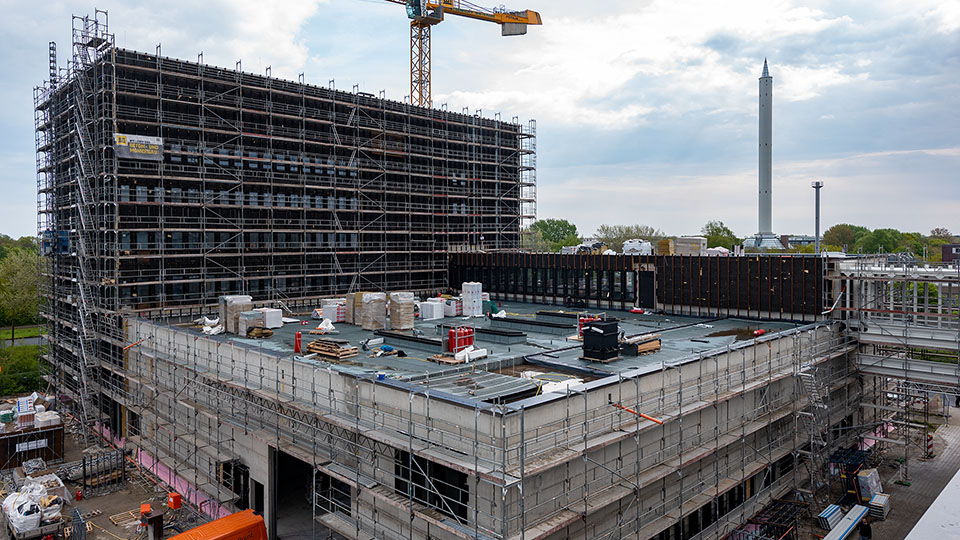
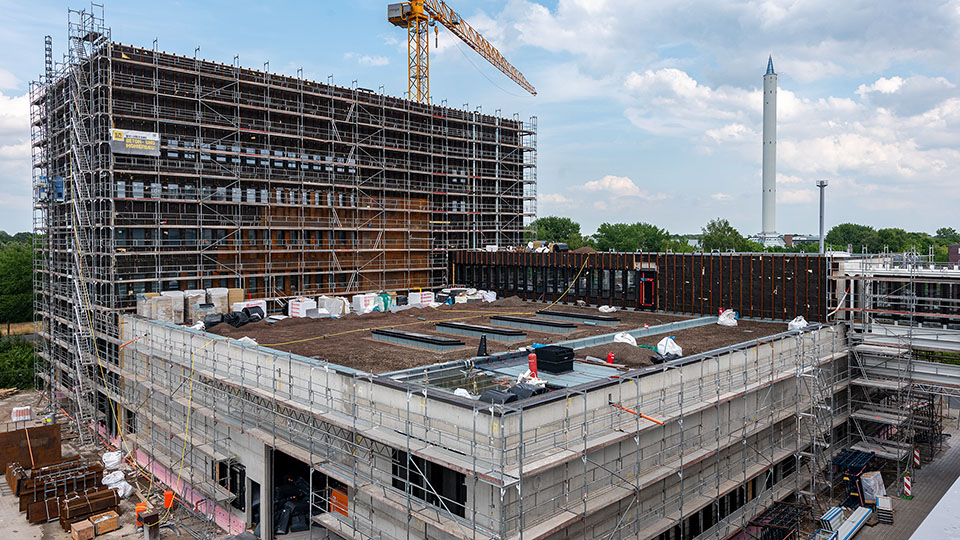
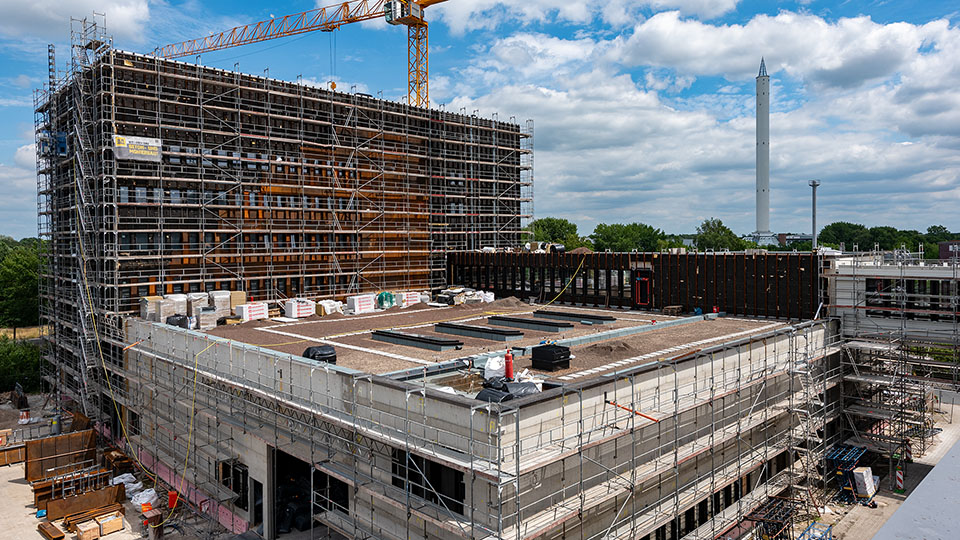
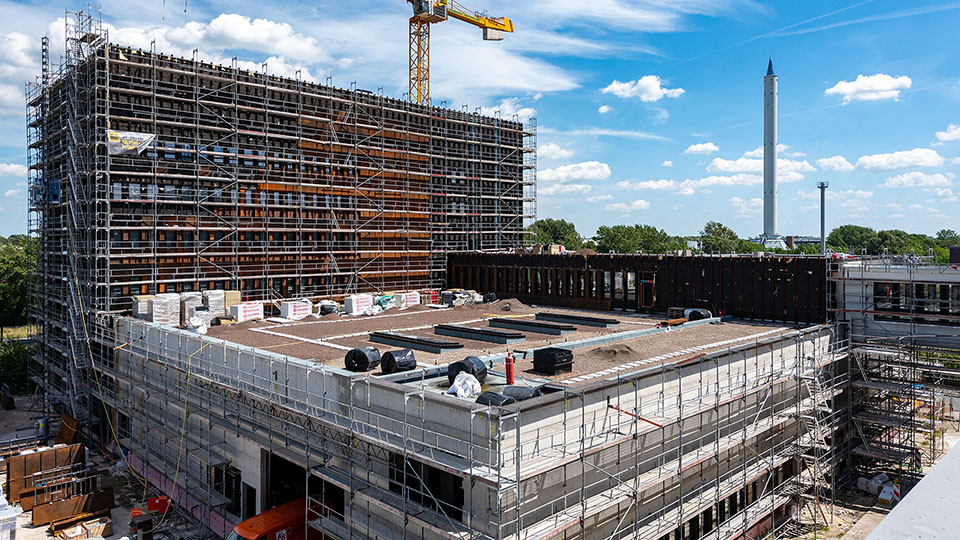
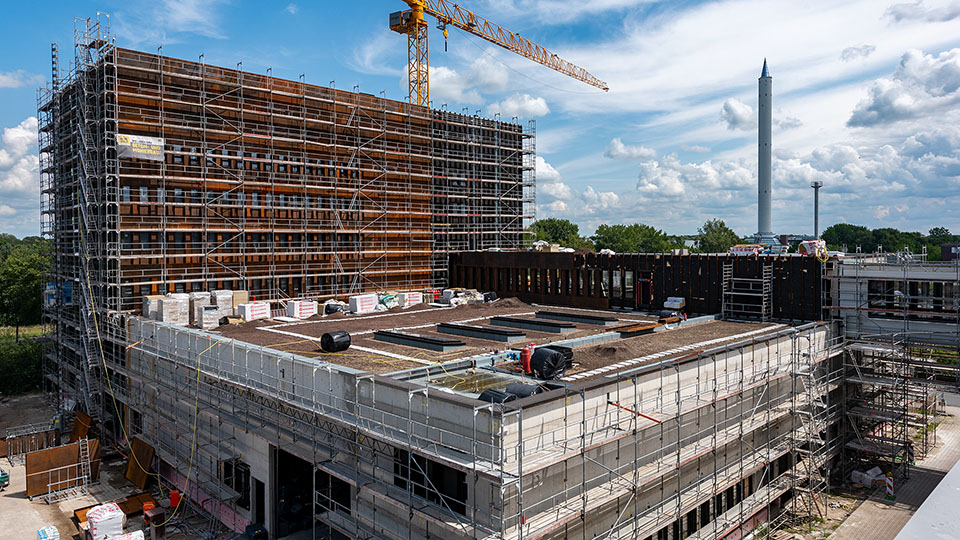
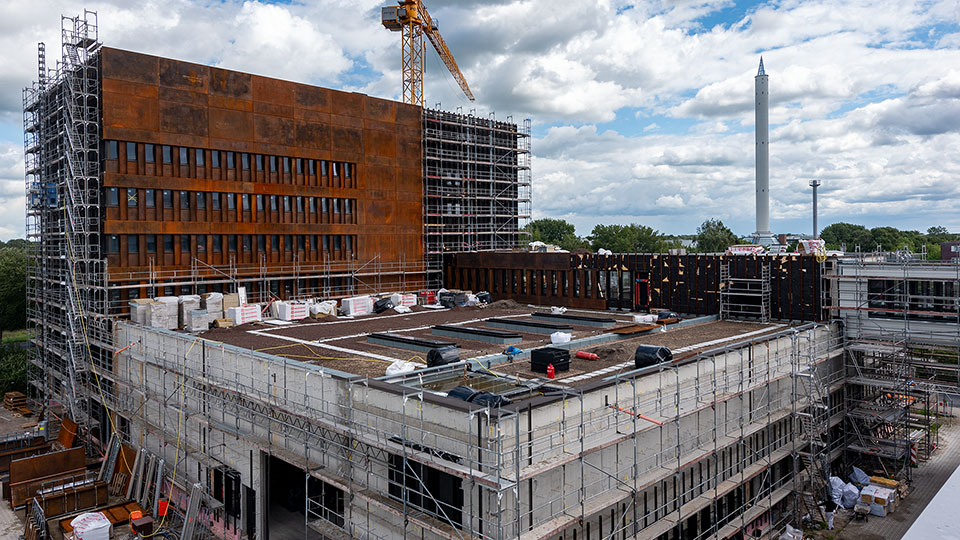
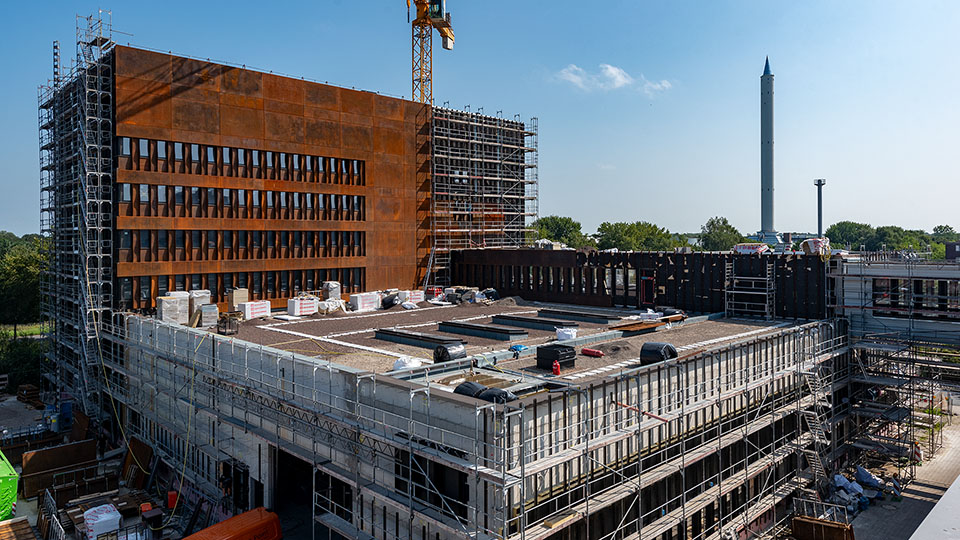
18. August 2023
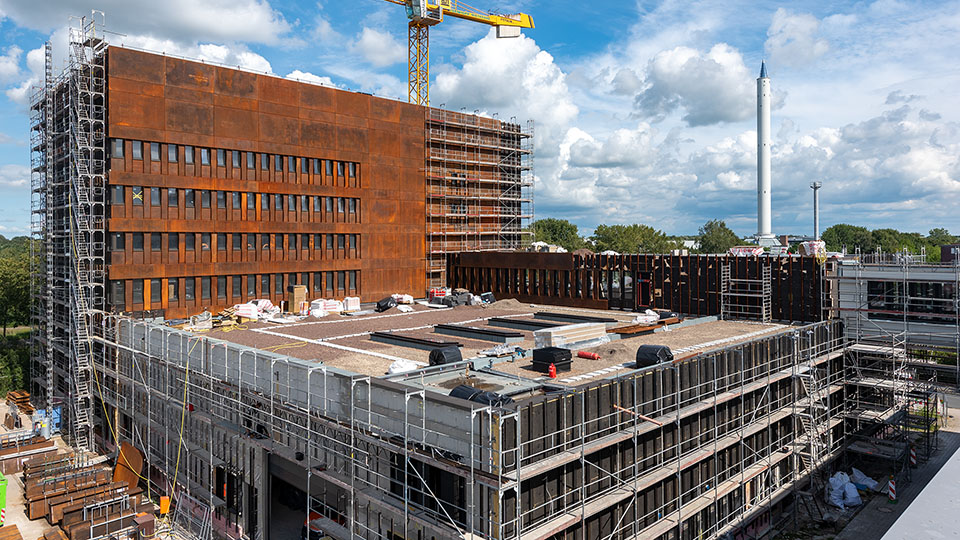
28. August 2023
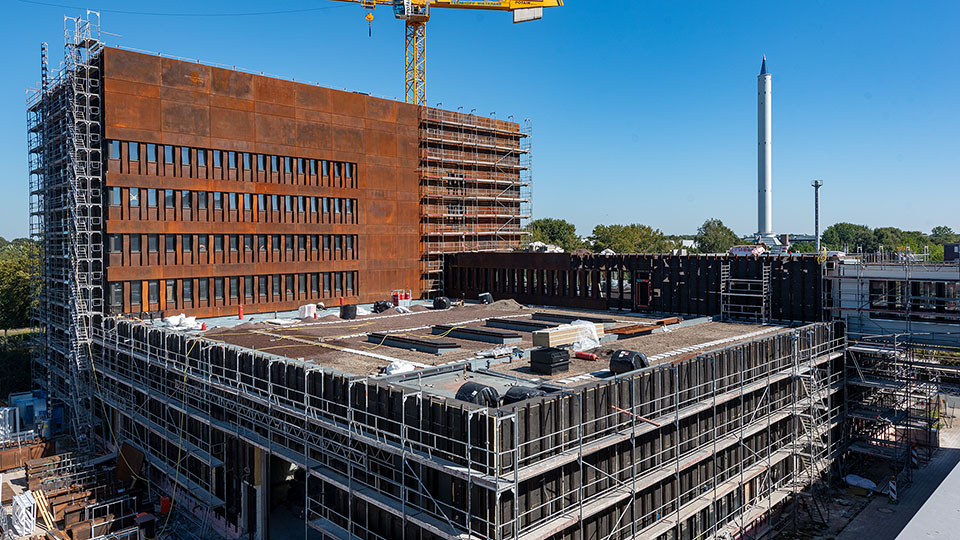
8. September 2023
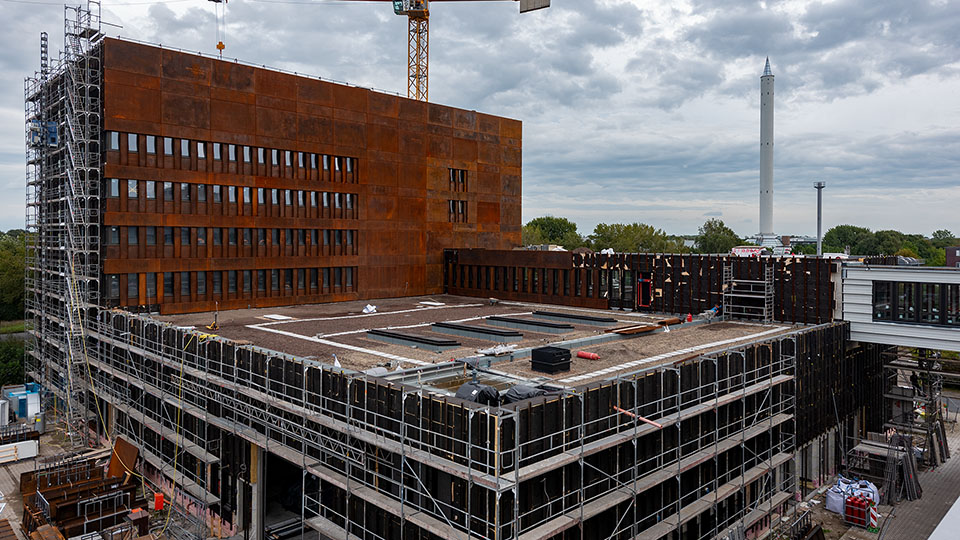
18. September 2023
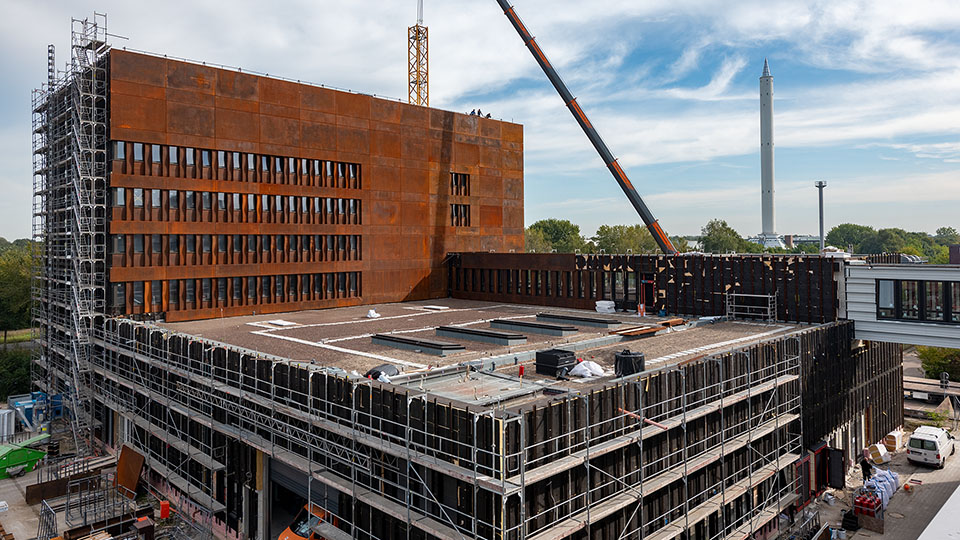
27. September 2023
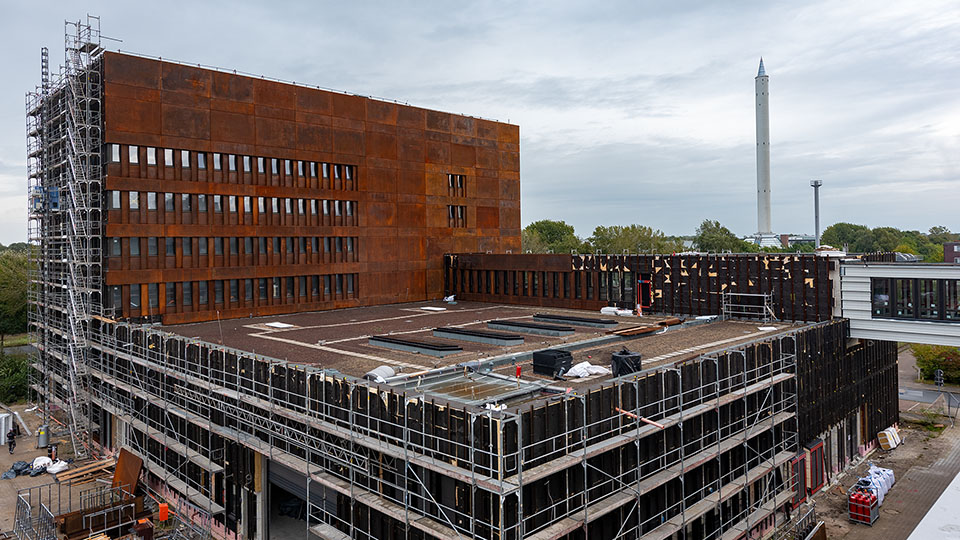
6. Oktober 2023
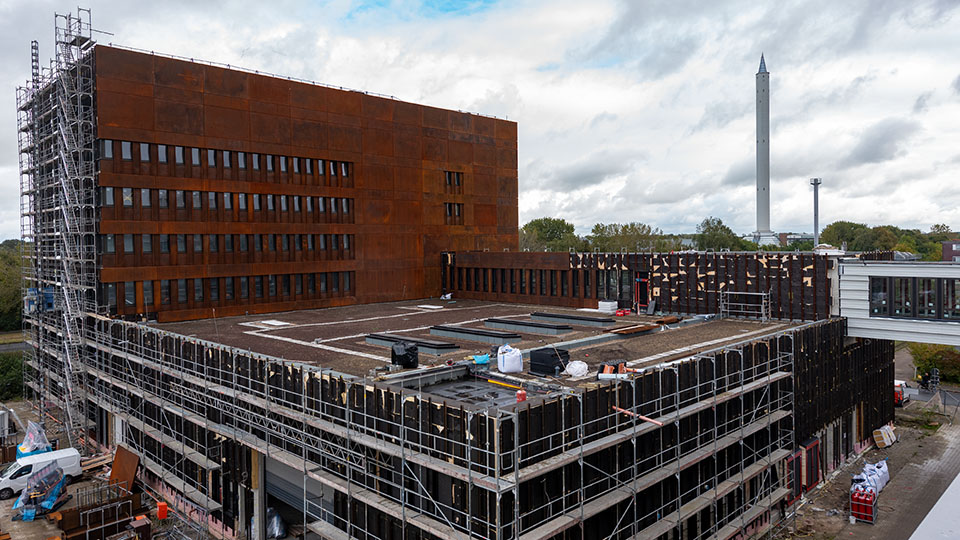
16. Oktober 2023
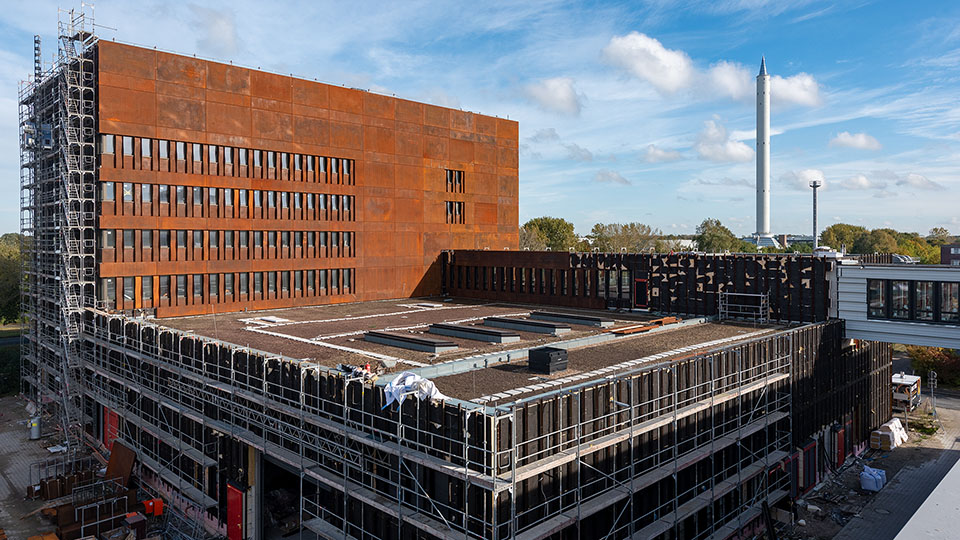
25. Oktober 2023
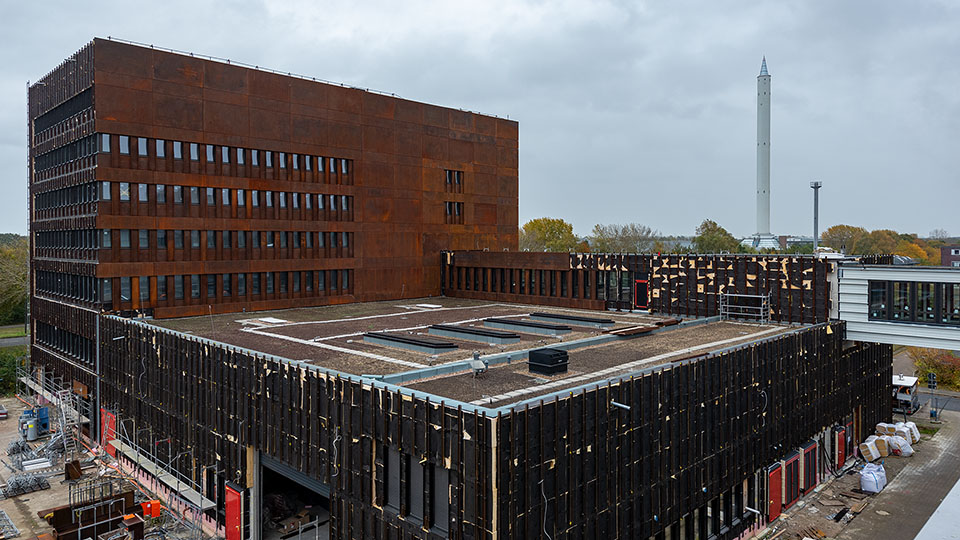
03. November 2023
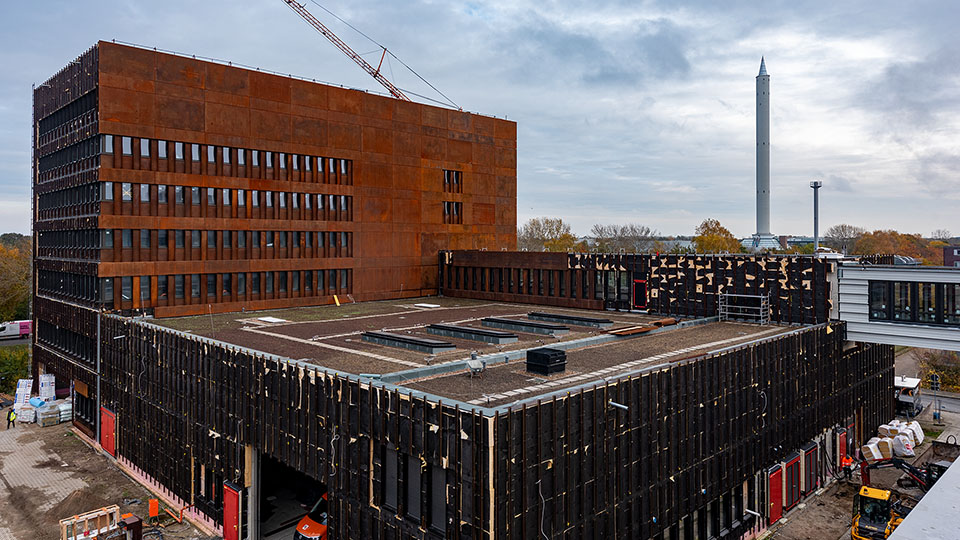
13. November 2023
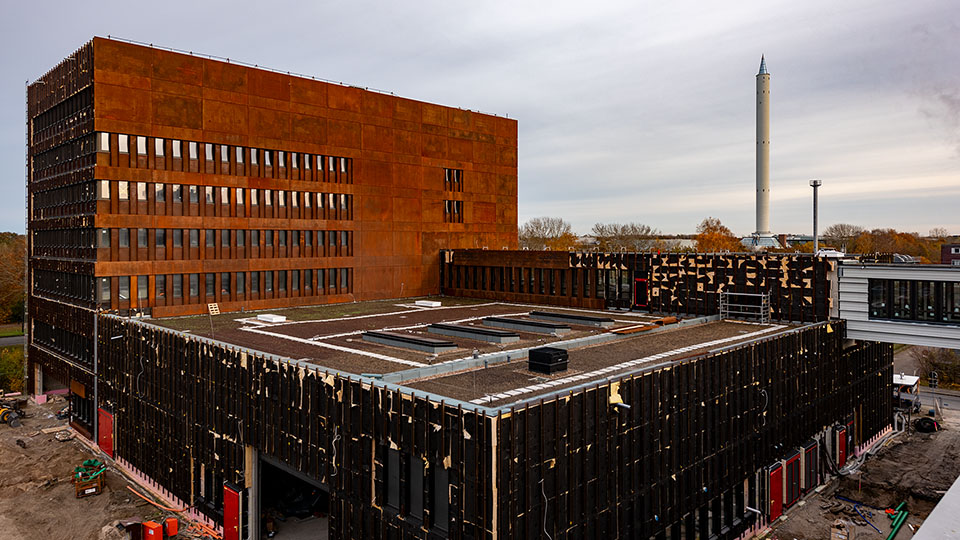
22. November 2023
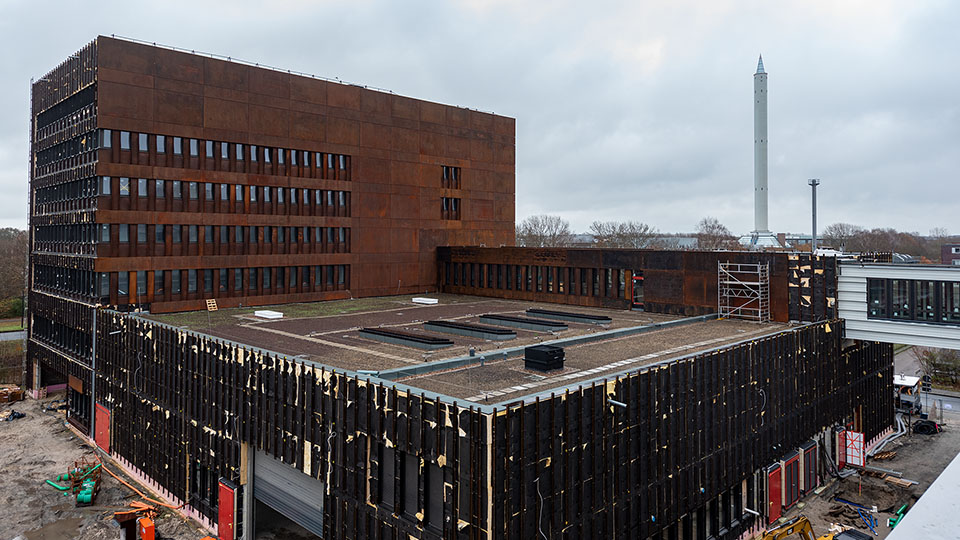
11. Dezember 2023
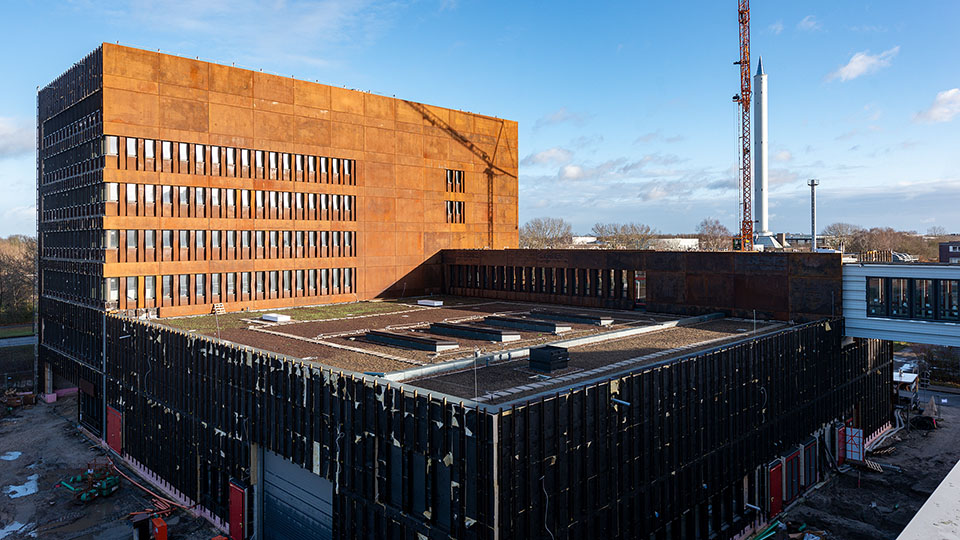
20. Dezember 2023
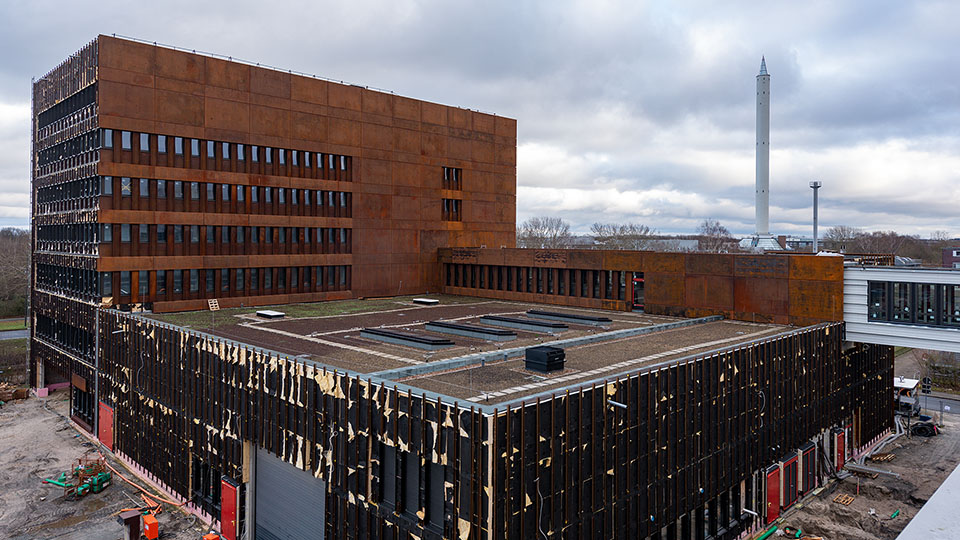
04. Januar 2024
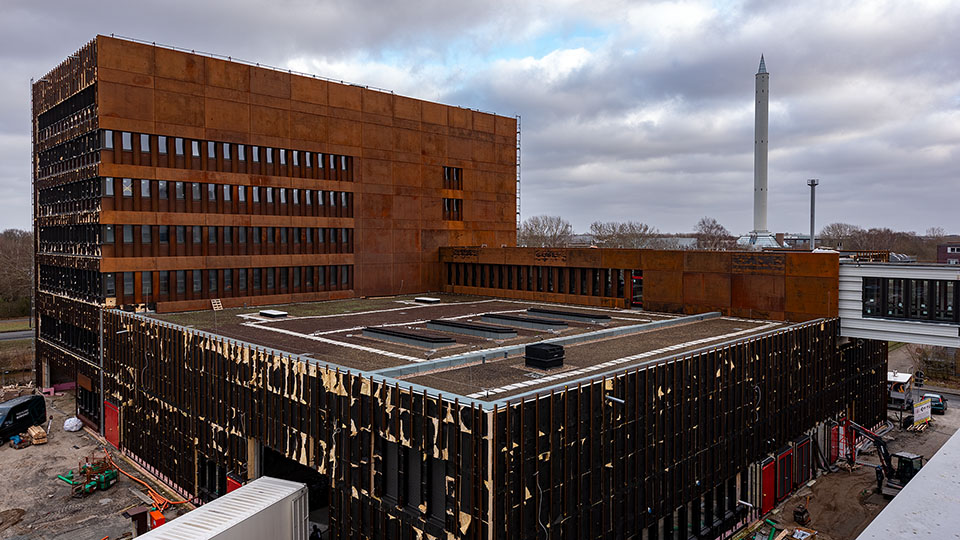
23. Januar 2024
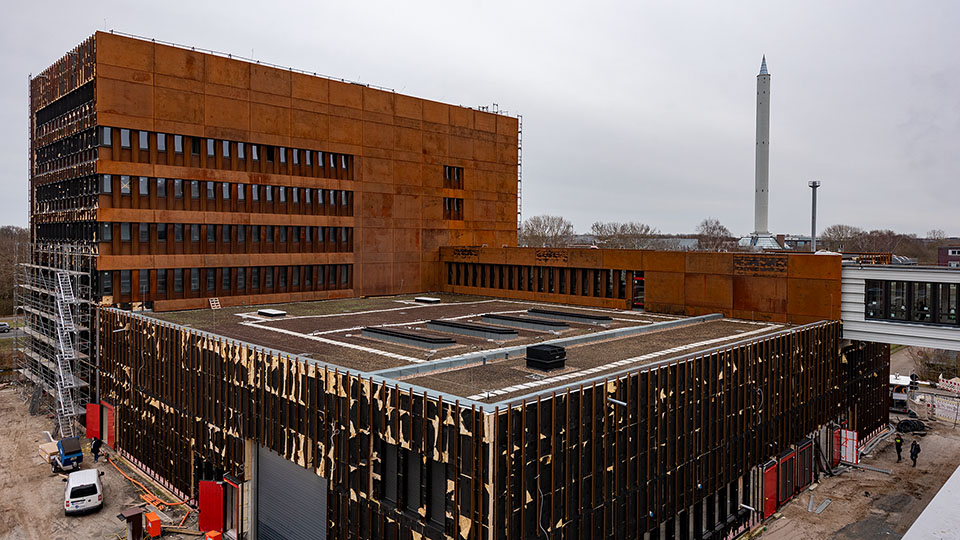
08. Februar 2024
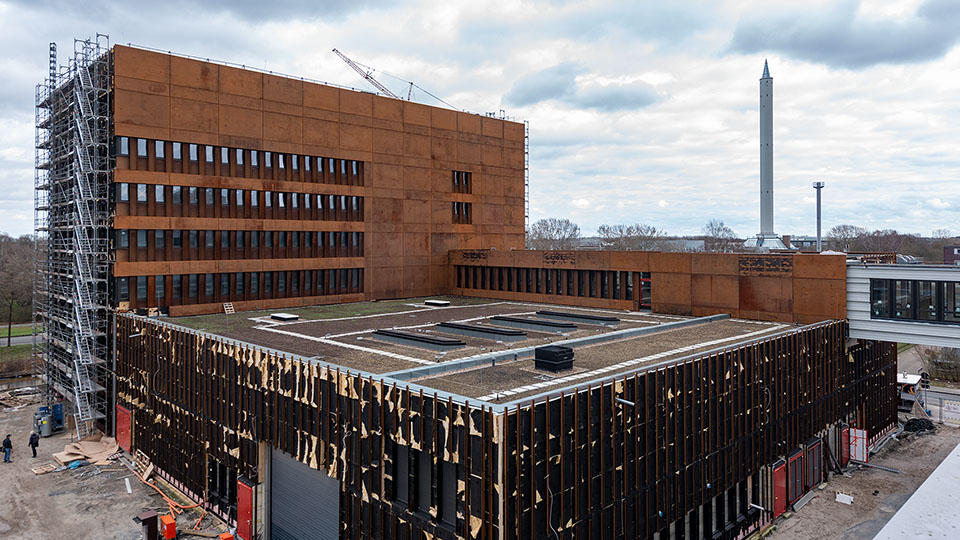
23. Februar 2024;
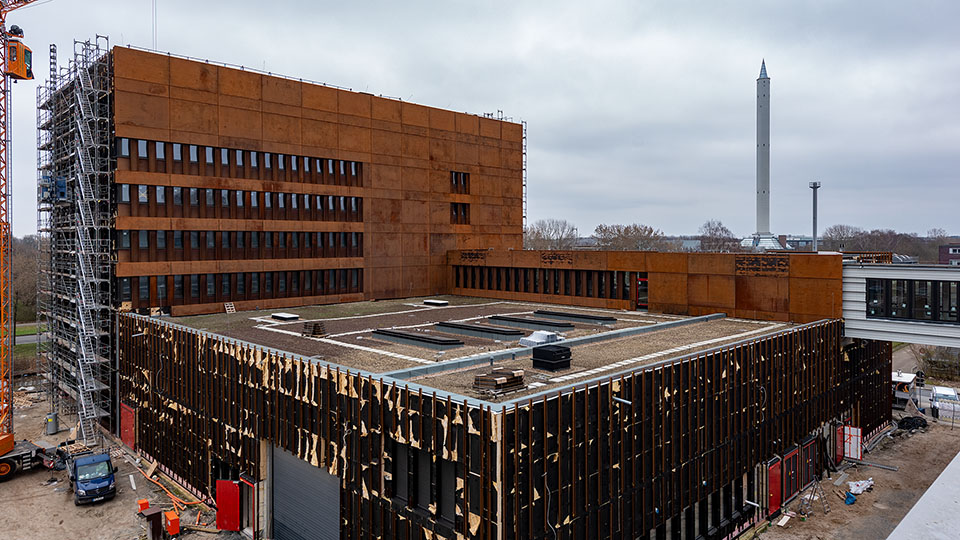
07. März 2024
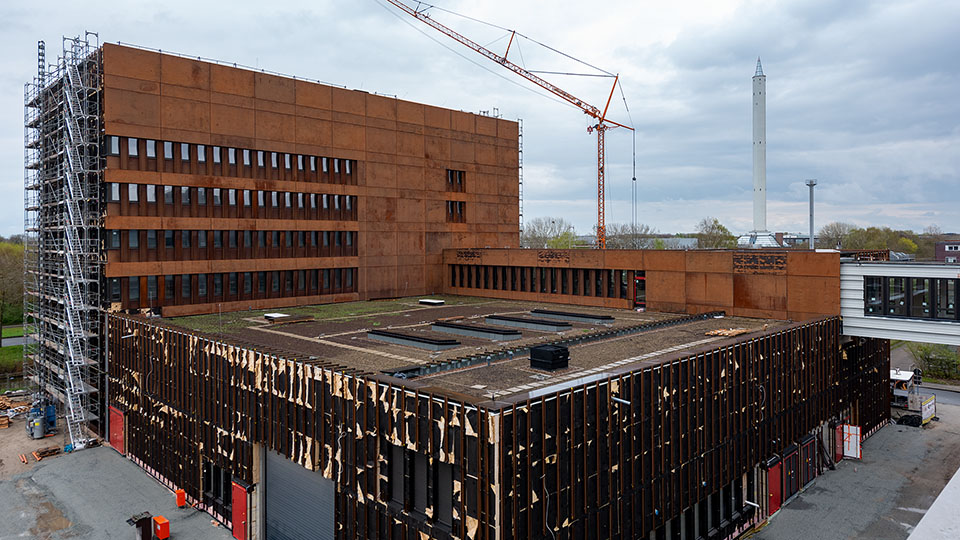
4. April 2024
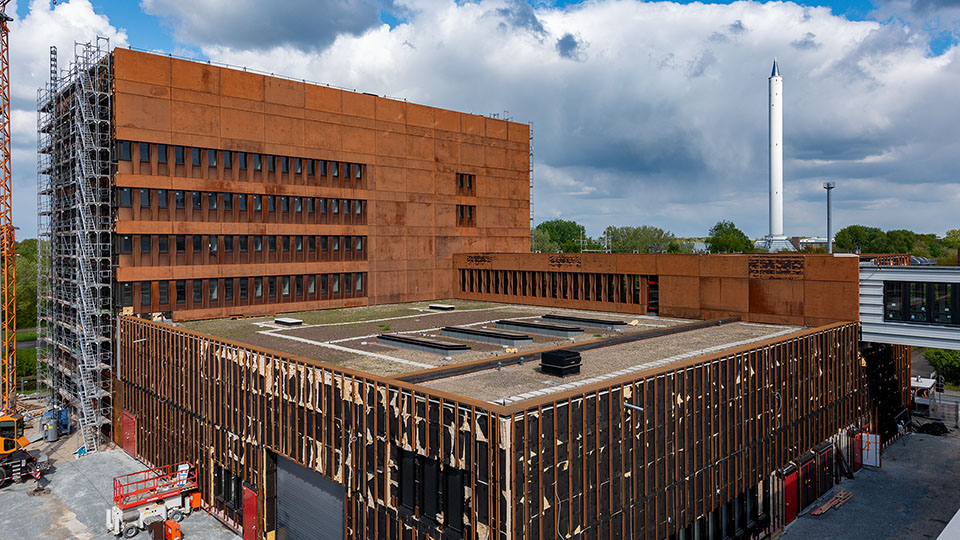
22. April 2024
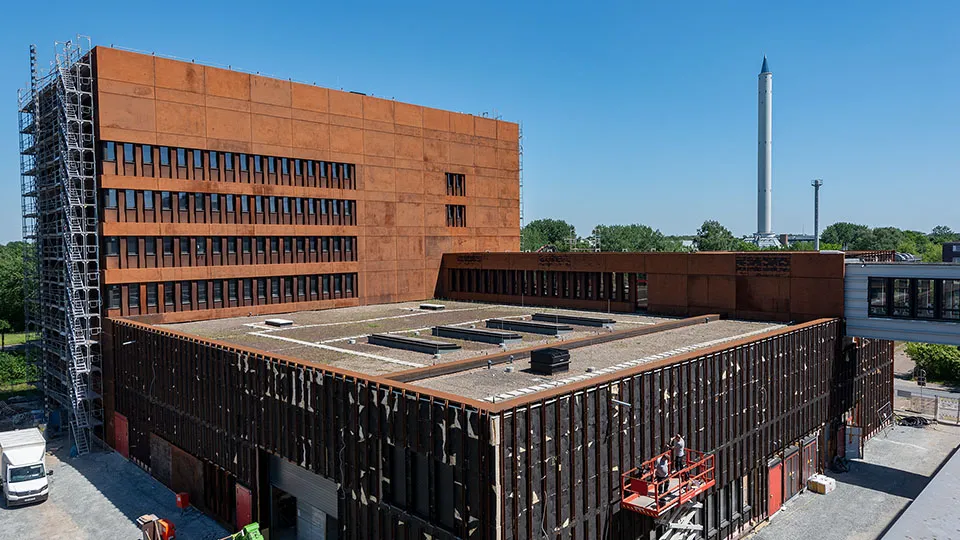
16. Mai 2024
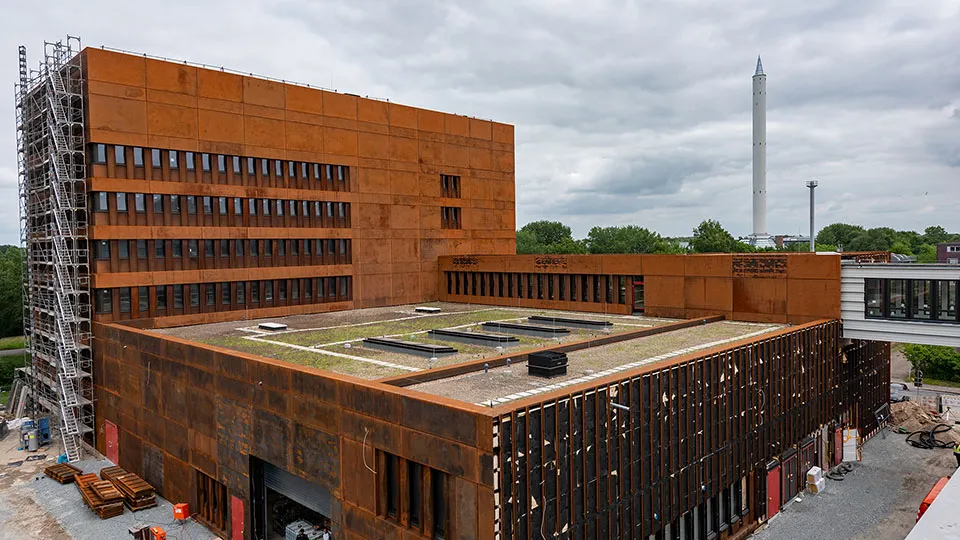
03. Juni 2024
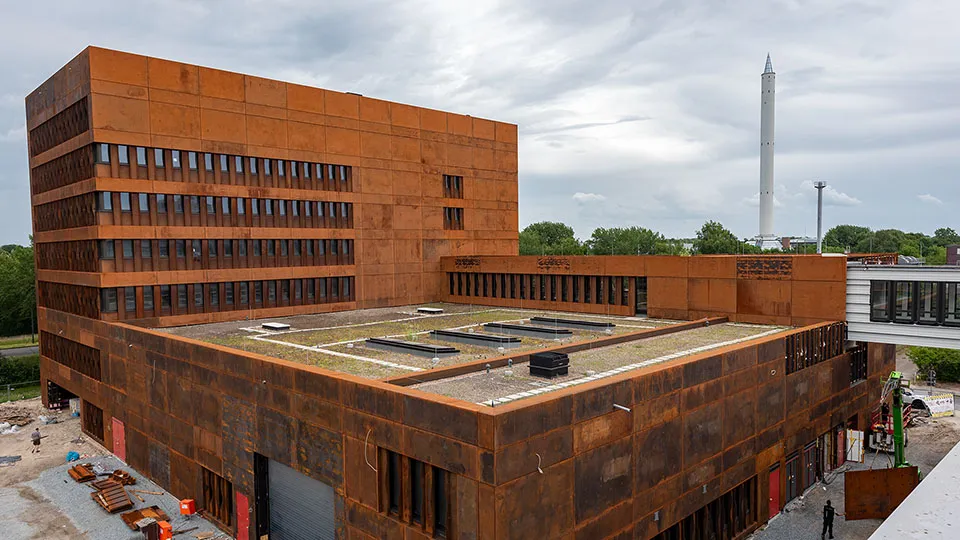
17. Juni 2024
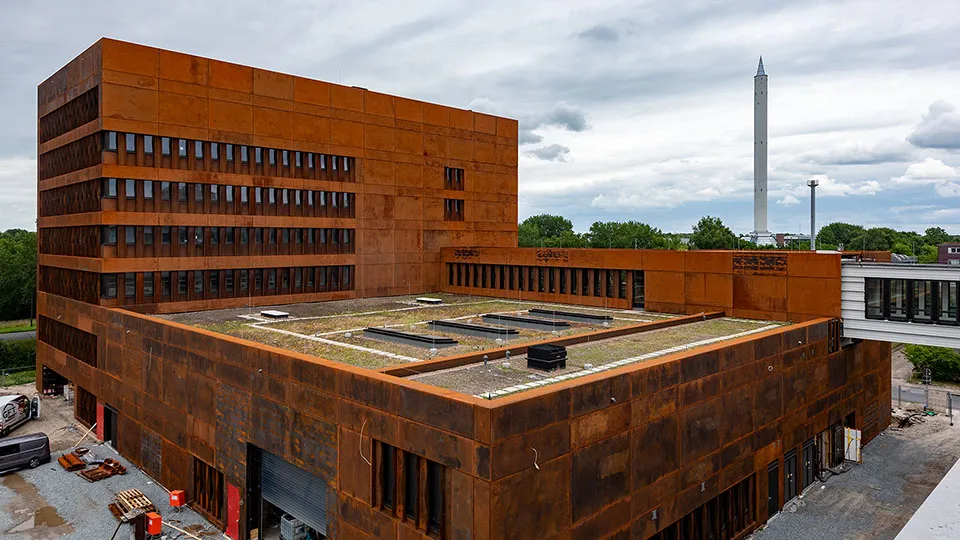
3. Juli 2024
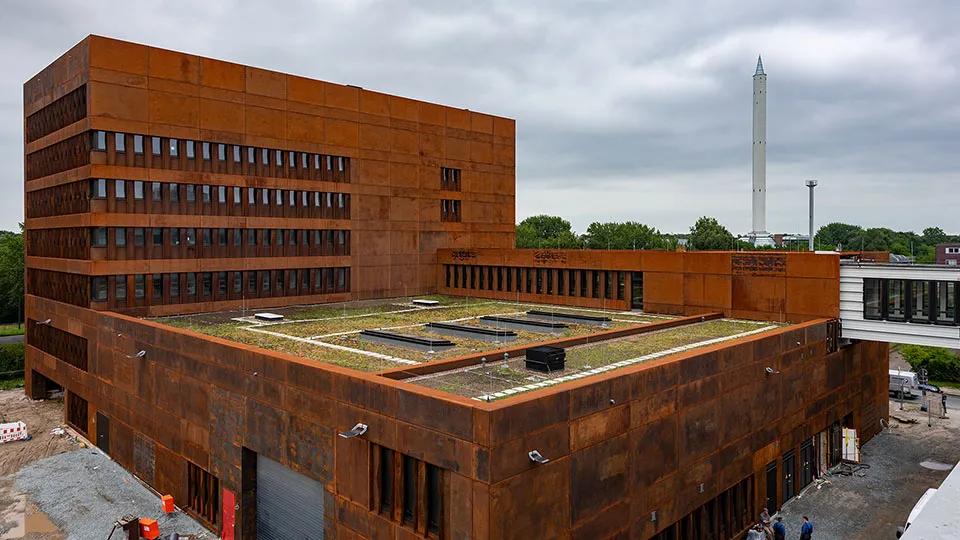
26. Juli 2024
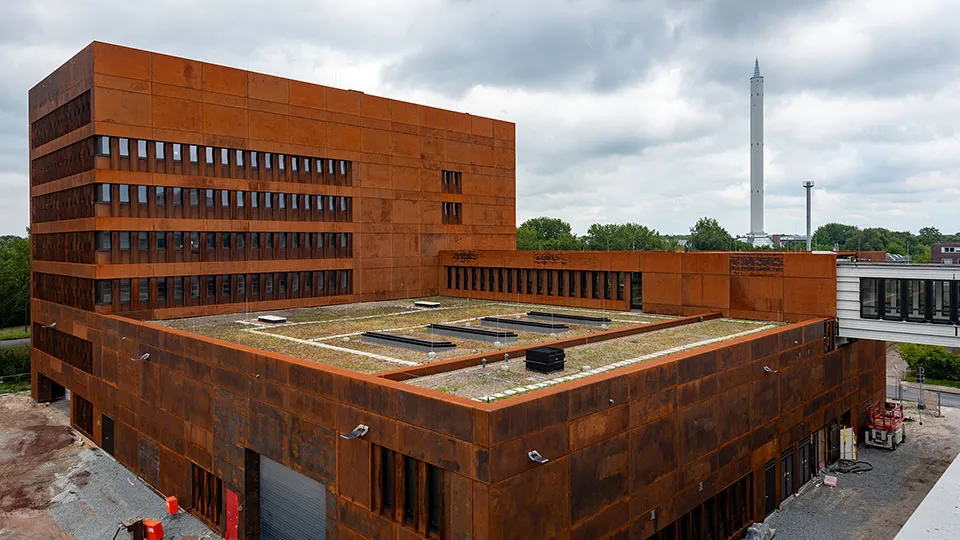
16. August 2024
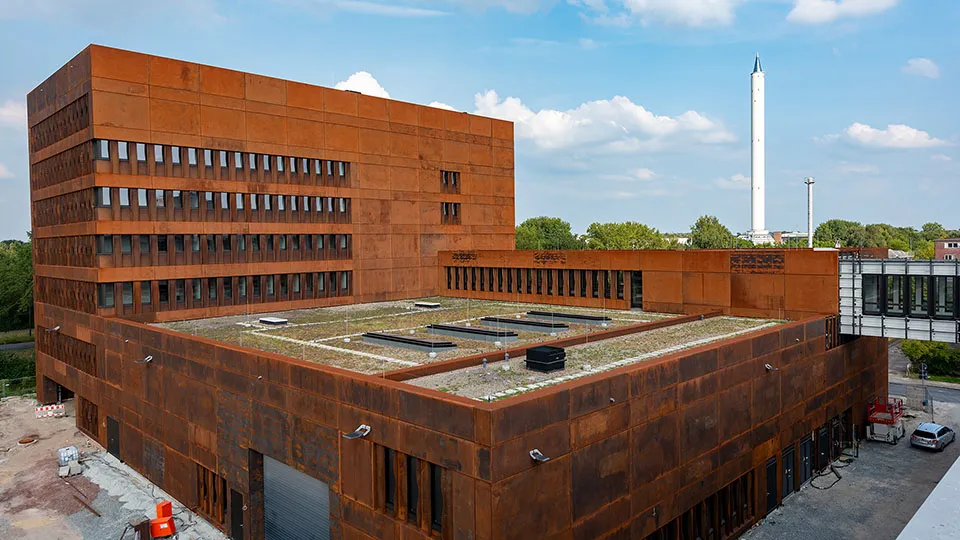
3. September 2024
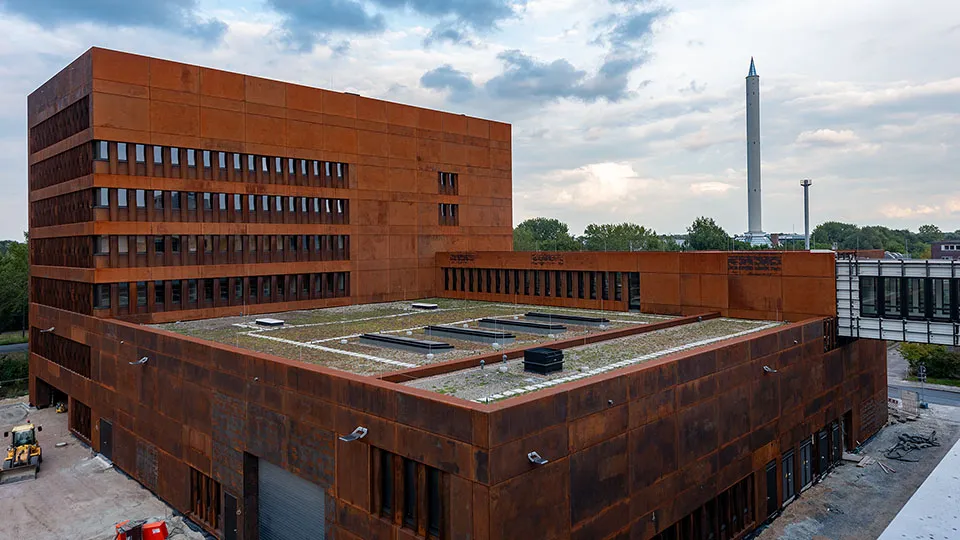
24. September 2024
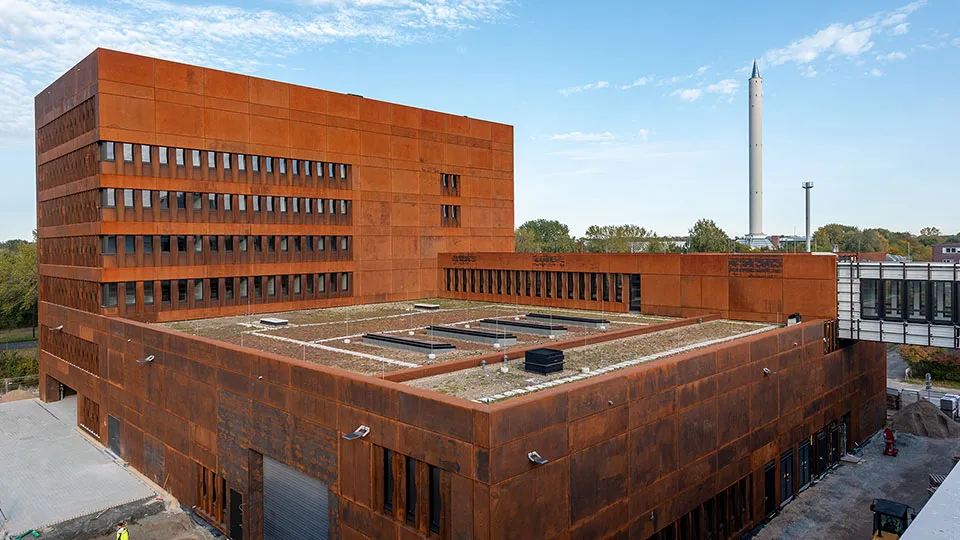
16. Oktober 2024
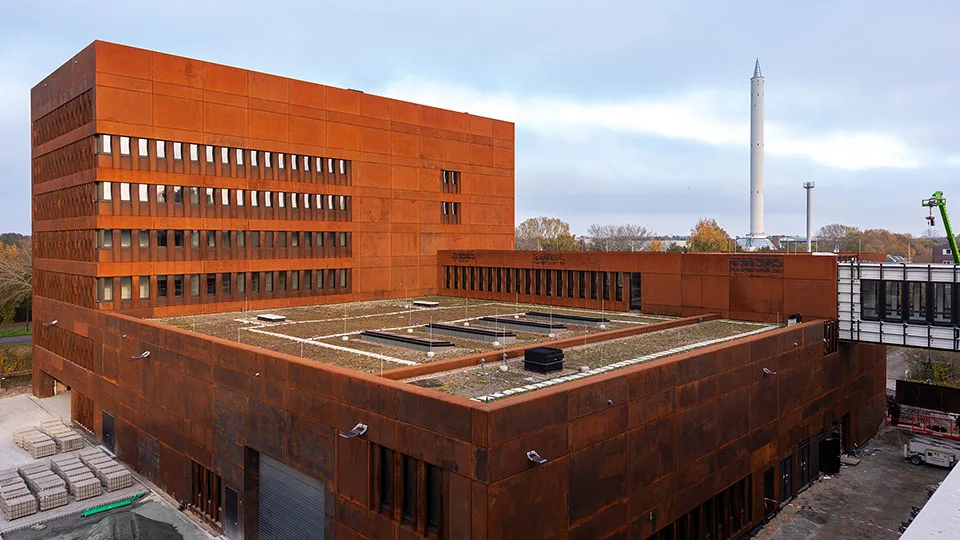
5. November 2024
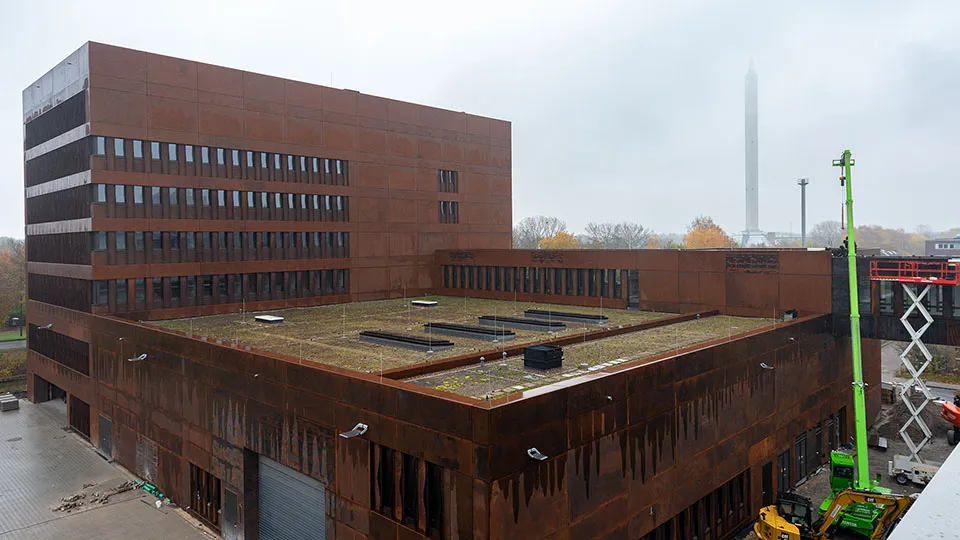
13. November 2024
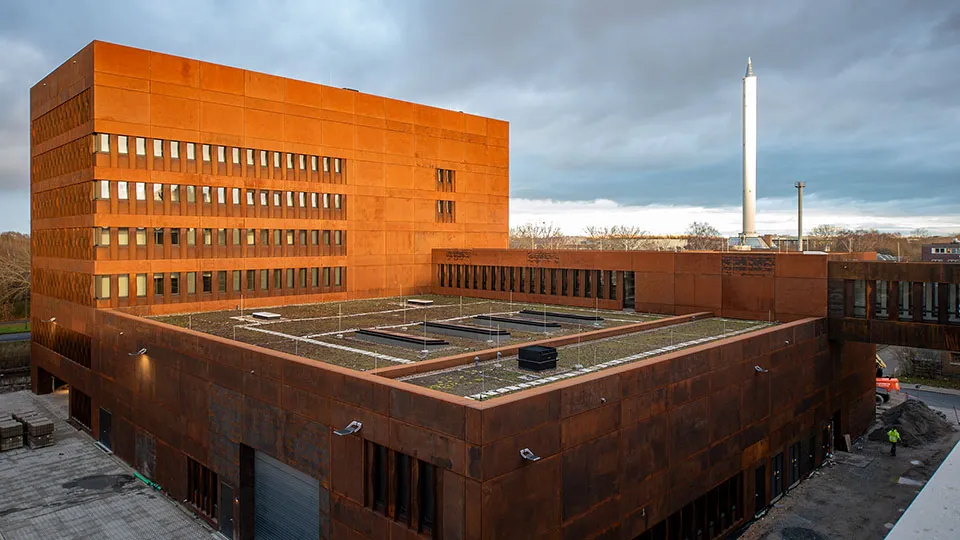
4. December 2024
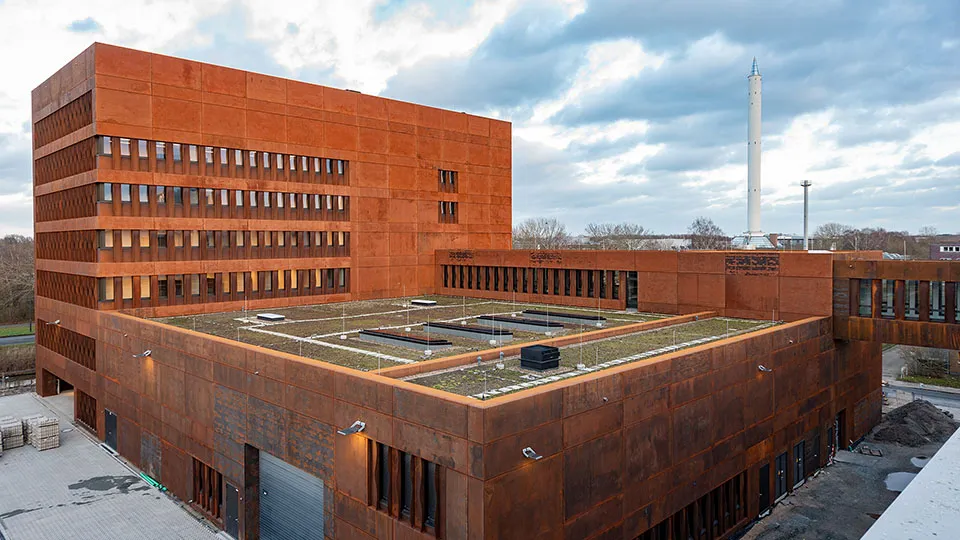
8. January 2025
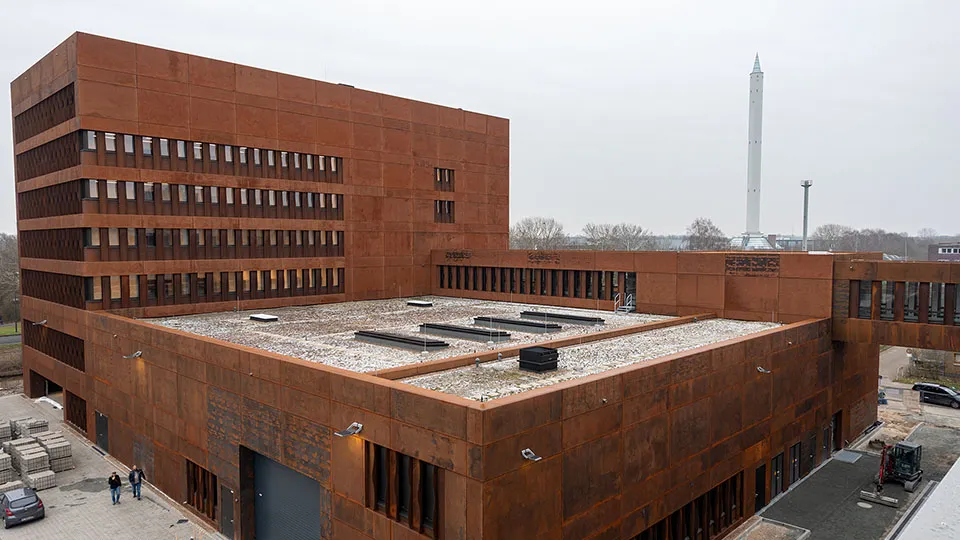
12. Februar 2025
The facade is also continuing to take shape: The first facade sheets are already hanging and can be seen through the scaffolding.
The Corten steel used here is characterized by its rusty surface, which is not only aesthetically pleasing but also protects against further corrosion. The orange-brown steel gets its versatile hues from a layer of oxidation. This patina of metal oxide protects the steel from weathering.
The designation "COR-TEN" is derived from English and stands for "Corrosion Resistance" and "Tensile Strength", which underlines its resistant properties.
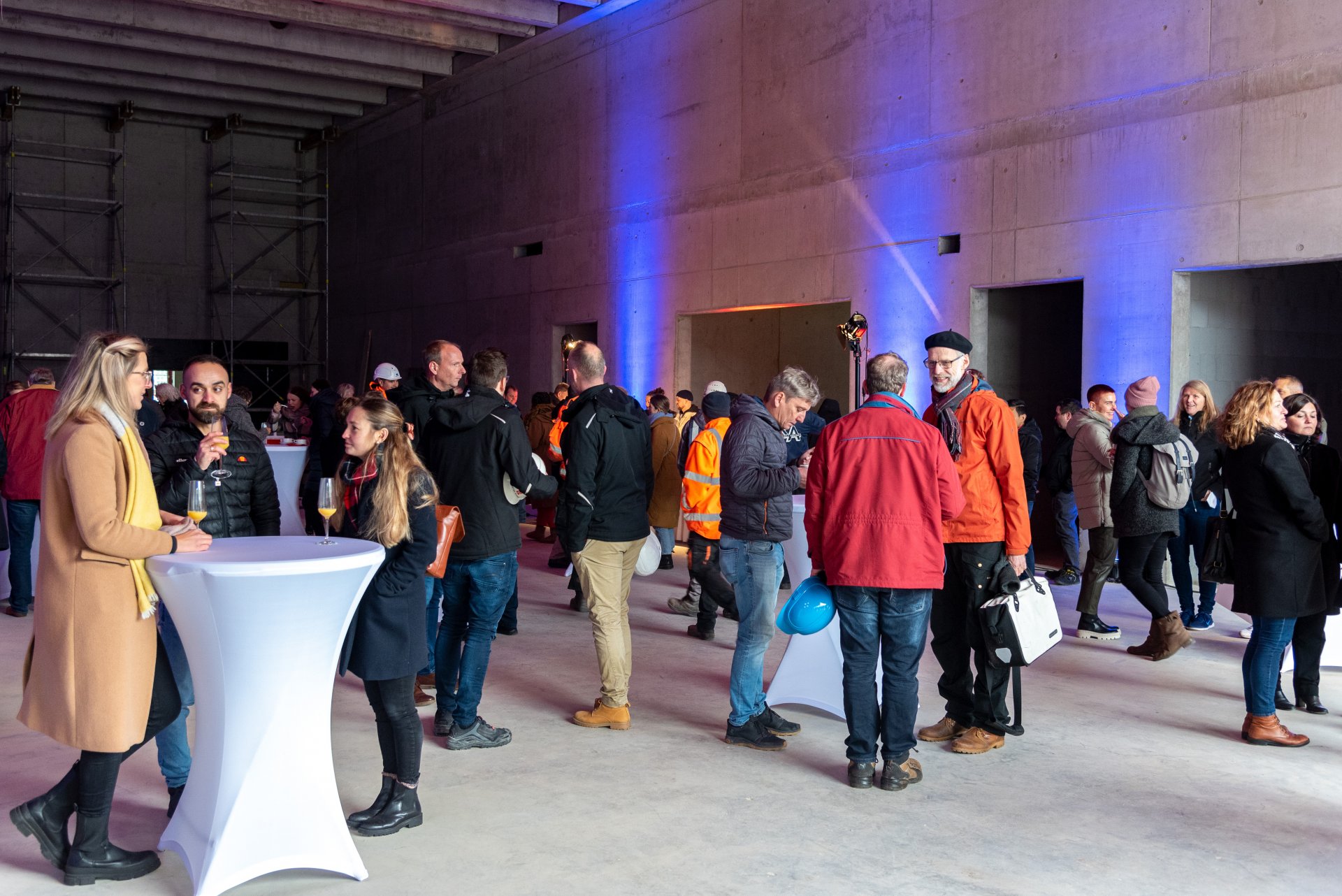
Opening ceremony on March 5, 2025
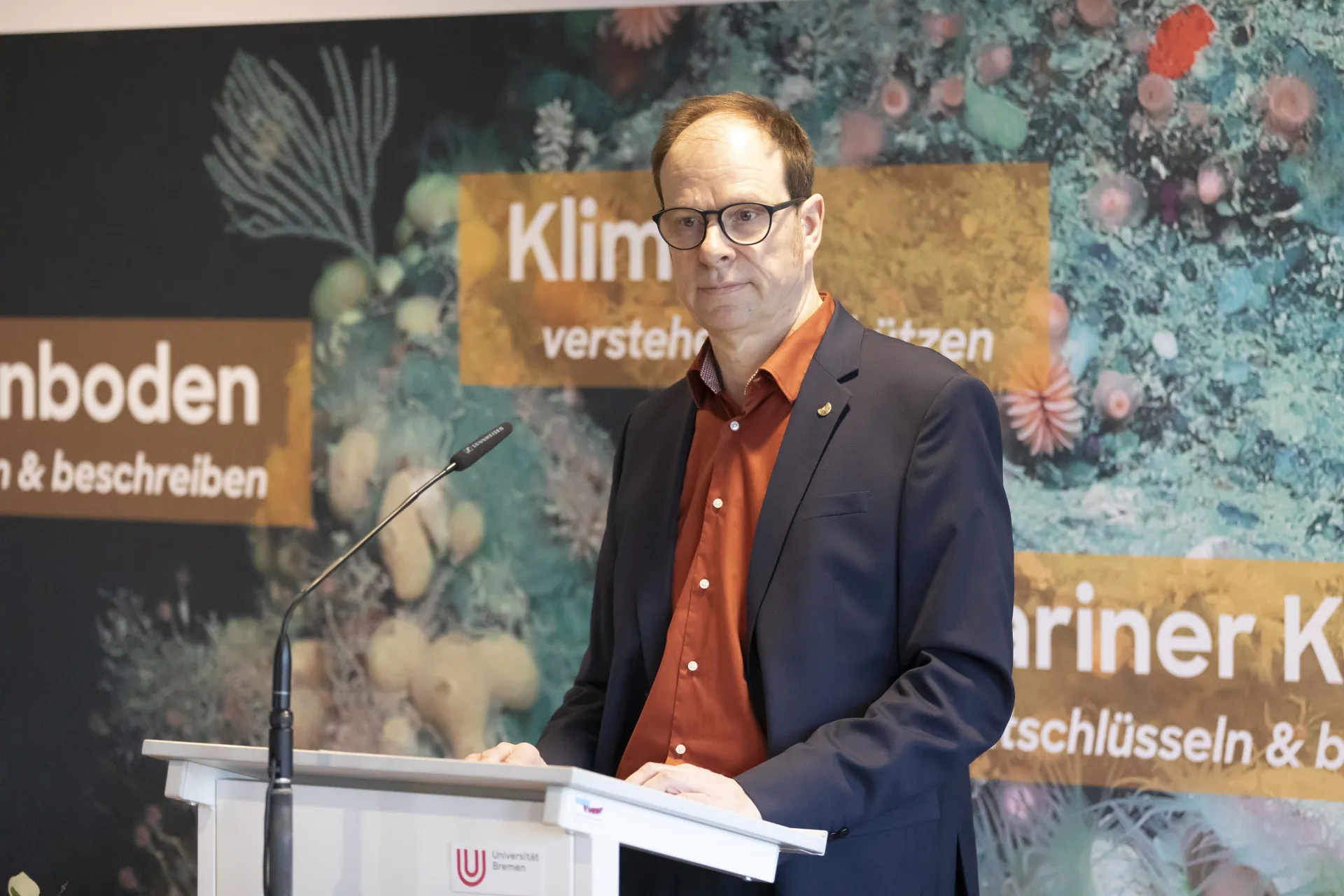
Einweihungsfeier. Foto: Jens Lehmkühler
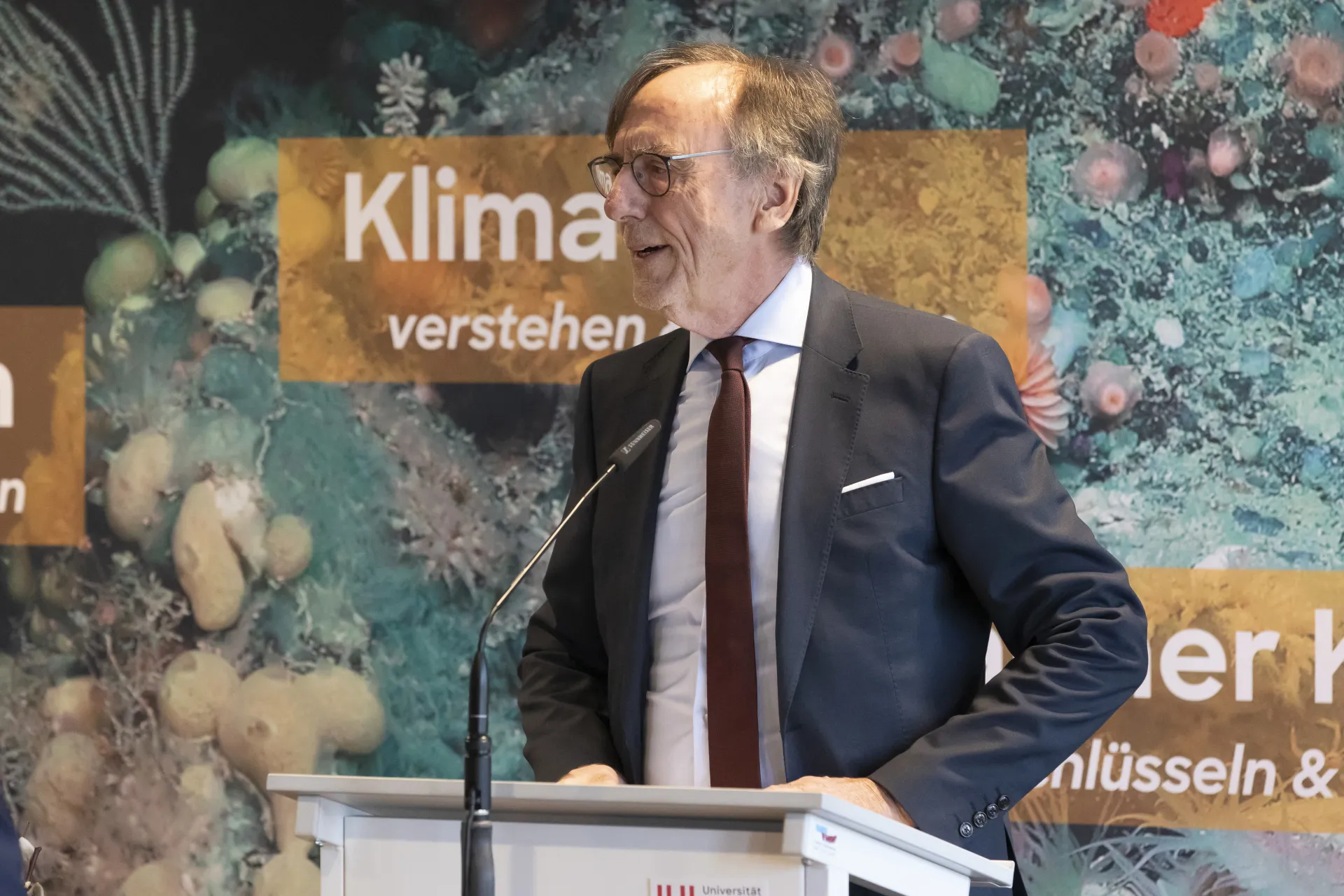
Einweihungsfeier. Foto: Jens Lehmkühler
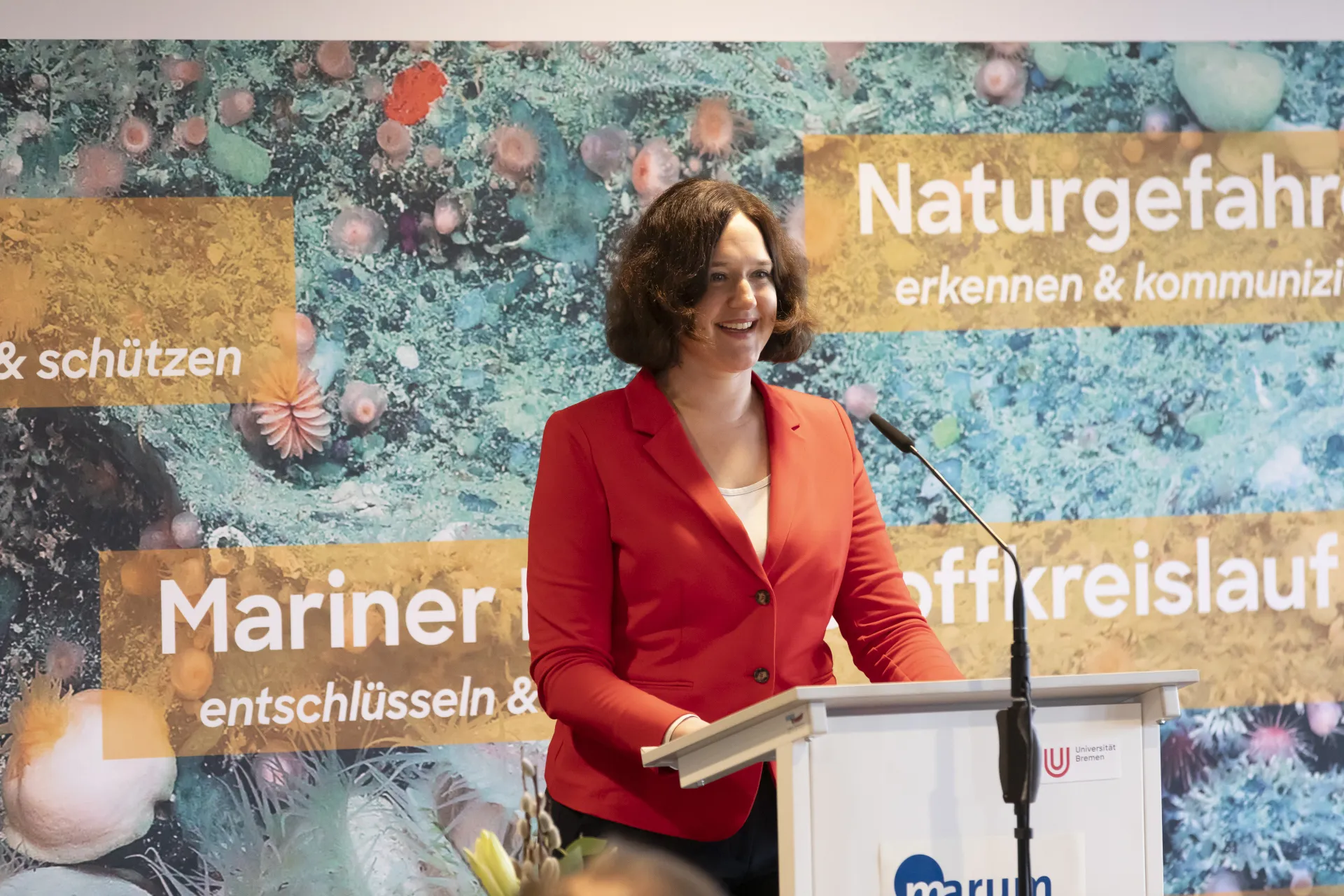
Einweihungsfeier. Foto: Jens Lehmkühler
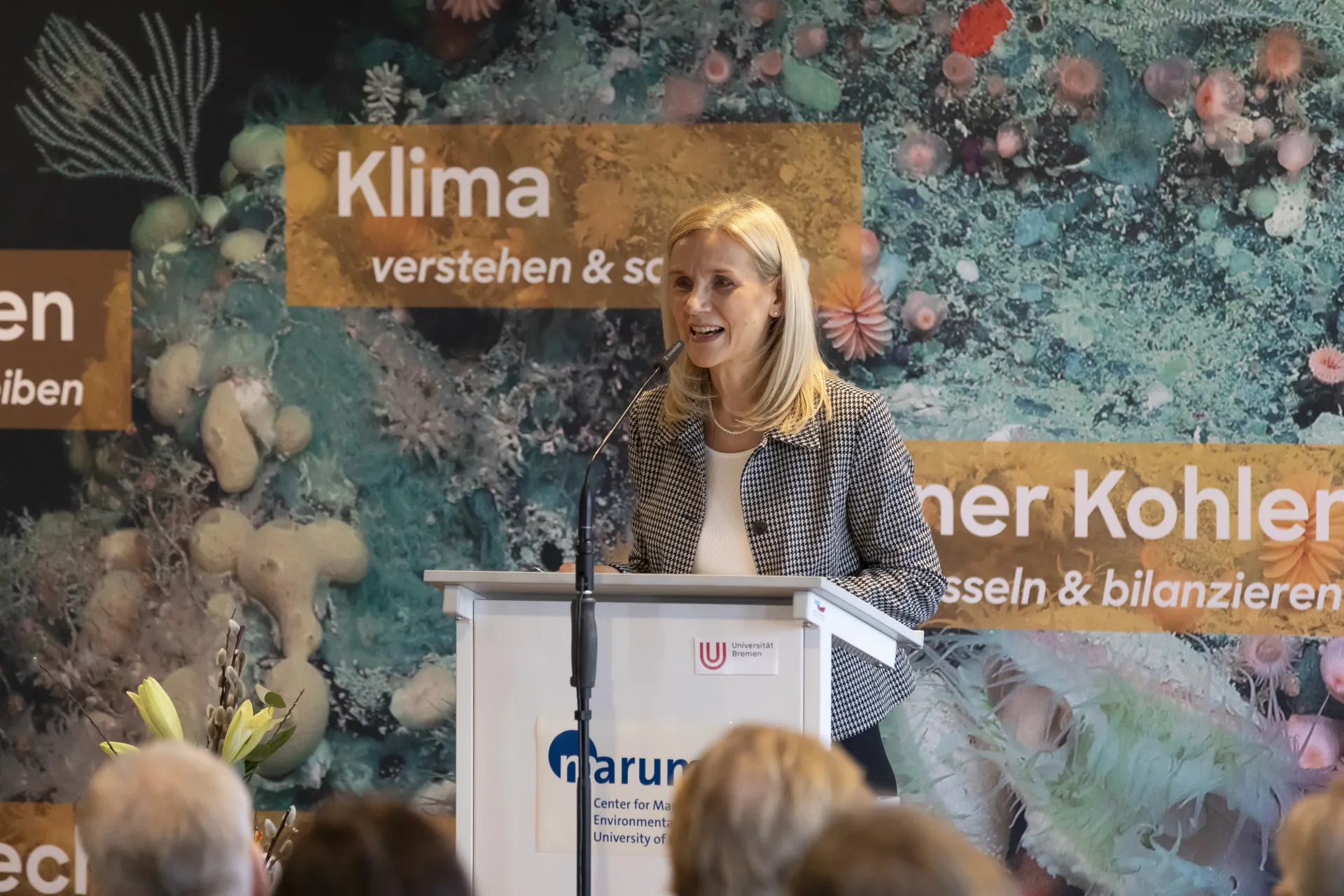
Einweihungsfeier. Foto: Jens Lehmkühler
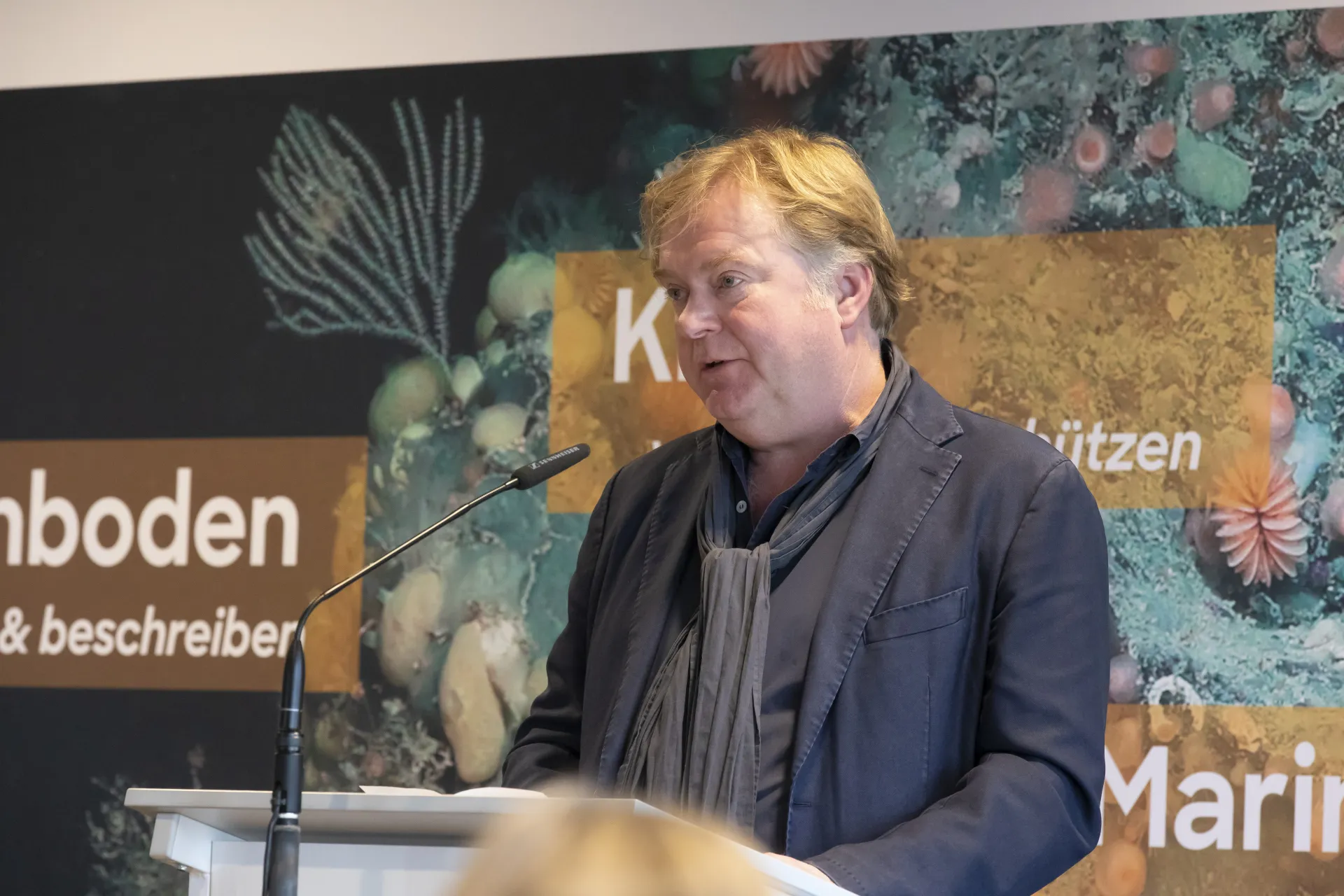
Einweihungsfeier. Foto: Jens Lehmkühler
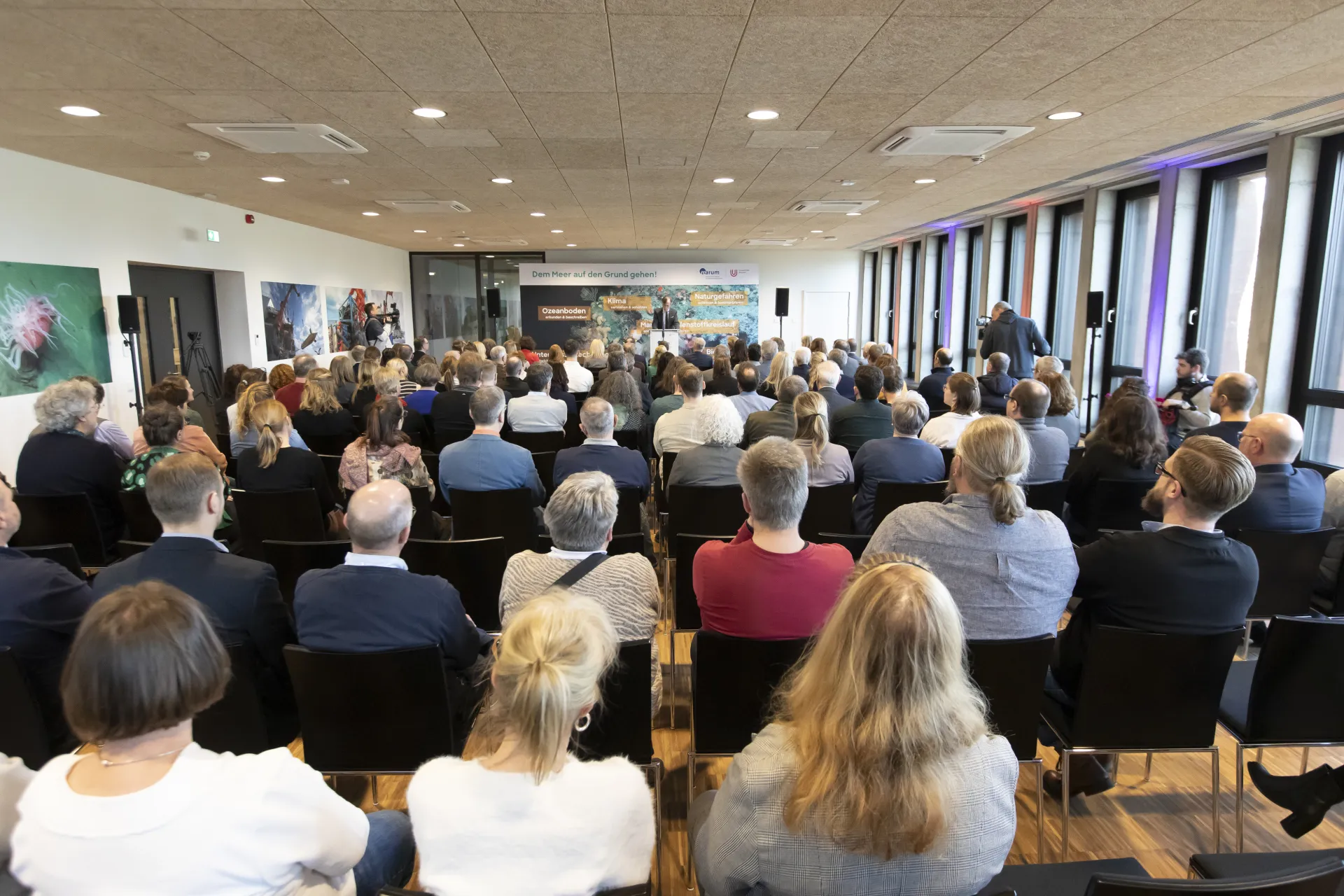
Einweihungsfeier. Foto: Jens Lehmkühler
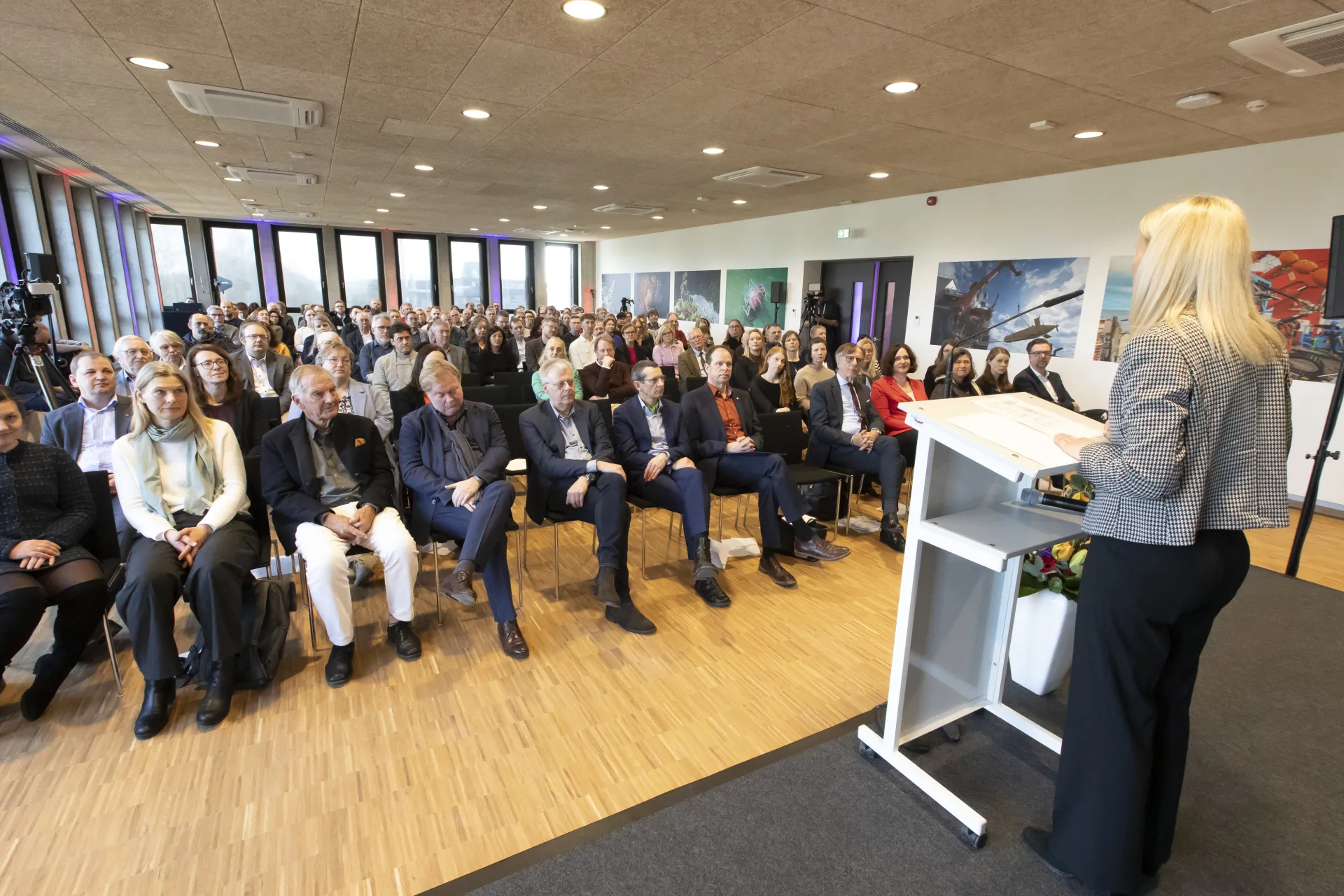
Einweihungsfeier. Foto: Jens Lehmkühler
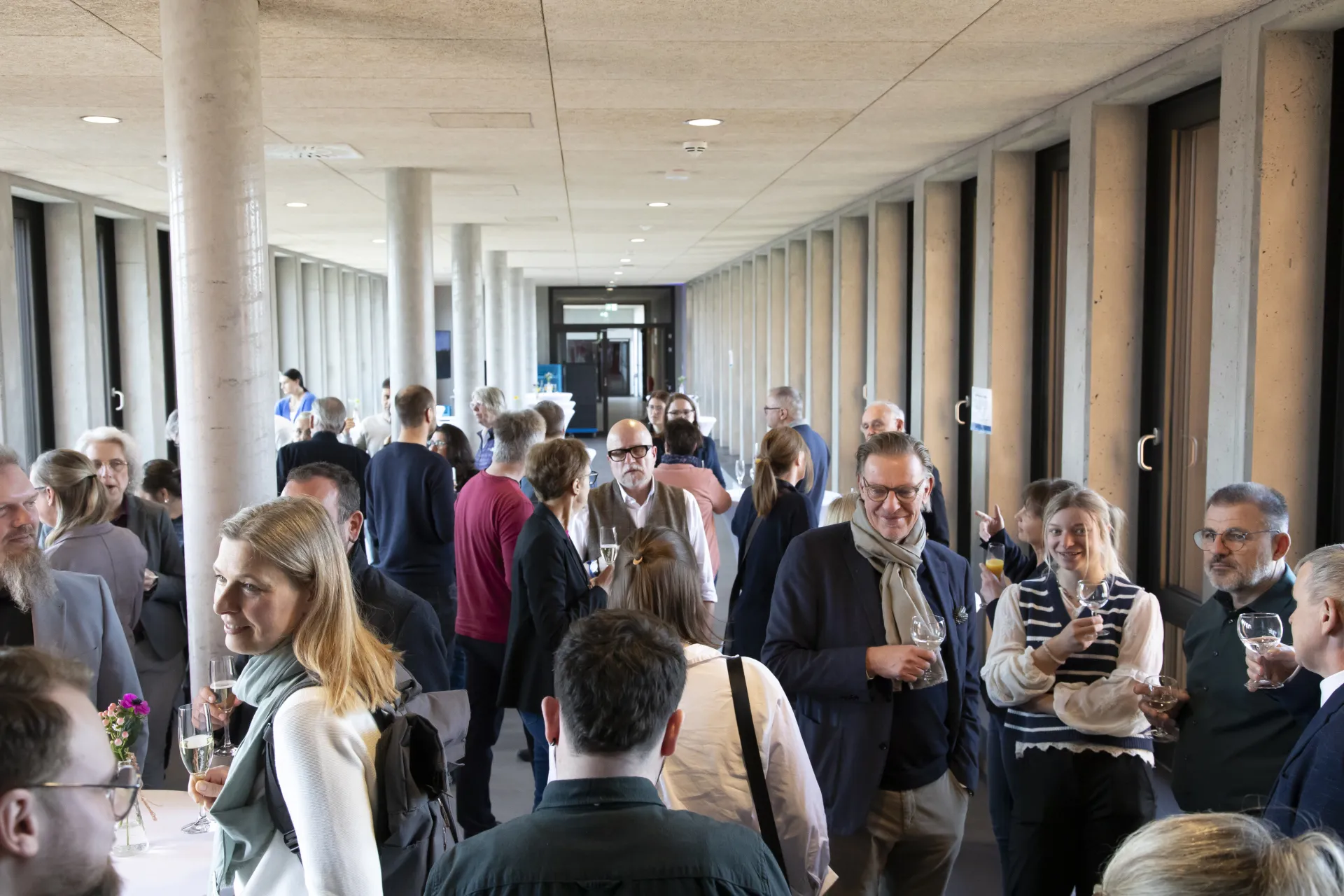
Einweihungsfeier. Foto: Jens Lehmkühler
Einweihungsfeier. Foto: Jens Lehmkühler
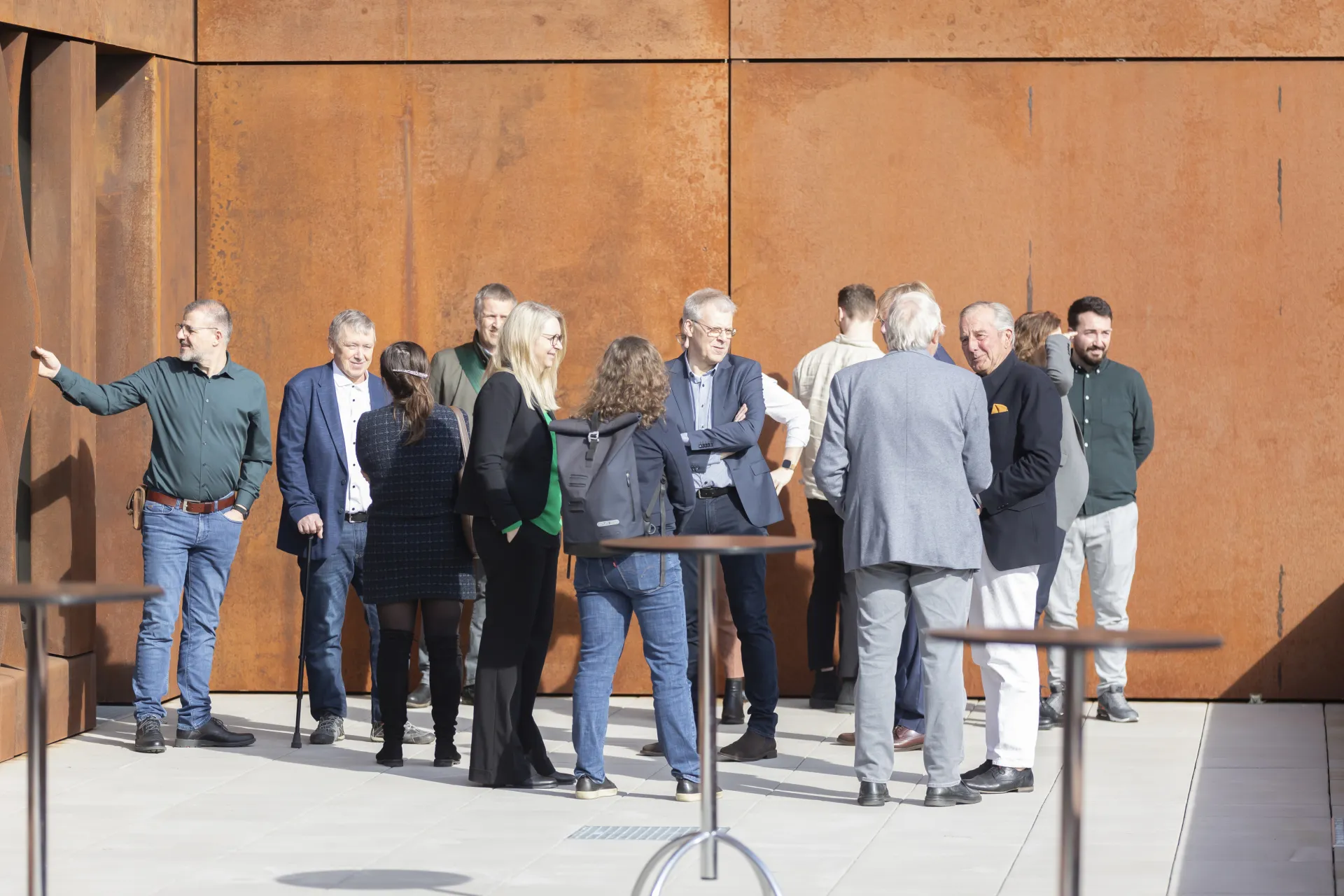
Einweihungsfeier. Foto: Jens Lehmkühler
Einweihungsfeier. Foto: Jens Lehmkühler
Einweihungsfeier. Foto: Jens Lehmkühler
Einweihungsfeier. Foto: Jens Lehmkühler
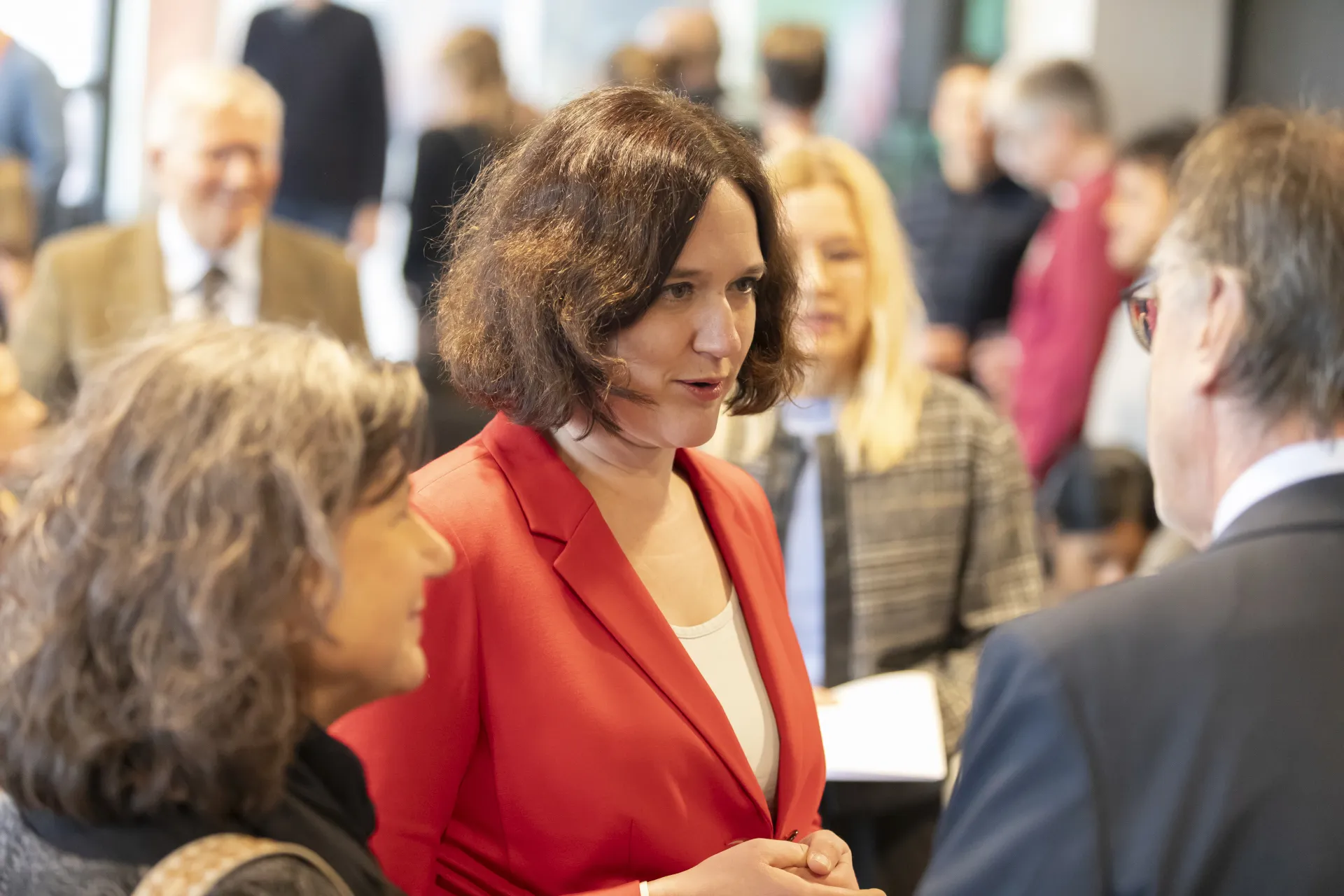
Einweihungsfeier. Foto: Jens Lehmkühler
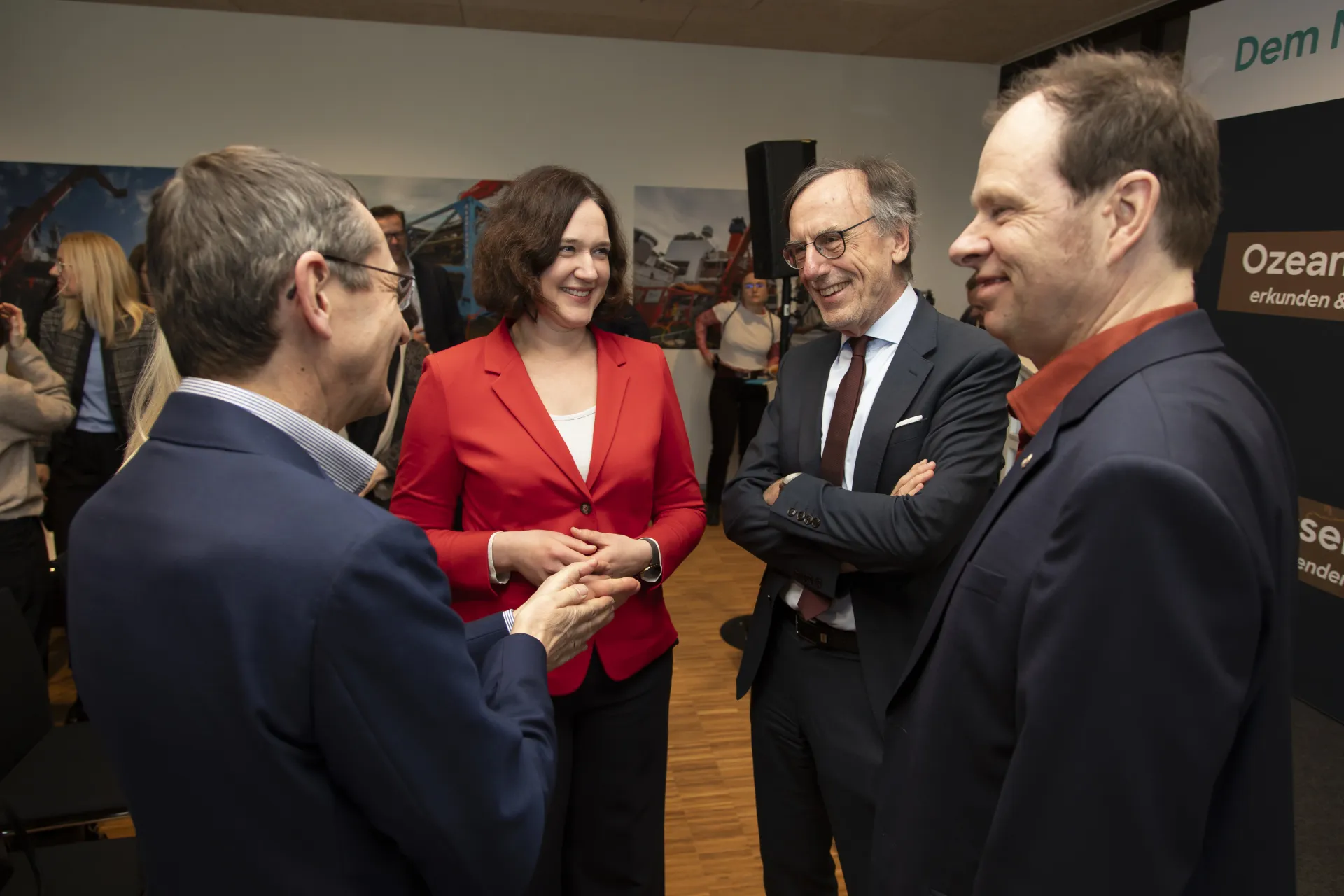
Einweihungsfeier. Foto: Jens Lehmkühler
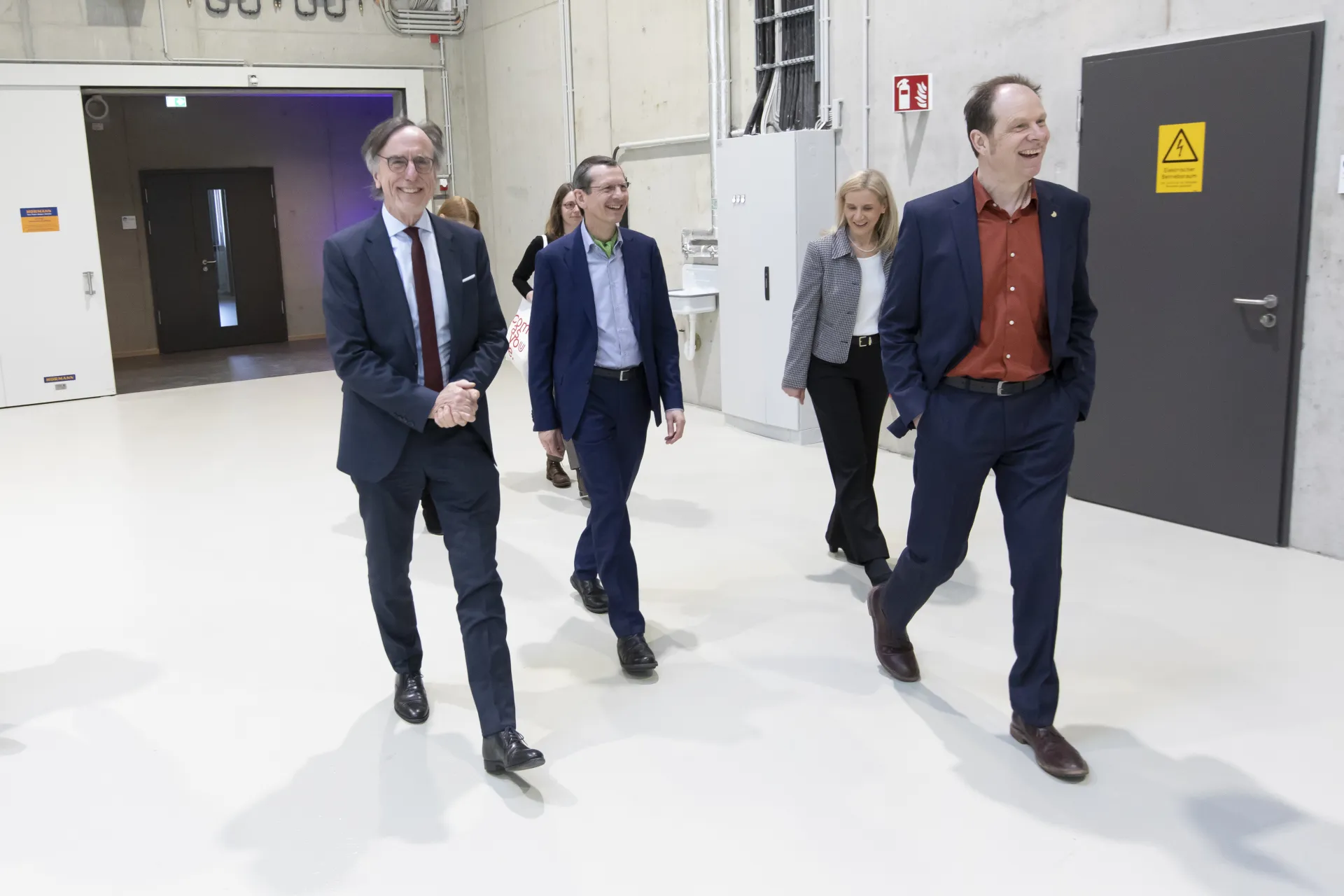
Einweihungsfeier. Foto: Jens Lehmkühler
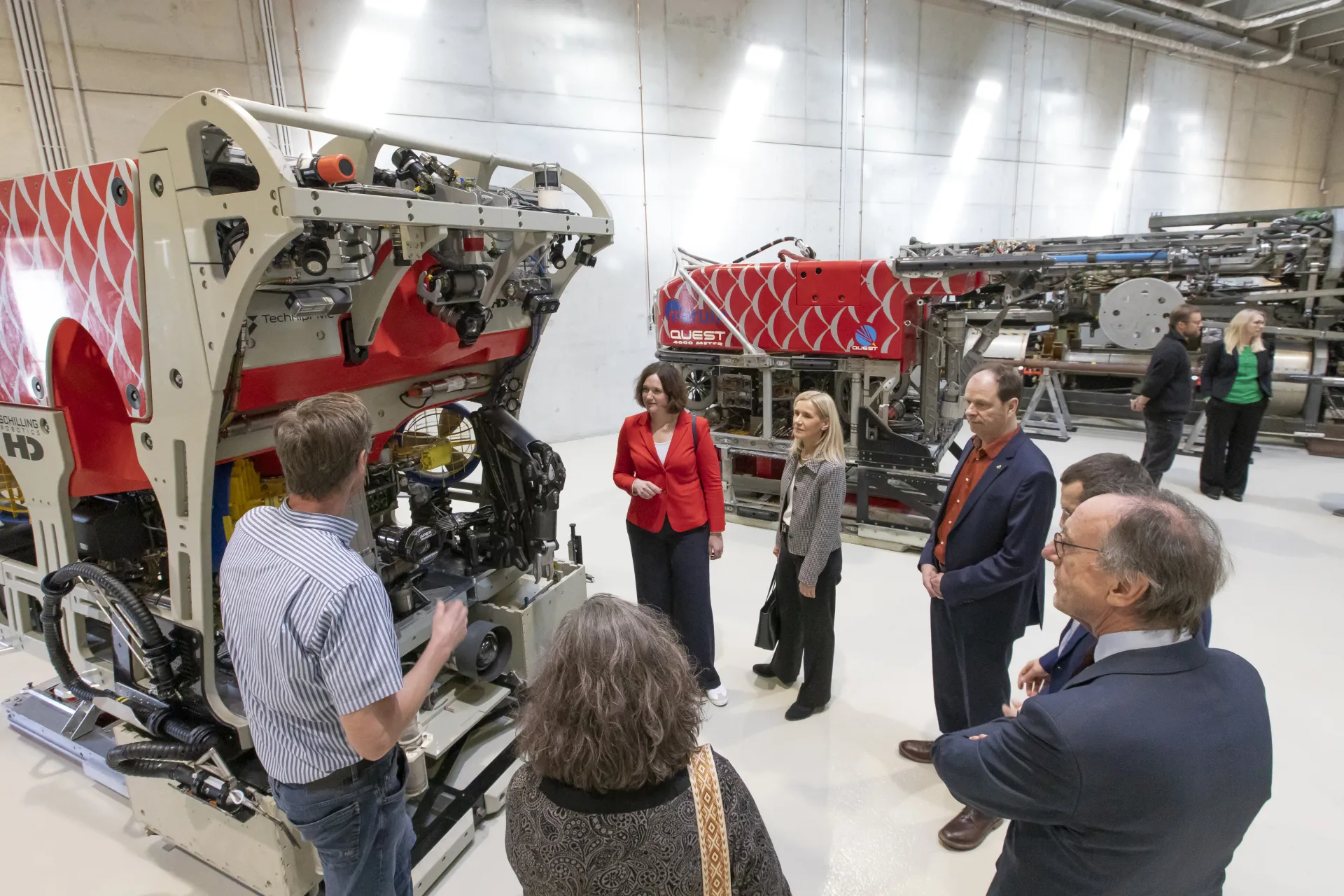
Einweihungsfeier. Foto: Jens Lehmkühler
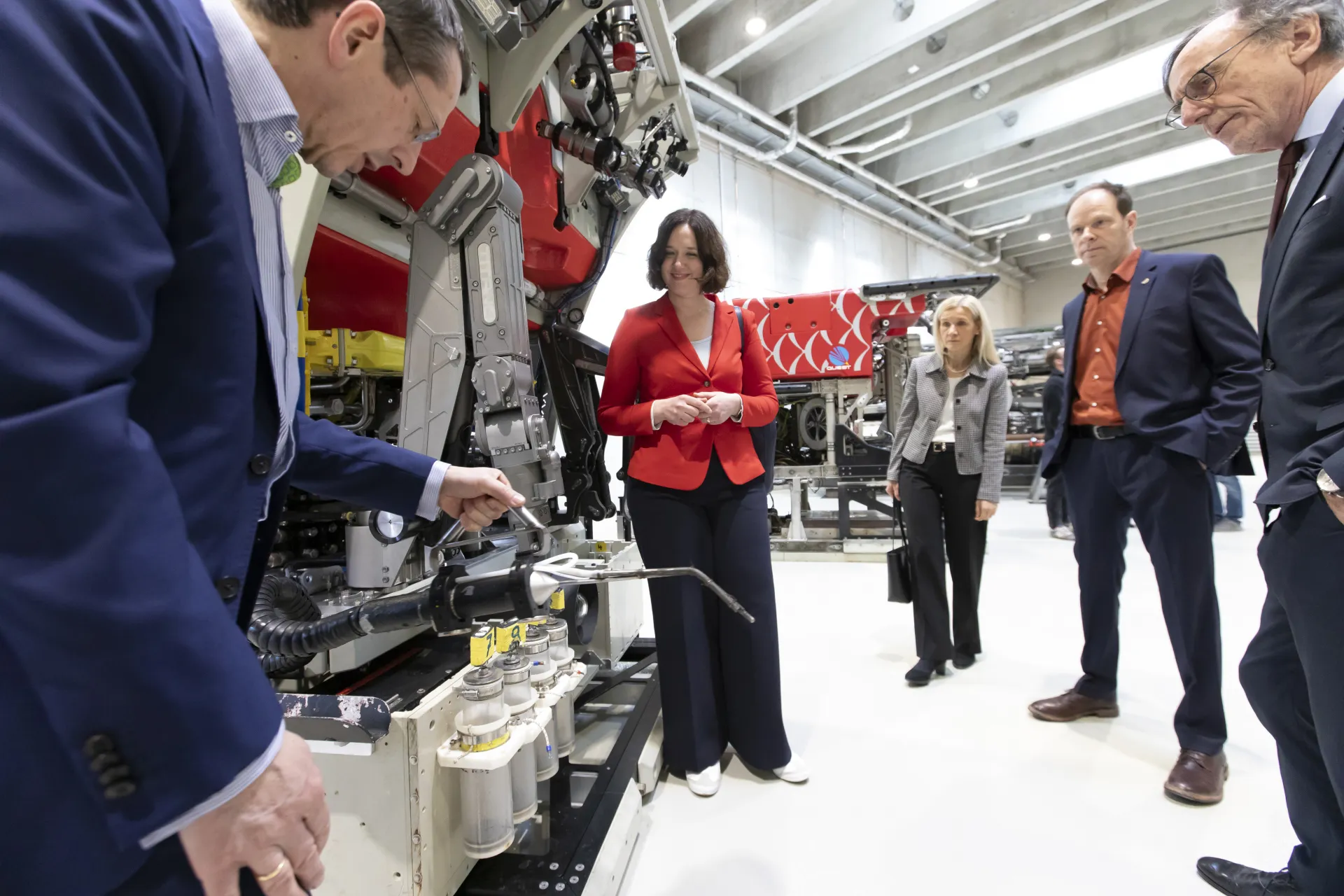
Einweihungsfeier. Foto: Jens Lehmkühler
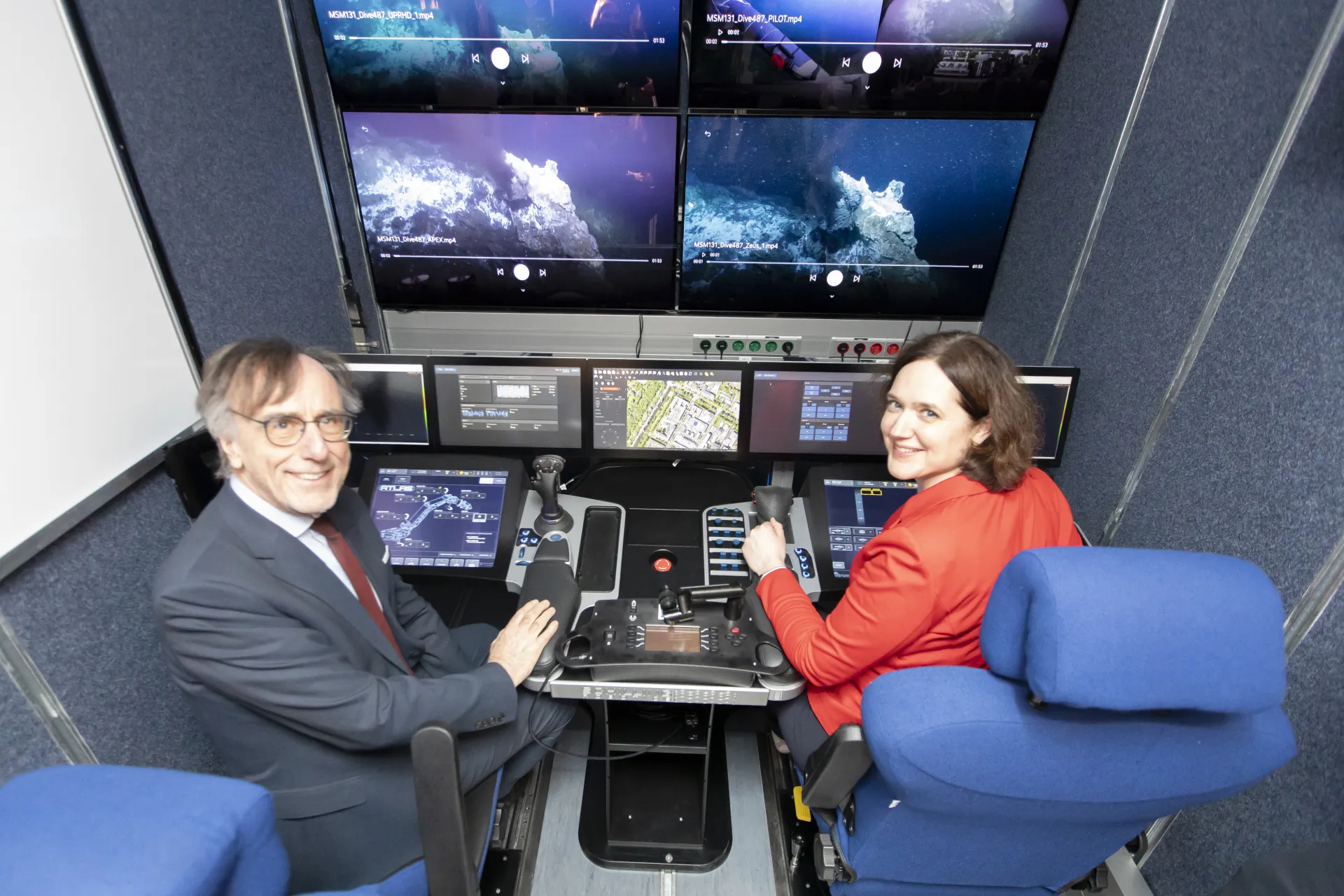
Einweihungsfeier. Foto: Jens Lehmkühler
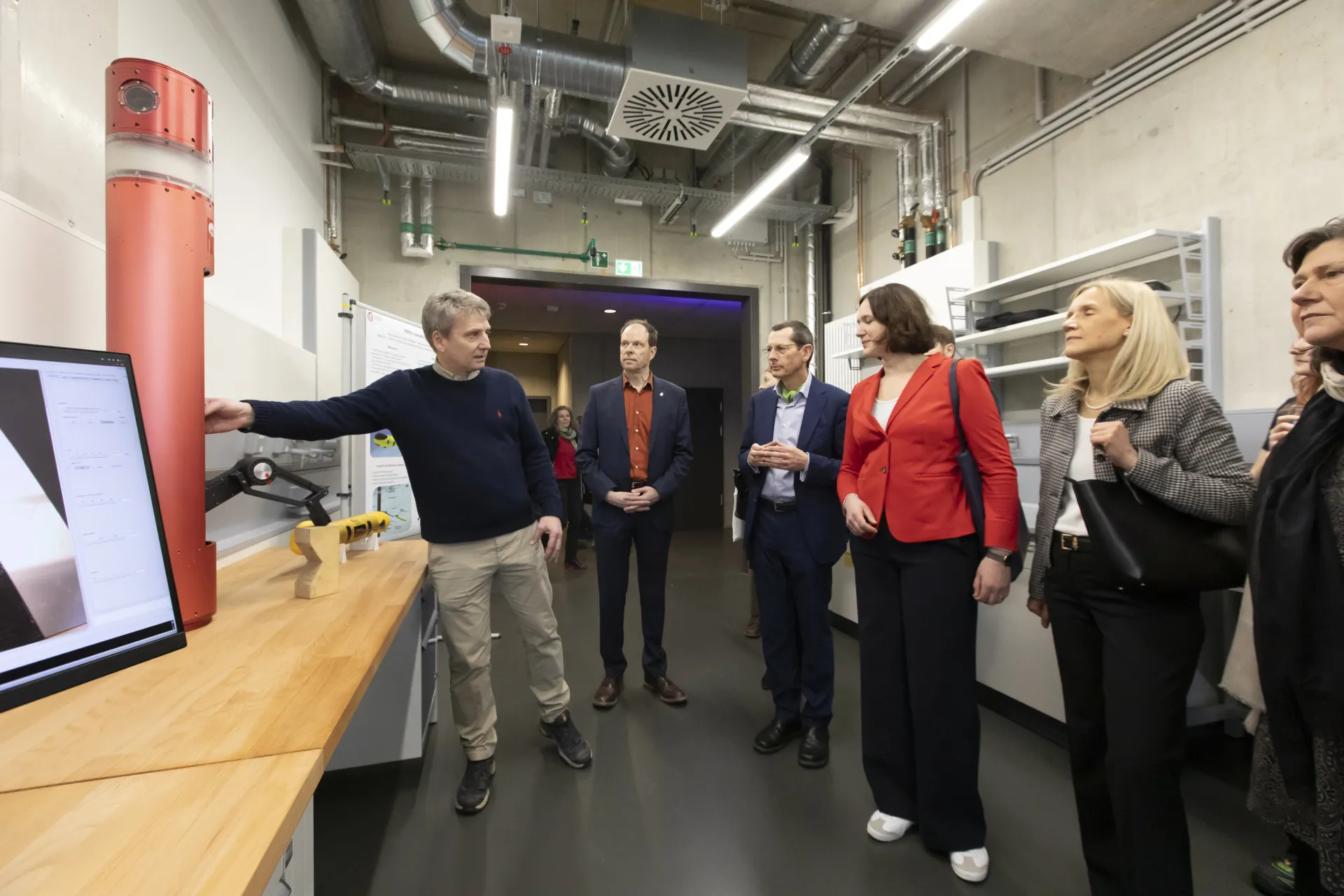
Einweihungsfeier. Foto: Jens Lehmkühler
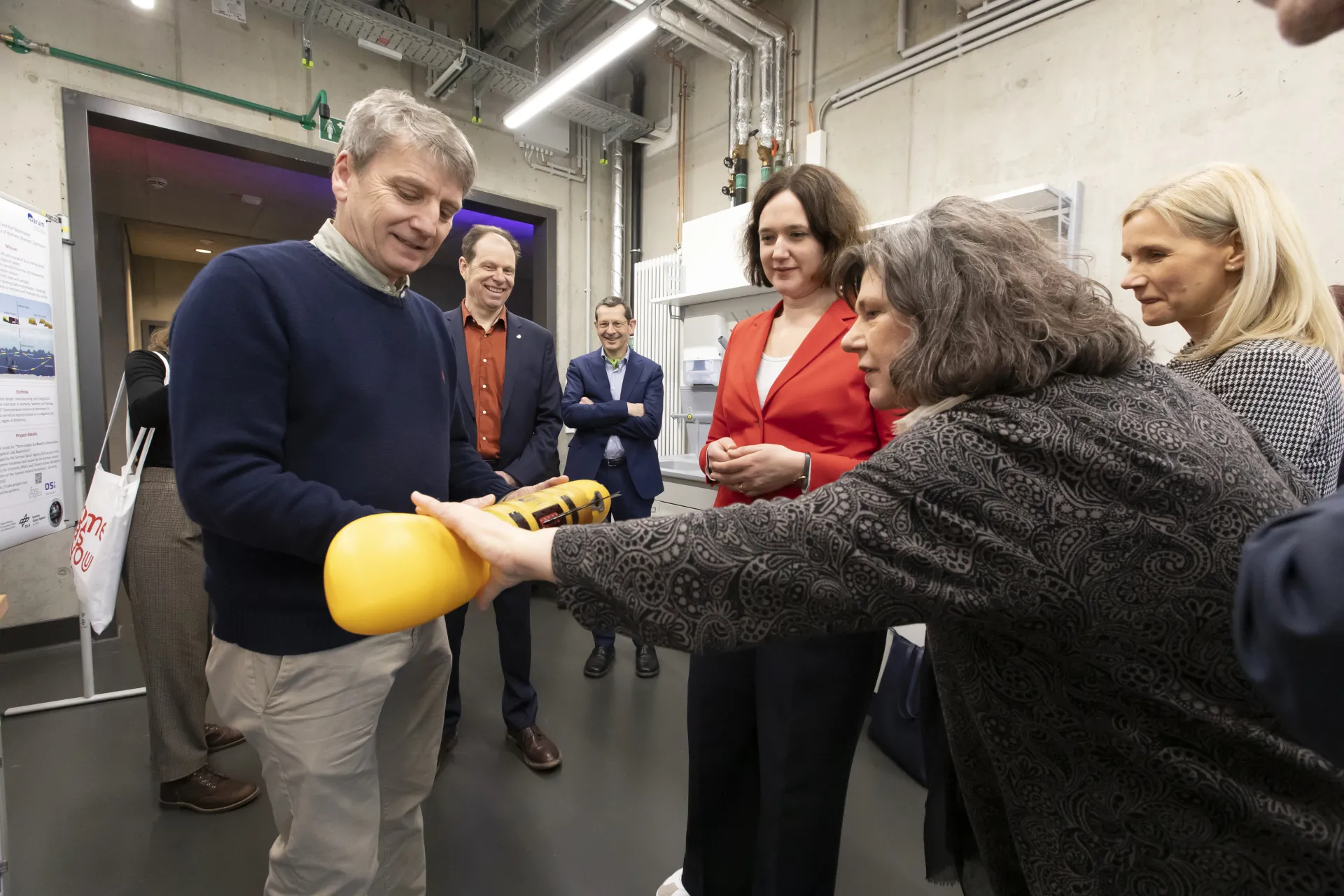
Einweihungsfeier. Foto: Jens Lehmkühler
New Center for Deep-Sea Research Inaugurated
The new Center for Deep-Sea Research has been opened at the University of Bremen. The 4,000 square-meter facility will allow the resident research groups to integrate research and the development of new technologies. The interdisciplinary center investigates processes in the deep sea. More about it in the press release here.
March 18, 2025
The move-in begins. Remaining work continues on the site.