


- Home
- Our Offers
- Media
- Archive News
- News 2025
- MSM133
Research in cloudy layers of water
MARUM researchers spent two weeks investigating material flows off northwest Africa

Under the scientific leadership of Prof. Dr. Morten Iversen, MARUM – Center for Marine Environmental Sciences at the University of Bremen, sediment traps for vertical material flow studies, in-situ pumps, marine snow catchers, camera systems as well as plankton and water samplers for pelagic analyses were used. In addition, hydroacoustic systems such as ADCP, Parasound and multibeam echo sounders were used and sediment samples were taken with multicorers and grabs for benthic investigations.
Focus on the Mauritanian shelf
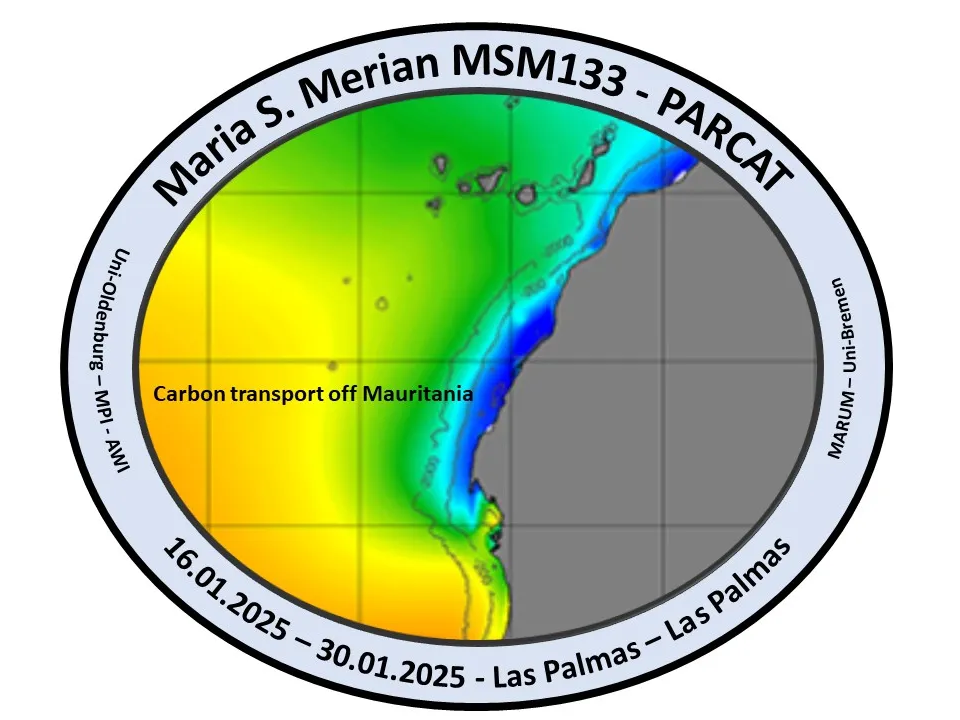
Two transects were investigated, ranging from 100 meters to 2,500 meters in depth. A highlight of the trip was a 24-hour process study on the formation and dynamics of so-called nepheloid layers. These are cloudy layers of water that are loaded with particles. These layers play a central role in the transport and redistribution of organic and inorganic material across the shelf and slope. By combining hydroacoustic measurements with physical sampling, the sources and origins of the nepheloid layers will be determined and their transport routes and composition traced. In addition, it will be determined whether organic material in these layers is transformed or transported intact in order to assess the role of these processes in the sequestration of carbon in the deep sea.
First results
“Initial analyses indicate considerable spatial variability in the characteristics of the nepheloid layers in the transects,” says chief scientist Morten Iversen. Near the shelf edge, MARUM scientist and cruise participant Prof. Dr. Elda Miramontes observed that the nepheloid layers are particularly pronounced at the bottom. This is probably due to increased bottom currents, internal waves and the resuspension of sediments. In contrast, the intermediate layers showed different particle size distributions and were influenced by lateral transport processes. Morten explains: “These results are consistent with our hypothesis that nepheloid layers serve as conduits for organic material from the productive shelf to the deep sea and may contribute to long-term carbon storage.”
The MSM133 expedition was the first of three cruises within the Cluster of Excellence “Ocean Floor – Earth’s Uncharted Interface”, which is dedicated to studying the vertical and lateral transport of organic matter in the ocean. The Cluster of Excellence is based at MARUM – Center for Marine Environmental Sciences at the University of Bremen.
Contact:
Prof. Dr. Morten Iversen
AWI-MARUM Bridge Group SEAPUMP and Polar Biological Oceanography at the Alfred Wegener Institute in Bremerhaven
[Bitte aktivieren Sie Javascript]
More Information:
- Background information on the Cluster of Excellence “Ocean Floor - Earth's Uncharted Interface” and the Receiver research focus
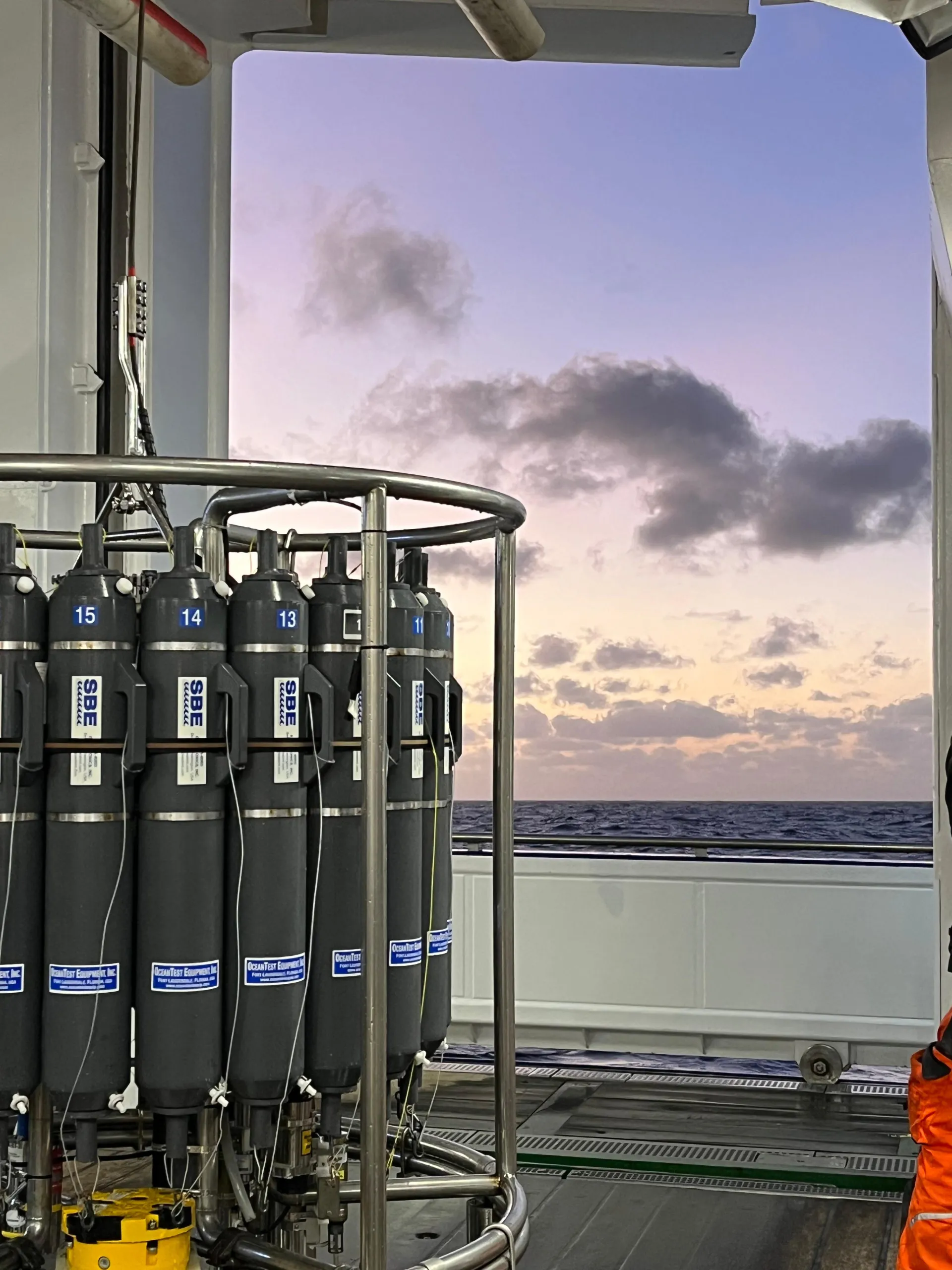
CTD rosette. Photo: Florian Pohl, University of Bayreuth
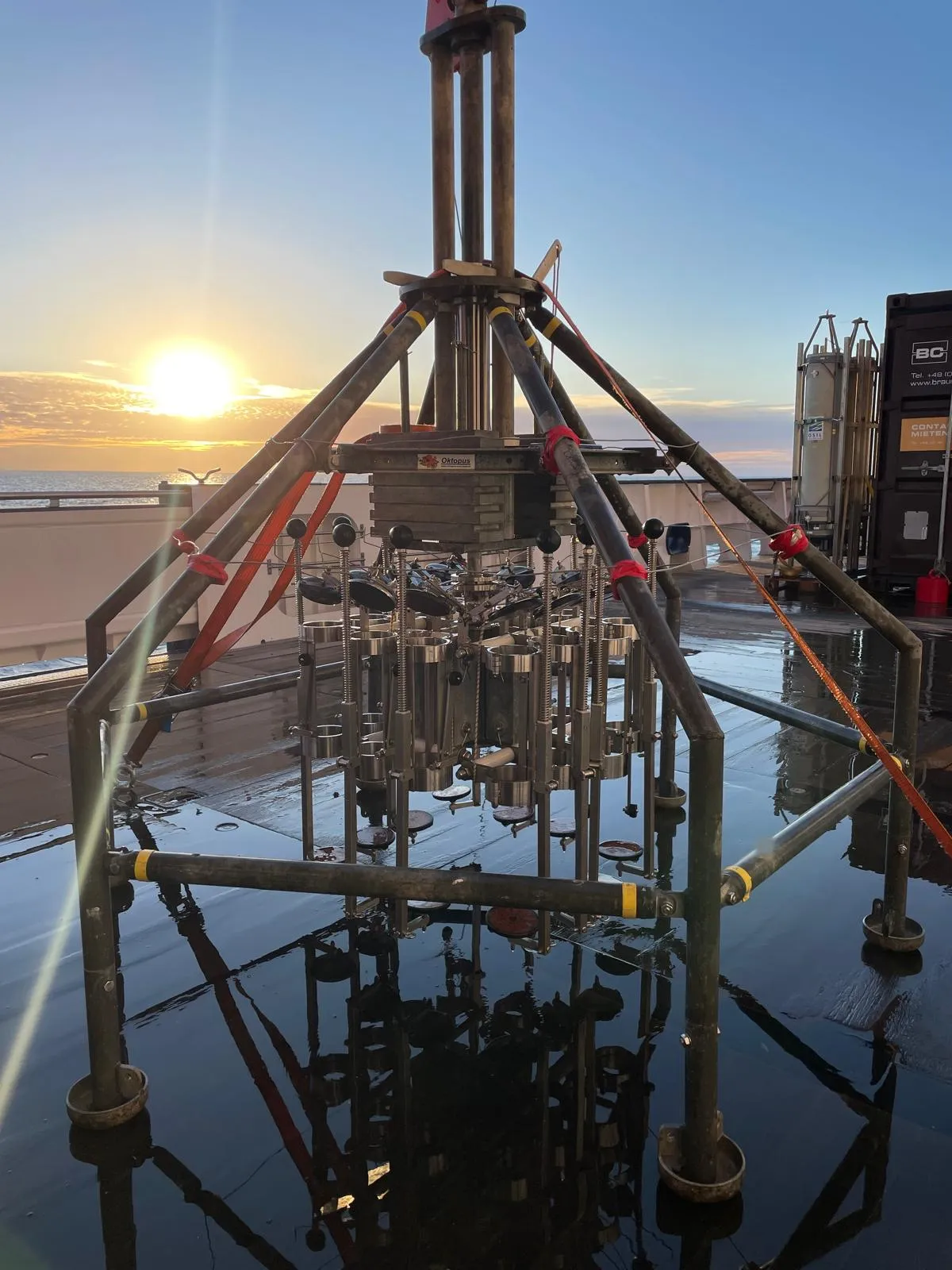
Multicorer. Photo: Mara Rosmann, AWI