


- Startseite
- ...
- Der Ozeanboden
- Über uns
- Karriere
- Stellenangebote
- Doctoral Researchers
- Kohorte I
- EXC1-13 Forecasting changes in pelagic ecosystem functions in a warmer ocean
Der Ozeanboden
EXC1-13 Forecasting changes in pelagic ecosystem functions in a warmer ocean
Forecasting changes in pelagic ecosystem functions in a warmer ocean
Important: Please read in detail the instructions provided in the umbrella advertisement (linked here).
Do not send applications directly to the contacts on this page.
Project Description
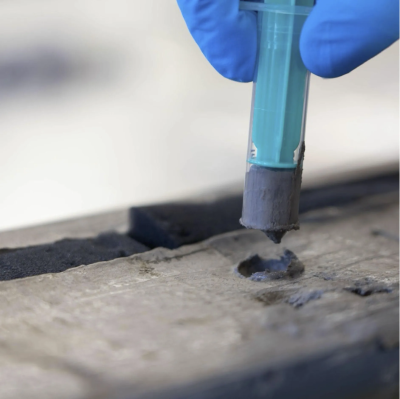
The pelagic ecosystem provides essential services to humanity, including nutrient cycling that sustains biodiversity, fisheries that support food security and livelihoods for millions, global oxygen production, and climate regulation via carbon dioxide sequestration. These ecosystem functions are increasingly impacted by global change, making it critical to assess the direction and magnitude of their response to future warming scenarios. Forecasting such changes requires quantifying biotic responses to global change and linking them to alterations in ecological function. Because of the involved timescales and complexity of the system, it is hard to obtain empirical data experimentally. Here, we propose to use the geological record of past warming intervals as a surrogate. To extract the ecosystem functional response, we will combine data from ancient DNA (aDNA), which provides access to the entire marine biodiversity at the gene level, and geobiomolecules, which record key ecosystem functions and allow quantification, co-registered in the same sedimentary archives. Because of the limited preservation potential of aDNA, the study will target the recent geological past such as the Last Glacial Maximum to Holocene transition, to assess ecosystem responses to warming and Marine Isotope Stage 5, representing the closest analogue to future warmer worlds. The project will benefit from access to geological data and existing core material available at MARUM and from aDNA pipelines developed at the University of Copenhagen. The results will be shared within a large team working towards the overarching question from a combined biological, geological, and modelling perspective.
Further Reading
- https://theoceanfloor.de/en/The-Ocean-Floor/Ancient-DNA-aDNA.html
- Armbrecht L, Herrando-Pérez S, Eisenhofer R, Hallegraeff GM, Bolch CJS, Cooper A. An optimized method for the extraction of ancient eukaryote DNA from marine sediments. Mol Ecol Resour. 2020; 20: 906–919. doi: 10.1111/1755-0998.13162
- Barrenechea Angeles, I., Lejzerowicz, F., Cordier, T., Scheplitz, J., Kucera, M., Ariztegui, D., Pawlowski, J., & Morard, R. (2020). Planktonic foraminifera eDNA signature deposited on the seafloor remains preserved after burial in marine sediments. Scientific Reports, 10(1), 1–12. 10.1038/s41598-020-77179-8
- Nguyen, N.-L., Devendra, D., Szymańska, N., Greco, M., Angeles, I. B., Weiner, A. K. M., Ray, J. L., Cordier, T., De Schepper, S., Pawłowski, J., & Pawłowska, J. (2023). Sedimentary ancient DNA: a new paleogenomic tool for reconstructing the history of marine ecosystems. Frontiers in Marine Science, 10. doi: 10.3389/fmars.2023.1185435
Modalities
The doctoral project will be supervised by Raphäel Morard MARUM) and Lars Wörmer (MARUM). The doctoral project will be supervised by Raphäel Morard (MARUM) and Lars Wörmer (MARUM) in the working groups “Micropaleontology” (Bremen) and “Organic Geochemistry” (Bremen). The remuneration corresponds to pay group TV-L 13 with 75% of the weekly working hours. The positions is for a fixed-term period of 4 years, starting January 1st 2026 the earliest and until at most December 31, 2029 (according to § 2 WissZeitVG) with the aim of obtaining a doctorate.
The project mentoring team also includes: Kai-Uwe Hinrichs (MARUM), Marcus Elvert (MARUM), Helmut Hillebrand (HIFMB), Chiara Vanni (MARUM), Murat Eren (HIFMB), Eske Willerslev (Univ. Copenhagen), Thilo Gross (HIFMB), and Michal Kucera (MARUM).
Main Tasks
- Establish time series of marine paleoenvironmental conditions during climatic transitions and at time-scales ranging from sub-decadal to centennial. These time series will be based on molecular and isotopic proxies
- Interrogate the aDNA and molecular biomarker data sets for taxonomic and functional responses to changing environmental conditions.
- Establish the impact on key ecosystem functions, as the biological carbon pump
- Writing of scientific publications
- Participation in ship expeditions
- Participation in international conferences
Formal Requirements:
Completed scientific university degree (Master/University diploma or comparable) in Geosciences, Environmental Sciences, Chemistry, Biology or similar.
Further questions?
Questions about the project can be addressed to Raphäel Morard ([Bitte aktivieren Sie Javascript]) or Lars Wörmer ([Bitte aktivieren Sie Javascript]).
Notes for Applicants
Please do not enclose any original certificates or references with your application documents. Please note that no photos are to be attached to the application documents. Please also do not use folders or transparencies. Application documents will only be returned on request if you enclose a sufficiently stamped envelope. Personal data is subject to restrictive access control to ensure that only authorized persons can access your data. In principle, your application data will only be used by the responsible application-processing personnel departments of the partner institutions of the cluster. Your application data will not be used for any other purpose or passed on to third parties. By sending us your application documents, we assume that you consent to the collection of your personal data. As soon as your application data is no longer used for the defined purpose of processing your application, it will be deleted immediately in compliance with data protection regulations. If you receive a written rejection, your application documents will be kept until the deadline in accordance with § 15 Allgemeines Gleichbehandlungsgesetz (AGG) has expired and then destroyed. The extent to which costs for the application can be reimbursed must be checked on a case-by-case basis.