




Sep 2, 2022
MARIA S. MERIAN on course for Baffin Bay
The research vessel MARIA S. MERIAN sets sail on September 2. Her destination on expedition MSM 111 is the Baffin Bay, located between Greenland and ...
+Marine biodiversity encompasses the diversity of life in the oceans and seas, from tiny microorganisms to large marine mammals. It includes the genetic diversity within species, the diversity of species themselves and the diversity of habitats, such as coral reefs, deep-sea trenches and mangroves. This biodiversity is crucial for the functioning of ecosystems, oxygen production and climate regulation. It also provides livelihoods for millions of people, for example through fishing and tourism. The threats to marine biodiversity are numerous, including overfishing, pollution, climate change and habitat loss. The protection and sustainable use of marine biodiversity is therefore crucial to ensure the health of the oceans and the quality of life on Earth.
Typical questions are:
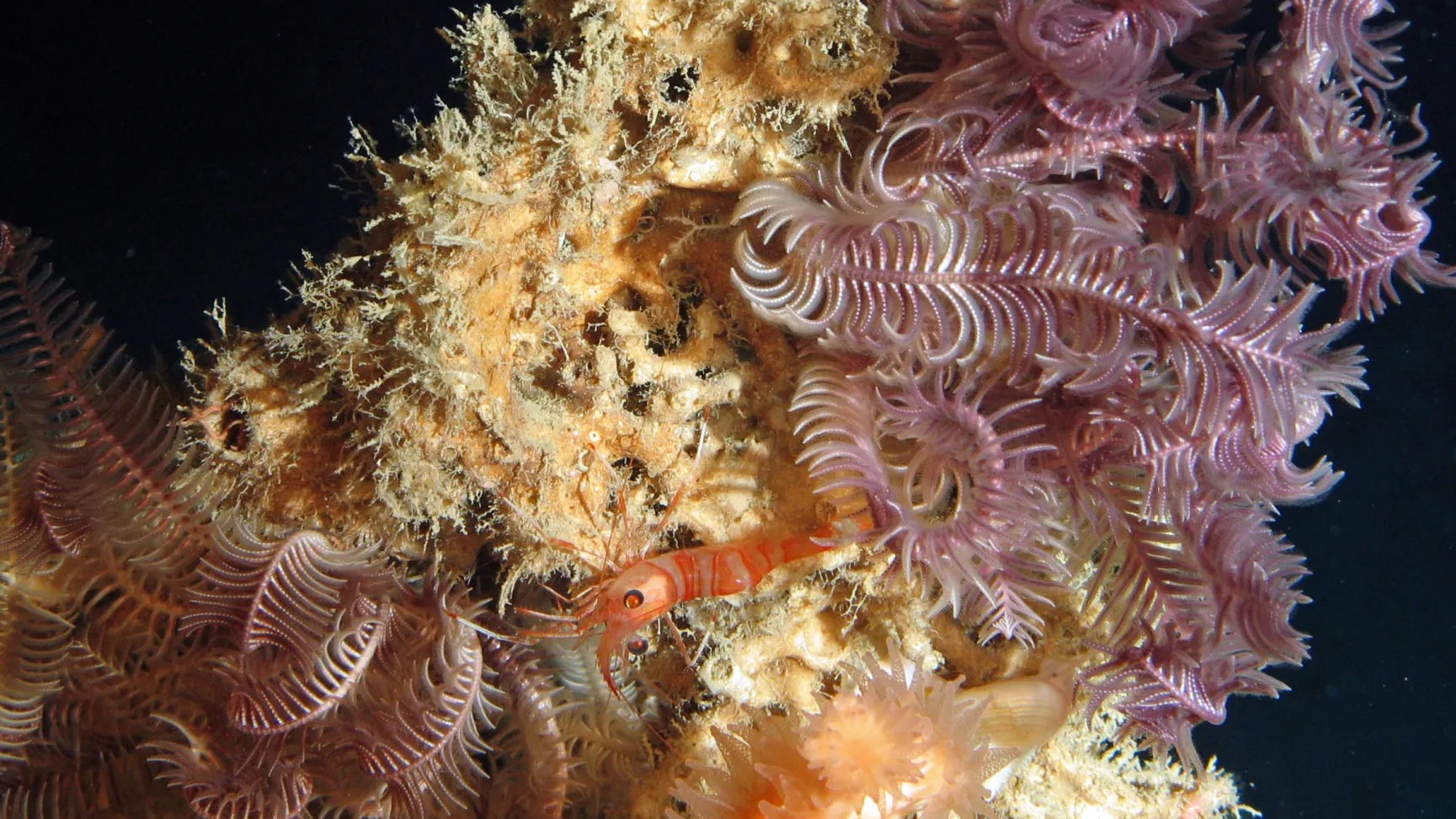
Cold-water corals off Ireland at a water depth of 750 meters, photographed with the diving robot MARUM-CHEROKEE, Photo: MARUM – Center for Marine Environmental Sciences, University of Bremen

The research vessel MARIA S. MERIAN sets sail on September 2. Her destination on expedition MSM 111 is the Baffin Bay, located between Greenland and ...
+
The research drillship JODES RESOLUTION is on its way to the Agulhas Plateau in the Indian Ocean. A team of international scientists, including Thomas ...
+
The first unified vision of the world ocean biodiversity, based on analysis of DNA sequences from the surface to deep-ocean sediments, unveils the rich and ...
+
Only a few microorganisms are able to produce oxygen in complete darkness. A new member of this exclusive circle is the extremely small unicellular ...
+