


- Home
- Our Offers
- Media
- Archive News
- News 2025
- elbeXtreme
ElbeXtreme Project Meeting 2025 at MARUM
Interdisciplinary exchange for a better understanding of marine extreme events in the Elbe estuary

On May 12 and 13, 2025, approximately 30 members of the ElbeXtreme consortium met in Bremen at MARUM – Center for Marine Environmental Sciences, to take stock, exchange ideas, and plan the next project steps after halfway through the first funding phase. Researchers from the fields of oceanography, ecology, geosciences, modeling, data management, and communication and transfer were present.
The meeting not only provided space for reports and planning, but above all for genuine interdisciplinary collaboration. The focus was on questions such as: How can physical and biological measurements related to e.g. heat waves be meaningfully linked? What is the resilience of marine ecosystem in this regard? How is technology development influencing the planning of monitoring field campaigns? And how can complex research results be processed in such a way that they are understandable and usable for regional stakeholders from administration, business, and civil society?
The discussions impressively demonstrated the importance of close dialogue between the disciplines – from measurement concepts and modeling to knowledge transfer. The goal is a holistic understanding of extreme events and their consequences – and thus also improved preparation and adaptation in the affected regions.
The conclusion after two days in Bremen: ElbeXtreme embodies the mission of mareXtreme – namely, to transcend disciplinary boundaries and understand science as a formative force in dealing with extreme events. The annual consortium meeting impressively demonstrated that the project team is not only on the right track, but is also growing as a community.
More about ElbeXtreme, mareXtreme, and the DAM at:
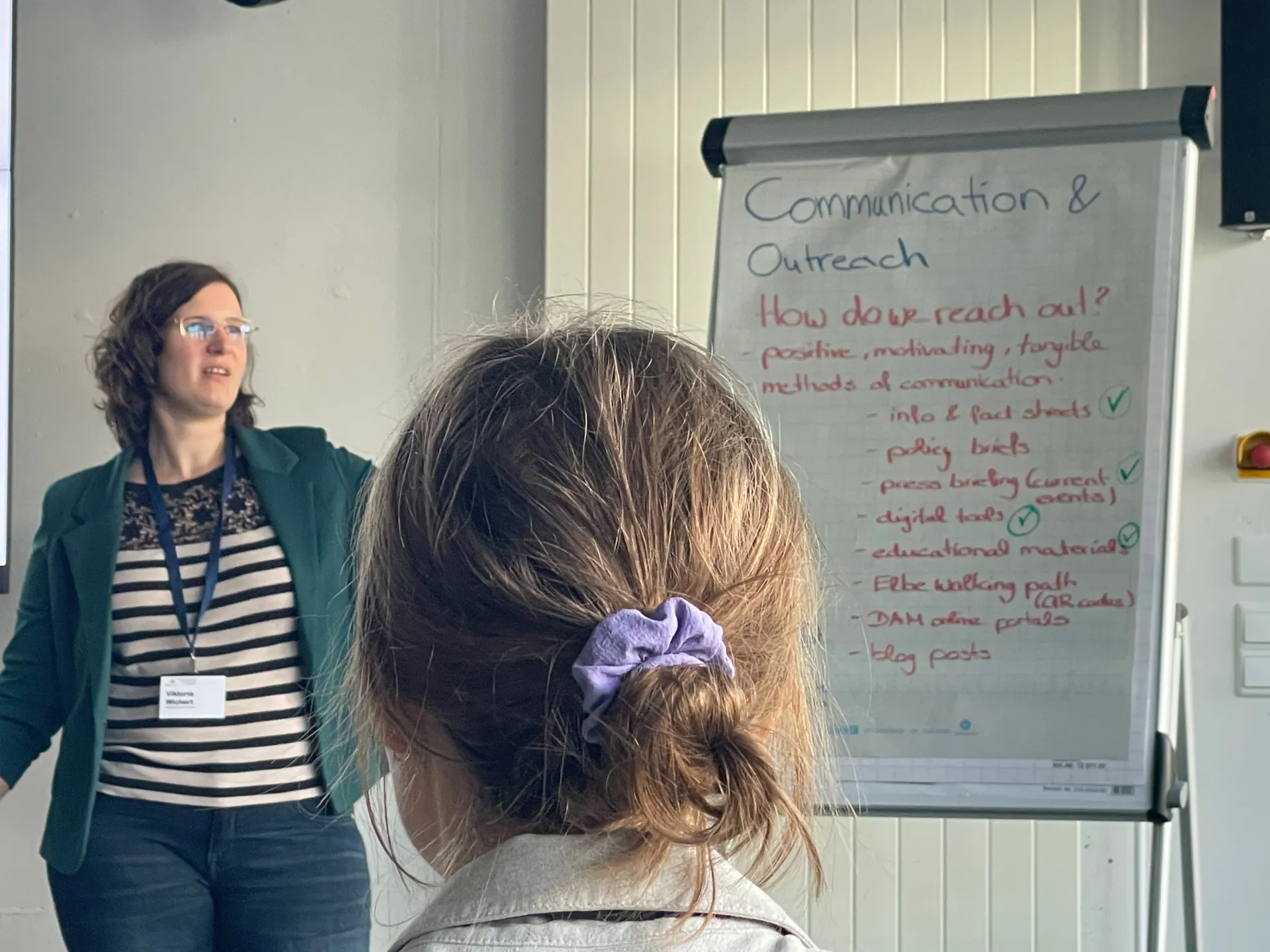
Viktoria Wichert (Hereon) discusses different communication and transfer formats with the participants. Photo: MARUM – Center for Marine Environmental Sciences, University of Bremen
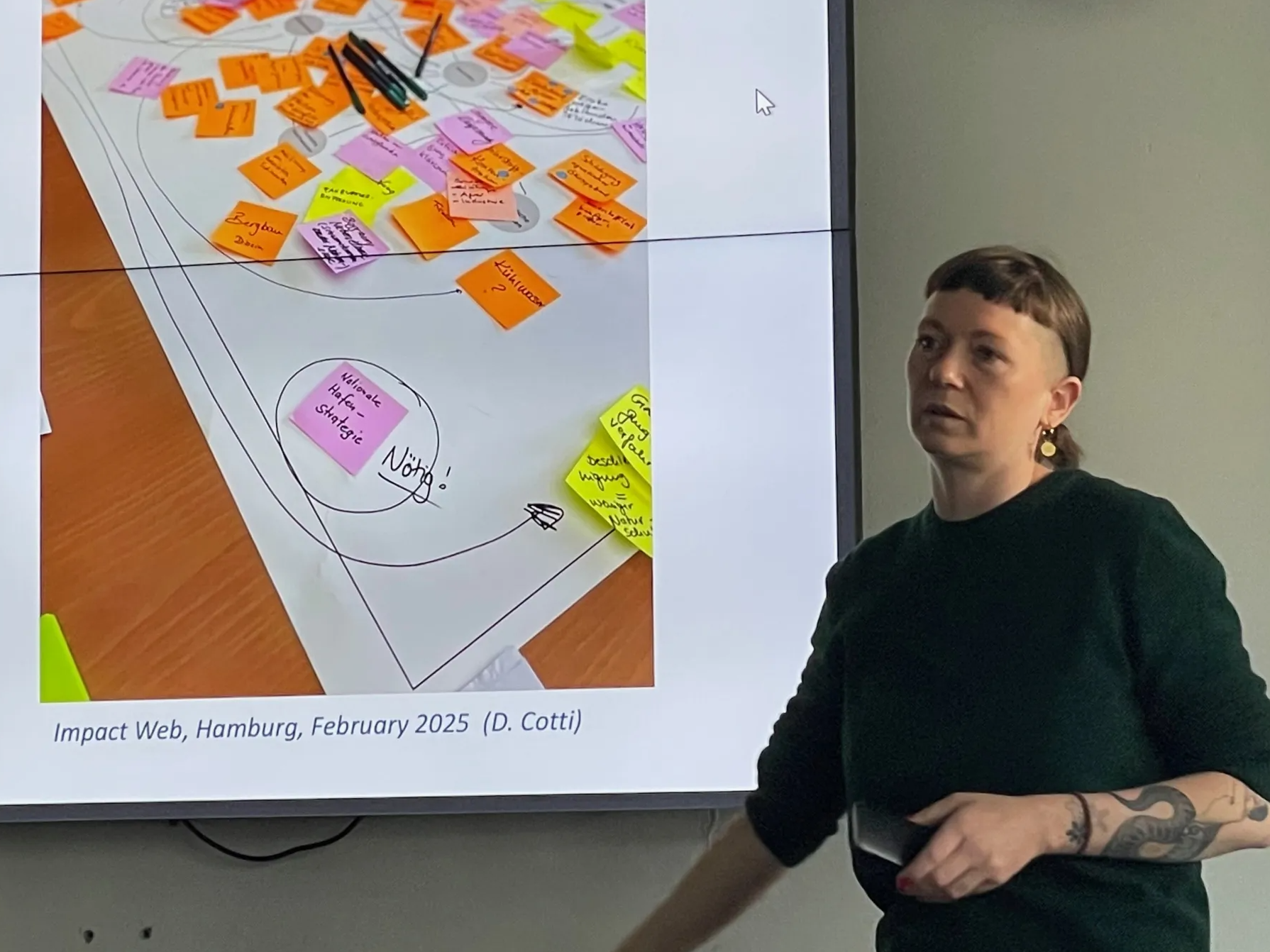
Greta Dekker (UNU-EHS) explains the impact of linked risks on ecosystems and how their assessment helps to adapt to extremes and take relevant decisions. Photo: MARUM – Center for Marine Environmental Sciences, University of Bremen