


- Home
- Our Methods
- Expeditions
- 2024
- MSM131
MSM131
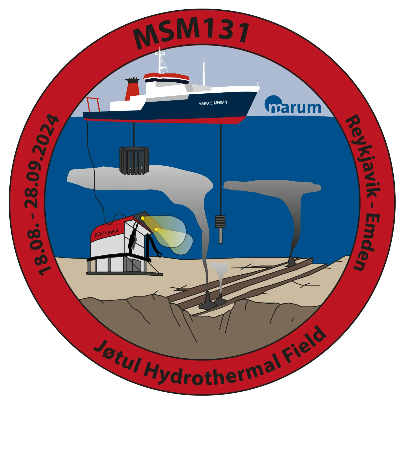
RV MARIA S. MERIAN - Cruise MSM131
18 August - 28 September 2024
Reykjavik - Longyearbyen - Emden
The Jøtul Hydrothermal Field - Magma-Sediment Interaction at the Ultraslow-Spreading Knipovich Ridge

During the MSM109 expedition in July 2022, a hydrothermal field was discovered for the first time on the 500 km long, ultraslow spreading Knipovich Ridge. The so-called Jøtul hydrothermal field is not located on an Axial Volcanic Ridge (AVR) but is located on the eastern flank of the rift, where interaction between magmatic intrusions and the sediments of the Svalbard continental slope results in an unusually high release of thermogenic methane. Previous investigations during the MSM109 with ROV QUEST show a wide variety of fluid exit points, such as diffuse venting from sediments but also from joints and cracks in igneous rocks, inactive and active mounds with hydrothermal precipitates and chemosynthetic organisms, an active Black smoker, one or more plumes in the water column and numerous other indications of hydrothermalism. Locations with such interactions between magma and sediments are of particular importance for the carbon cycle. Additional and, above all, more detailed investigations of the newly discovered Jøtul Field and other hydrothermal activities of the Knipovich Ridge are important to the ocean cluster and therefore shall be carried out during MSM131.
German Research Fleet Coordination Center - RV MARIA S. MERIAN
MARUM Robotics
Cruise MSM131 - courtesy of BRIESE RESEARCH
Weekly Reports


