

- Home
- Our Offers
- Media
- Archive News
- News 2025
- sea level rise in Bremen
MARUM in dialog: How sea level rise affects Bremen

In her welcoming address, Kathrin Moosdorf, Senator for the Environment, Climate and Science, emphasized how important it is “that we address the pressing issues of climate change and develop solutions together. And that we do not play down climate change despite the many other problems. Because research clearly shows us that it is not.” The topic of coastal and flood protection is particularly existential for the people of Bremen, who live so close to the sea.
The first keynote speech by Prof. Ben Marzeion, MARUM – Center for Marine Environmental Sciences and Institute of Geography at the University of Bremen, provided scientific background information on sea level rise and showed that rising sea levels are already causing restrictions on hinterland drainage in Bremen.
Dr. Rita Seiffert from the Federal Waterways Engineering and Research Institute explained that the rise affects a wide range of areas, for example the clearance height under bridges, water-related infrastructure, the penetration of salt into the groundwater, but can also affect ecosystems.
The panel consisted of Marion Langenbach from the senatorial authority for the environment, climate and science, Lena Lankenau from bremenports GmbH & Co. KG, Prof. Dr. Ben Marzeion, and Prof. Dr. Gudrun Massmann from the University of Oldenburg. They emphasized that human activity can exacerbate the effects, especially if CO2 emissions are not sufficiently reduced. Technical coastal protection has its limits, so options for action must be developed in good time, not least out of a sense of responsibility towards future generations.
A total of almost 80 people took part in the third edition of “MARUM in Dialogue”. The series will be continued in the fall and will focus on another climate impact for Bremen. The aim of the dialog series is to make scientific findings from MARUM and related disciplines available to political decision-makers in an understandable way and to strengthen the transfer of knowledge on selected topics.
Impressions of the event
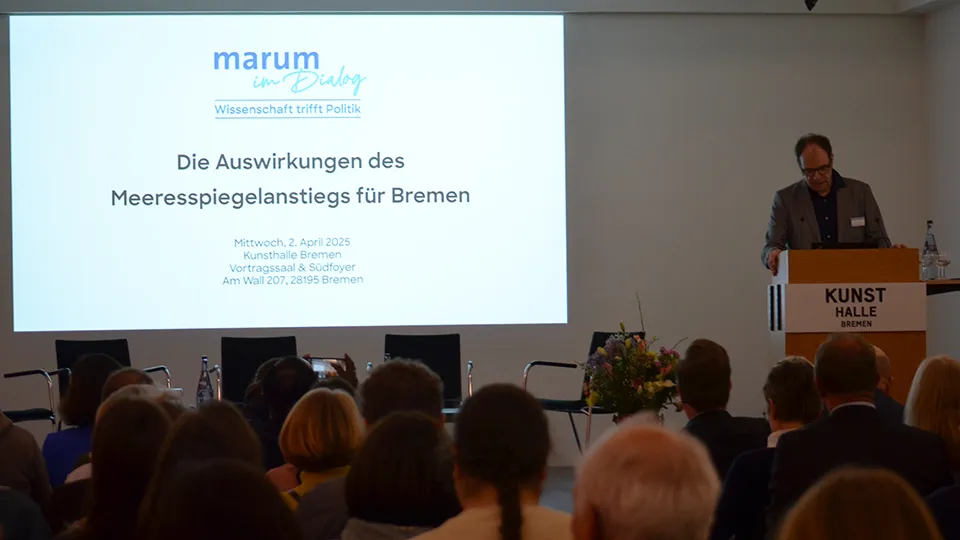
Welcome note by MARUM Director Prof. Dr. Kai-Uwe Hinrichs. Photo: MARUM – Center for Marine Environmental Sciences, University of Bremen; U. Prange
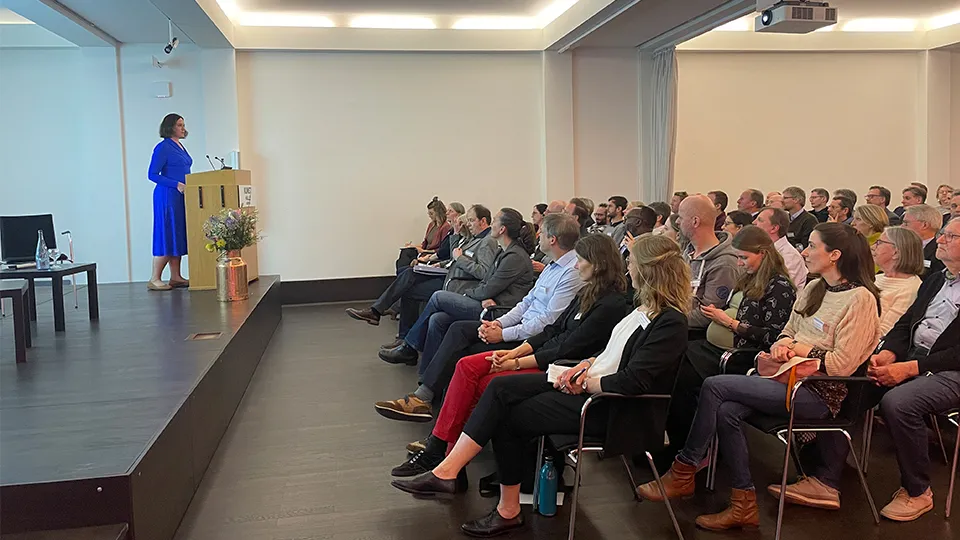
Senator Moosdorf during her welcoming speech at the beginning of the event. Photo: MARUM – Center for Marine Environmental Sciences, University of Bremen; J. Nitsch
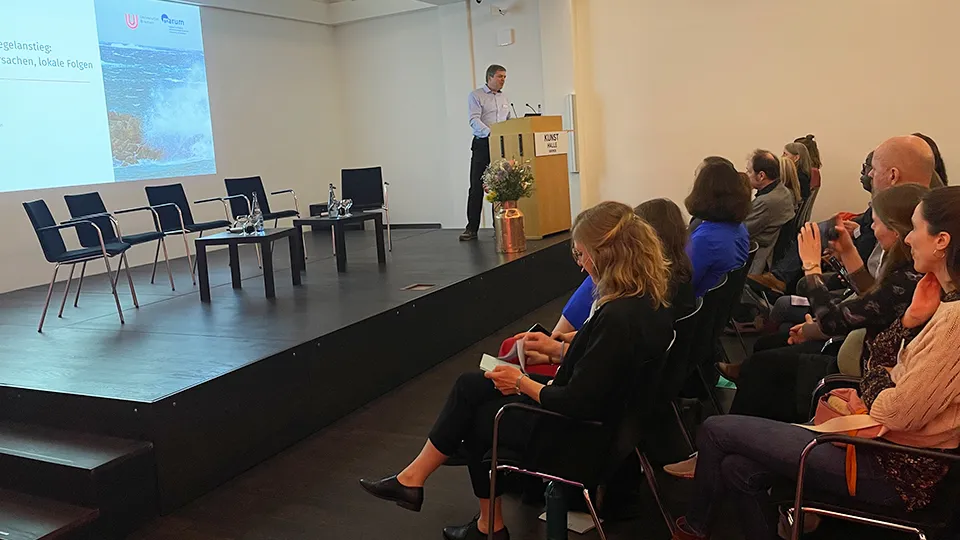
First keynote speech by Ben Marzeion, University of Bremen. Photo: MARUM – Center for Marine Environmental Sciences, University of Bremen; J. Nitsch
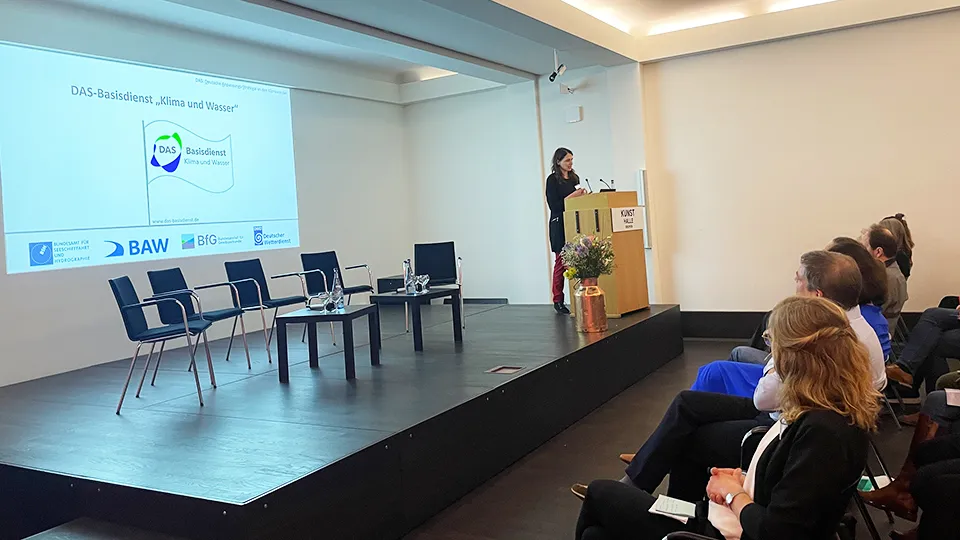
Second keynote speech by Rita Seiffert (BAW). Photo: MARUM – Center for Marine Environmental Sciences, University of Bremen; J. Nitsch
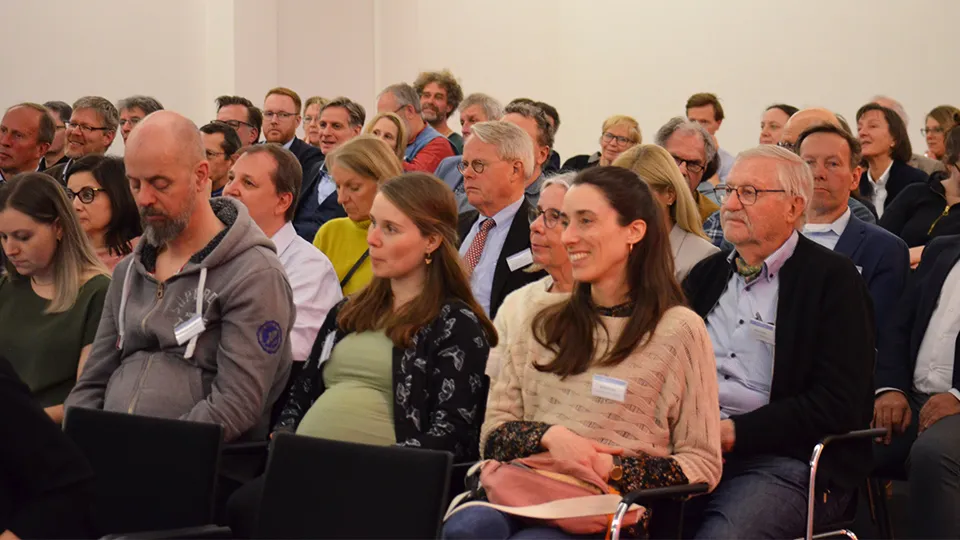
View into the audience. Photo: MARUM – Center for Marine Environmental Sciences, University of Bremen; U.Prange
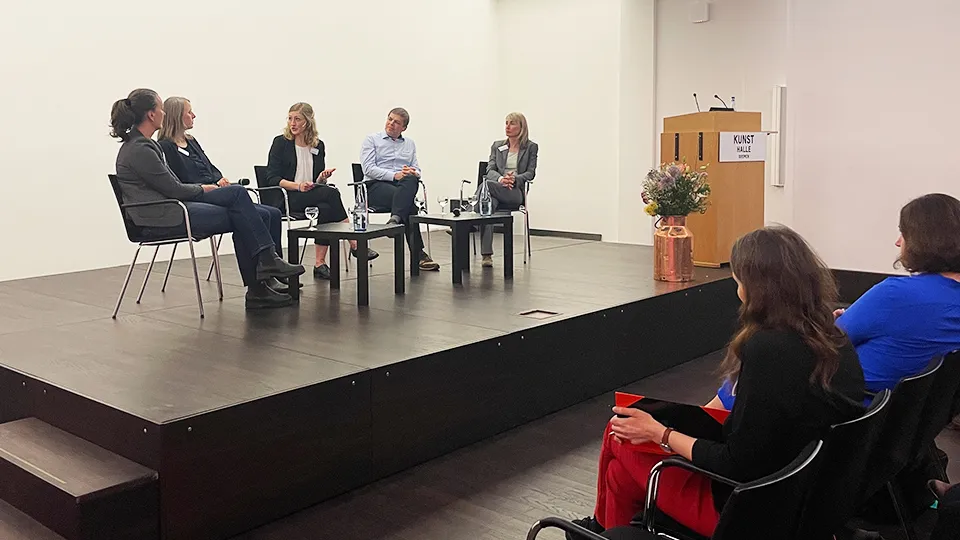
Lively panel discussion. Photo: MARUM – Center for Marine Environmental Sciences, University of Bremen; J. Nitsch
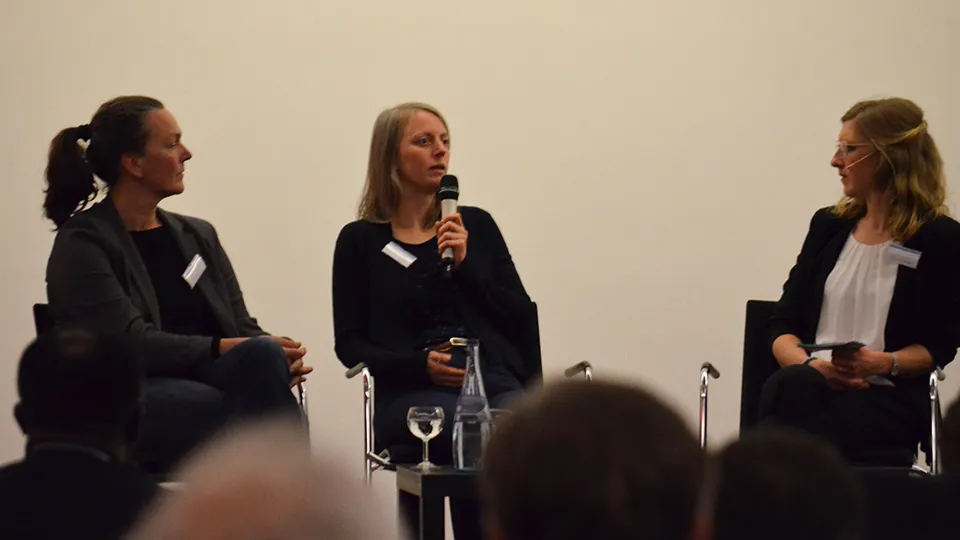
Lena Lankenau, bremenports GmbH & Co. KG, answers questions from the audience during the panel discussion. Photo: MARUM - Center for Marine Environmental Sciences, University of Bremen; U.Prange
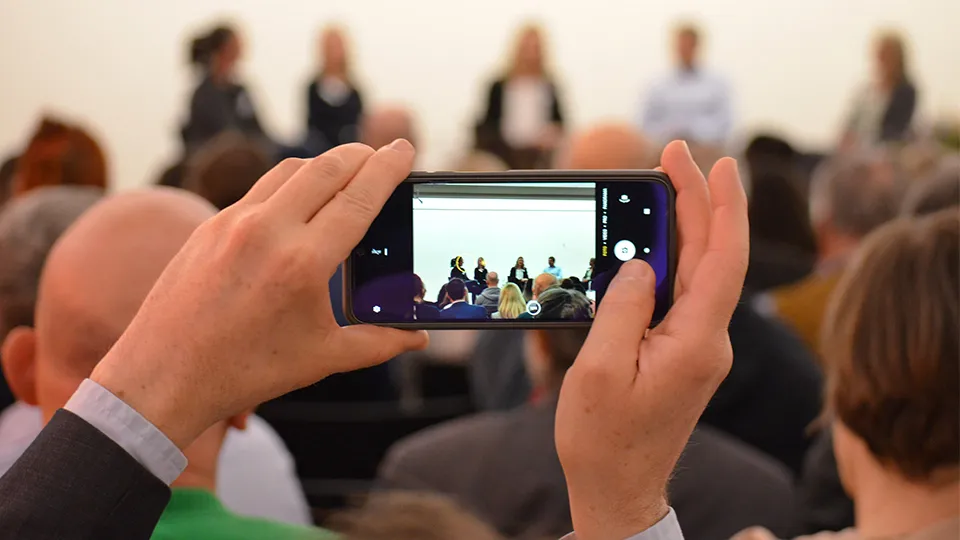
Snapshot. Photo: MARUM – Center for Marine Environmental Sciences, University of Bremen; U.Prange
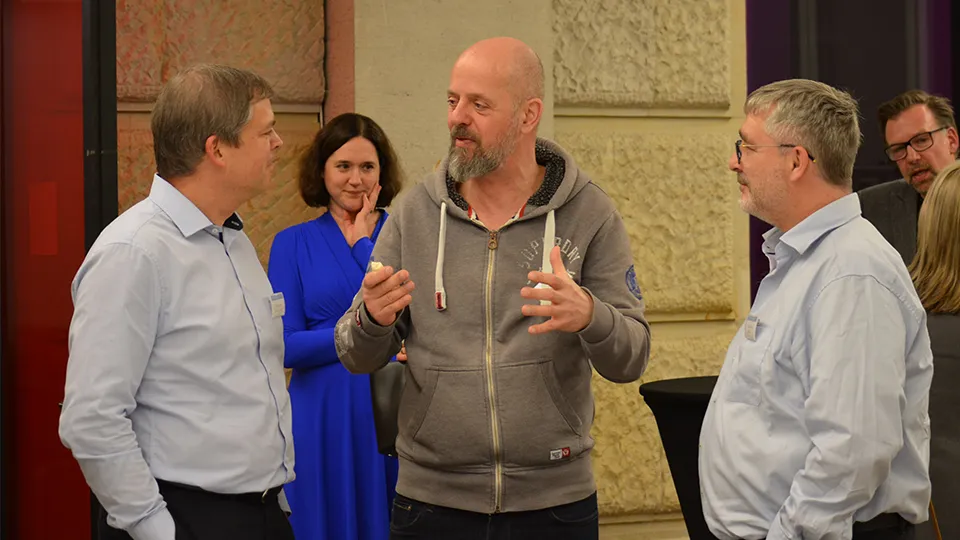
At MARUM in Dialog, the focus is on exchange. Photo: MARUM – Center for Marine Environmental Sciences, University of Bremen; U.Prange
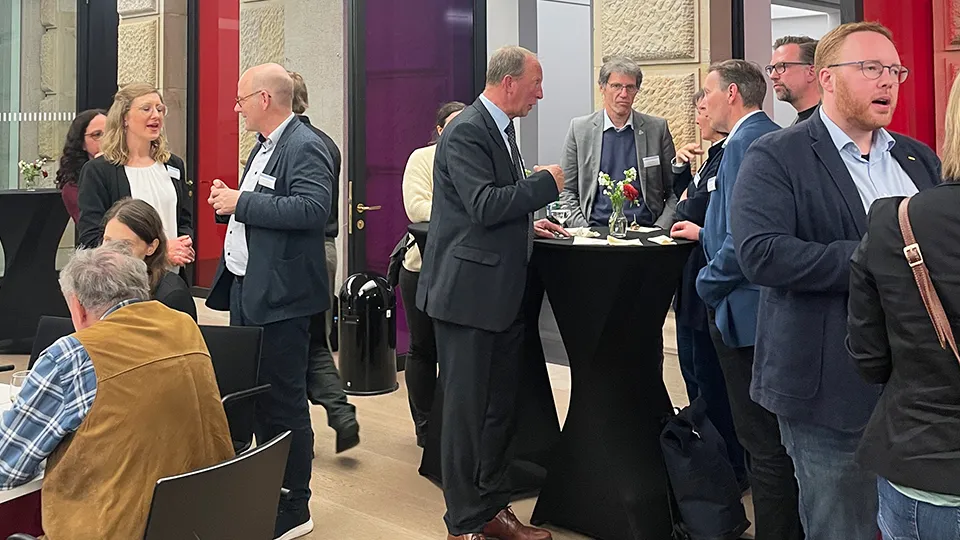
Get-together after the panel discussion Photo: MARUM – Center for Marine Environmental Sciences, University of Bremen; U.Prange
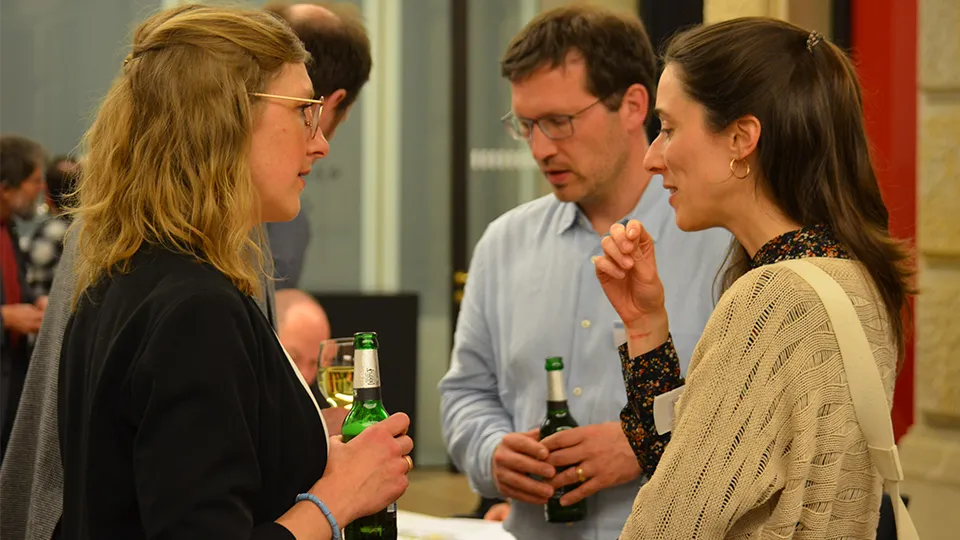
Get-together after the panel discussion Photo: MARUM – Center for Marine Environmental Sciences, University of Bremen; U.Prange
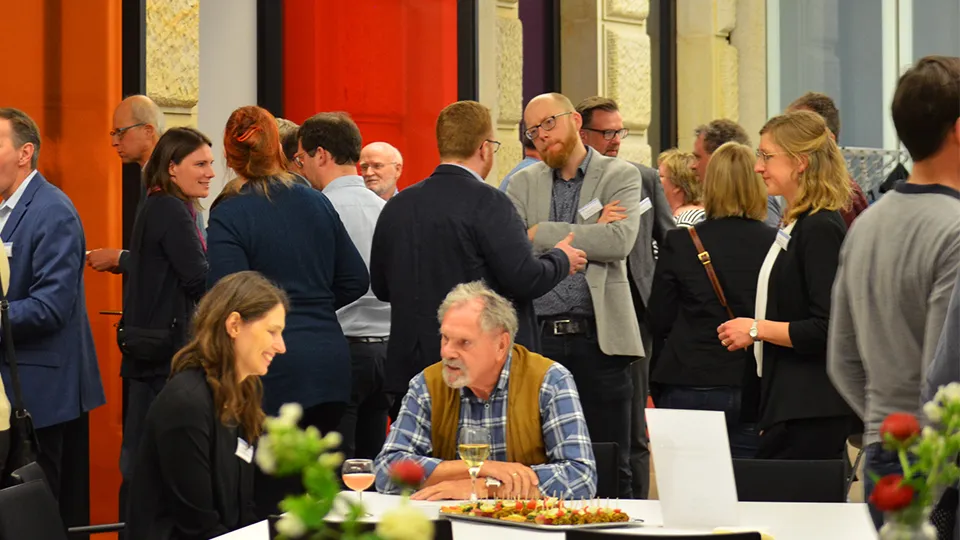
Thoughts and ideas were not only further deepened at theme tables. Photo: MARUM – Center for Marine Environmental Sciences, University of Bremen; U.Prange