


- Home
- Our Offers
- Media
- Archive News
- News 2024
- OceanDay2025
5. Bremen Ocean Day
An event for learning groups at upper secondary level

The presentations in detail
Dr. Julian Kiefer
Max Planck Institute for Marine Microbiology (MPIMM), Bremen
From deep-sea mussels to coastal worms: The secrets of marine symbioses
The sea is full of fascinating symbiotic communities. They appear inconspicuous at first glance, but provide deep insights into biology and evolution. From mussels at hot springs in the deep sea to gutless worms in the shallow waters of the Mediterranean, many marine animals live in close partnership with microbes that help them survive in extreme habitats. In his lecture, Julian Kiefer explains how these symbioses work, how we study the animals and their microbes and what stories their DNA tells us about their evolution.
Julian Kiefer started out on land, investigating symbioses between insects and bacteria. Now he is investigating gutless worms and their bacterial subtenants in the Mediterranean. Using a mixture of field research, molecular analyses and bioinformatics, he is trying to understand the evolution of these fascinating communities.
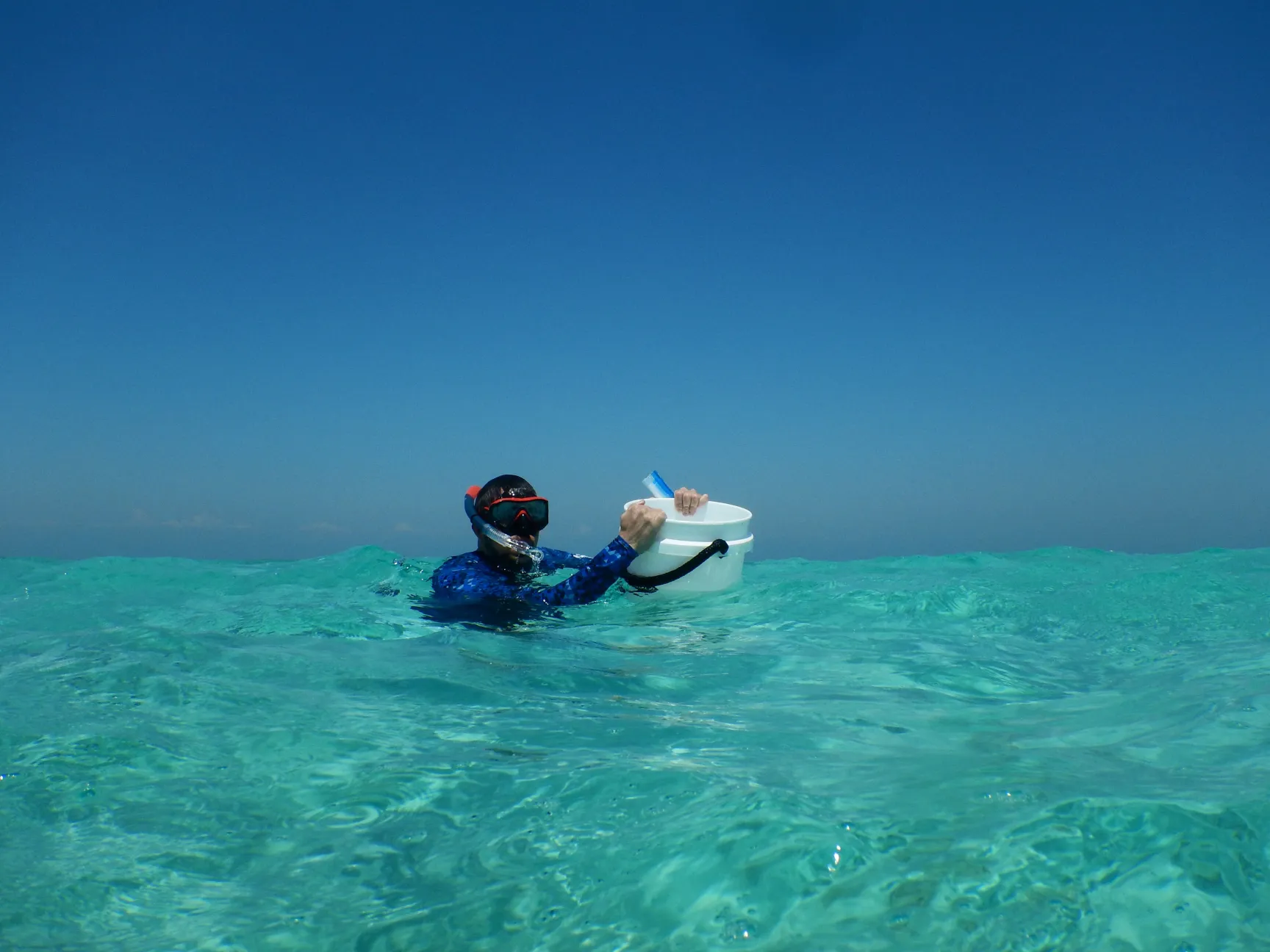
Sample name in tropical sea. Photo: Harald Gruber-Vodicka / Max Planck Institute for Marine Microbiology
Elena Schiller
MARUM – Center for Marine Environmental Sciences, University of Bremen
Lights on! How do we see in the deep sea?
Why are photos from the deep sea so dark and often look as if someone has put a rainbow filter over them? What is the color of a place where it is always dark and which we humans cannot see with our own eyes, but only with the help of cameras? In her lecture, Elena Schiller explains how water swallows light, how colors are created and what light we need to bring with us into the deep sea to get real pictures of the underwater world.
Elena Schiller studied mechanical engineering and is a scientific diver. She spent a few years building deep-sea robots for marine research at the Alfred Wegener Institute in Bremerhaven. Now she is researching at the University of Bremen how colors are created underwater and what lighting we need to get real images of the underwater world.
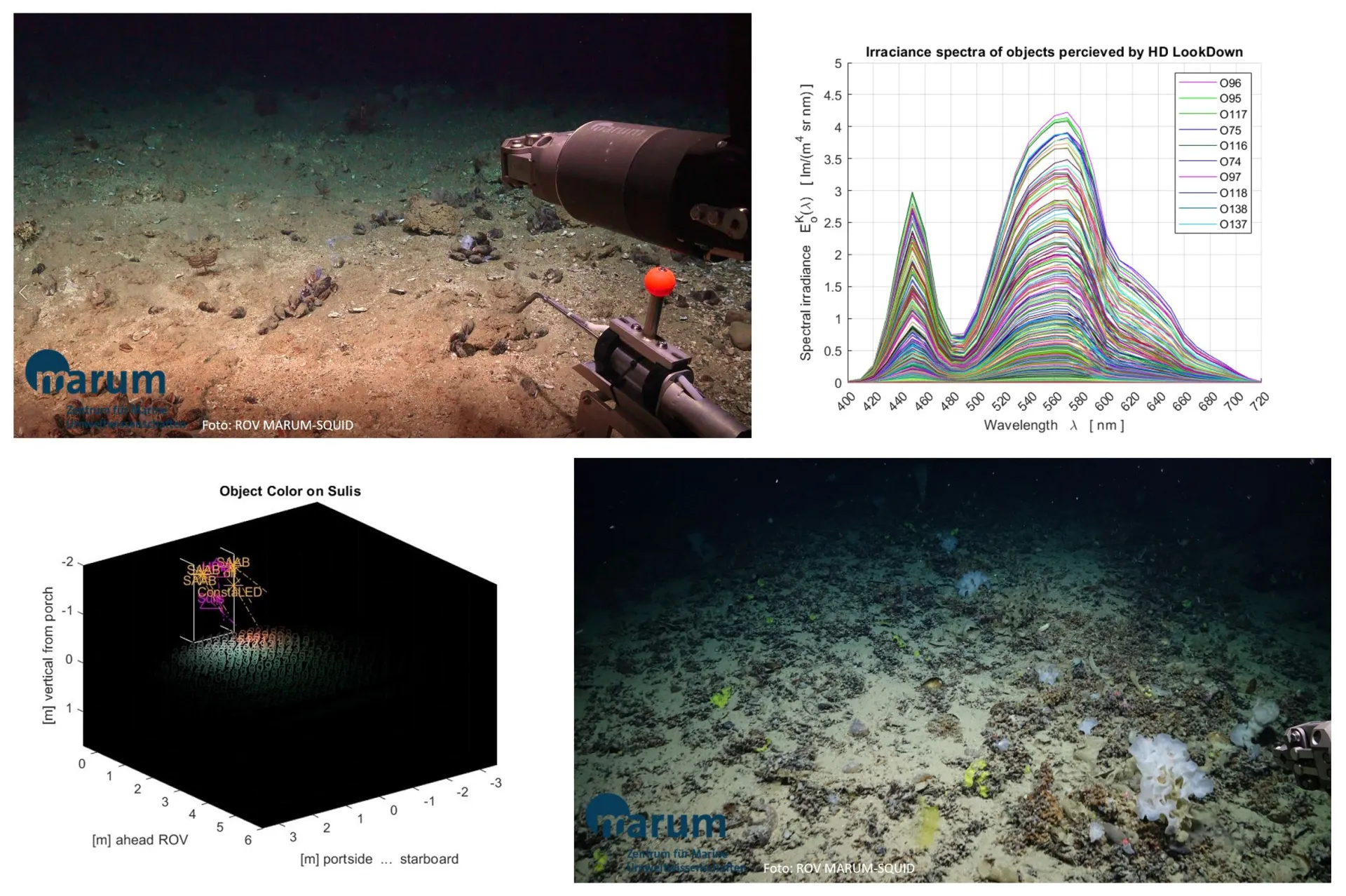
Impressions of working with a deep-sea robot. Photo: Elena Schiller/ROV MARUM-SQUID, MARUM – Center for Marine Environmental Sciences, University of Bremen
Dr. Mirco Wölfelschneider
Leibniz Center for Tropical Marine Research (ZMT), Bremen
Mangroves as climate savers? What's behind them and what makes these tropical trees so unique.
What are mangroves and why do they help us in the fight against climate change? Mirco Wölfelschneider researches these fascinating trees, which can even survive in salt water. The mangrove ecologist invites you on a voyage of discovery to tropical coasts. He shows what he finds so exciting about the trees and why mangrove forests are not only (super)vital for people in the tropics, but are also being treated as "climate savers" these days.
Mirco Wölfelschneider conducts research into carbon storage in densely vegetated coastal ecosystems and is particularly interested in the question of how carbon gets into the seabed there.
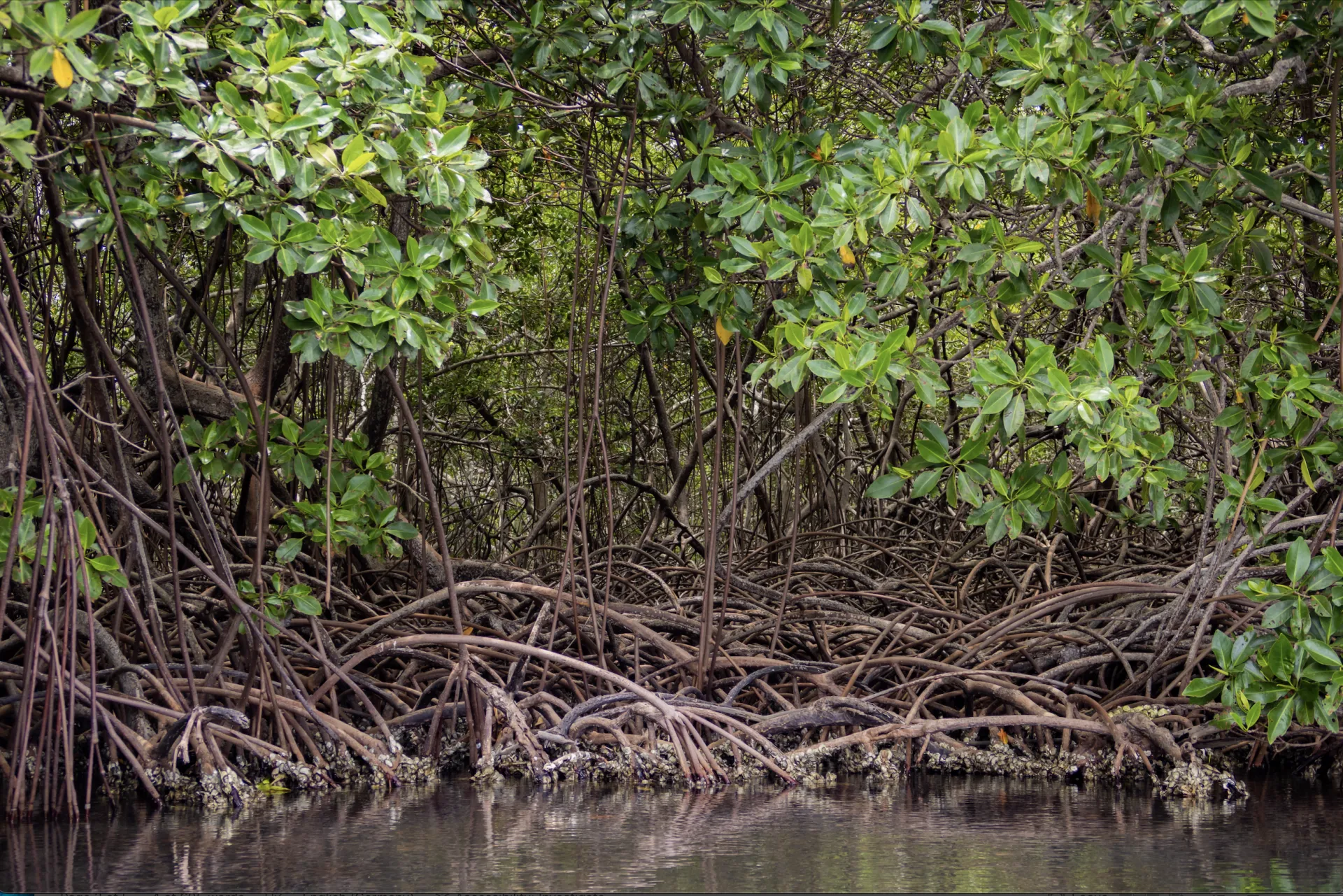
Dense mangrove ecosystem. Photo: Carolina Hortúa Romero