


- Home
- Our Offers
- Media
- Archive News
- News 2025
- Spirula
Successful test underwater monitoring system

The testing of the newly developed SPIRULA system was at the heart of this effort. SPIRULA consists of a stationary lander and a mobile unit connected via tether, designed to monitor both the seafloor and the surrounding water column within a 20-meter radius. Equipped with sensors to measure conductivity, temperature, pressure, turbidity, and fluorescence, along with high-resolution cameras and a forward-looking multibeam sonar, SPIRULA aims to provide full optical and environmental coverage of hydrothermal vent fields. For deployment, the expedition team implemented a tailor-made pontoon system — affectionately dubbed the "Busy Beaver" — while preliminary site assessments were carried out using a BlueROV to identify key venting areas. ROV is short for remotely operated vehicle.
This expedition marked a successful interdisciplinary collaboration, bringing together marine engineering and geosciences to advance our understanding of hydrothermal systems in shallow marine environments. Alongside the lead scientists, the team also included Ankita Jadhav, Monja Daub, Arni Thor Thorgeirsson, and Jan Gümpel. The expedition was funded by the Werner Siemens-Foundation and the Cluster of Excellence “The Ocean Floor – Earth’s Uncharted Interface”, based at MARUM – Center for Marine Environmental Sciences at the University of Bremen.
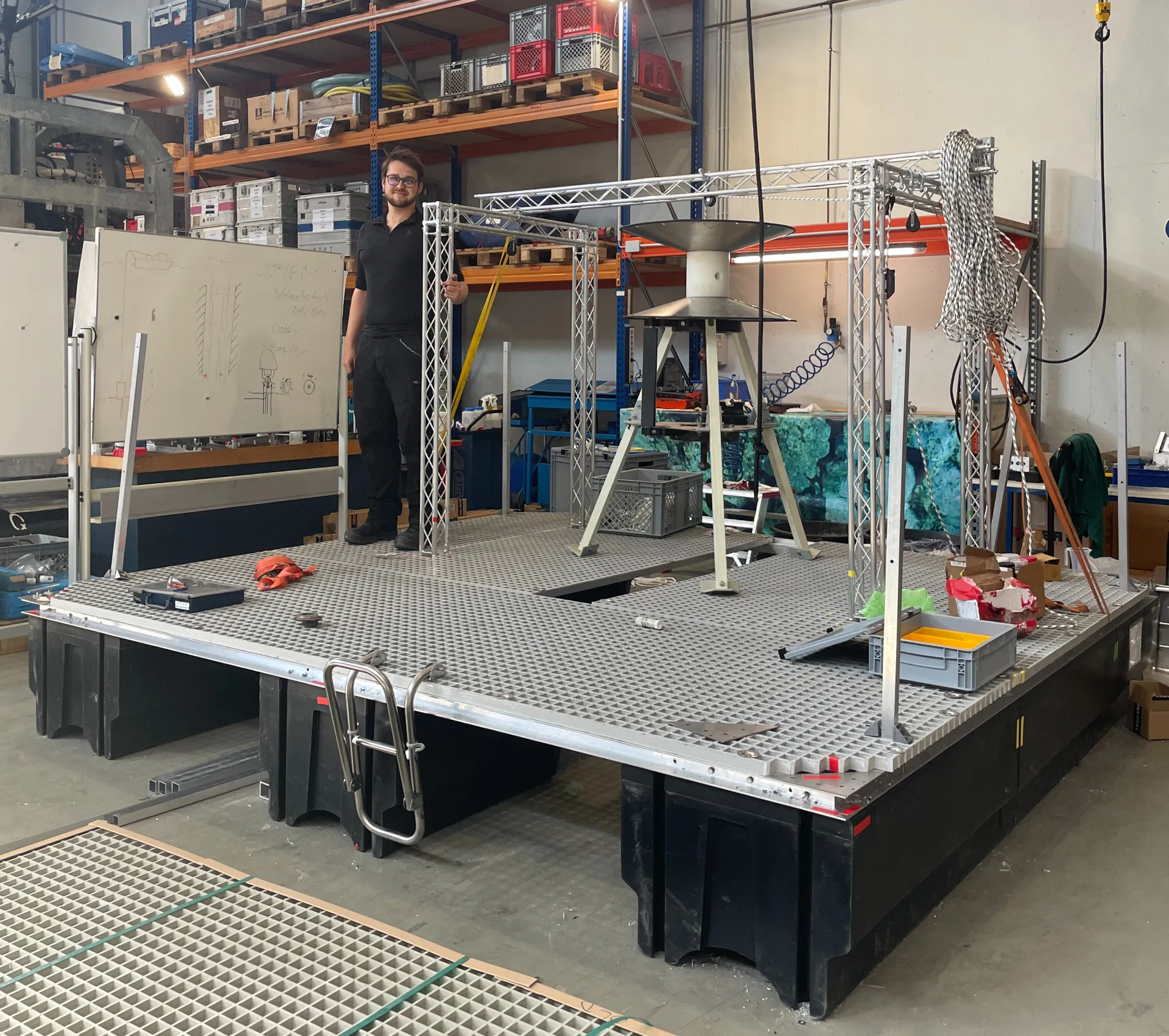
Jan Gümpel, Master's student at the University of Bremen, stands in the workshop next to the SPIRULA system he co-developed. Photo: MARUM – Center for Marine Environmental Sciences, University of Bremen
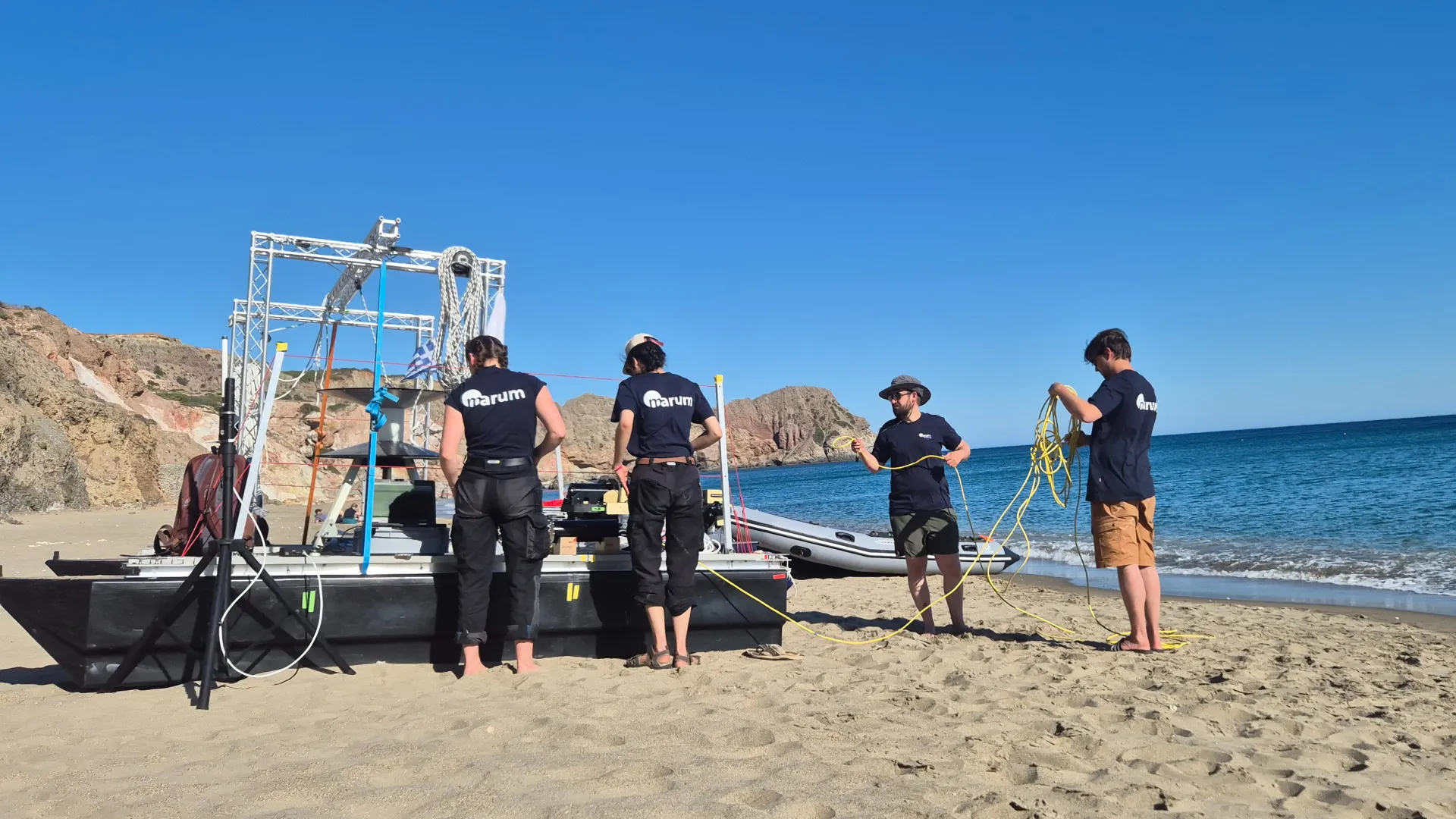
Set-up of the “Busy Beaver” at the beach of Milos. Photo: MARUM – Center for Marine Environmental Sciences, University of Bremen; S. Bühring
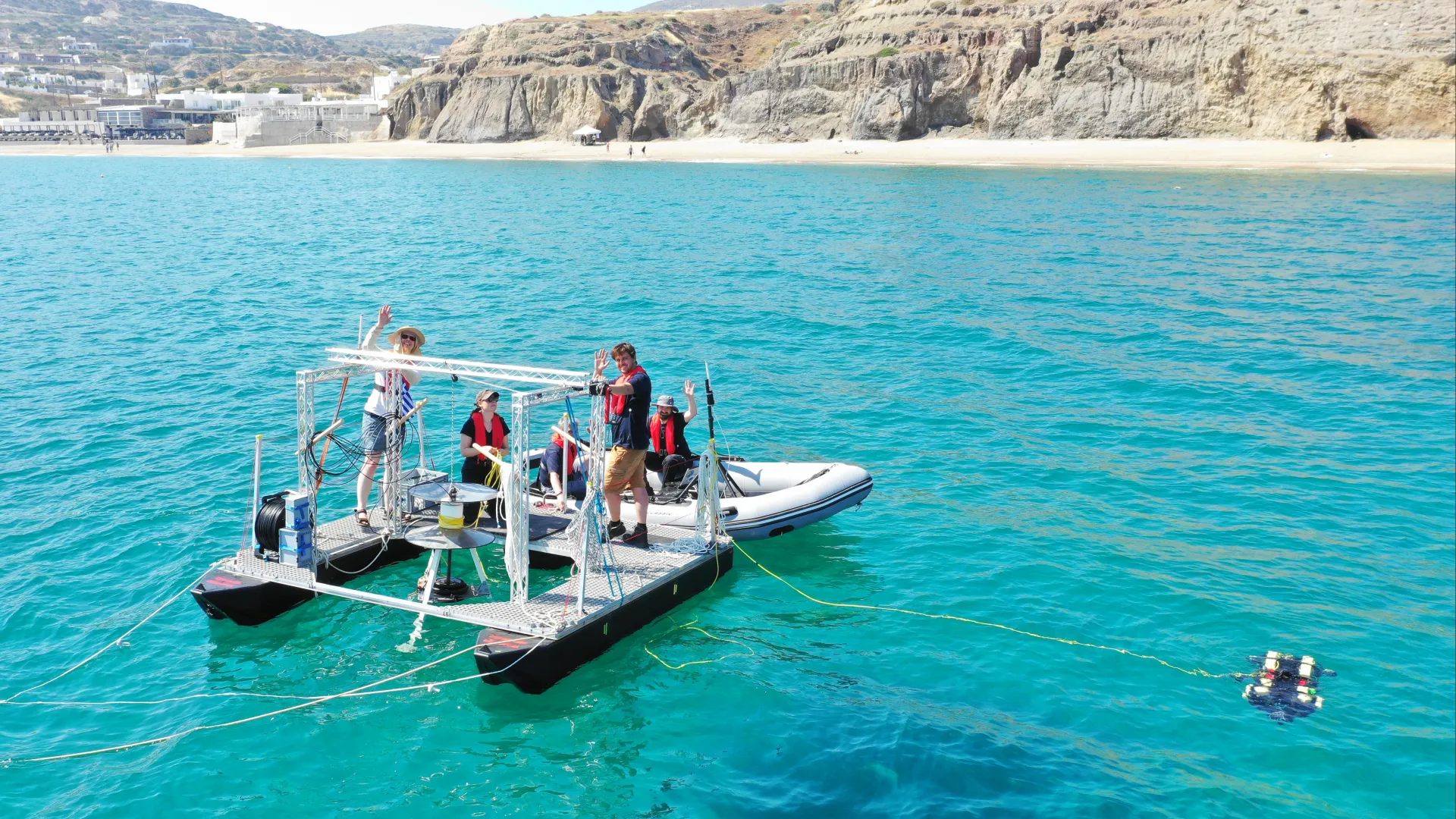
“Busy Beaver” on station, SPIRULA is making its rounds. Photo: MARUM – Center for Marine Environmental Sciences, University of Bremen; A. Jadhav
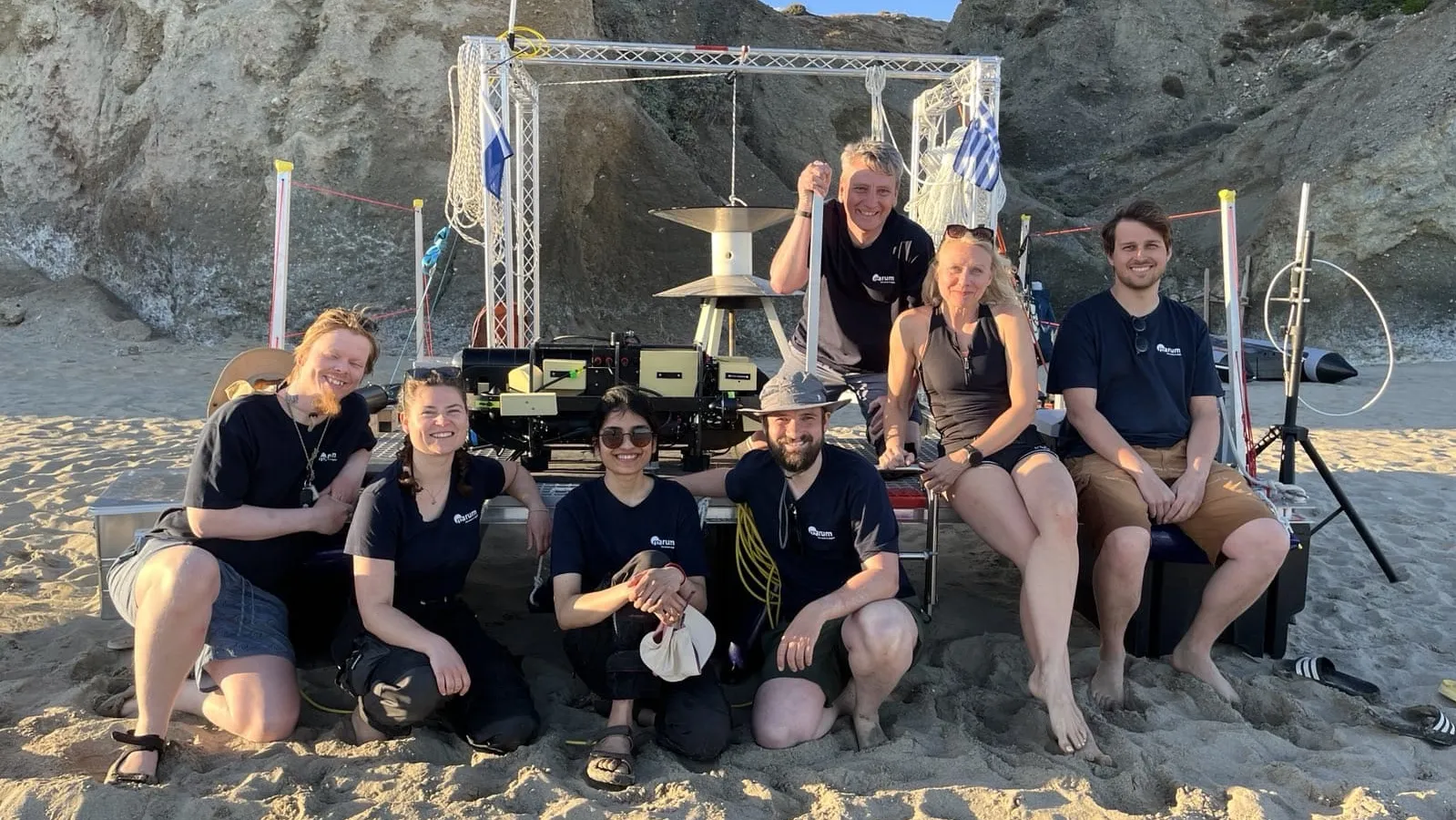
Group picture. Photo: MARUM – Center for Marine Environmental Sciences, University of Bremen; O. Lang