
- Home
- Our Offers
- Media
- Archive News
- News 2024
- Association of German Foundations
Visit of the Association of German Foundations at MARUM

Kai-Uwe Hinrichs, Elda Miramontes García, Kai Bischoff and Matthias Zabel from MARUM presented the center, its mission and some of its research priorities to the approximately 25 participants. A tour of the MARUM followed. Particular interest was shown in the new remotely operated vehicle MARUM-QUEST5000, the seafloor drilling rigs MeBo70 and Mebo200 developed at MARUM, the one of only three core repositories worldwide of the international ocean drilling program (IODP), as well as individual drill core segments in which prominent extreme events are clearly visible, such as the asteroid impact in the Gulf of Mexico at the boundary between the Cretaceous and Tertiary eras.
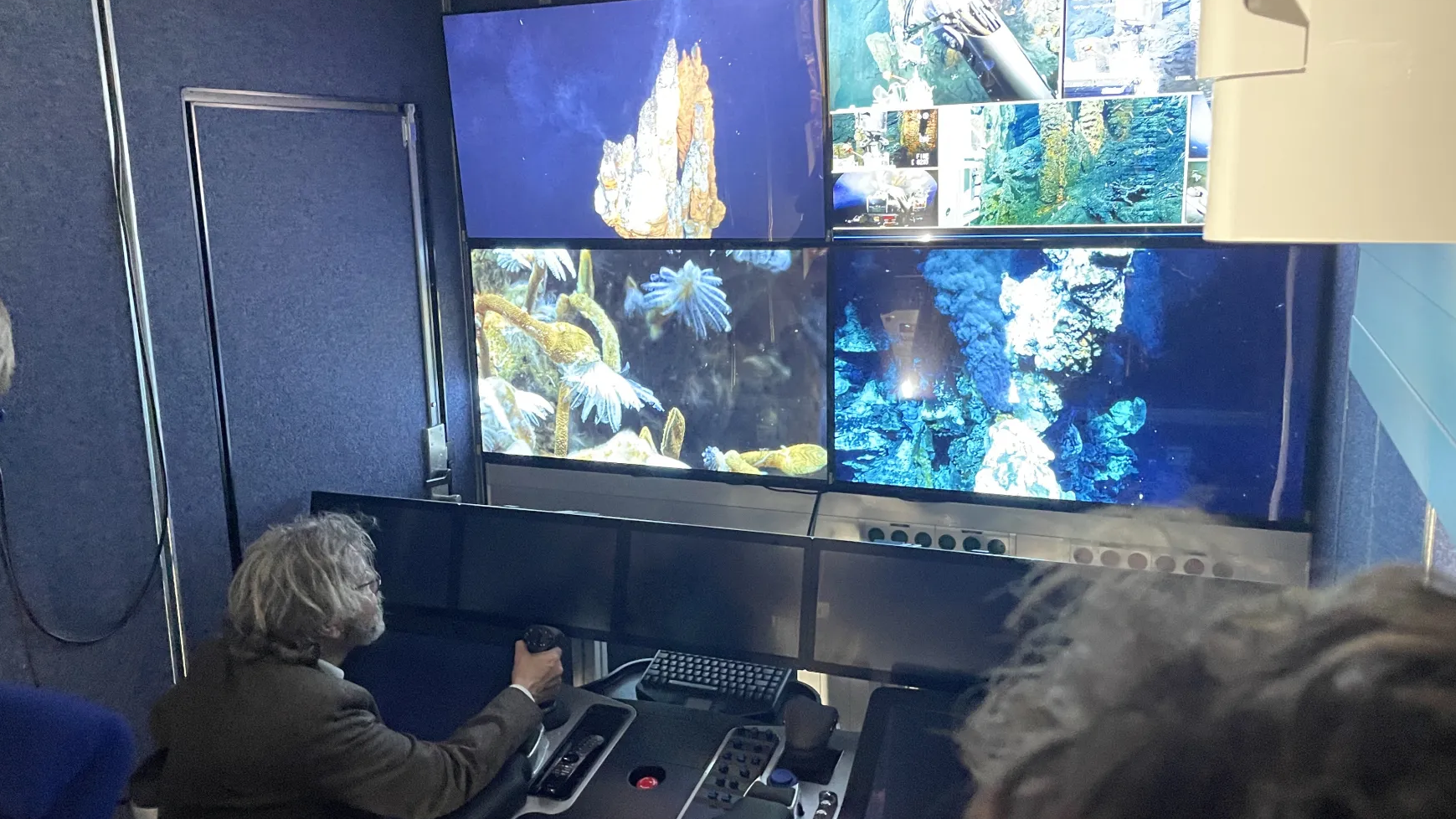
In the simulation container of the diving robot MARUM-QUEST4000.
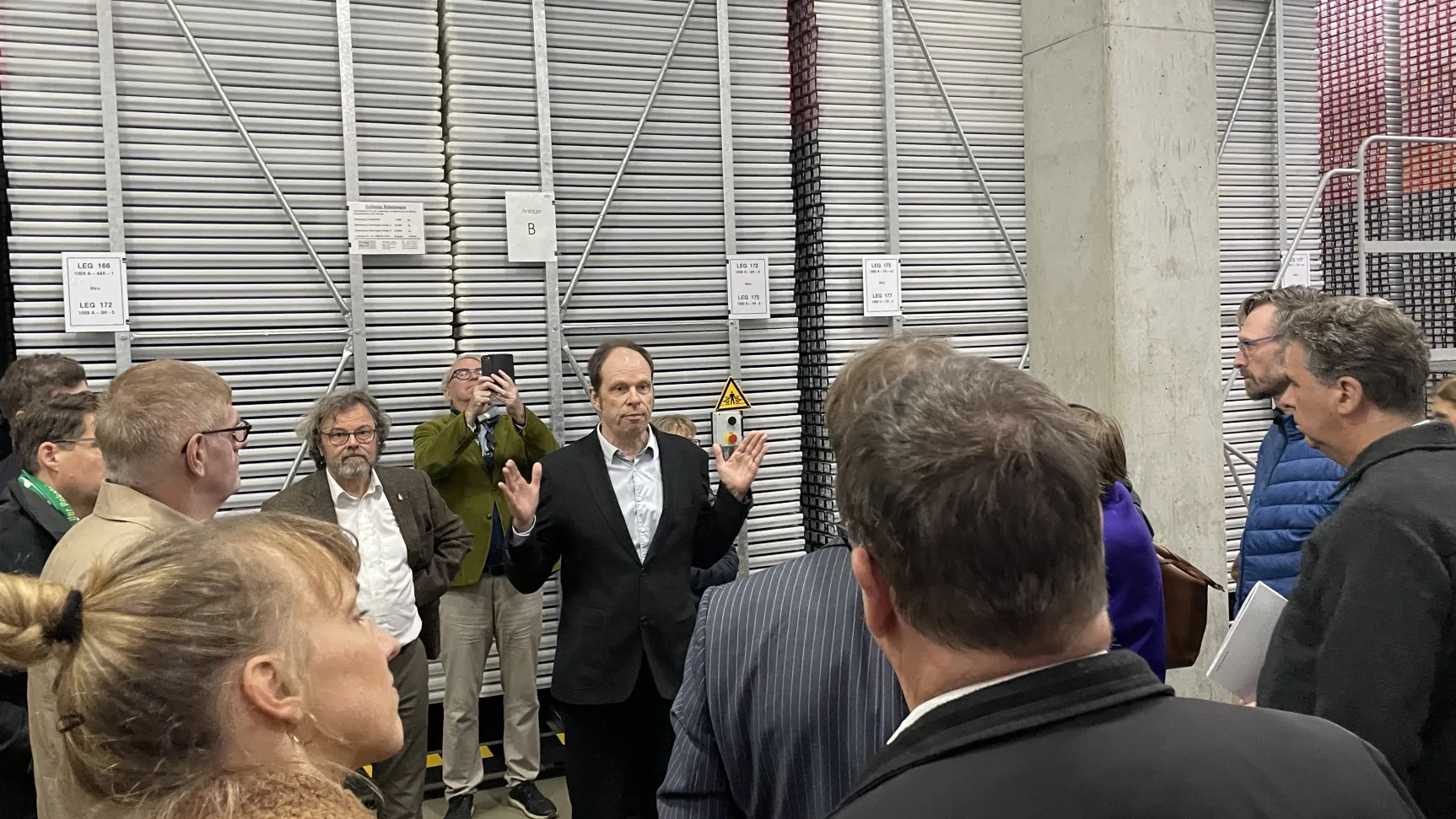
The Bremen IODP core repository houses around 193 kilometers of samples from the ocean floor.