

MARUM Research Academy
Report of Selma Mezger
European Coral Reef Symposium (ECRS) in Naples, Italy from 2 to 5 July 2024
The European Coral Reef Symposium (ECRS) aims to bridge the knowledge gap between tropical, temperate and cold-water coral reefs. This year's symposium was held in Naples, Italy, at the Città della Scienza and the Anton Dohrn Zoological Station, from 2 to 5 July 2024. Organised by the European Chapter of the International Coral Reef Society (ICRS), the ECRS brought together a diverse group of participants, including coral reef scientists, researchers, conservationists, policy makers and reef managers, to present the latest research findings and exchange knowledge critical to advising international and national policies on the conservation and sustainable use of coral reefs.
The symposium opened with a keynote address by Dr Marte Ribes, whose talk was entitled 'A journey from individual traits to the ecosystem functions of marine benthic communities: providing a personal perspective on where we stand and what is lacking'. This talk emphasized the need to look at individual traits, but then to look at the effects at higher levels up to ecosystem functions, to decipher the overall response of these for comprehensive conservation strategies, especially in the face of escalating climate change and anthropogenic pressures.
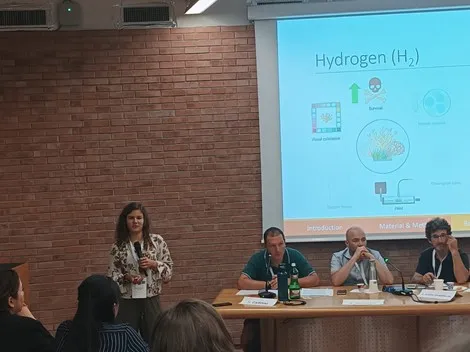
I presented my recently submitted chapter "Testing Stress Antagonists for their Potential to Enhance Coral Recovery after Natural Heat Exposure" during session 4, "Global Climate Change and Environmental Stressors". My research focuses on identifying compounds that could mitigate the adverse effects of heat stress on corals by enhancing their subsequent recovery, which is becoming increasingly critical as ocean temperatures continue to rise and marine heat waves become more intense and frequent. The presentation was well received, with questions about how these antagonists could be applied in the field.
Throughout the symposium, I networked extensively with professionals working in my field, including representatives from NGOs, companies and research institutes from Israel, Saudi Arabia, Monaco and Switzerland. These interactions were particularly important as I am about to complete my PhD and will soon have to start actively seeking job opportunities. I had promising discussions with several potential employers and collaborators, which I plan to follow up on in the coming months.
The poster sessions and social events provided additional opportunities to network and exchange ideas with fellow researchers. It was good to see familiar faces from previous conferences and research stays and to catch up on our respective projects. Beyond the conference, I took advantage of the previous weekend to explore Naples and its surroundings, including a visit to Mount Vesuvius and the ancient ruins of Pompeii. These excursions provided a fascinating insight into the rich history and natural beauty of the region, adding a cultural dimension to my trip.
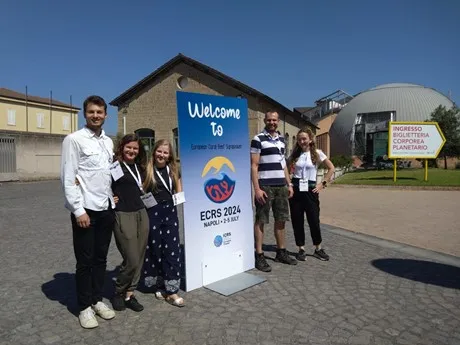
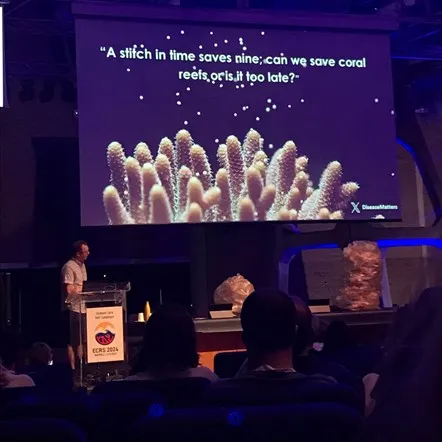
Overall, ECRS 2024 was a great success. The symposium not only provided a platform to present my research and receive constructive feedback, but also facilitated meaningful connections with potential employers and collaborators. I am grateful to the International Coral Reef Society and the organisers for providing this invaluable opportunity, and to GLOMAR for supporting my attendance at the conference. The knowledge gained and connections made during the Symposium will undoubtedly be of great benefit to the next phase of my career and my continued efforts to help conserve coral reefs.