


- Home
- Our Offers
- Media
- Archive News
- News 2024
- MSM131 first results
First results of the MSM 131 research expedition

Chimney-like rock formations, also known as black and white smokers depending on their color, are formed at hydrothermal vents, from which fluids at around 300 degrees Celsius emerge. The fluids are rich in minerals and are therefore often dark in color, giving them the appearance of escaping smoke. Researchers from the fields of geology, oceanography, biology and chemistry were on board the MARIA S. MERIAN to explore the Jøtul field together. It was important for them to understand what the smokers' chimneys are made of and how they form.
The MARUM-QUEST remotely operated vehicle was used to take rock, fluid and gas samples at a depth of 3,000 meters. Based on the samples obtained, it can already be said that the hydrothermal field is one of the largest natural methane sources discovered to date. In addition to the Jøtul field as a methane super-source, the scientists were able to witness how quickly the chimney of an active smoker forms and grows in height. Within five days, a collapsed smoker grew by more than one meter. “As the hot fluids continuously lead to metallic mineral precipitation at their immediate exit point, the chimneys become very top-heavy over time and collapse after a while. This leads to the accumulation of mineral debris on the sea floor, which we have encountered in numerous mounds in the Jøtul field,” reports Gerhard Bohrmann.
The collected samples and data are now being analyzed and processed in Bremen. This means that research on the Jøtul field will continue to accompany MARUM scientists into the next Cluster of Excellence.
More information about the expedition MSM131
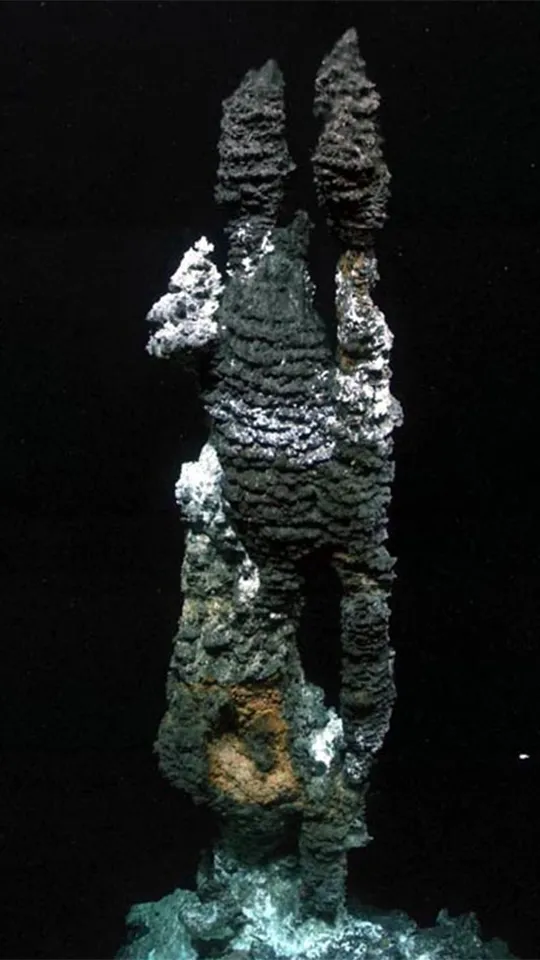
Gyme-Smoker. Photo: MARUM – Center for Marine Environmental Sciences, University of Bremen
Cruise MSM131 - courtesy of BRIESE RESEARCH
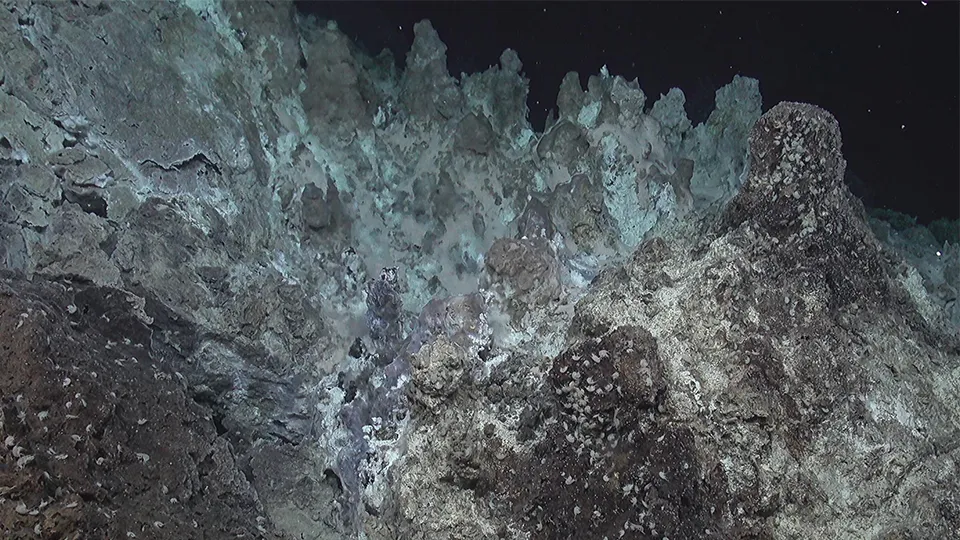
Niddog venting area with amphipodes. Photo: MARUM – Center for Marine Environmental Sciences, University of Bremen
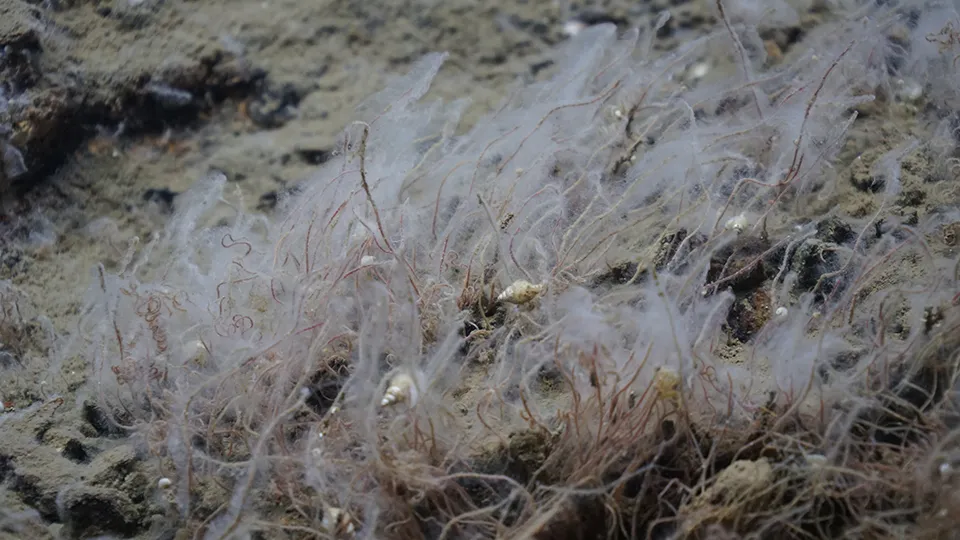
Tubeworms with microbial filaments. Photo: MARUM – Center for Marine Environmental Sciences, University of Bremen
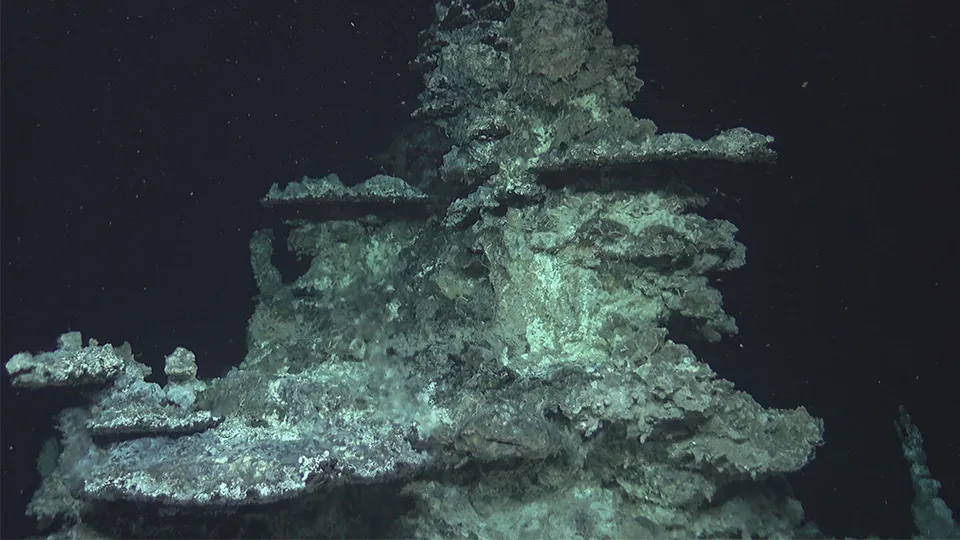
Yggrasil vent. Photo: MARUM – Center for Marine Environmental Sciences, University of Bremen
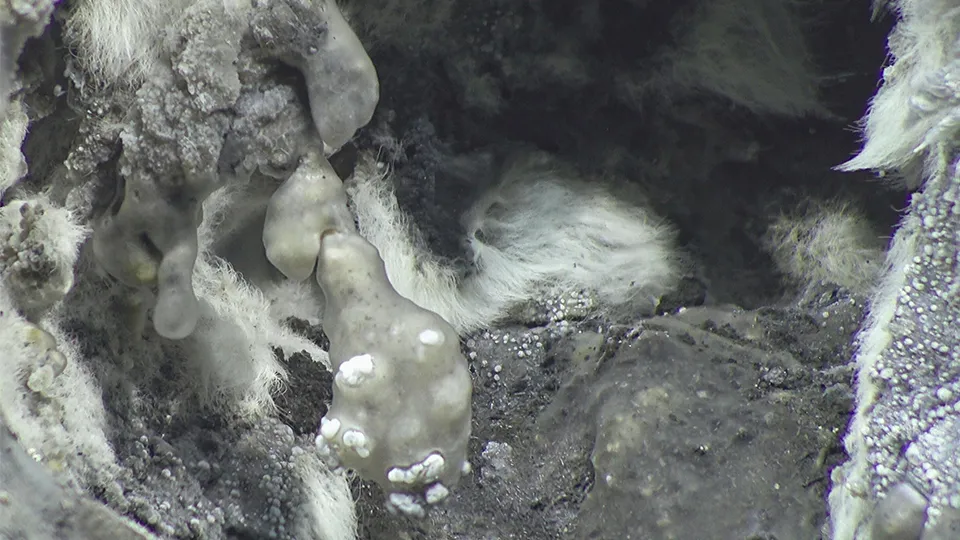
Divers microbial matter at Niddog. Photo: MARUM – Center for Marine Environmental Sciences, University of Bremen
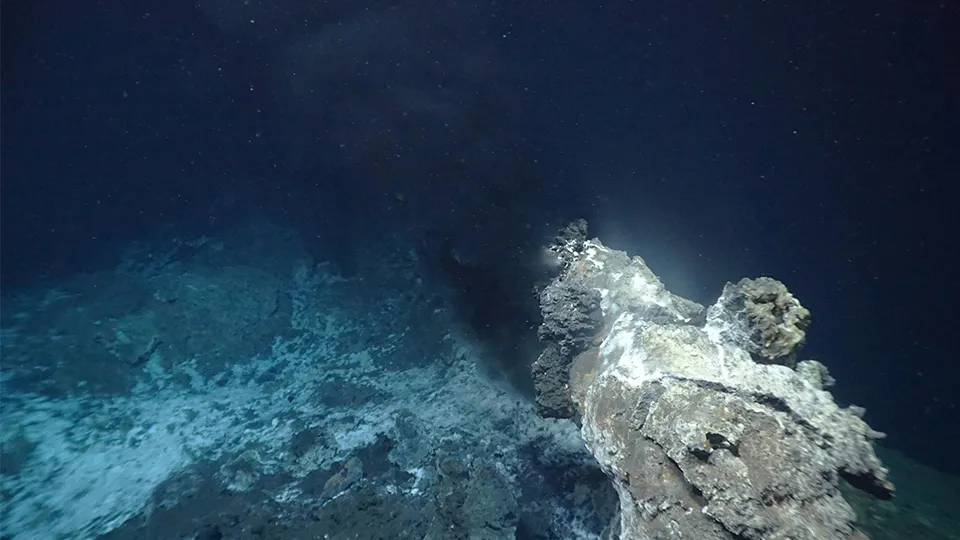
Fenris-Smoker. Photo: MARUM – Center for Marine Environmental Sciences, University of Bremen