


- Home
- Our Offers
- Media
- Archive News
- News 2025
- Harbortest
In the water: MARUM-OTTER and MARUM-Wave Glider complete harbor test

The small and maneuverable MARUM-OTTER is to be used in dangerous and inaccessible regions in order to carry out autonomous missions for adaptive data sampling of important environmental parameters. It is equipped with a depth sonar, an automated winch (110m cable length), a camera and a platform for additional sensors (CTD, fDOM, pH sensor) and can operate at a speed of up to six knots.
The MARUM-Wave Glider is an autonomous and uncrewed surface vehicle that serves as a platform for different types of scientific sensors. It uses wave energy for propulsion (forward movement) at a speed of about 1.5 knots and solar energy for its scientific sensors, communication, navigation and control. This way, it can carry out scientific missions in the open ocean over periods of several months. This deployment tested a software developed by Faculty 3 Cognitive Neuroinformatics at the University Bremen within the project iMarEx.
The two vehicles differ in terms of their size and possible deployment scenarios: While the smaller USV MARUM-OTTER with a deployment time of up to 20 hours can, due to its elective drive be used flexibly in rivers, lakes and coastal areas, the USV MARUM-Wave Glider is designed for the open sea and can be operated autonomously for weeks and months at a time.
More information here:
- MARUM research area "Underwater Technologies"
- The MARUM Wave Glider
- The project "Intelligente Maritime Exploration" (iMarEx)
Photos of the harbor test in Bremen's industrial port
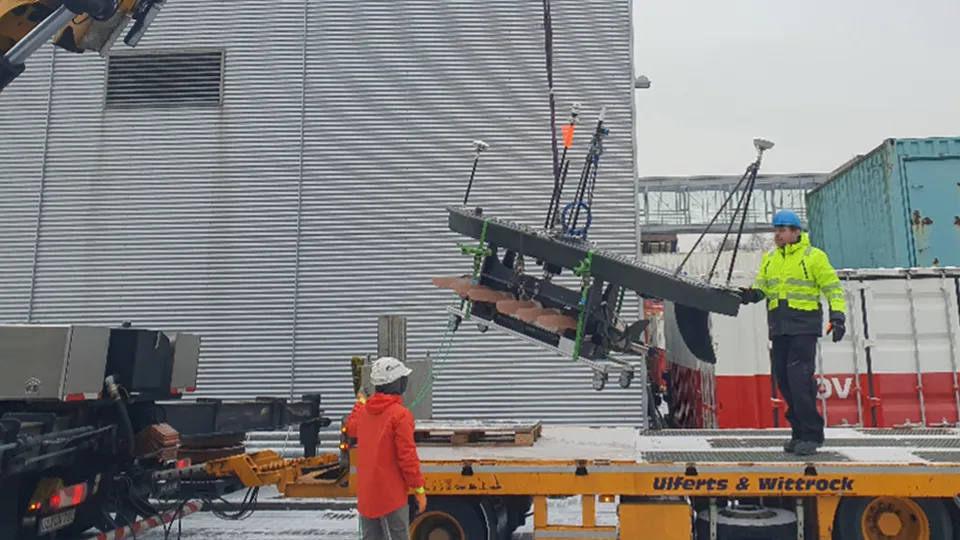
The autonomous surface vehicle MARUM-Wave Glider is loaded at MARUM. Photo: MARUM – Center for Marine Environmental Sciences, University of Bremen
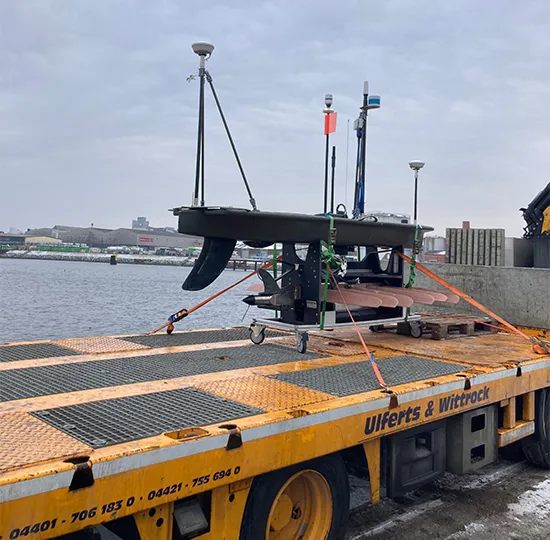
The MARUM-Wave Glider in the industrial harbor of Bremen. Photo: MARUM – Center for Marine Environmental Sciences, University of Bremen
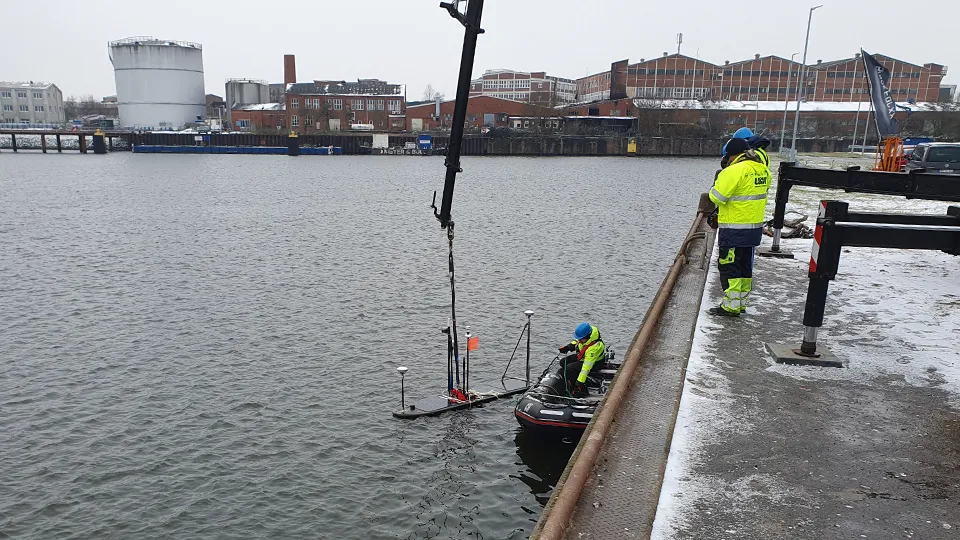
The autonomous surface vehicle MARUM-Wave Glider is lowered into the water in Bremen's industrial harbor. MARUM – Center for Marine Environmental Sciences, University of Bremen
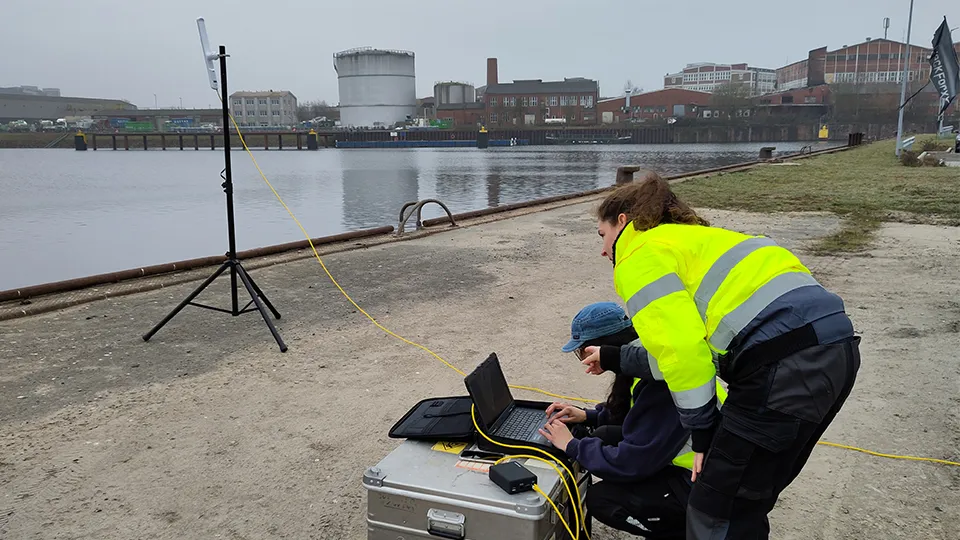
Monja Daub and her colleagues control the harbor test from the shore. The surface vehicles are controlled by a computer. Photo: MARUM – Center for Marine Environmental Sciences, University of Bremen
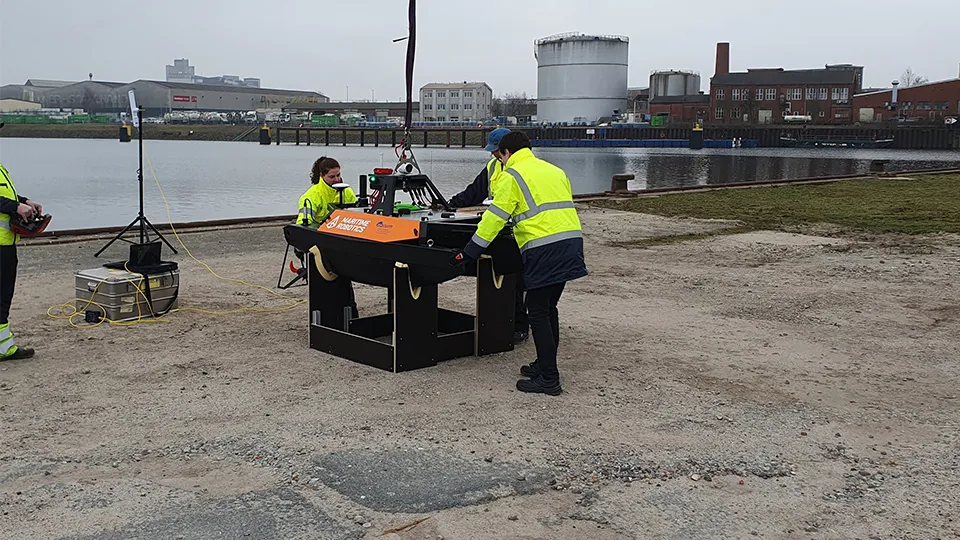
The unmanned surface vehicle (USV) MARUM-OTTER is being prepared for deployment in the water. Photo: MARUM – Center for Marine Environmental Sciences, University of Bremen
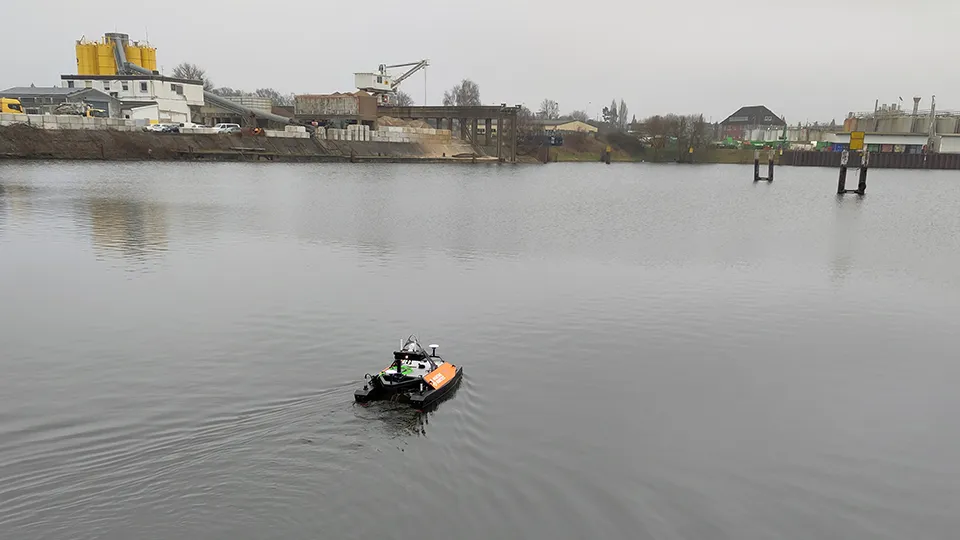
The unmanned surface vehicle (USV) MARUM-OTTER in the harbor basin of Bremen's industrial port. Photo: MARUM – Center for Marine Environmental Sciences, University of Bremen