

- Home
- ...
- The Ocean Floor
- Research Topics
- Objective 3
The Ocean Floor
Objective 3
Understanding ocean floor ecosystems under changing environmental conditions based on biological and biogeochemical interactions
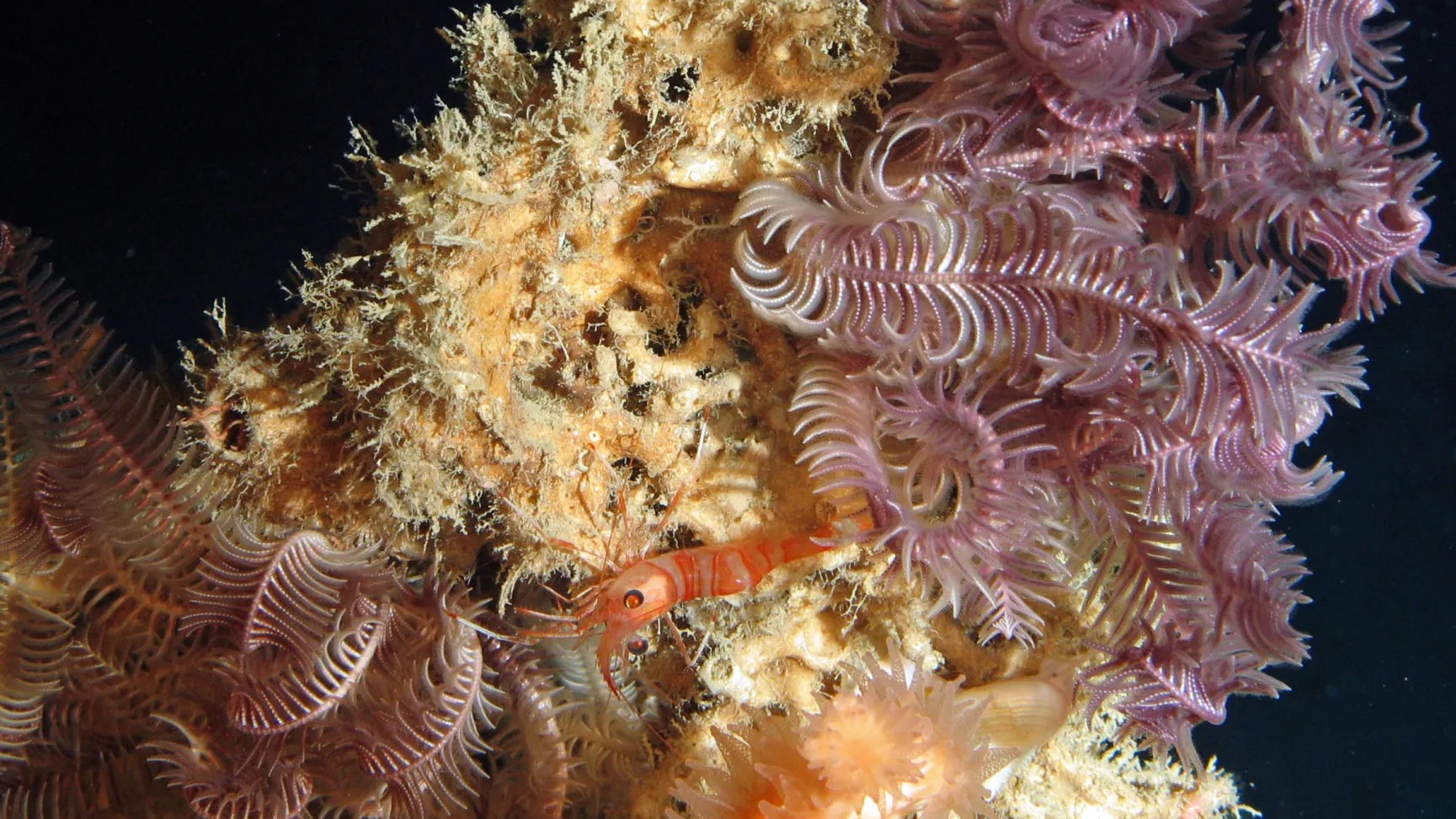
Our research on ocean-floor ecosystems encompasses studies of planktonic communities associated with the biological carbon pump, cold-water corals, chemosynthetic life at hydrothermal vents and cold seeps, and microbial life within the subsurface of the ocean floor. We have substantially advanced our understanding of the diversity and functioning of cold-water coral ecosystems, which represent oases of life at continental margins. In a North Atlantic-wide study on past environmental change, we found that these deep-sea biodiversity hotspots are largely controlled by the control of bottom-water hydrodynamics on food supply. Internal waves play a paramount role in this process, while reef formation off North Africa was additionally boosted by nutrients and sediments supplied by intense dust pulses originating from the African continent.
Another focus has been on the deep biosphere, i.e., the exploration of the limits of life in the deep subseafloor, in up to 1.2 km deep and 120°C hot sediments in the Nankai Trough. Concentrations of active microbial cells drastically declined at temperatures >45°C, coinciding with a simultaneous rise of dormant endospores. Endospores became >6000 times more abundant than active cells, and microbial life persisted even at 120°C, where cellular-level activities were unexpectedly high at this presumed upper temperature limit of life. Our investigations of the deep crustal biosphere demonstrate the presence of active microbes in the lower ocean crust with an opportunistic lifestyle as an adaptation to these low energy-environments.
Another pillar of our research is dedicated to the sensitivity and resilience of plankton communities to climate change. We demonstrated the role of benthic foraminifera in renewal of planktonic diversity following major biological crises associated with extreme climates. We could show that the current anthropogenic pressure already led to an ~800 km poleward migration of zooplankton communities. Major progress was made in exploring changes in biological productivity and ecosystems under warmer/warming conditions. For example, the ocean warming following the Last Glacial Maximum depressed biological diversity in the equatorial Ocean, resulting in the emergence of a latitudinal diversity gradient 15,000 years ago.