


- Home
- ...
- The Ocean Floor
- Research Topics
The Ocean Floor
Research Topics


Key processes involving the ocean floor
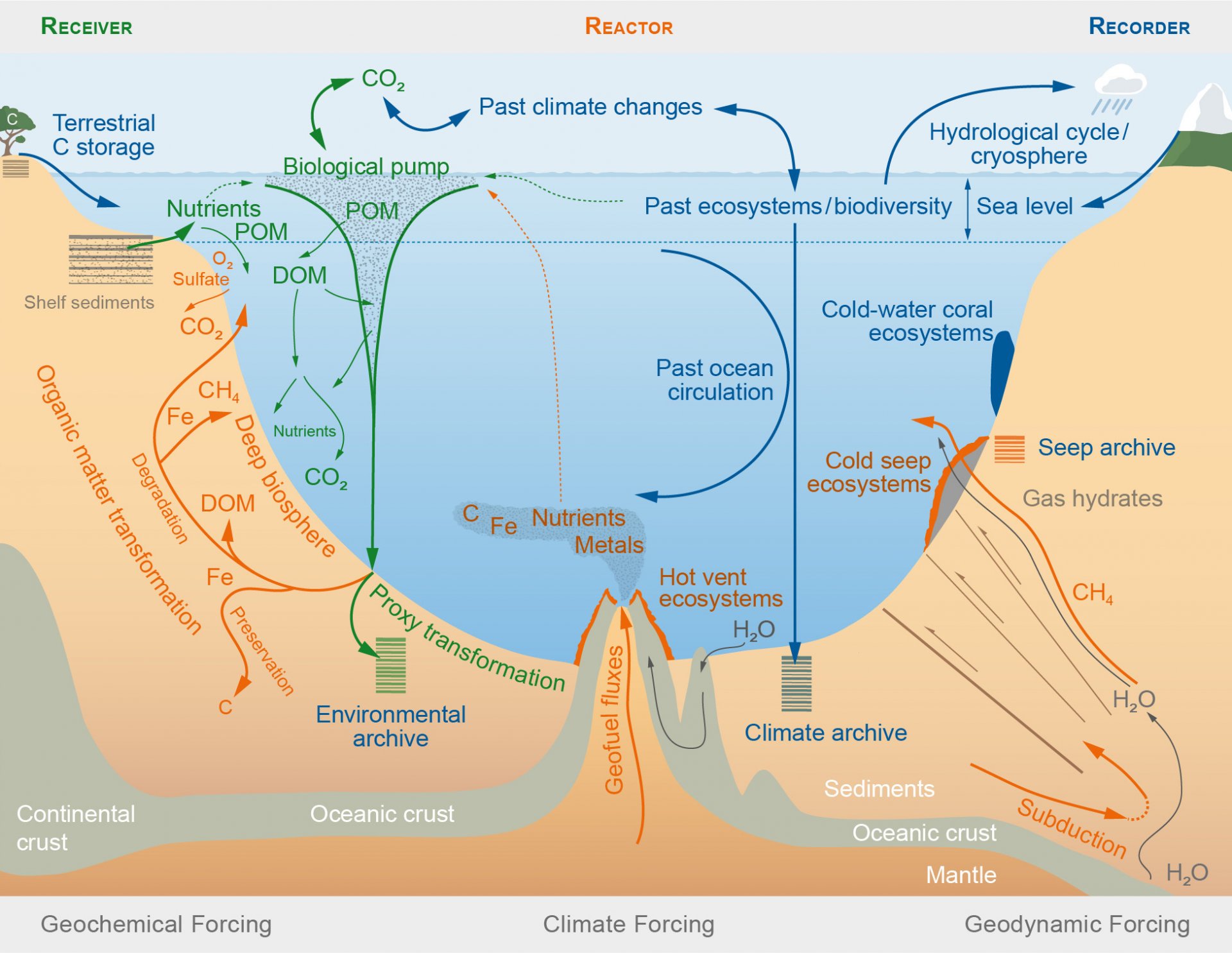
Geological processes shape the ocean floor and result in vastly different environments, including
- mid-ocean ridges where new ocean floor forms,
- subduction zones where old ocean floor is transferred back into the Earth’s interior,
- cold seeps and hot vents, both of which release fluids and gases from within the ocean floor, and
- vast areas and volumes of sediment, which register the history of the ocean and climate.
It is now evident that the ocean floor and its biological communities are anything but static. Life at and within the ocean floor is surprisingly diverse despite the absence of light and other energy limitations, but it is not easily observed nor probed. The ocean-floor ecosystems extend up to 2.5 kilometers beneath the seabed, and are fueled by inadequately explored metabolic processes. More than 80 % of volcanic activity on the Earth occurs on the ocean floor and the volume of seawater circulating through the ocean floor rivals the discharge of all the rivers on the planet. Therefore, the ocean floor is a major driver of our planet’s global element cycles, biogeochemistry, and climate.