
MARUM Research Academy
Report of Janina Groninga
Organic Geochemistry Gordon Research Seminar (GRS) "Navigating the Modern Era of Organic Geochemistry" and Conference (GRC) "Contemporary Applications of Organic Geochemical Research" in Holderness, New Hampshire, USA from 27 July to 2 August 2024
In its typical two-year cycle, the Holderness School in New Hampshire again opened its doors to host the Organic Geochemistry Gordon Research Conference (GRC) "Contemporary Applications of Organic Geochemical Research" and its complementary research seminar (GRS) "Navigating the Modern Era of Organic Geochemistry" from July 27 to August 2, 2024. Researchers from around the globe gathered to delve into pivotal topics shaping the field of organic geochemistry right now and present mostly
unpublished and cutting-edge research in a safe and welcoming environment. Participants ranged from early-career scientists to well-known experts, offering a broad spectrum of insights and facilitating extensive discussions following each talk. The event prioritized giving early-career scientists
the opportunity to speak first, encouraging them to share their thoughts alongside those of more experienced researchers.
The conference featured nine sessions dedicated to various biogeochemical topics, including sessions on planetary pollution problems, paleoenvironmental proxies, and organic matter in our solar system.
Exceptionally noteworthy sessions included "Bridging Earth and Life Sciences: The Omics Revolution" and "Understanding Feedstocks and Reservoirs to Aid the Energy Transition." Both sessions stuck with me for different reasons. The former is closely connected to the project I presented at the GRC, which
primarily focuses on efficiently navigating the hydrothermal lipidome using untargeted metabolomics techniques. The session highlighted the various -Omics techniques as powerful tools in a research field with ever-growing datasets. At the same time, the latter session highlighted how the basic research many attendees conduct can be incredibly valuable in real-life applications with great societal relevance. I learned how stimulating thermophilic endospores can significantly decrease the carbon
footprint of thermal oil recovery and how hyperthermophilic archaea found in hydrothermal vents in the deep sea can be used to degrade food waste efficiently and produce hydrogen as a byproduct for various industrial applications.
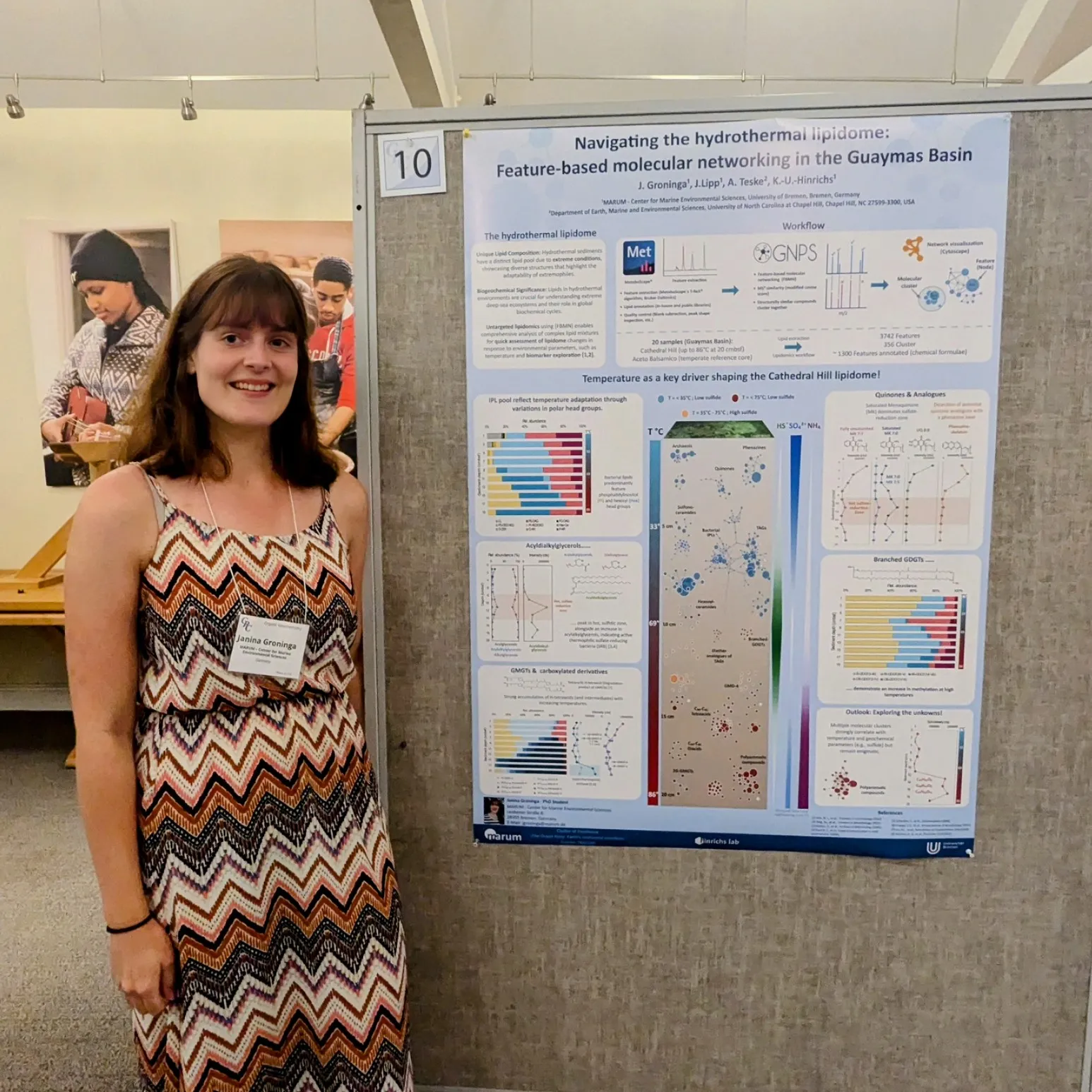
The poster sessions were also exceptionally engaging, covering a wide array of topics from positionspecific isotope analysis and metabolomics techniques to paleoenvironmental reconstruction, fire biomarkers, and more. I was happy to present my own poster on 'Navigating the Hydrothermal
Lipidome using Feature-Based Molecular Networking in the Guaymas Basin .' The two hours allocated for my poster session flew by quickly as I had great discussions with many visitors.
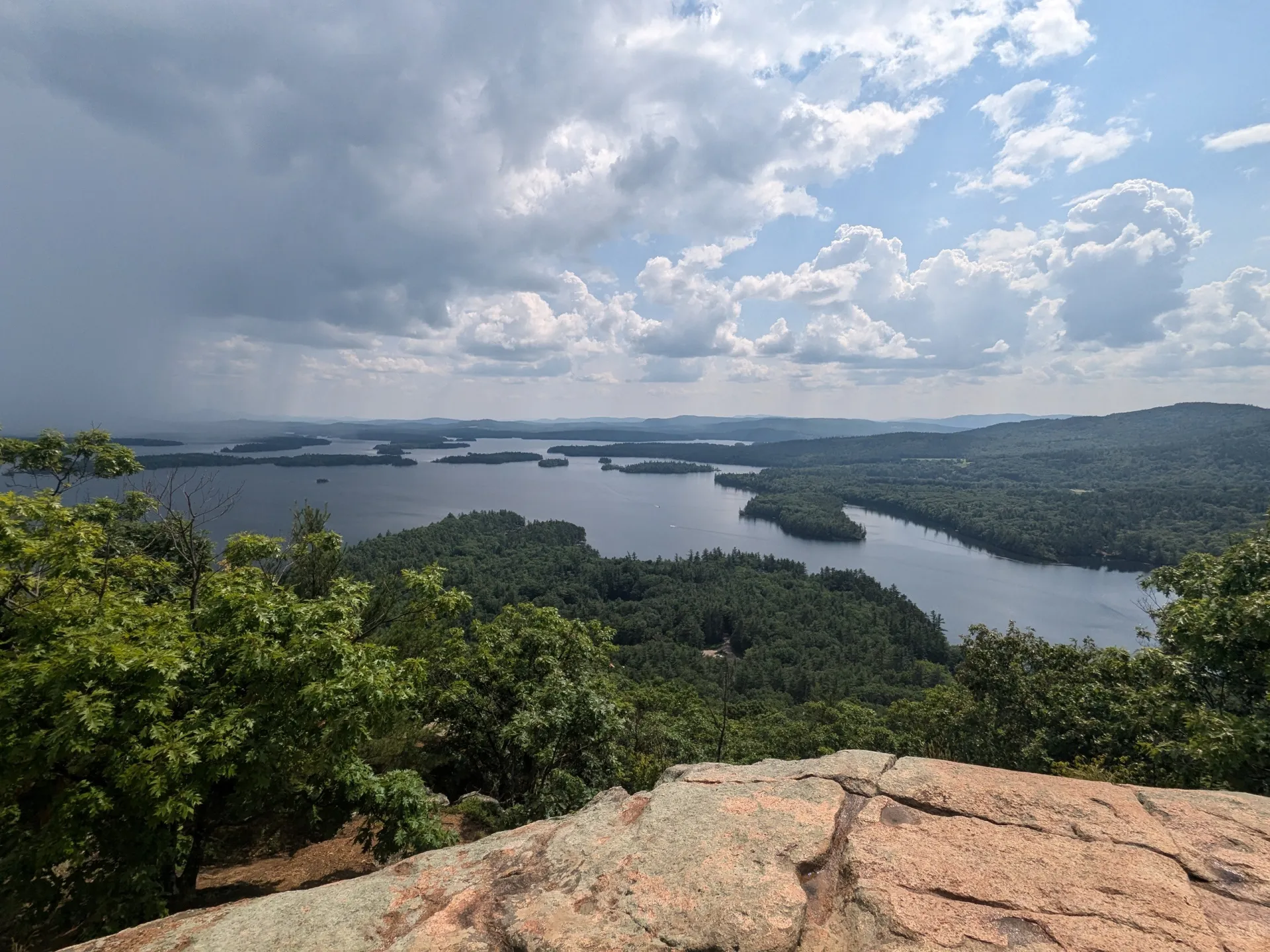
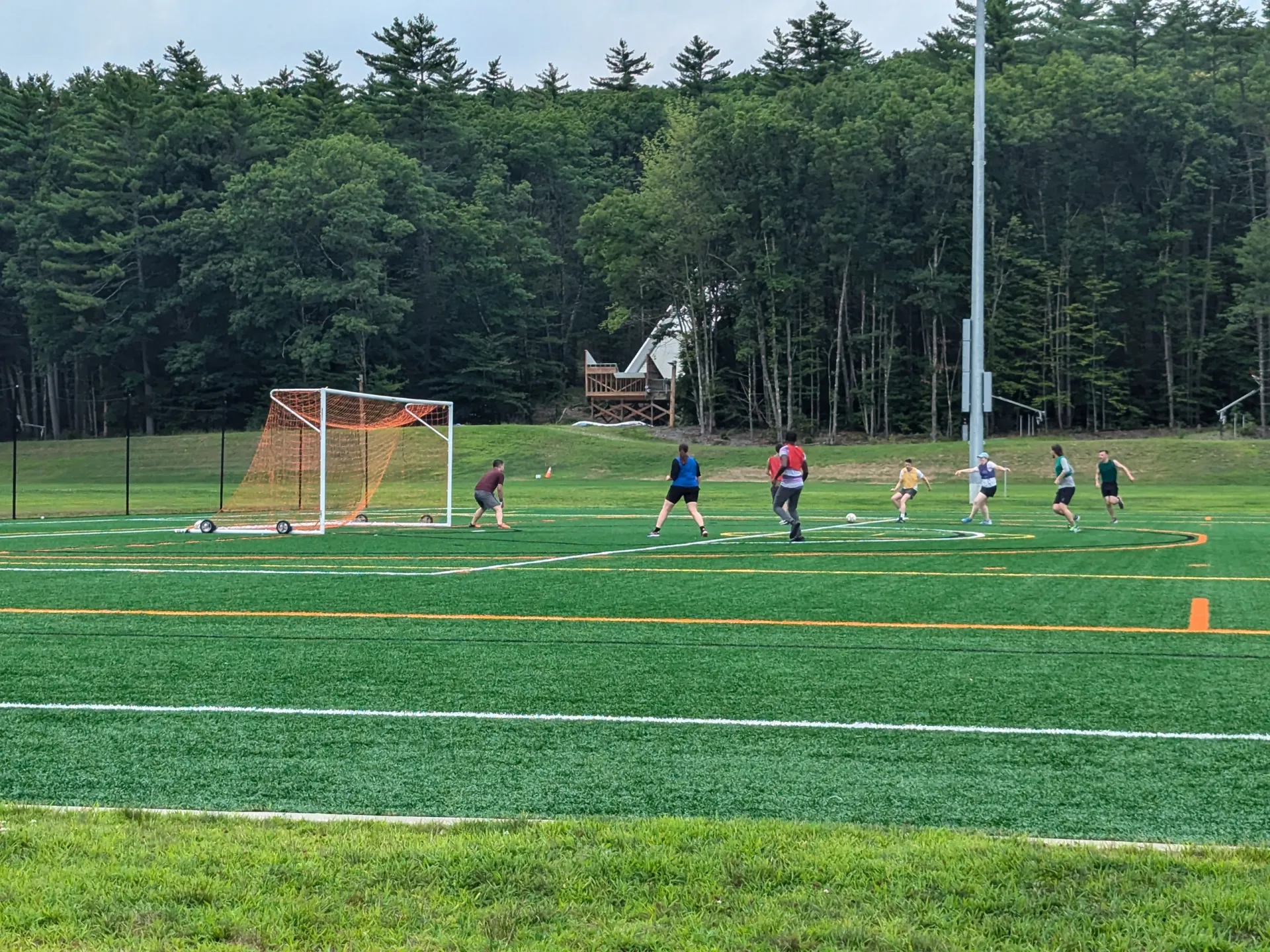
One of the key features distinguishing the GRC and GRS from many other conferences is that they offer exceptional opportunities for networking and socializing in more casual settings. The Holderness School is situated remotely within the beautiful New Hampshire forests, allowing for exciting activities such as kayaking and hiking. The school setting also provides the base for the traditional GRC soccer match, and the last evening concluded the GRC perfectly with its traditional lobster dinner, followed by a fun evening of karaoke and line dancing. These activities provided a relaxed atmosphere for
participants to network and break any potential barriers early-career researchers might have in connecting with their peers and senior scientists.
I attended the GRC/GRS in 2022 and have been eagerly looking forward to returning to reconnect with everyone I met. This year's conference exceeded my expectations, successfully fostering even stronger connections. I met many new people, and a WhatsApp group emerged among many GRS participants, where ongoing conversations are actively taking place. The sense of community and collaboration this year was truly remarkable, making the conference an even more enriching experience. I look forward to continuing to attend this conference in the future and would highly recommend that anyone in the field of organic geochemistry join.
I am deeply grateful to GLOMAR for enabling me to attend this conference. The conference provided me with an invaluable opportunity to share my research, learn from leading experts, and network with peers in the field of organic geochemistry.