


MARUM Research Academy
Report of Sabine Weidlich
8th Congress of the International Society for Applied Phycology (ISAP2024) in Porto, Portugal from 16 to 21 June 2024
The motto of this year’s Congress of the International Society for Applied Phycology was “Algae 2030: Challenges and Opportunities”, and sought to bring together researchers working with all kinds of macro- and microalgae and industry stakeholders in the “Alfândega do Porto”, next to the pitouresque Douro River in Porto. In many interesting sessions, ecology, molecular composition, production, harvesting, and applications of algae were discussed in a motivating atmosphere. The passion and vigour of all participants involved in algal research and – production accounted for five days of lively debates, productive lunch meetings, and animated talks about algae and especially algae cultivation in the present and near future.
I was lucky to participate in the congress together with three colleagues from CCMAR in Faro, where I had been spending some months preceding the event. All of us had a similar focus of interest, and we were looking forward to joining as many sessions about algal microbiomes as possible. On the second day of the congress, I presented my poster titled “Bioremediation in marine RAS (Recirculating Aquaculture Systems): Testing Ulva’s capacity to lower toxic ozonation by-products”. It summarises the findings of the first study of my PhD, where I explored the effects of ozone-aided seawater treatment on the growth, molecular composition, and microbiome of the “sea lettuce” Ulva, and vice versa the effects of the seaweed on the abundance of ozonation by-products. The feedback and questions I got following the presentation confirmed what I had already anticipated before: the effects of ozonation on aquaculture organisms might be under-researched, but the impacts of ozone on seaweeds in aquaculture in particular are an absolute blank page. My study is the first of hopefully many more that will explore this exciting topic. I received some intriguing suggestions and remarks especially by people from the aquaculture production sector, some of whom have worked with ozone before and could recount of their personal experiences with this versatile water treatment tool. Coming from an academic background, these inputs are of great value to me as they indicate where research is needed most and which problems still have to be overcome with regard to the safe use of ozone.
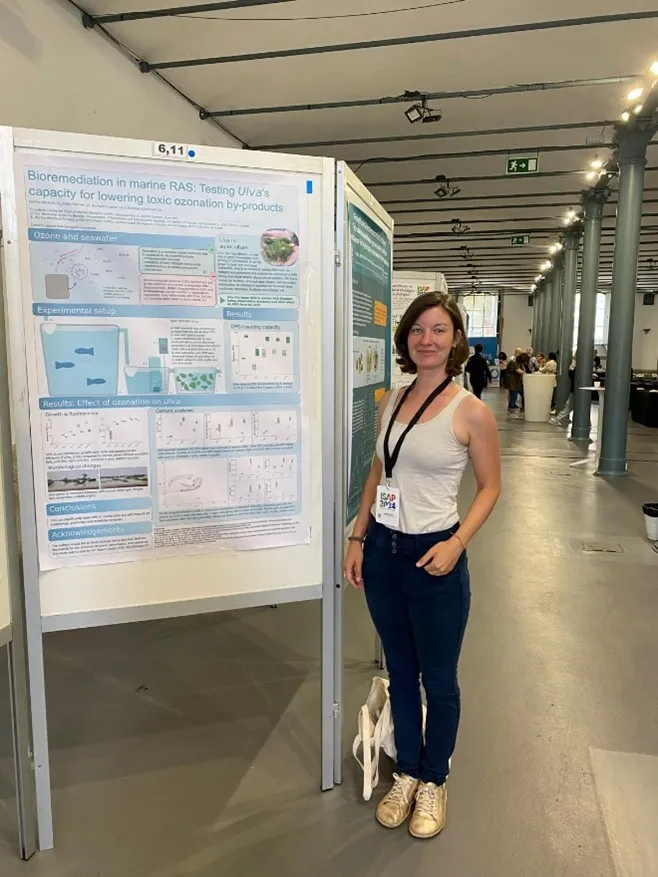
ISAP2024 invited me to present my research in poster-form. I enjoyed playing around with different design softwares to effectively communicate the gist of my study
It was interesting to see the relative prevalence of some of the bigger Portuguese aquaculture companies at the congress, and their impact on the course of development within the discipline. A great many of the sessions centered on microalgae research, which reflects the current development of the algae production industry in Portugal. Several talks by company employees highlighted their successes, but also the struggles and hurdles they are facing in day-to-day production and how they plan to overcome them. They also showed the vulnerability of this relatively young economic branch, and emphasised the importance of collaboration between research and industry, especially when facing the challenges of human-made climate change.
Summing up, ISAP2024 was a great opportunity to develop my presentation skills, network, and learn about the current status of algal research and seaweed aquaculture. I left Porto with a pocket full of business cards and a head full of ideas for future research. A big thanks to GLOMAR for enabling this trip and my participation in the congress.

In our spare time, my colleagues and I tried to explore as much of Porto as possible. Fortunately, we were quite lucky with the weather.
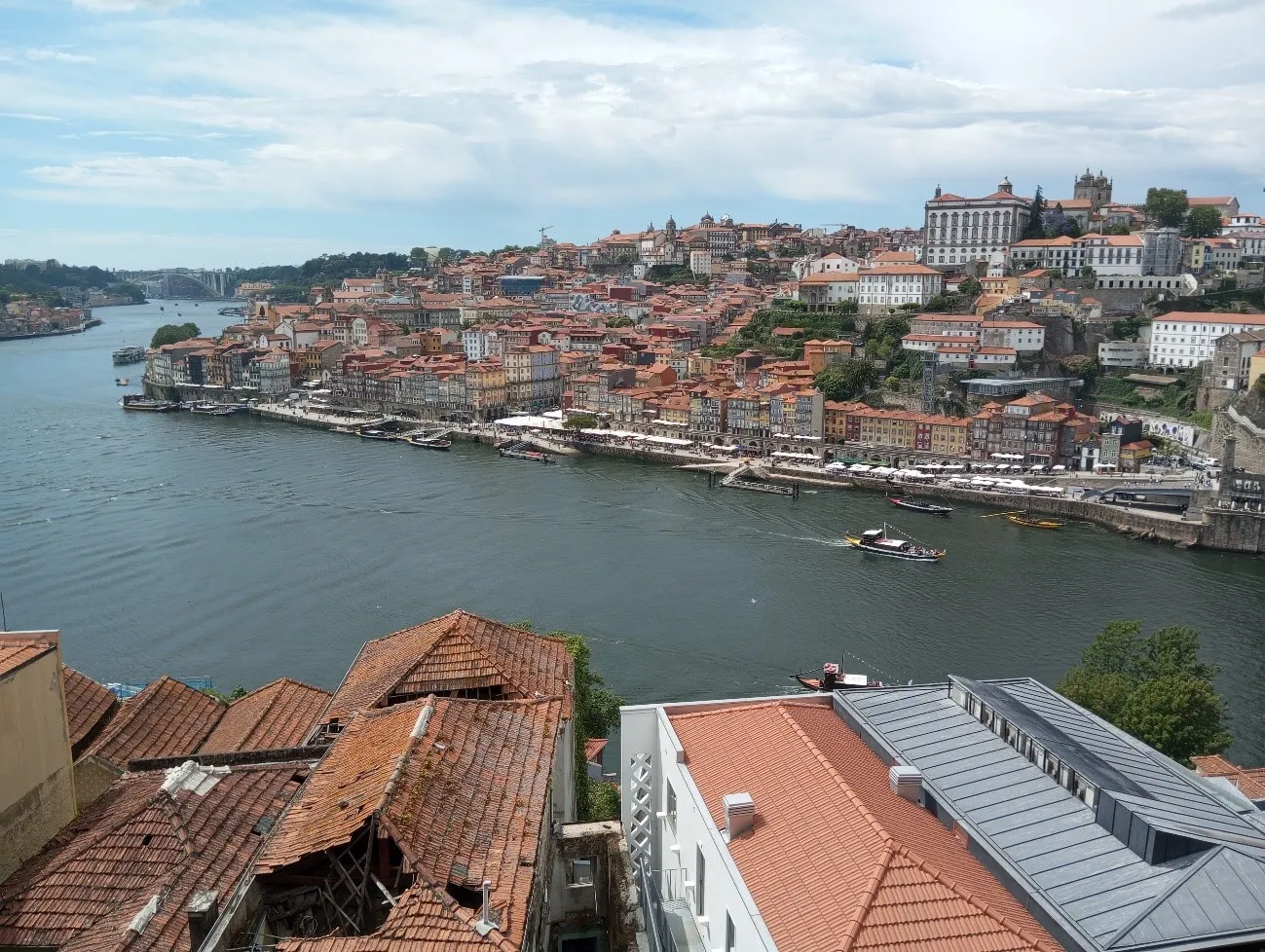
The congress venue, Alfândega do Porto, was located at the waterline of the Douro river in Porto.