
MARUM Research Academy
Anna Katharina Baltz
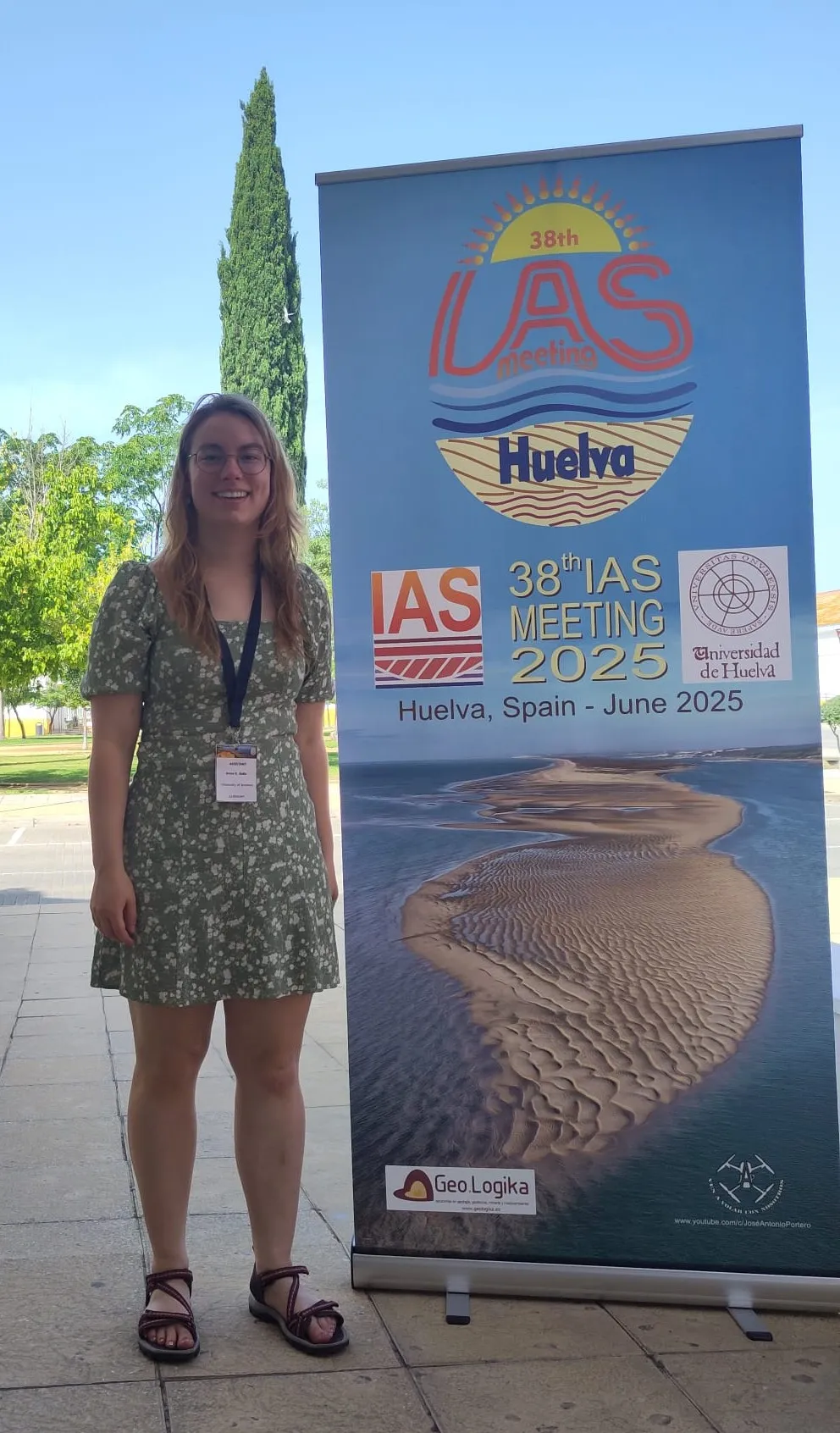
38th International Meeting of Sedimentology in Huelva, Spain from 26 - 30 June 2025
1. Purpose of Attendance
The goal of attending the 38th International Meeting of Sedimentology was to present my preliminary results, receive expert feedback, and strengthen the methodological and conceptual foundation of my PhD project. As a doctoral esearcher at the University of Bremen (FB5), my work focuses on econstructing an over regional seismo-stratigraphic model and the evolution of glacial and interglacial landscapes in the southern North Sea. Presenting at IMS allowed me to discuss my seismic-based stratigraphic model with international peers and sedimentology experts.
2. Summary of Participation
I gave an oral presentation in a session relevant to shallow marine depositional systems. I also attended multiple sessions of high relevance to my research, including:
- Coastal Clastics
- Holocene Coastal Dynamics
- Shallow Marine Clastics
These sessions deepened my understanding of coastal and shallow marine sedimentary processes during sea-level oscillations—key to interpreting the transitions in my North Sea study area.
I also took part in the field trip along the Huelva coast, where we studied Holocene coastal systems and their morphological and depositional development. This hands-on experience enriched my ability to interpret similar stratigraphic structures in the seismic
record.
3. Key Takeaways
- I received useful comments and questions on my presentation that will help sharpen the interpretation of seismic facies and refine the stratigraphic model.
- Sessions on sea-level driven changes in depositional environments were directly applicable to my work on transgressive-regressive phases during glacial cycles.
- Field observations of modern coastal systems provided analogues to interpret paleoenvironments in seismic data.
4. Networking and Professional Growth
IMS provided an excellent platform to meet fellow researchers working on Quaternary sedimentology, seismic stratigraphy, and sedimentary systems. I exchanged contact details with several researchers, including potential collaborators for future comparative studies and publications. I also had valuable conversations with experts whose methods and publications are highly relevant to may thesis work.
5. Research Impact
The conference helped me:
- Clarify key interpretations in my current model
- Explore methodological enhancements, especially in dating interglacial sediments.
- Gain insight into how my findings fit into boarder regional context of glacial history in northwest Europe
The experience also contributed significantly to my academic development by enhancing my presentation and communication skills.
6. Acknowledgement
I sincerely thank GLOMAR for supporting my participation at the 38th International Meeting of Sedimentology. this opportunity provided critical feedback for my ongoing work and valuable exposure to international sedimentology research. I will integrate the insights gained into my upcoming thesis chapters and conference papers.