


MARUM Research Academy
Sabine Weidlich
Report of GLOMAR member Sabine Weidlich about her research placement at the Algarve Centre of Marine Sciences - CCMAR in Faro, Portugal from March to June 2024
From March till June 2024 I had the opportunity to go on a research placement with the Marine Microbial Ecology and Biotechnology (MMEB) working group at CCMar institute in Faro. The placement was well chosen, as it turned out, and I learned a lot during these four months in Portugal. Here is a short summary of the three parts of my placement.
Part1: Sampling seagrass microbiomes
Some while ago, researchers of the research station EPPO (Estacão Piloto de Piscicultura de Olhão) close to Faro made a curious discovery: the sedimentation ponds of their experimental aquaculture systems started growing seagrass! This presented the perfect oppportunity for MMEB to study the impacts of fish aquaculture on microbiomes associated with seagrass meadows, which are abundant in the wetlands and coastal areas around southern Portugal. By sampling the microbiomes of the roots and blades of the seagrass Cymodocea nodosa in the sedimentation ponds we hoped to gain insights in the potential of aquaculture effluents to shape their microbial communities, and thus influence seagrass health and nitrogen- and carbon cycling in these important habitats. In the sampling campain, I got some first insights in the techniques that are required when sampling microbiomes in the field as opposed to my own experimental aquaculture setups.
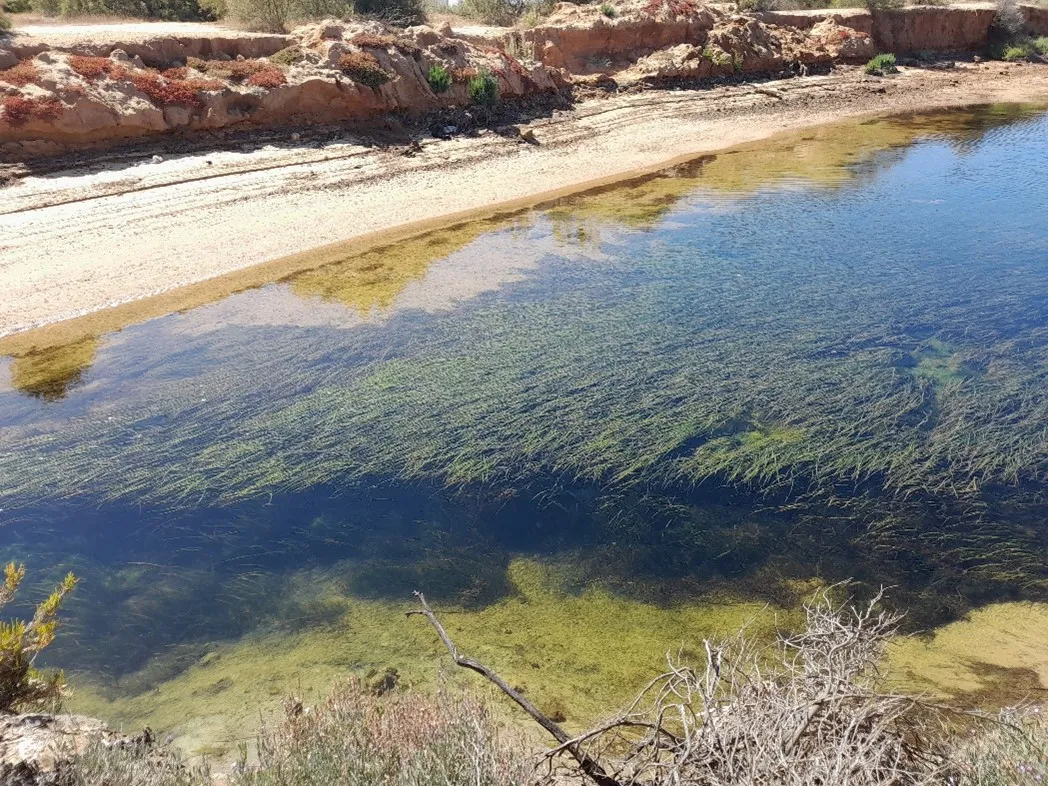
Seagrass in the sedimentation ponds of the experimental fishfarm in Eppo station in Olhão
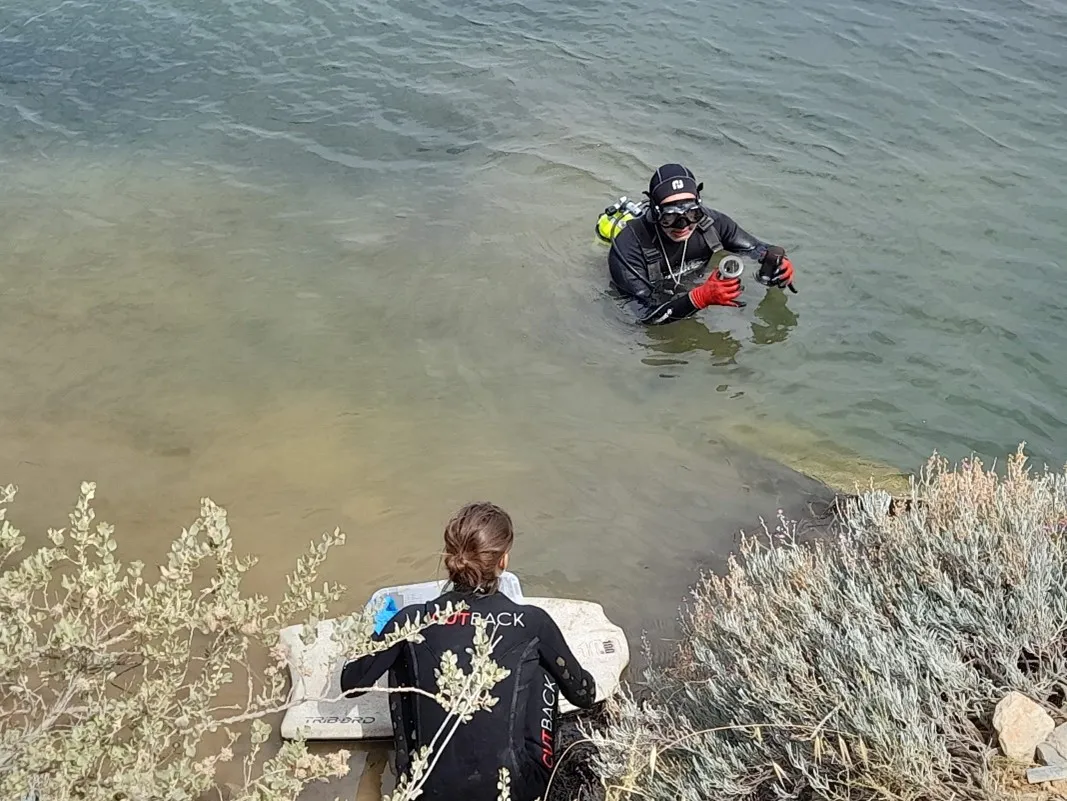
Sampling day at the fish farm. We collected samples from seagrass roots and -blades, as well as from the surrounding seawater.
Part 2: Internship at Necton
As in every other type of aquaculture, controlling pathogens is of great importance when growing microalgae. At the commercial microalgae production site of the company Necton in Olhão, the necessity of monitoring microalgae-associated microbiomes and the importance of understanding host-symbiont interactions led to close collaborations with several working groups at CCMar. In the scope of my PhD project I was interested in applying ozone directly in microalgae cultures to modify microbial communities within the cultivation tanks. Thankfully, Necton liked the idea and allowed me to test and experiment with two microalgal strains in their facility: Nannochloropsis salina and Tisochrysis lutea. Before I could get started with experimenting, though, there was a lot to learn! I was taught how to safely handle cultures, monitor their growth and fluorescence signals, and check them for contaminations. Finally, I was able to build an outdoor photobioreactor setup to test the effects of ozonation on microalgae. The experiments lasted for two weeks and – luckily – ran smoothly and without any major setbacks.
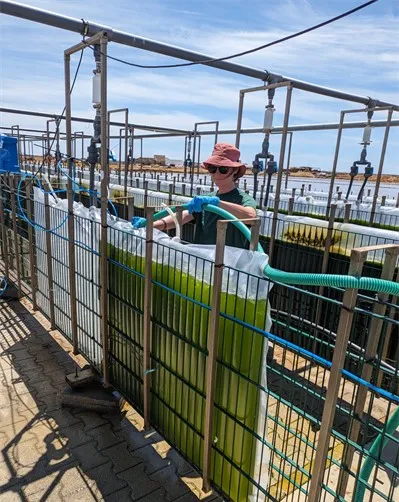
Transferring Nannochloropsis culture into an experimental outdoor setup
Part 3: Managing multivariate 16S data analysis
A big part of my doctoral research project entails the impacts of ozone water treatment on the microbiomes associated with various aquaculture organisms. To monitor these impacts I apply 16S rRNA amplicon sequencing, a method which allows to characterise the ‘who and how much’ of microbial communities. While 16S sampling procedures are fairly easy and straitforward, managing the multivariate data sets resulting from them is a more complex affair and requires specific statistics skills. With the help of the MMEB working group members, I learned how to pre-treat sequences, analyse the data and, finally, interpret and present the findings in a coherent way. This part of my research placement was definitely the most challenging, but also the most rewarding. I am really looking forward now to applying my new skills to my own research data.
Summing up my experiences in Faro and Olhão, I could not have wished for a better research placement. Big thanks to MMEB and GLOMAR for enabling this adventure!